Thrillers and chillers: Spooky books for adults

Halloween is a holiday for children, but adults can get in the act, too. (Why turn down the candy?) There’s no better way to get into the mood than with a creepy or suspenseful book. As part of book blogger Jenn Lawrence’s meme, Murder, Monsters & Mayhem, here’s a list of Latino-themed thrillers. And check out our list of Halloween books for children posted earlier this week.

Let’s start with the monsters – specifically, vampires. The Strain is a trilogy of novels by Mexican film director Guillermo del Toro, written with Chuck Hogan, about a virus that vampires inflict on the world. (If you want a creepy movie to watch on Halloween, his 2006 film Pan’s Labyrinth is an excellent choice.)

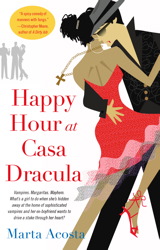
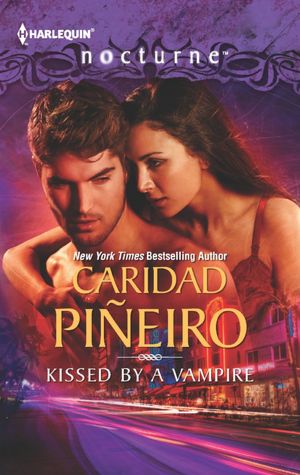
For a humorous touch, Marta Acosta’s Casa Dracula series, including Happy Hour at Casa Dracula, features a romance between the main character, Milagro de Los Santos, and a vampire. Caridad Piñeiro’s new book, Kissed by a Vampire, also features a paranormal romance – all part of her The Calling/Reborn series featuring the undead beasts.

Now let’s get to murder and mayhem, with several book series featuring Latino crime solvers. The Henry Rios series by Michael Nava, which has a gay lawyer in San Francisco as its lead character, began with The Little Death and ended with Rag and Bone. Rudolfo Anaya’s Sonny Baca series, which includes Zia Summer and Jemez Spring, features a detective solving crimes in New Mexico. The Rio Grande Valley is home to several thrillers, including Partners in Crime, by Rolando Hinojosa.

For books with a strong female protagonist, Lucha Corpi’s mysteries – including Eulogy for a Brown Angel, Cactus Blood and Black Widow’s Wardrobefeatures a clairvoyant detective solving crimes in Los Angeles. Or try these recent thrillers: Lyn DiIorio’s Outside the Bones, about a bruja who gets caught up in an old mystery; Joy Castro’s Hell or High Water , which has a newspaper reporter investigating sexual predators in New Orleans; and Linda Rodriguez’s  Every Last Secretabout a college police chief who solves a murder on campus.

1 Comment

Filed under Features, Fiction

La Llorona, chupacabras, oh my! Spooky books for children and teens

Boo! October brings the greatest holiday ever – Halloween. It’s not just about the candy, but listening to stories that put goosebumps on your arms and a shiver in your bones. As part of book blogger Jenn Lawrence’s meme, Murder, Monsters, Mayhem, here’s a look at spooky tales, Latino-style, for children and young adults. Look for a list of suspense books for adults later this week.

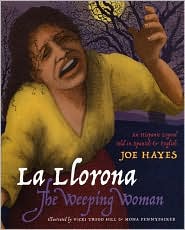
In Mexican folklore, no figure is more haunting than La Llorona, the woman who drowned her children and spends her time calling for them. Her tale has been told in numerous books, including La Llorona/The Weeping Woman by Joe Hayes, who talked about the story’s enduring legacy to The Hispanic Reader last year.

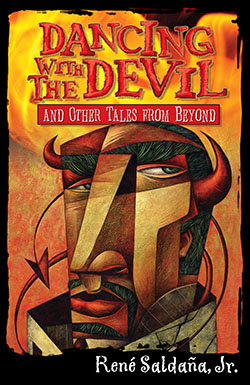
Texas-based writer Rene Saldaña Jr. also explores the myth – and others – in his book, Dancing with the Devil and Other Tales from Beyond / Bailando con el diablo y otros cuentos del más allá. La Llorona is becoming part of mainstream pop culture: She will be the subject of NBC’s Grimm in the Oct. 26 episode. Wilmer Valderrama talked about the project to NBC Latino. And here’s Lila Downs singing about La Llorona.

La Llorona and those other spooky beasts – the chupacabras – are part of Texas-based children’s writer Xavier Garza books, including Creepy Creatures and Other Cucuys, Kid Cyclone Fights the Devil and Other Stories and Juan and the Chupacabras/ Juan y el Chupacabras. The Rio Grande Valley native talked about the inspiration for the books to the San Antonio Express-News last year.

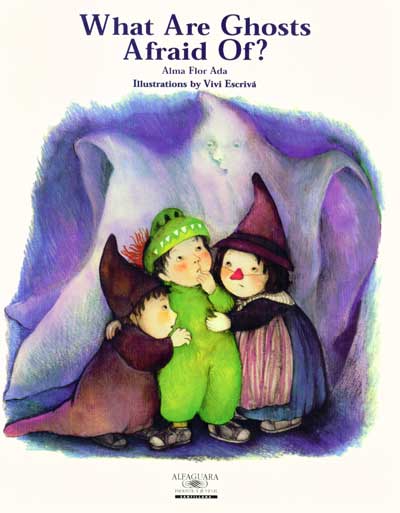
For more universal creatures, Alma Flor Ada writes about ghosts in What Are Ghosts Afraid Of? El susto de los fantsmas. In A Mummy in Her Backpack/Una Momia en su mochila by James Luna, a girl ends up with an unusual souvenir from vacation. Los Gatos Black on Halloween by Marisa Montes and Yuyi Morales is a poem about the creatures that haunt the night.

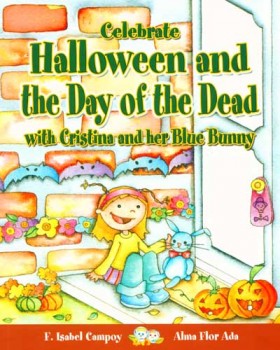
Alma Flor Ada and F. Isabel Campoy combines Halloween and the other upcoming holiday, Dias de los Muertos, in Celebrate Halloween and the Day of the Dead with Cristina and her Blue Bunny Celebra el Halloween y el Día de Muertos con Cristina y su conejito azul. Pat Mora’s Abuelos describes a Halloween-like holiday in northern New Mexico that has Mexican and Pueblo roots.

For young adults, You Don’t Have a Clue: Latino Mystery Stories for Teens features a variety of tales from as Saldaña, Diana López and Sergio Troncoso. Guadalupe Garcia McCall’s recently released novel Summer of the Mariposas also features La Llorona – in a gentler light than most books – and chupacabras.

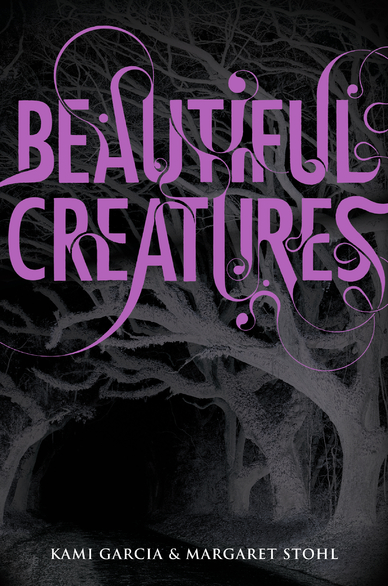
The Beautiful Creatures series, written by Kami Garcia and Margaret Stohl, features teenagers who meet otherworldly beings called Casters. The book soon will be a major motion picture starring Viola Davis and Emma Thompson. Alisa Valdes’ The Temptation features a romance between supernatural teens.

4 Comments

Filed under Children's Books, Culture, Features, Young Adult Books

Book review: César Aira’s “The Miracle Cures of Dr. Aira”

The Miracle Cures of Dr. Aira (New Directions) by César Aira begins with the title character talking to a tree.

So begins another original novel by Argentine-based Aira, whose Varamo was released earlier this year. In this 80-page novel, Dr. Aira is a Buenos Aires doctor who believes he is being followed and filmed in pursuit of his miracle cures.

The book is funny and philosophical at times, strange and confusing at others. Take this passage that shows Dr. Aira’s paranoia – and the book’s charm:

He had developed at least one sure method for finding out if somebody was observing him: it consisted of yawning while secretly spying on the one he suspected; if he yawned in turn, it meant his eyes had been on him, because the contagious property of yawns is infallible. Of course, somebody who just happened to be looking at him at that moment might have yawned; and anyway, proof didn’t do him much good, though at least he knew what to expect, which was enough for him.

But Aira writes in long sentences that can ramble and may need to be reread. The ending may be a bit mystifying for some readers – but it’s just about what you would expect from the quirky mind of César Aira.

More about César Aira:

César Aira is the author of more than 70 novels and essays. Miracle Cures was translated by Katherine Silver.

Source: I received a review copy from the publisher.

Leave a comment

Filed under 2012 Books, Book Reviews, Fiction

Meet novelist Sabrina Vourvoulias, author of “Ink”

Sabrina Vourvoulias has taken on the immigration issue with an intriguing twist.

Her newly released novel, Ink, explores the topic under the science fiction genre. Vourvoulias knows the issue firsthand. She grew up in Guatemala and moved to the United States as a teenager. Vourvoulias has worked mostly in newspapers and serves as managing editor of Al Día News Media, the Spanish-language newspaper in Philadelphia. She writes speculative fiction and poetry and also runs the blog, Following the Lede.

Q. Tell me about your book, Ink.
A. Ink is a novel that combines dystopia, literary fiction and magic realism. As the novel opens, a biometric tattoo has been instituted for temporary workers, immigrants with permanent resident status, and citizens with too-recent immigration history. (Because it is a tattoo those who are marked by it come to be called “inks.”) Restrictions, including “English-only” ones, are imposed and escalate until life becomes a series of “bad” and “worse” choices for the protagonists.

The story is narrated by four alternating voices: a journalist whose “beat” is reporting on inks; a citizen ink who works in the city’s population control office; an artist who is drawn (pun intended) into the inks’ struggles through friendship and temperament; and a teenager whose mother runs an “inkatorium” (a sanitarium-internment center opened in response to public health concerns).

All of the characters grapple with issues of exclusion, identity, and a shifting sense of community. But there is another layer of the world the characters are touched by — a layer peopled by mythic beings, and coursed by spirit and magic. A layer of the world where justice and reconciliation is measured in memories, and by the heart.

Q. Why did you choose the science fiction genre for a novel about immigration?
A. Speculative fiction that incorporates elements of science fiction and fantasy is born with a “what if?” and grows from there. In my case, I was already hearing and reporting about undocumented immigrants in my journalistic work, and tracking how the discourse was becoming less and less about authorization, and more about a generalized fear and loathing. I created characters I cared about — with a diversity of life experiences and expectations — and subjected them to a daily existence that is an exaggerated version of what I have already observed or heard about. I wove through this what I love best about Sci Fi/Fantasy/Magic Realism: the poetic imaginings, and the “what ifs” that aren’t restricted to our material, physical world.

Q. How has your Guatemalan/Latino heritage inspired your work? Who are your favorite Latino writers, and why?
A. I grew up in a Guatemala torn by an undeclared, internal war. Those years were spent living our everyday lives under the rule of a repressive government that didn’t hesitate to get rid of those it deemed undesirable. Those experiences undergird the very U.S. dystopia I created for Ink, and much of what I subject the fictional city of Hastings to (martial law, curfews, roadblocks and civil patrols, states of emergency) is lived experience.

At the same time, I am formed by the folklore and legends of Guatemala, which all live barely under the skin of those of us connected by blood and heart to that country. It is hard to imagine a nation more rich with pre and post colonial mythology and folklore. That living cultural legacy, and the particularly strong ties of family, faith and community I’ve experienced in the U.S., are all part of what inspires not only this work, but all my work.

As for favorites, I’m very fond of both Latin American Boom classics and the works of U.S. Latino authors, and probably for the same reasons: they tend to be character-driven and very socially aware, while imbued with a kind of casual or innate magic. Or, if not actual magic, a sense of the mythic. So, Miguel Angel Asturias, Gabriel Garcia Marquez, Juan Rulfo and Jorge Luis Borges on the Latin American side, and Sandra Cisneros, Denise Chavez, Ana Castillo, Julia Alvarez, Cristina Garcia, Francisco Goldman and emerging writers like Gina Ruiz and Melinda Palacio on the U.S. side. I also read a lot of poetry including the works of Francisco Alarcon, Lorna Dee CervantesAlma Luz Villanueva, Elena Diaz Bjorkquist and Martin Espada.

Leer es poder, they say, and it’s true. There is power in words, and the need for Latino voices — read, wrtitten and spoken — has never been clearer.

Leave a comment

Filed under 2012 Books, Author Q&A, Fiction

Book review: Sandra Cisneros’ “Have You Seen Marie?”

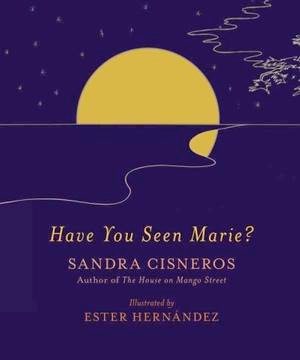
In Sandra Cisneros’ new book, Have You Seen Marie? (Knopf), the narrator searches for her lost her cat in her neighborhood. But she’s not just looking for Marie, she’s looking for a piece of herself.

The narrator lives in the King William district of San Antonio – a series of historic homes that are as colorful and unique as the people who live in them. On a hot Sunday, the narrator and a friend meet their neighbors as they search for the black and white cat who “looks like she’s wearing a tuxedo.” These eccentric group of people – a viejita who offers them a can of Big Red soda; a family of musicians who play in the park; “a girl in a fiesta dress and sleeves of tattoos” – are rendered beautifully by California-based artist Ester Hernandez.

At less than a hundred pages, Maria seems like a picture book for adults, but the book’s weight comes as the narrator realizes that she also misses her mother, who passed away a few months earlier. Marie provides a unique glimpse into a quirky neighborhood and heartfelt look into grieving.

More about Sandra Cisneros:

Sandra Cisneros is best known for her 1991 novel The House on Mango Street, and her 2003 novel Carmelo. She also founded The Macondo Foundation writer’s group.

Source: I checked this book out of the library.

Leave a comment

Filed under 2012 Books, Book Reviews, Fiction

Meet novelist Caridad Piñeiro, author of “Kissed by a Vampire”

Caridad Piñeiro has given Latino literature a supernatural edge.

Her latest novel is Kissed by a Vampire, featuring a paranormal romance. She’s written nearly three dozen books, including the Chicas romance series and the The Calling/Reborn series. She’s received numerous awards from romance writers associations.

Piñeiro was born in Havana, Cuba, and worked as an attorney. This post is part of a blog tour for Kissed by a Vampire.

Q: Tell us about your latest book, Kissed by a Vampire

Kissed by a Vampire is the story of a 2000-year-old vampire, Stacia, who has grown tired of her eternal life and has also grown lonely. She doesn’t believe it’s possible for her to find love or have any kind of lasting relationship, but then she meets DEA Agent Alex Garcia. Or should I say is reunited with him. She had saved his life many years earlier when Alex was shot during a raid that went wrong. Stacia had taken pity on Alex when she saw the love in his eyes for another agent who had been shot during the same raid. When Stacia runs into Alex again, she is unprepared for her attraction to him and for the emotions he rouses. Kissed by a Vampire is sexy and emotional. It’s also action-packed as Stacia decides to help Alex find a missing young woman and shut down a white slavery ring.

Q: Most of your novels deal with paranormal romance. What drew you to this genre? Why has it become so popular? 

I was in a dark mood and wanted to vent that in my writing. I also thought that stories with paranormal elements would let me play with different ideas that I could not include in more traditional romances. I think the ability to have such different stories, especially the edgier kinds of stories possible with paranormals, is what has made the genre so popular.

Q: How has your Cuban/Latino heritage inspired your work? Who are your favorite Latino authors? 

I try to include aspects of my culture and/or other Latino culture in as many works as I can.  For example, one of the main characters in The Calling/Reborn series is Cuban-American FBI Agent Diana Reyes. In her stories, I’ve brought in her family’s values and foods. In Kissed by a Vampire, the story is set in South Beach and I’ve tried to work in the flavor that Cuban-Americans have given to that area. As for my favorite Latino authors, there quite a few. Julia Amante, Sylvia Mendoza, Berta Platas, Tracey Montoya, Reyna Grande, Julia Alvarez and Aimee Thurlo just to name a few.

6 Comments

Filed under 2012 Books, Author Q&A, Fiction

Book review: F.G. Haghenbeck’s “The Secret Book of Frida Kahlo”

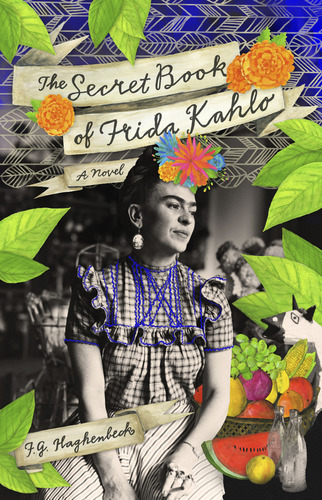
Frida Kahlo loved food, elaborate skirts and Diego Rivera. But the iconic Mexican painter was haunted by death every day of her life. Mexican novelist F. G. Haghenbeck uncovers her inner life in the novel The Secret Book of Frida Kahlo (Atria).

The “secret book” refers to one of the journals found in La Casa Azul, her home in Mexico, and Haghenbeck imagines its content. Each chapter depicts a phase in her life – her childhood, her love affair with Mexican painter Diego Rivera, meetings with Ernest Hemingway and other writers in Paris – and ends with Kahlo’s thoughts and recipes.

Food plays a big role in reflecting her moods. When she lives in San Francisco and Detroit, she calls the food bland – just like the sad times she had there compared to the spicy flavors and life in her homeland. When Diego’s wife Lupe confronts her after their affair, it’s in the kitchen. As Lupe tells her, “A woman should know how to move in the kitchen so her man won’t want to eat anywhere else.” The chapter ends up becoming one of the most amusing in the book.

But the major motif of the book is death. Kahlo nearly died in a bus accident, and she made a deal with Death to sacrifice one thing each year she lives – compromises that include the loss of a child and Rivera’s constant infidelity.

Readers can feel her heartbreak thanks to Haghenbeck’s beautiful writing style, which includes great descriptions and inventive metaphors. (The book was translated by Achy Obejas.) Take this scene in which Rivera eyes Kahlo at one of their first meetings:

“He studied his interlocutor with his amphibian eyes. She smelled of fresh meat to be deliciously and vigorously devoured. She had a beautiful face, with deep eyes and charcoal hair. He noticed that her thick eyebrows met in the middle and crowned her delicate nose. He imagined them as wings of a blackbird struggling to fly.”

My only complaint: some chapters are stronger than others. But, overall, it’s a intriguing look into the mind of one of the most legendary figures in the Latino community.

More about F. G. Haghenbeck:

F. G. Haghenbeck, who was born and lives in Mexico, is known for his crime novels, such as the award-winning Trago amargo (Bitter Drink). He also has written for Superman and other graphic novels.

Source: I received a review copy from the publisher.

1 Comment

Filed under 2012 Books, Book Reviews, Fiction

Book review: Guadalupe Garcia McCall’s “Summer of the Mariposas”

Summer of the Mariposas (Tu Books/Lee & Low Books), a young adult novel by Guadalupe Garcia McCall, combines Aztec and Mexican folklore with the plot of The Odyssey and elements from the movies Stand By Me and Weekend at Bernie’s – and it works.

Odilia, 18, and her four sisters are struggling to get by after their father has abandoned their mother. They’re enjoying a dip in the Rio Grande near their Eagle Pass home when they come across a dead body – hints of the Stephen King short story The Body and the 1986 movie Stand By Me, in which four boys look for a corpse. The sisters decide to take the body to the man’s home in Mexico with a scene reminiscent of the 1989 movie Weekend at Bernie’s, in which two men drag around a dead body.

Before they leave, La Llorona – the Mexican folklore figure who haunts waterways, crying for the children she drowned – gives Odilia advice about the journey and perils she will face in Mexico, similar to the trials Odysseus faced in Homer’s epic tale The Odyssey.

Odilia – get it? – and her sisters face a siren named Cecilia, who lures the girls with pan  dulce, and a one-eyed shepherd named Chencho. Garcia McCall also manages to get in the loteriaa quinceanera, chupacabras and the Aztec goddess Tonantzin (also referred to as the Virgen de Guadalupe) in the book. And, just like Odysseus, Odilia grows during her journey. The mariposas are in the title for a reason.

Adults may find the symbolism heavy-handed, but the book is aimed at young adults and Mariposas is a good guide to get them through The Odyssey. The book has a light, amusing touch that makes it a fun read, and young Latinos will enjoy reading about their culture.

More about Guadalupe Garcia McCall:

Guadalupe Garcia McCall won the prestigious Pura Belpré Award for her first book, the 2011 young adult novel Under the Mesquite. Born in Mexico, she now lives in Texas and teaches at a junior high school. She talked to The Hispanic Reader last year about her works and inspiration.

Source: I received a review copy from the publisher.

1 Comment

Filed under 2012 Books, Book Reviews, Fiction, Young Adult Books

In the news: New books by Cisneros; book festivals; and tons of links about Junot Díaz

(Note: This post was updated to include the Junot Díaz award from the MacArthur Foundation.)

It’s October, and that means news books, book festival season and Dias de los Muertos. Find out more below:

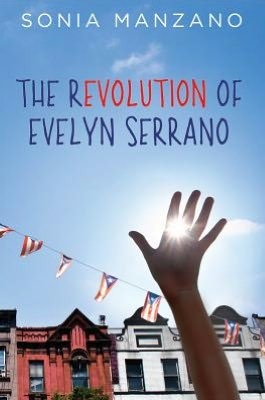
Already out: Sesame Street actress Sonia Manzano’s young adult novel The Revolution of Everlyn Serrano depicts a Puerto Rican teen growing up in Spanish Harlem in the turbulent 1960s. Manzano talked to the TBD website about the book.

• Oct. 1: Guadalupe García McCall, author of the Pura Belpre winning book Under the Mesquite, releases Summer of the Mariposas, a retelling of Homer’s The Odyssey through the eyes of five sisters.

Oct. 2: Sandra Cisneros writes about her missing cat in the illustrated book, Have You Seen Marie?

Oct. 9: In the young adult novel A Thunderous Whisper by Christina Díaz Gonzalez, a 12-year-old girl is caught up in spying during the Spanish Civil War.

Oct. 16: Benjamin Alire Saenz releases a collection of short stories, Everything Begins and Ends at the Kentucky Club. In The Miracle Cures of Dr. Aira by Cesar Aira, a doctor discovers he has superhuman powers.

Junot Díaz alert:

Junot Díaz was awarded the prestigious MacArthur “Genius Award” on Oct. 1. The honor is given by the MacArthur Foundation to outstanding individuals in the arts, humanities and sciences.

Need a Junot Díaz fix? Lots of people do since his collection of short stories, This Is How You Lose Her, was released last month. Nearly a thousand fans crammed into a New York City Barnes and Noble, causing a near riot, according to the ColorLines website. He chatted with The New York Times Magazine’s recent “Inspiration” issue about what has influenced his writing, and a nice slideshow is included. He talked about the main character’s game to NPR; his Dominican background to NBC Latino; genre fiction to Capital New York; and the perceived sexism in his book to The Atlantic. He also went bar-hopping with Grantland. But wait, here’s more articles from Latina magazine, the NPR radio show Latino USA, Huffington Post, the Good Reads website and CNN. Here’s some podcasts from The New York Timesand the Brooklyn Vol. 1 website, where Díaz discusses his passion for comic books. He talked about his love for the Hernandez brothers (of Love and Rockets fame) to the NPR radio program Latino USA. Still can’t get enough of Díaz? Check out his Facebook feed or the new fan website, Junot Díaz Daily.

Book Festivals:

Oct. 1-6: The San Diego City College Int’l Book Fair will include Reyna Grande (left), Gustavo Arellano, Rudy Acuña, Matt de la Peña and Herbert Sigüenza.

Oct. 13 – The Los Angeles Latino Book & Family Festival will feature Victor Villaseñor and Luis J. Rodriguez.

Oct. 27: The Boston Book Festival will feature Junot Díaz and Justin Torres, right.

Oct. 27-28: The Texas Book Festival in Austin will feature Gustavo Arellano, Nora de Hoyos Comstock, Junot Díaz, Reyna Grande, Diana López, Domingo Martinez, Guadalupe Garcia McCall, Benjamin Alire Sáenz, René Saldaña Jr., Esmeralda Santiago, Ilan Stavans, Duncan Tonatiuh, Juan Pablo Villalobos, Ray Villareal and Gwendolyn Zepeda.

Literary magazines:

Aztlan Libre Press has released the book Nahualliandoing Dos: An Anthology of Poetry, which was influenced by Cecilio Garcia-Camarillo, Caracol and Nahualliandoing.

• Here’s an interesting article from Ploughshares literary magazine from Jennifer De Leon (no relation) about whether to italicize foreign phrases in literary works, with a mention of Junot Díaz (him again!).

Events:

• Las Comadres Para Las Americas will host a writer’s workshop Oct. 6 in New York City. Speakers include  Sonia Manzano, Lyn DiIorio, and Caridad Pineiro.

• The Festival de la Palabra, which includes discussions and readings from from Rosa Beltrán, Ángel Antonio Ruiz Laboy and Charlie Vásquez, takes place Oct. 9-11 in New York City.

Other news:

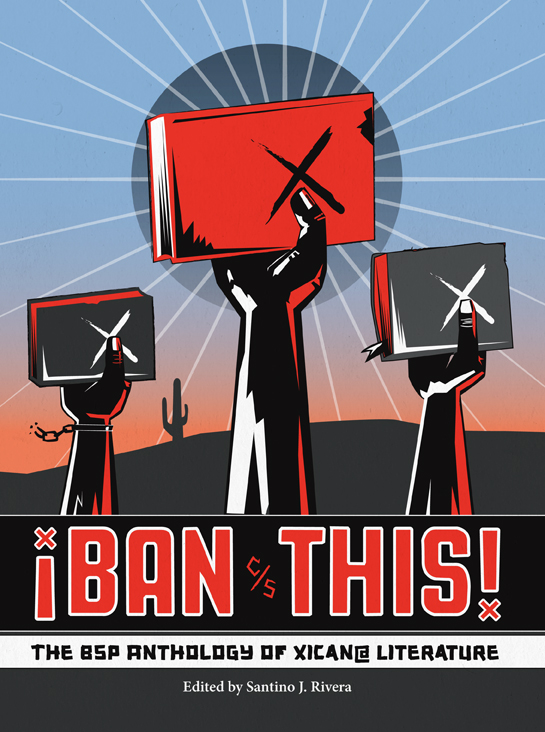
• The Southern California public radio station KPCC covered a reading of Ban This! The BSP Anthology of Chicano Literature, written in response to the state of Arizona’s ban on ethnic studies.

• Poet Lupe Mendez was named one of the Houston Press’s top 100 creative people.

Héctor Tobar’s 2011 novel The Barbarian Nurseries may be adapted into a movie, according to ComingSoon.net.

• The film version of Rudolfo Anaya’s Bless Me Ultima premiered in El Paso, according to the El Paso Times.

• A new film based on Juan Gonzalez’s Harvest of Empire: A History of Latinos in America is being released.

Justin Torres, author of 2011’s We the Animals, was named to the National Book Founationa’s 5 under 35 list of emerging authors.

Also this month:

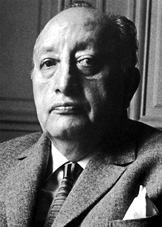
• Celebrating birthdays this month: Nobel Prize winner Miguel Angel Asturias, right, on Oct. 19.

• The Nobel Prizes will be announced this month, and Book Riot has its predictions. (It’s not likely a Latino or an American will win this year.) Here’s a look at Latinos who’ve won the award.

• Looking for some books for Dias de los Muertos? Here’s The Hispanic Reader’s round-up from last year.

Leave a comment

Filed under 2012 Books, Events, Fiction, Movies, News, Non-Fiction, Young Adult Books

Book review: Carlos Andrés Gómez’s “Man Up: Cracking the Code of Modern Manhood”

Carlos Andrés Gómez wants men to stop acting like Superman.

In his memoir, Man Up: Cracking the Code of Modern Manhood (Gotham), the spoken word poet uses his own personal experiences to show how men should be open to expressing their personal emotions, including crying and asking for help and forgiveness. As he writes:

“I was taught to wipe my tears and steady my expression as a kid. Don’t talk about what’s rumbling inside of your chest. Stay stoic and quiet. It’s part of the unspoken male code. ‘Toughen up, son,’ ‘suck it up,’ ‘man up’ – this is how we learn to process emotion. This is the cause of our emotional illiteracy. No wonder so many men bury their wounds and insecurities in alcohol and drugs and violence.”

Gómez has an interesting background. His father was from Colombia and worked for the United Nations, moving his family around the world when Gómez was young. His mother is a “traditional Southern WASPy American” with a doctorate in linguistics. His parents divorced when he was young, but Gómez earned good grades and served in leadership positions in the high schools he attended on the East Coast. After graduating from the University of Pennsylvania, he worked as a social worker and teacher.

Even more interesting is the chapter called “Sex: F—king, Making Love and F—king Up.” Earlier in the book, Gómez says he’s only slept with six women in his life. But then he describes various encounters of “hooking up” in vivid detail – how Clinton-esque of him. The chapter comes across as self-serving and hypocritical – although he later concedes that he was using “the girls.”

But the book provides some interesting insights and it becomes stronger in the end, thanks to Gómez’s well-written, easy-to-read prose. Take this passage in which Gómez describes how he healed his relationship with his father:

“When I started studying acting at twenty-three it was turning point, and I realized how impersonal all of my poems had been. Why was I so passionate and loud in my delivery of all of them? … And one day it clicked: all of those poems were about my father. I had been getting up on stage for years yelling at my father. These poems had been a vehicle to heal from the hurt I felt from our relationship. From the broken promises and the move and changing schools and the family being split apart, I was screaming with such intensity, making my throat go hoarse, because I wanted to acknowledged. More than anything else, I just wanted to be heard.”

I also enjoyed his poetry – which is included in the beginning of each chapter – and I wished the book included more of his work.

Man Up is a great book for young men to find themselves – and for women to understand a little bit about men.

More about Carlos Andrés Gómez:

Gómez has performed his spoken word poetry at more than 200 colleges around the world. He appeared in the 2006 movie Inside Man and in Russell Simmons Presents Def Poetry. Check out his performances here.

Source: I received a review copy from the publisher.

Leave a comment

Filed under 2012 Books, Book Reviews, Non-Fiction