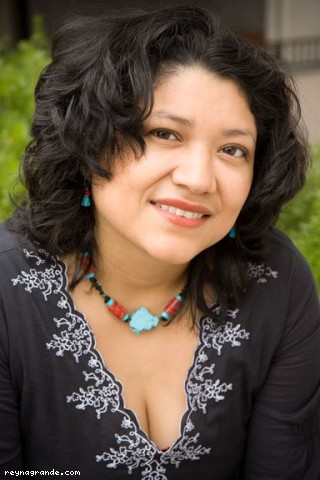
Happy Birthday, Gloria Anzaldúa!

Gloria Anzaldúa was born Sept. 26, 1942, in the Rio Grande Valley of Texas, and died Oct. 4, 2004. Her 1987 book, Borderlands/La Frontera, is considered a landmark book in Chicano and feminist studies.

Anzaldúa worked the fields with her family as a child growing up in South Texas. She received her bachelor’s degree at Pan American University and her master’s and doctorate at the University of Texas at Austin.

She co-edited the book This Bridge Called My Back: Writings by Radical Women of Color with Cherríe Moraga. But it was Borderlands that has drawn the most acclaim. In an article for The Week magazine, writer Dagoberto Gilb said, “Anzaldúa transmuted scholarly writing into a kind of poetic prose that was fiercely political,” adding that she “treated the border not only as the physical presence that it is but as a metaphor of both gender and sexual identity.”

A collection of her essays, poetry and other works is compiled into The Gloria Anzaldúa Reader. Here’s a terrific profile of her from Ms. Magazine.

Leave a comment

Filed under Author Profiles, Non-Fiction

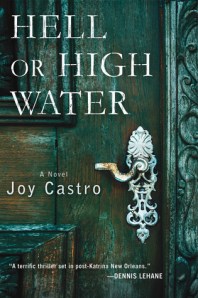
Book review: Joy Castro’s “Hell or High Water” and “Island of Bones”

Class and cultural identity are two topics that don’t get as much attention as much as they should, but Joy Castro tackles the issues in her suspense novel Hell or High Water and a book of essays, Island of Bones.

Hell or High Water (St. Martin’s Press) begins with an intriguing premise. A young woman is kidnapped from a restaurant in broad daylight. The book then turns to Nola Céspedes, a Cuban-American newspaper reporter who’s assigned to investigate sexual predators in post-Hurricane Katrina New Orleans.

The book only devotes a few passages to the kidnapping that hooks the reader. Instead, it delves into the Nola’s long interviews for her article and her personal struggles. Nola is supposed to come off as ambitious and sarcastic, but I found her snobby and pretentious, especially when she talked about her job.

“I’ve got no intention of sticking around,” she says. “The plan is to write a few knockout features, get noticed, pack my bags and then take my clips to some real newspaper in some real city.”

Well, aren’t you special? In 2008, the year the story (somewhat randomly) takes place, and even today, she would have been lucky to have any job in newspapers.

I also wanted the book to be more about the potential killer on the loose than on Nola. And as a former newspaper reporter, I found the newsroom scenes could have been so much more – which may by why I’m more critical of this book than if Nola had been a police detective or a private investigator.

Fortunately, Castro writes clearly, so the book was an easy read. And Castro is terrific at bringing up class issues that many other writers ignore. In one scene, she talks to two lower-income women about sexual predator laws.

“Neither of the women has heard of Megan’s Law. Neither knows she can access a sex-offender registry online. Neither one owns a computer.”

At the end of the book, I understood more about the decisions that Nola makes. But I wished I could have liked her more.

I liked Island of Bones (University of Nebraska Press) much better. The collection of essays covers Castro’s personal life, including a horribly abusive childhood, and her career working as the rare Latina in academia in the Midwest.

The title essay examines the stereotypes people have about Latinos, such as their faith and looks. Another great essay, “Fitting,” discusses the subtle barbs of female friendships and the importance of a good spouse.

Like her novel, Castro excels when she discusses class issues. Coming from a poor background, she is amazed at the food spreads in the faculty meetings at the college at she works.

In one of the best essays, “On Becoming Educated,” she points out how academia doesn’t reach out to everyday Latinas.

“I’m a first-generation college student, here by fluke on fellowship, and the theorists’ English seems foreign to me, filled with jargon and abstractions at which I can only guess. They say nothing about wife-beating or rape or unequal wages or child molesting, which is the charge that finally got my stepfather sent to prison. They say nothing about being a single mother on ten thousand dollars a year, which is my own situation. The feminist writers respond to male theorists – Lacan, Derrida – whose work I haven’t read. I can’t parse their sentences or recognize their allusions, and I don’t know what they mean or how they’re helpful to the strippers and dropouts and waitresses I know, the women I care abut the most, to my aunt Lettie who worked the register at Winn-Dixie and my aunt Linda who cleaned houses.”

Fortunately, in Castro, women like Lettie and Linda have someone that’s writing about them.

More about Joy Castro:

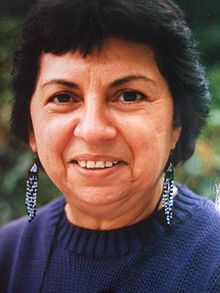
Joy Castro’s first book was the 2005 memoir The Truth Book: Escaping a Childhood of Abuse Among Jehovah’s Witnesses. She is an associate professor at the University of Nebraska-Lincoln.

Source: I checked Hell or High Water out of the library. I received a review copy of Island of Bones from the publisher.

Leave a comment

Filed under 2012 Books, Book Reviews, Fiction, Non-Fiction

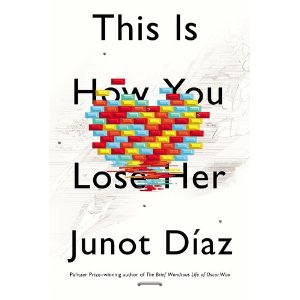
Book review: Junot Díaz’s “This is How You Lose Her”

Junot Díaz’s collection of short stories, This Is How You Lose Her (Riverhead), is absolutely brilliant – and just a tad annoying.

Most of the stories feature Yunior – a character in Díaz’s first book, Drownwho, like Díaz, was born in the Dominican Republic, immigrated to New Jersey as a child and teaches creative writing in the Boston area. All of these stories are told in Díaz’s unique voice that seems to be speaking to you like you’re his best friend. The voice is tormented, cynical and, to the reader, entertaining to read.

The book shows Yunior in different phases from his life, including one story (“Invierno”) from his childhood in which he is fascinated by the snow and disillusioned by his father: “I had expected a different father, one about seven feet tall with enough money to buy our entire barrio, but this one was average height, with an average face.”

But, most of the time, Yunior always seems to be breaking up with a woman or in some sort of relationship drama. “And that’s when I know it’s over,” Yunior says in “The Sun, the Moon, the Stars.” “As soon as you start thinking about the beginning, it’s the end.”

In “The Pura Principle” Yunior’s brother, Rafa, has been diagnosed with cancer. It’s one of the best stories in the book, and it has some of the best lines, such as when their mother turns to religion: “She’d never been on big on church before, but as soon as we landed on cancer planet she went so over-the-top Jesucristo that I think she would have nailed herself to a cross if she had one handy.”

An abusive partner is described as “a two-year-long PSA,” and a new friend is termed as “fresh-off-the-boat-didn’t-have-no-papers Dominican.”

And there’s this: “Pura was her name. Pura Adames. Pura Mierda was what Mami called her.”

While it’s a great line, that sentence also represents the book’s one flaw. Many of the women are portrayed as lying sluts. Yunior is not a saint himself, but I’d wish the women were more multidimensional, such as in “Miss Lora”,  in which Yunior has an affair with an older woman, or in “Otra Vida, Otra Vez,” about an immigrant who works in a laundry room and waits for her family to call every Sunday.

(Díaz’s frequent use of the “F” and “N” words also may turn off some readers, although I understand that language is a reflection of the working class lives portrayed in the stories.)

But then, in the last story in the book, “The Cheater’s Guide to Love,” Yunior begins to grow up after his girlfriend catches him cheating on her and dumps him. You feel for Yunior because Díaz captures the pain of a broken heart so well – it’s slow, it’s hard, and it’s painful. It’s the perfect ending to a great book.

More about Junot Díaz:

Díaz is the author of the 1997 short story collection Drown and the 2008 novel The Brief Wondrous Life of Oscar Wao, which won the Pulitzer Prize for Fiction.

Source: I received a review copy from the publisher.

3 Comments

Filed under 2012 Books, Book Reviews, Fiction

In the news: New releases from González and Díaz, book festivals and more

September means new books and book festivals. Here’s a look at what’s going on:

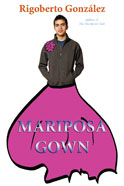
Already released: Rigoberto González’s Mariposa Gown – a sequel to The Mariposa Club –depicts the friendship between three teenage boys who want to make a splash at their high school prom with the titular outfit.

Brazilian writer Jorge Amado‘s The Double Death of Quincas Water-Bray and The Discovery of America by the Turks have received new translations from Gregory Rabassa. To mark Amado’s 100th birthday, Rabassa and writer Rivka Glachen will discuss Amado’s work Sept. 17 at the Queen Sofia Spanish Institute, reports the Shelf Awareness newsletter. The Millions website also wrote about the two new releases.

• Sept. 11: Pulitzer Prize winner Junot Díaz will release a collection of short stories, This is How You Lose Her. Here’s a cool Pinterest board by blogger Poornima Apte that shows the town and other details from the book. (She did the same for Roberto Ampuero’s The Neruda Case and other books.) Díaz has been all over the media: dressing up in Edith Wharton-era clothes for a Vogue fashion spread; discussing his love life in New York magazine; sharing his reading habits with The New York Times; and compiling a playlist to NPR’s alt. Latino website.

Sept. 25: In the novel The Secret Book of Frida Kahlo, Mexican writer F.G. Haghenbeck writes about the life of the iconic Mexican artist.

Sept. 27: Spoken word poet Carlos Andrés Gómez discusses how masculinity is evolving in Man Up: Cracking the Code of Modern Manhood.

Book festivals:

Here’s a look at some upcoming book festivals:

• Sept. 15: Houston Librofest will play host to Gwendolyn Zepeda (right), Javier O. Huerta and Sarah Cortez.

• Sept. 22-23: The National Book Festival in Washington, D.C. will feature Sandra Cisneros, Junot Díaz, Mario Vargas Llosa, Justin Torres and Maria Dueñas. Mexican-born, California-based Rafael Lopez is the festival artist.

Sept. 23: The Brooklyn Book Festival will include Carlos Andrés Gómez, Charles Rice-Gonzalez, Reyna Grande, Esmeralda Santiago, Luis Alberto Urrea, and graphic artists Gilbert & Jaime Hernandez.

• Sept. 28-30: The Baltimore Book Festival will feature Caridad Pineiro and Carmen Ferreiro-Esteban.

Literary Magazines:

• Several Latino-oriented literary magazines are out with new issues. Acentos Review, edited by Bonafide Rojas, focuses on music on its August 2012 edition. The bilingual BorderSenses published its 18th volume. Lorna Dee Cervantes, Rigoberto Gonzales and Andrea J. Serrano are featured in the latest issue of the Mas Tequila Review.

• The fall issue of Zyzzyva magazine, which is devoted to West Coast writers, features works by Dagoberto Gilb and Luis Alberto Urrea.

Librotraficante:

Sept. 21: Librotraficante, which was founded earlier this year to protest the state of Arizona’s ban on ethnic studies, will host a 50 States of Freedom of Speech event in honor of Hispanic Heritage Month, which begins Sept. 15.

Writer’s Workshop

Las Comadres Para Las Americas will host a writer’s workshop Oct. 6 in New York City. Speakers include Sesame Street actress and children’s book writer Sonia Manzano, author of the just released The Revolution of Evelyn Serrano, as well asLyn DiIorio, and Caridad Pineiro.

Other features:

• NPR featured the latest work of graphic comic book artist Jaime Hernandez, creator of the Love and Rockets series.

• The El Paso Times has marked the 40th anniversary of the Rudolfo Anaya novel Bless Me Ultima with essays from Rigoberto González, Denise Chávez and other writers.

• Argentine writers will now receive a pension, according to The New York Times.

Reyna Grande, author of The Distance Between Us, talked to the Zyzzyva website.

• Junot Díaz was among the writers at the Edinburgh World Writer’s Conference who condemned Arizona’s ban on ethnic studies.

3 Comments

Filed under 2012 Books, Events, Fiction, News

Book review: Las Comadres Para Las Americas’ “Count on Me: Tales of Sisterhoods and Fierce Friendships”

Count On Me: Tales of Sisterhoods and Fierce Friendships (Atria) is the perfect gift to give to your best friend.

The book of essays was put together by the non-profit association Las Comadres Para Las Americas and edited by Adriana V. Lopez. In a dozen essays, 11 prominent Latinas – plus Luis Alberto Urrea – talk about the power of female friendship. Some of the friends make extraordinary gestures. Carolina de Robertis, author of Perla, edits a deceased friend’s book. A teacher offers shelter to Reyna Grande, in an excerpt from her memoir The Distance Between Us, after she faces a bad family situation. Lorraine López receives advice from writer Judith Ortiz Cofer to pursue her literary career – leading to such books as The Realm of Hungry Spirits.

But two of the best essays are those that acknowledge that a best friend can often be your worst enemy. In “Anarchy Chicks,” Michelle Herrera Mulligan describes how adolescent friends go weeks without talking to each other, then become best friends again with a single phone call. In “The Miranda Manual,” Sofia Quintero nails all the subtle gestures and actions that can destroy a relationship:

“There were no betrayals or putdowns, no angry emails or shouting matches, breaches of confidences or rehashing of past misdeeds. Neither of us committed a gross act of deliberate hurt against the other. Rather, we engaged in tiny yet relentless acts of thoughtless toward each other. The little digs, constant interruptions and the passive listening typical of mere acquaintances that’s easy to ignore. When the person is usually mindful and considerate best friend, it hurts like hell.”

Most of the essays are excellent. Dr. Ana Nogales’ essay is too general to make an emotional impact, but she describes the health benefits to friendships. But Teresa Rodríguez sums up the power of friendship in her essay about activist Esther Chávez Cano:

You see, a comadre is not necessarily a close friend, but a person whose example is etched in your heart. The one you’d like to emulate, that friend who gave so much of herself and asked for nothing in return.

Source: I received a review copy from the publisher.

Leave a comment

Filed under 2012 Books, Book Reviews, Non-Fiction

Happy Birthday, Américo Parades!

Américo Parades was born Sept. 3, 1915 and died May 5, 1999. The scholar is best known for his 1970 book, With His Pistol in His Hand.

Parades grew up in Brownsville, Texas, and, inspired by the corridos he heard, he wrote poetry and other stories. He taught folklore and creative writing at the University of Texas at Austin, where he wrote his dissertation on Gregorio Cortez.

With His Pistol in His Hand tells the story of Cortez, a ranchhand who kills a Texas sheriff after a case of mistaken identity and then spends his life running from the law. The book was made into the 1982 movie, The Ballad of Gregorio Cortez, starring Edward James Olmos.

Texas singer-songwriter Tish Hinojosa wrote the song, Con Su Pluma en Su Mano (With His Pen in His Hand), in honor of Parades. His name appears on schools in Austin and Brownsville, Texas. He was awarded the Charles Frankel Prize from the National Endowment for the Humanities in 1989.

The University of Texas has a great website devoted to his life and work.

Leave a comment

Filed under Author Profiles

Labor Day literature: The farmworkers movement in print

Americans will celebrate workers this Labor Day weekend. Two of the Latino community’s most prominent figures – César Chávez and Dolores Huerta – led the farmworkers movement in the 1960s, demanding better conditions for the workers who picked grapes in California. The movement not only had an impact on workers’ rights, but on Latino literature as well.

Here’s a look at some books about Chávez and Huerta, a couple of novels that portray the life of farmworkers, and the story of how the movement gave birth to one of the Hispanic community’s most prominent theaters:

For children: Children can learn about the movement in Side by Side: The Story of Dolores Huerta and César Chávez by Monica Brown, Harvesting Hope: The Story of César Chávez by Kathleen Krull and Dolores Huerta: A Hero to Migrant Workers, by Sarah Warren.

For adults: The Words of César Chávez is a book of Chávez’s speeches and writings. It was included in the Library of Congress exhibit, The Books That Shaped America. Delano: The Story of the California Grape Strike, by John Gregory Dunne and Ilan Stavans, is a comprehensive look at the strike, while Cesar Chavez: Autobiography of La Causa by Jacques Levy focuses on Chávez. (A film of Chávez’s life is being made into a movie starring Diego Luna, according to The Los Angeles Times.) The Fight in the Fields by Susan Ferriss and Ricardo Sandoval is the companion to the 1997 PBS documentary of the same title.

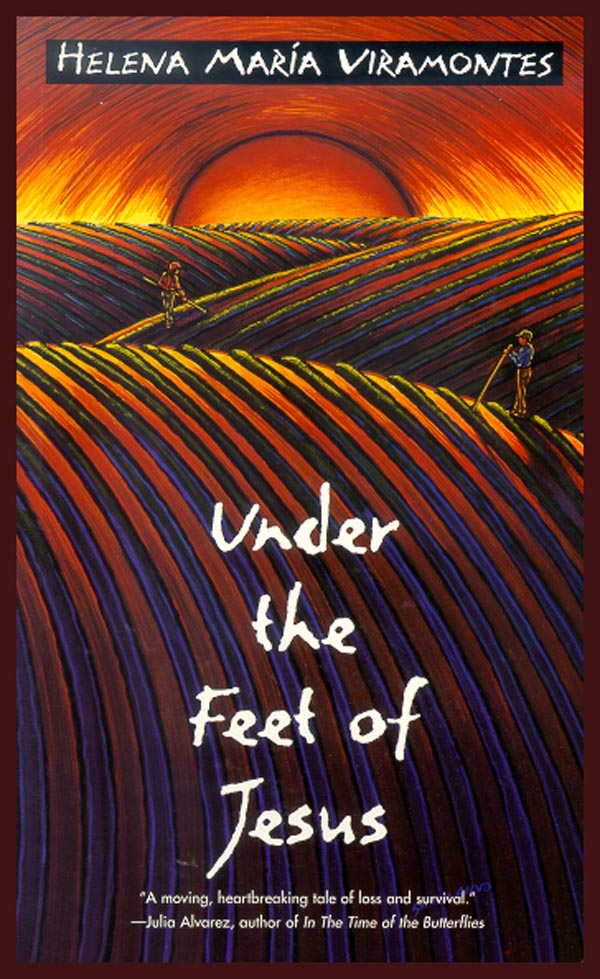
Fiction: Two of Latino literature’s most acclaimed novels focus on the plight of farmworkers. The 2000 young adult novel Esperanza Rising by Pam Muñoz Ryan depicts a teenager working the fields in the 1920s. The 1996 novel Under the Feet of Jesus by Helena Maria Viramontes tells the story of California farmworkers through the eyes of a 13-year-old worker.

Theater: During the Delano Grape Strike, Luis Valdez began presenting plays on flatbed trucks and union halls. He eventually founded El Teatro Campensino, and went on to write the play and the movie Zoot Suit and the movie La Bamba. He recently talked about his theater’s roots to AARP VIVA radio. (The program is in Spanish.)

Leave a comment

Filed under Children's Books, Culture, Features, Fiction, Non-Fiction, Theater, Young Adult Books

Book review: Reyna Grande’s “The Distance Between Us”

Reyna Grande’s memoir The Distance Between Us (Atria) should come with a box of tissues.

Grande grew up in the 1970s in Iguala, Mexico, a small town whose mountain has a mysterious force on its other side that residents call El Otro Lado – the United States.

Grande’s parents left Reyna and her two older siblings behind with their grandparents so they could work at better paying jobs and build a new home in Iguala. But as Grande describes it, the separation took a toll on the family as the children live in squalor.

“… the banks lined with trash and debris floating in the water, the crumbling adobe houses, the shacks made of sticks, the children with worm-pregnant bellies running around with bare feet, the piles of drying horse dung littering the dirt road, the flea-bitten stray dogs lying under the shade of trees, flies hovering above them. But what I saw back then I saw through the eyes of a child – a child who had never been anywhere, a child who was still innocent enough to see past the things later in life she could not. What I saw the were the velvety mountains around us, the clear blue sky, the beautiful jacaranda trees covered in purple flowers, bougainvilleas crawling up fences, their dried magenta petals whirling in the wind. … I continued to think that there was beauty everywhere around us. … But when … I saw mothers and fathers strolling about holding hands with their children, I realized that it didn’t matter what I thought of Iguala. Without my parents here, it was a place of broken beauty.”

At age 10, Grande and her siblings crossed the border illegally and moved to Los Angeles to be with her parents. But life is just as tough there as her mother ignores her and father becomes abusive toward her and her siblings.

But her father also was her best motivator, emphasizing the importance of a good education. Grande earned good grades and became a top musician in her school’s marching band. Federal legislation in 1986 enabled her to become a legal citizen.

A teacher in junior college encouraged her to write – leading Grande to write this incredible book. Told in simple, easy to read – yet descriptive – prose, my heart broke as I read about all that Grande suffered through. The Distance Between Us is an inspirational book for young Latinos or anyone who has faced adversity. Just keep those tissues handy.

More about Reyna Grande:

Reyna Grande is the author of the novels Across a Hundred Mountains and Dancing with Butterflies.

Source: I received a review copy from the publisher.

Leave a comment

Filed under 2012 Books, Book Reviews, Non-Fiction

Happy birthday, Oscar Hijuelos!


(Update: Oscar Hijuelos passed away in October 2013. Here is his obituary from The New York Times.)

Oscar Hijuelos was born August 24, 1951 in New York City. His 1989 book The Mambo Kings Play Songs of Love became the first novel by a Latino author to win the prestigious Pulitzer Prize.

Hijuelos was raised by his Cuban parents in New York City – a childhood reflected in his first novel, 1983’s Our House in the Last World.

His next novel was Mambo Kings. The book, which depicts the lives of two Cuban brothers who pursue their musical dreams in New York City, was made into a 1996 movie staring Antonio Banderas.

Mr. Ives’ Christmas, published in 1996, was a finalist for the Pulitzer Prize. Here’s a great review of the book from NPR’s Ray Suarez. He also wrote 2000’s Empress of the Splendid Season and 2008’s Dark Dude. His most recent book is his 2011 memoir, Thoughts Without Cigarettes.

It’s a great day for Latino writers: Jorge Luis Borges and Paulo Coelho also celebrate birthdays today.

Leave a comment

Filed under Author Profiles, Fiction

Classic book review: Pam Muñoz Ryan’s “Esperanza Rising”

Pam Muñoz Ryan’s 2000 book, Esperanza Rising, is a young adult novel set in the 1920s, but readers of all ages will enjoy reading this story with its themes and issues that resonate today.

Esperanza Ortega is about to celebrate her 13th birthday on her family’s luxurious ranch when her family faces a series of tragic circumstances. As the revolution rages in Mexico, her mother decides they must go to the United States and work the fields. Esperanza quickly learns she must adjust to a new life, which includes living in a cramped two-room home with five other people and working the fields with workers who want to strike for better working conditions.

Muñoz Ryan writes beautifully with great descriptions of the land, but the novel’s greatest strength is its way of introducing relevant social issues – such as racism and immigration – to young people.

For example, Esperanza and her family go out of their way to a Japanese merchant because he treats them well, even stocking up cow’s intestines for menudo.

As her friend Miguel says:

“Americans see us as one big, brown group who are good for only manual labor. At this market, no one stares at us or treats us like outsiders or call us ‘dirty greasers.’ My father says that Mr. Yakota is a very smart businessman. He is getting rich on other people’s bad manners.”

As Esperanza accepts her new life, she also thinks about other people – such as the way workers were treated during a raid by immigration officials.

“Some of these people did not deserve their fate today. How was it that the United States could send people to Mexico who had never even lived there?”

Esperanza Rising won the Pura Belpré Medal – which honors works for youth by Latino authors – and it deserved it. It’s a great book with a strong character that young adults will identify with.

More about Pam Muñoz Ryan:

Pam Muñoz Ryan was inspired to write Esperanza Rising for her grandmother, also name Esperanza Ortega, who came from Mexico to the United States to pick the fields. The California native also has written Riding Freedom, Becoming Naomi León and The Dreamer, as well as numerous picture books.

Source: I checked this book out of the library.

Note: This book is part of the series of classic books by Latina authors. Next up: Esmeralda Santiago’s When I Was Puerto Rican.

Leave a comment

Filed under Classic Books, Fiction, Young Adult Books