She has the cure for what ails you: The curandera in Latino lit

Bless Me Ultima, which The Hispanic Reader reviewed earlier this week, features an enduring figure in the Latino culture – the curandera, or healer. That figure has played a role in some of the great books in Latino literature. In this great post from La Bloga, Ultima author Rudolfo Anaya and children’s author Monica Brown talk about the role of curandera. Here’s a look at some great curanderas:
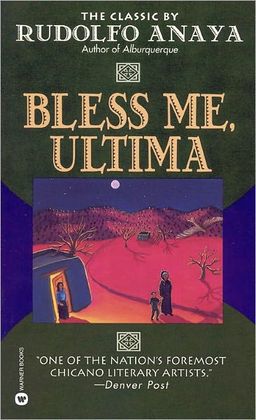
BlessMeUltimaCoverBless Me Ultima – Young Antonio Marez is growing up in rural New Mexico when his family takes in Ultima, an elderly curandera. She helps heal his dying uncle, but townspeople believe she places curses on people. This book by Rudolfo Anaya has become one of Latino lit’s best known and beloved books, and has stirred controversy for its profanity.
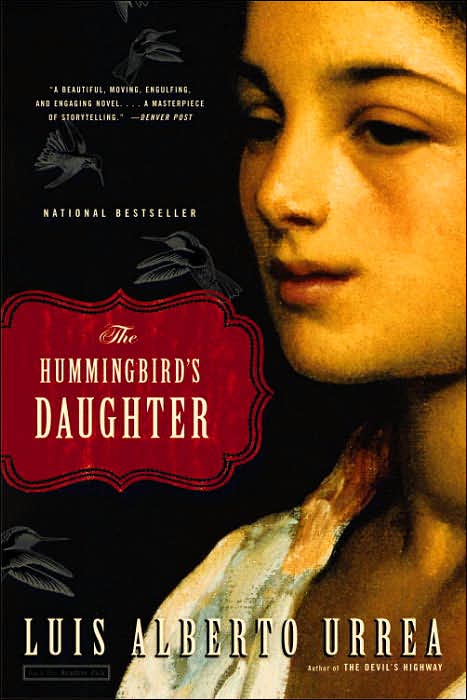
The+Hummingbird's+DaughterThe Hummingbird’s Daughter – In revolutionary Mexico, Teresita Urrea learns healing powers from a villager named Huila. Soon, she attracts the attention of hundreds of villagers, hoping she will cure them. The brilliantly funny book, written by Luis Alberto Urrea, rivals Ultima in the amount of profanity. The sequel, Queen of America, in which Teresita’s celebrity takes her to the United States, is now in paperback.

SoFarFromGodSo Far From God Ana Castillo’s book about a mother and her four daughters in New Mexico features a whole chapter devoted to villager Dona Felicia’s remedies. Dona Felicia goes on to teach the remedies to one of those daughters, Caridad, after she is traumatized after an attack. Caridad ends up becoming a saint to villagers because they believe she has special powers.

Clara_and_the_CuranderaClara and the Curandera – In this bilingual children’s book written by Monica Brown and illustrated by Thelma Muraida, the curandera has a cure for a young girl who is afflicted with a nasty case of the grumps.

Sources: Wikipedia, Challenging Realities: Magic Realism in Contemporary American Women’s Fiction by M. Ruth Noriega Sánchez

3 Comments

Filed under Children's Books, Culture, Features, Fiction

Classic book review: Rudolfo Anaya’s “Bless Me, Ultima”

BlessMeUltimaCoverIt’s easy to see why Rudolfo Anaya’s Bless Me, Ultima has become one of Latino literature’s greatest classics and a well-read book in the classroom. The story of one boy’s struggle to find faith touches readers on a personal and cultural level.

Ultima was first published in 1972 by a small press, then grew in popularity through the decades – and has been the subject of banning at schools due to profanity. The book has been made into a movie that will be released this year.

The book is told through the eyes of 6-year-old Antonio Marez, who lives in rural New Mexico with his family in the 1940s. His mother wants him to become a priest, hoping for a more stable life than his brothers and some of the other villagers. The family invites Ultima, an elderly curandera, to live with them and she makes an instant connection with Antonio.

Antonio begins having visions as his town experiences some tough situations – including a shooting he witnesses. Some townspeople are angry at Ultima, accusing her of being a bruja who places curses on others.

But Ultima also heals people. As he undergoes his First Communion, Antonio begins to question his Catholic faith.

“I had been thinking how Ultima’s medicine had cured my uncle and how he was well and could work again. I had been thinking how the medicine of the doctors and of the priest had failed. In my mind I could not understand how the power of God had failed. But it had.”

The book is a fast read, with a well-paced plot and vivid descriptions about the land. Anaya also balances the dramatic passages with funny scenes at a Christmas pageant and Holy Communion.

Many Latinos – such as novelist Julia Amante, La Casa Azul bookseller Aurora Anaya-Cerda and writer Richard Yañez and others in a series of essays in the El Paso Times – cite this as one of their favorite books because they saw themselves depicted in the novel.

Bless Me, Ultima features some of the most prominent elements of Latino literature and the universal themes such as the importance of family and the toughness of growing up. Little wonder why it’s a classic.

Rudulfo AnayaMore about Rudolfo Anaya:

Anaya wrote Bless Me Ultima while working as a teacher in New Mexico in the 1960s. He went on to write many other books, including Alburquerque and the Sonny Baca mystery series, and he is considered the father of the Chicano literary movement.

Source: I checked this book out of the library.

Note: This is the first in my series of reviews of great Latino novels. Next up: The Aleph by Jorge Luis Borges.  

2 Comments

Filed under Book Reviews, Classic Books, Fiction

Book review: Manuel Gonzales’ “The Miniature Wife and Other Stories”

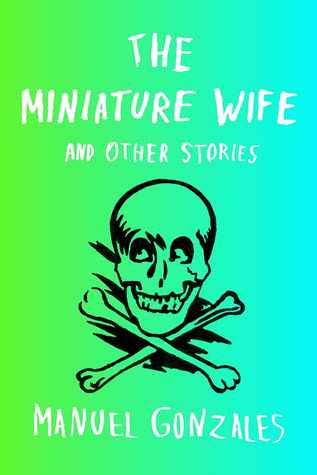
Miniature WifeManuel Gonzales can make a skeptic believe vampires and werewolves are real, even human.

In his book, The Miniature Wife and Other Stories (Riverhead), Gonzales conjures up all sorts of wild scenarios – and he uses those situations as metaphors for larger issues about the world we live in.

The book starts off with two strong stories – “Pilot, Copilot, Writer” – in which the narrator sits on a plane that is stuck in the air for 20 years, and the title story, about a man who shrinks his wife to the size of a coffee cup. Crazy stuff, but they speak about the stagnation of life and the world’s treatment of women.

A few stores – “The Artist’s Voice,” about a composer who speaks with his ears, and “Harold Withy Keith: A Meritorious Life,” about the inventor of a vascular system made out of plants – get so bogged down in technical detail that I felt like I was reading a science textbook.

But the book roars back with great, inventive stories – “All of Me,” about a zombie who crushes on a co-worker; “One-Horned and Wild-Eyed,” about a man whose friend finds a unicorn; and “Wolf,” a graphic but fascinating account about a father who turns into a werewolf.

How good are these stories? I’m not into paranormal books because I can’t take them seriously, but Gonzales makes them believable with clear, matter-of-fact writing and relatable characters who are forced to make heartbreaking decisions.

Take the zombie in “All of Me”:

“I don’t understand how hard it can be to keep our baser selves in check or how much easier it is, ultimately, to go back to the evil we knew and understand, the evil we have lived with for so long that it feels an inherent and important part of ourselves, to go back to this evil and tell ourselves that we had no other choice, that we didn’t opt for this decision, but that really there were never any other options for us to take. I know about choices and about not having choices and how it feels when it seems you have no other choice.”

So you get crazy scenarios mixed in fine writing and profound thoughts about the human condition and the state of the world. Manuel Gonzales can make you believe anything.

Manuel_GonzalesMore about Manuel Gonzales:

Texas-based Gonzales runs the Austin Bat Cave creative writing center for children and bakes pies on the side. His work has been published in The Believer, Esquire and the Dear Teen Me website. Read “The Animal House” from The Miniature Wife on the FiveChapters.com website.

Source: I received a review copy from the publisher.

Leave a comment

Filed under 2013 Books, Book Reviews, Fiction

In the news: Books from Valdes, Gonzales kick off the new year

Here’s what’s happening in the first month of 2013 (Note: I updated this article to include the Blanco and Valdes links.):

Feminist and the CowboyJust released: In The Feminist and the Cowboy: An Unlikely Love Story, Alisa Valdes recounts her relationship with a man with opposite views. In an intriguing article in Salon, Valdes said the relationship was abusive. In The Tragedy of Fidel Castro, Portuguese writer Joao Cerqueira imagines how Jesus Christ would settle the battle between Cuban dictator Fidel Castro and U.S. President John F. Kennedy.

Ways of Going HomeJan. 8: Chilean Alejandro Zambra depicts life in the Pinochet-era Chile in the novel Ways of Going Home.

Jan. 10: The Miniature Wife and Other Stories is a quirky collection of 18 short stories from Tejano Manuel Gonzales, whose work has appeared in The Believer and Esquire.

JunotDiazEvents:

Junot Díaz (right) and Francisco Goldman will speak at “A Benefit Evening of Latin American Storytelling,” Feb. 5 in New York City, with proceeds going to Radio Ambulante. Radio Ambulante’s executive producer, Daniel Alarcon, will moderate.

Literary magazines:

• The literary magazine BorderSenses is taking submissions until March 31 for its next issue. The publication will take short stories, poetry and book reviews in English and Spanish, as well as artwork. Write to editor@bordersenses.com.

Other features:

• Cuban-American poet Richard Blanco will read a poem at President Obama’s inauguration later this month, becoming the first Latino to hold that honor, NPR reports. He was also profiled in The New York Times.

• In a much-discussed article, The New York Times wrote about the lack of Latino-oriented books for children. In a follow-up article, Aurora Anaya-Cerda of La Casa Azul Bookstore in East Harlem, N.Y., gave her reading recommendations. Many small publishers felt they were not represented in the article, and Publishers Weekly featured those presses, including Lee and Low Books and Arte Público.

•  Arte Público books, which recently moved into new headquarters, was recently profiled in The Houston Chronicle.

ABC News/Univision marked the 50th anniversary of the Latin American Boom in literature.

• Book editor Marcela Landres delivered her list of the best in Latino literature for 2012.

Junot Díaz talked with NBC Latino about how he found his literary voice. He also discussed his love for libraries, politics and the greatness of Star Wars on the TV show Moyers & Company.

Joy Castro talked to the Lincoln Journal-Star about the prospect of her 2012 book, Hell or High Water, being optioned by actress Zoe Saldana for a possible movie or TV show.

Sandra Cisneros’ The House on Mango Street and Paulo Coelho’s The Alchemist are among the 30 selections for World Book Night, in which volunteers will give out books April 23. Sign up to be giver by Jan. 23.

• Cisneros remembered Mexican singer Chavela Vargas, who passed away last year, in The New York Times.

• Chilean Roberto Ampuero, author of The Neruda Case and his country’s ambassador to Mexico, was profiled in The Wall Street Journal.

• The film version of Rudolfo Anaya’s Bless Me Ultima is coming to the big screen, reports the Huffington Post.

3 Comments

Filed under 2013 Books, Fiction, News

Happy new year to 2013 – and new challenges!

Hey, happy new year! After a two-month hiatus, I’m ready to get back into blogging.

I have a couple of goals for the upcoming year. First, I plan to spotlight each country with strong Latin American populations on its independence day – similar to the author profiles I do for writers’ birthdays. I expect July and September to be busy months.

I also plan to do a similar reading challenge as I did last year, which covered classic books from Latinas – except that I haven’t published all of the reviews from that challenge yet. I will wrap up that project in January and February.

This year, I will read classic Latino novels. Here they are:

Some of these books (Ultima, Mango Street, Oscar Wao) will be rereads for me. A few of them will be challenging reads. And some books (The Alchemist, Mambo Kings), I have been meaning to read and never gotten around to it.

I chose the books based on popularity and timelessness. These books are in the high school canon (Ultima, Mango Street), Pulitzer Prize winners (Oscar Wao, Mambo Kings), Nobel Prize winners (One Hundred Years of Solitude, Blindness), beloved best-sellers (The Alchemist) and pop culture favorites (Spider Woman).

Of course, there are some missing books. Where’s the most famous Latino novel of them all, Don Quixote? At 900 pages, I decided it would too challenging to read such a thick tome while trying to keep up with current books. Where’s Roberto Bolaño, Julio Cortázar, Juan Rulfo and Miguel Angel Asturias? Hey, I can’t read everything. The list is subjective.

Of course, the heart of the blog is spotlighting new books by Latino authors. I’m looking forward to The Miniature Wife and Other Stories by Manuel Gonzales, The Five Acts of Diego León by Alex Espinoza, Bird of Paradise: How I Became Latina by Raquel Cepeda and King of Cuba by Cristina Gárcia. Unfortunately, many of the books won’t come out until March. So expect to see many of the classic books reviewed in January and February.

It’s easy to get burned out from blogging, especially with a full-time job and the other chores of life (which is why I took a long break). So my other resolution is chill out a little more. If I can only produce one post a week or I need to take some time off, I’m going to do it.

To those who read my blog and comment or retweet my tweets, thanks for your time and comments. I look forward to the new year.

4 Comments

Filed under Features

At the theater: Taking Sandra Cisneros’ words from print to the stage

Vanessa DeSilvio (center), with S-Ankh Rasa (left) and Armando Monsivias (right), plays Our Lady of Guadalupe in "Milagritos." Photo courtesy Cara Mia Theatre.

Vanessa DeSilvio (center), with S-Ankh Rasa (left) and Armando Monsivias (right), plays Our Lady of Guadalupe in “Milagritos.” Photo courtesy Cara Mia Theatre.

(Note: The Hispanic Reader is still on hiatus, but I wrote this article for the Theater Jones website, which appeared in a slightly different version. Enjoy the holidays and I’ll see you in January.)

“I had to stay up to read it,” she says. “I immediately connected with it.”

So much so that Barrera adapted it into the play, Milagritos / little miracles, which the Cara Mía Theatre Co. stages until Dec. 15 at the Latino Cultural Center in Dallas. Cisneros attended the opening night production.

Cara Mía is presenting the play, which director David Lozano bills it as a “holiday classic,” for the second time. The title comes from the short story, “Little Miracles, Kept Promises,” in which pilgrims come to a shrine to give thanks to Our Lady of Guadalupe—an iconic Mexican symbol who appeared before peasant Juan Diego on Dec. 12, 1531.

“The characters’ range (of prayers) reflects the diversity of life’s experiences, from problems with pimples to more serious health issues, to lost love and loves that need to get lost,” Barrera says.

Barrera was especially drawn to the lead character, Chayo.

“I found not only myself in her but the Chicanos I was running into,” Barrera says, adding that Cisneros based the characters on folks she knew. “That’s why her works are so relevant. We read them and it’s like, ‘Yes, I know this story, I know this woman.’ ”

Lozano agrees.

“Everyone knows these characters from our community,” Lozano says. “I think that’s what grabs people. The more you read it, the more you start peeling away some transformational pieces that become pure poetry.”

The story illuminates the people beyond the Latino neighborhood and into the Catholic community, he says.

“You talk to Catholic people and they have their miracle story,” he says. “Their prayers are heard.”

Eliberto Gonzalez, the president and co-founder of Cara Mía, knew Cisneros and got permission for Cara Mía to present the play when it first ran in 1998. Adapting the book is always full of surprises.

“Cisneros’ works aren’t dramatic narratives, and are more sophisticated than readers realize,” Lozano says. “Most folks will get more of the sense of the everyday quality of these characters and what they live through, while astute readers will recognize the symbolism and poetic quality.”

“Her writing is very complex at times and so when you start really repeating and working through these lyrical imagery, the symbolism of such profound events, you begin [to see] a larger universe that is very real to us,” he says.

Barrera, a Southern Methodist University graduate and a San Antonio-based playwright, director, actress, artist and community arts educator, says Cisneros has seen the play before, and she was supportive.

“I think she really felt the stories and listening to them in that way,” Barrera says. “[She enjoyed] her own work in a way she hadn’t before.”

If you live in the Dallas area, you can catch Milagritos  at 8 p.m., Thursdays-Saturdays, Dec. 1-15 at the Latino Cultural Center, 2600 Live Oak Street, Dallas. Tickets are $12-$30. Go to caramiatheatre.org for details.

Leave a comment

Filed under Features, Theater

In the news: Books from Bolaño, Saramago; new literary magazine

(I’m still taking a break, but check out my story I wrote about a Dallas theater company’s adaption of Sandra Cisneros’ Women Hollering Creek for the Theater Jones website.)

The Hispanic Reader will be taking a long hiatus, so here’s the new releases, events and holiday books to keep you entertained for the rest of the year. See you in 2013.

New releases:

Nov. 13Woes of the True Policeman is the last book Roberto Bolaño wrote before his death. The novel follows a Chilean professor as he undergoes several personal crises.

Nov. 30 – In the children’s book The Poet Upstairs by Judith Ortiz Cofer, a young girl makes friends with a writer.

• Dec. 4 – Raised From the Ground, by the late Nobel Prize winner José Saramago, is a reissue of a book – published for the first time in English – that depicts the lives of Portuguese peasants.

Dec. 11 – The children’s book The Beautiful Lady: Our Lady of Guadalupe by Pat Mora features the iconic Mexican figure.

Awards:

• The National Book Awards announced its nominations, with Junot Díaz’s  This is How You Lose Her shortlisted in the fiction category and Domingo Martinez’s The Boy Kings of Texas making the non-fiction category. Martinez spoke to NPR about how he learned about his nomination. Winners will be announced Nov. 14.

Literary magazines:

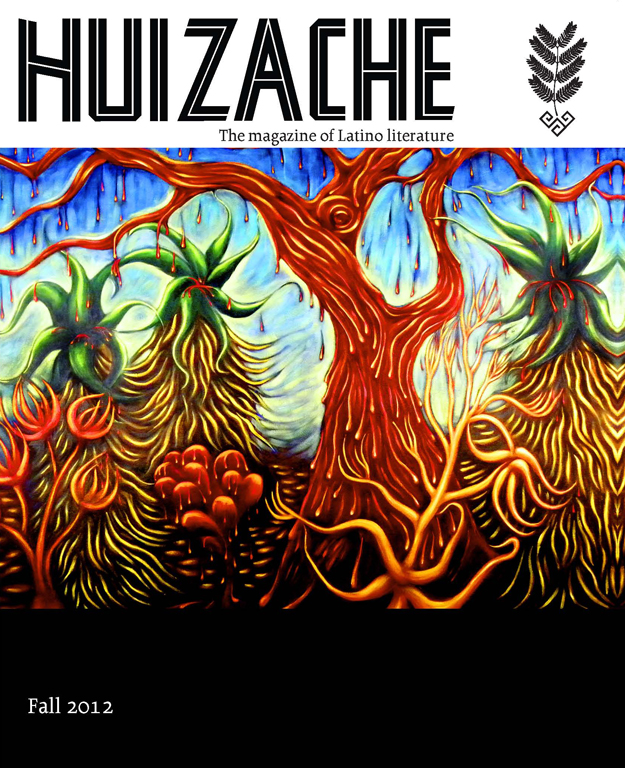
• The second issue of the literary magazine Huizache, produced by CentroVictoria – the Center for Mexican American Literature and Culture at the University of Houston-Victoria, is out. Contributors include Lorna Dee Cervantes, Rigoberto Gonzalez, Luis J. Rodriguez, Michele Serros and Gary Soto.

Book Festivals:

• The Miami Book Fair Festival International takes place Nov. 16-18. Featured authors include Malin Alegria, Roberto Ampuero, Joy Castro, Sandra Cisneros, Jeanne Cordova, Junot Díaz, Christina Diaz Gonzalez, Reyna Grande and Justin Torres.

Other News:

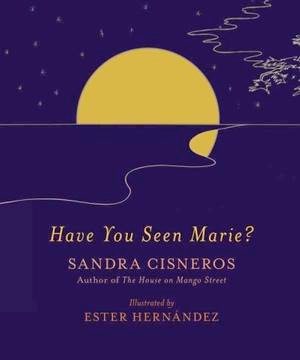
Sandra Cisneros discussed her newest book, Have You Seen Marie?, to NBC Latino, CNN and the LA Review of Books.

Junot Díaz talked to Wired magazine about the science-fiction book he’s writing, Monstro, and to LA Review of Books about his current book, This Is How You Lose Her.

Luis Alberto Urrea’s Into the Beautiful North has been named a 2013 Big Read selection by the National Endowment for the Arts.

• Pulitzer Prize winner Oscar Hijuelos will be featured in Symphony Space’s Artful Dining fundraiser Nov. 12 in New York City. Sonia Manzano will lead the discussion.

• Mexico City celebrated the 50th anniversary of Gabriel Gárcia Márquez’s move to that city by putting up posters honoring him, according to an article by Héctor Tobar in the Los Angeles Times. Tobar also wrote about a MacArthur Grant-winning Orange County barbershop that features a bookstore and is teaming up with Chapman University to promote Latino literature.

• Ploughshares magazine talked to Aurora Anaya-Cerda, owner of the La Casa Azul Bookstore in East Harlem, N.Y., that is devoted to Latino literature.

• Voices of New York wrote up about the Las Comadres Para Las Americas writer’s conference last month, with some interesting insights about Latinos in publishing.

• Want a blog that features the poetry of Pablo Neruda with pictures of cats? Here you go.

Also:

• Celebrating birthdays in November: The late Carlos Fuentes, right, and Nobel Prize winner José Saramago.

• Celebrating birthdays in December: Sandra Cisneros, Nobel Prize winning poet Juan Ramon Jimenez and Manuel Puig.

• Looking for gifts for the holidays? Here some some Christmas books for children and adults.

2 Comments

Filed under 2012 Books, Awards, Children's Books, Events, Fiction, News

Book review: Juan Pablo Villalobos’ “Down the Rabbit Hole”

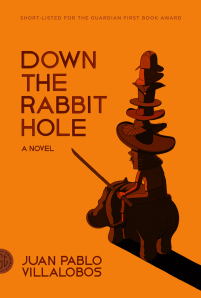
Down the Rabbit Hole (Farrar, Straus and Giroux) by Juan Pablo Villalobos seems like a crazy book, almost a fantasy – but it’s a serious book about one boy’s harsh reality.

Tochtli, the narrator, is a seven-year-old boy who lives in a palace in Mexico filled with ammunition. When he says he wants a pygmy hippopotamus, his family takes him on a safari in Liberia to get him one.

Sounds surreal, right? But Tochtli is the son of a drug gang leader.

The concept works because of Villalobos’ strong voice. Thanks to Villalobos and the book’s translator, Rosalind Harvey, Tochtli sounds both innocent and precocious. Take this passage in which he describes his preference for guillotines compared to the violent images seen on TV:

“The French put the heads in a basket after cutting them off. I saw it in a film. They put a basket just under the king’s head in a guillotine. Then the French let the blade fall and the king’s head is cut off and lands in the basket. That’s why I like the French so much. They’re so refined.”

He’s funny, too, as in this passage on the subject of food:

“I don’t like pozole much, mainly because it’s got cooked lettuce in it, which is ridiculous. Lettuce is for salads and sandwiches. Also you make pozole with pigs’ heads: once I peeped into the pot and there were teeth and ears floating around in the broth. Sordid. The things I like are enchiladas, quesadillas, and tacos al pastor. I like tacos al pastor without the pineapple, because pineapple on a taco is ridiculous, too. I hardly put any chili on my enchiladas, because otherwise my belly hurts a lot.”

One thing that bothered me: the frequent use of the F word (the one used to deride homosexuals). It was unnecessary and jarring to read.

Still, the book is an fast, fascinating read. At just 70 pages, Down the Rabbit Hole creates a unique  experience that makes you laugh and cringe.

More about Juan Pablo Villalobos: Juan Pablo Villalobos was born in Mexico and currently lives in Spain. Rabbit Hole was shortlisted for The Guardian First Book Award. His work, “Dispatches from Ambassador to Brazil, Earth,” was published by Granta.

Source: I received a review copy from the publisher.

2 Comments

Filed under 2012 Books, Book Reviews, Fiction

At the theater: Kristoffer Diaz’s “The Elaborate Entrance of Chad Deity”

“At the Theater” is a feature in which I check out plays by Latino writers. The article is intended to be a look at the author’s work and not a review of the theatrical production – so no comments about acting, lighting or staging. I caught the Dallas Theater Center production of “Chad Deity.”

Kristoffer Diaz’s The Elaborate Entrance of Chad Deity explores the issue of race through an offbeat forum – the wrestling ring.

Macedonia “Mace” Guerra is a Puerto Rican who grew up in the Bronx and now works as a wrestler – but he’s always there to lose. The star is Chad Deity, an Apollo Creed-type character, but without the talent.

Vigneshwar Padura, a young, enthusiastic Indian-American, aspires to get into the ring. So the wrestling association’s chief, Everett K. Olson, agrees to let him participate – albeit as a Muslim fundamentalist, complete with a long bushy beard and ammunition on his chest. His opponent is Mace – now billed as Che Chávez Castro.

Deity deals with serious issues in a humorous format. Mace speaks of the frustrations of stereotypes, but he’s more weary than preachy. The show – much of it Mace’s monologue – flows smoothly with good audience interaction.

The play was a finalist for the Pulitzer Prize in Drama in 2010. It was first produced in Chicago and has been presented in Berkeley, Calif., Boston, New York City, Washington, D.C., and is currently playing in Dallas and Colorado Springs until Nov. 11. This is a play that draws as much reflection as it does laughs. If you get the chance, go see it.

More about Kristoffer Diaz:

Kristoffer Diaz also has written the plays Welcome to Arroyo’s, Guernica, and #therevolution. He won the 2011 New York Times Outstanding Playwright Award.


Leave a comment

Filed under Theater

Classic book review: Esmeralda Santiago’s “When I Was Puerto Rican”

Esmeralda Santiago’s When I Was Puerto Rican (De Capo Press) is a beautiful book – one whose beauty often comes from deep pain.

The book is a memoir of Santiago’s early childhood in Puerto Rico, where the country dwellers are called jibaros. She grew up poor, describing her home as “a rectangle of rippled metal sheets on stilts hovering in the middle of a circle of red dirt.”

Through the years, young Esmeralda – called Negi by her parents because she was so dark as a baby – moves from the country to the city and, eventually, to Brooklyn – as her unmarried parents separate and reunite repeatedly. Negi takes care of her seven younger siblings as she experiences school, impending womanhood and, in one amusing chapter, the food program from the United States.

The book’s strength comes from Santiago’s style of writing – so simple that the book is a fast read, yet so elegant in its gorgeous and inventive descriptions.

Take this passage when Santiago’s family flies to New York City:

“Several times I bumped into Mami as I walked backwards, unwilling to face the metal bird that would whisk us to our new life … Neither one of us could have known what lay ahead. For her it began as an adventure and turned out to have more twists and turns than she expected or knew how to handle. For me, the person I was becoming when we left was erased and another one was created. The Puerto Rican jibara who longed for the green quiet of a tropical afternoon was to become a hybrid who would never forgive the uprooting.”

Although Santiago never feels sorry for herself, my heart broke for her all that she had to through in her young life. Fortunately, the great ending makes you grateful you went on the tough journey with her.

More about Esmeralda Santiago:

When I Was Puerto Rican was Santiago’s first book. She wrote two sequels, Almost a Woman and The Turkish Lover, as well as several novels, including America’s Dream and Conquistadora.

Source: I purchased this book at Barnes and Noble.

Note: This review is part of a series of classic books by Latinas. (I’m running a bit behind.) Next up: Chicana Falsa by Michelle Serros.

Leave a comment

Filed under Book Reviews, Classic Books, Non-Fiction