Book review: Cristina García’s “King of Cuba”

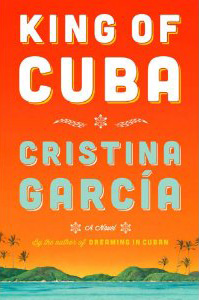
king-of-cuba-coverCristina García’s King of Cuba (Scribner) is a wickedly awesome book.

The novel features two aging Cubans who went to college together and took two separate paths in life. El Comandante, based on Fidel Castro, became the country’s dictator, and Goyo Herrera ended up living in Florida and yearns to assassinate the man – or at least see “that son of a bitch in Havana to die first.”

After all, like many Cubans, Goyo has been through a lot.

“His brother had died in the Bay of Pigs, his father had shot himself from grief, his first love had hung herself over that tyrant. Goyo’s hatred was incontestable, lavish beyond measure.”

While Goyo also has to deal with an unruly son and health problems, El Comandante has to face political prisoners and other assassination attempts.

The book, at 235 pages, is easy to zip through because of Garcia’s great voice, which captures the bitterness of Goyo, the arrogance of El Comandante and the agony of old age. The book features generous amounts of profanity and sex and descriptions of their bathroom problems and penises. (Yes, you read that right.)

Aside from the foibles of the two main characters, the novel is a serious book – featuring anecdotes by everyday Cubans describing their struggles to make a living. King of Cuba makes a good companion to the recently released The Death of Fidel Pérez by Elizabeth Huergo, which also showed the effects of life under Castro’s regime.

Despite all he and his fellow Cubans have been through, Goyo still loves his homeland, as displayed in this beautifully written passage:

“ … the skies were embossed with the same moon and stars. The older he got, the more vividly his memories of Cuba returned – its dialects, its minerals, its underground caves, its guajiros, its hummingbirds, its fish, its chaos, its peanut vendors, its Chinese lotteries, its cacophonies, its myths, its terrors. Maybe this was what happened when a man approached death; senility and longing conspired to overtake reality. Perhaps Cuba had become nothing but an imaginary place, unrelated to any truth.”

King of Cuba is a book that will leave you thinking and laughing at the same time.

CristinaGarciaMore about Cristina García:

García, who grew up in New York City, also is the author of Dreaming in Cuban and The Lady Matador’s Hotel, as well as children’s books and poetry. She lives in Texas and New Mexico.

Source: I received a review copy from the publisher.

1 Comment

Filed under 2013 Books, Book Reviews, Fiction

Happy Independence Day, Paraguay!

On May 14, 1811, Paraguay declared its independence from Spain. The South American country’s turbulent history has made it a great topic for its writers.

AugustoRoaBastosAugusto Roa Bastos (1917-2005) won the Miguel de Cervantes Prize, given to Spanish-language writers, for his body of work about life in his country. I, the Supreme depicts the life of dictator José Gaspar Rodríguez de Francia, while Son of Man covers the Chaco War. Bastos lived in exile from Paraguay for most of life. Read more about him in The Culture Trip and BBC News.

pla_josefina• Poet Josefina Pla (1903-1999) was born and raised in Spain, but she lived in Paraguay for much of her adult life. Another poet, Hérib Campos Cervera (1905-1953), became the leader of the “Generacion del 40” literary movement along with Bastos, Pla and others. The Spanish-language website Los Poetas features the works of Pla and Cervera.

The_News_from_Paraguay_by_Lily_Tuck_t250• And check out American Lily Tuck’s novel The News from Paraguay, which shows the relationship between dictator Francisco Solano López and his Irish mistress in the 18oos. The book won the National Book Award in 2004. Tuck received such a great response from the country that she established the PEN/Edward and Lily Tuck Award for Paraguayan Literature to honor the country’s writers.

Sources: CIA Factbook, Encyclopedia Britannica, Amazon.com, The Culture Trip, BBC News, Wikipedia, Los-Poetas.com, National Book Foundation, NYCityWoman.com

Leave a comment

Filed under Fiction, Nation profiles, Poetry

Short and sweet: A look at Latino short story collections

May is Short Story Month. When it comes to this particular form of storytelling, Latino authors have produced some memorable and diverse collections.

AlephBorgesJorge Luis Borges: Considered a master of the short story, Borges’ works in the 1949 collection The Aleph will take you from the ancient times to the 20th century, from Argentina to the Middle East, from wars to personal revenge. One thing is certain – the ending will surprise you.

WomanHollering+Creek.wix_mpSandra Cisneros: In her spectacular 1992 collection Women Hollering Creek: And Other Stories, Cisneros writes about everyday people’s struggles – a 11-year-old having a bad day at school; a woman in love with Emiliano Zapata; a group of people who pray to the Virgin de Guadalupe (a story that inspired a play) and, in the title story, a woman who compares her troubled life to La Llorona, the weeping woman.

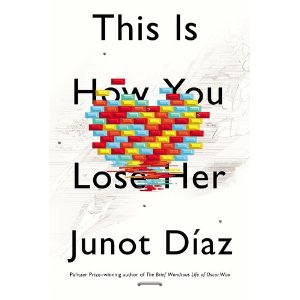
ThisIsHowYouLoseHerJunot Díaz: Yunior de las Casas, an immigrant from the Dominican Republic, is the main character in Díaz’s two collections, 1997’s Drown and 2012’s This Is How You Lose Her (and Díaz’s novel, The Brief Wondrous Life of Oscar Wao). You may not always like Yunior’s bad language and misogynistic attitude, but you can’t stop reading about his ordeals with love and life.

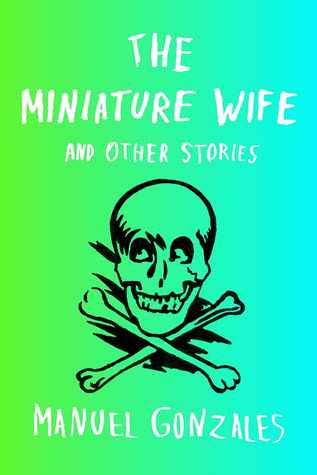
Miniature WifeDagoberto Gilb and Manuel Gonzales: These two Tejanos have produced two wildly different collections of short stories in the last two years. Gilb’s 2011 Before the End, After the Beginning shows the gritty lives of men facing tough decisions. Gonzales’ 2013 The Miniature Wife and Other Stories features men dealing with unicorns, werewolves and zombies.

Leave a comment

Filed under Classic Books, Features, Fiction

Classic book review: Junot Díaz’s “The Brief Wondrous Life of Oscar Wao”

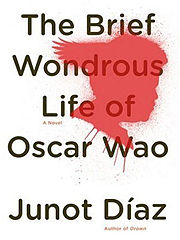
OscarWaoI first read Junot Díaz’s The Brief Wondrous Life of Oscar Wao (Riverhead) when it came out in 2007 for a selfish reason – I was excited the main character, Oscar de León, had the same last name as me.

I reread it again this year and rediscovered the awesomeness of the book.

Oscar Wao became an instant classic when it was released. It won the 2008 National Book Critics Circle Award and Pulitzer Prize and propelled Díaz into literary stardom.

Most of the book is narrated by smart-ass Yunior de las Casas, who also appears in Díaz’s other books, Drown and This Is How You Lose Her. As with those books, Oscar Wao’s big strength is Díaz’s voice, in which the characters tell their stories as though they are talking to you over a beer.

The focus is on Oscar, the youngest son of a single mother who has immigrated from the Dominican Republic to New Jersey. He loves science fiction and hasn’t kissed a girl. His nerdiness may stem a family curse – or fukú – his family has been under since Oscar’s grandfather offended Rafael Trujillo, their homeland’s dictator.

“It seemed to Oscar that from the moment (his classmate) Maritza dumped him – Shazam! – his life started going down the tubes. Over the next couple of years he grew fatter and fatter. Early adolescence hit him especially hard, scrambling his face into nothing you could call cute, splotching his skin with zits, making him self-conscious; and his interest – in Genres! – which nobody has said boo about before, suddenly became synonymous with being a loser with a capital L. Couldn’t make friends for the life of him, too dorky, too shy, and (if the kids from his neighborhood are to be believed) too weird.”

Yunior goes on to describe Oscar’s further exploits as they room together in college. Just when Oscar may have found love, the curse comes back to haunt him.

The book put me through many emotions. I laughed out loud many times, especially during the opening pages. I nearly cried as I read the portion narrated by Lola, Oscar’s sister, as she recounts the struggles with her verbally abusive mother, Beli – although this passage, when she runs away from home, made me laugh:

“I kept waiting to run into my family posting up flyers of me on the boardwalk … but the closest I came to any of that was someone had put up for a cat they lost. That’s white people for you. They lost a cat and it’s an all-points bulletin, but we Dominicans, we lost a daughter and we might not even cancel our appointment at the salon.”

I also was fascinated by the sections about the lives of Beli and her parents in their native country – stuff I didn’t learn, as the book says, during “your mandatory two seconds of Dominican history.” Díaz weaves in other bits of Dominican history seamlessly – a minor character always seems to have a connection with someone in the Trujillo regime.

Some caveats: Some readers may be offended by the vulgar language and frequent use of the “N” word. Non-Spanish speakers may need a dictionary to keep up with the Spanish phrases. And many readers, such as myself, may not get the references to The Lord of the Rings (a series I’ve successfully avoided all my life).

But don’t let those things deter you from reading the book. Even if you don’t get the Gollum reference or a Spanish phrase, Oscar Wao is a brilliant book that successfully combines history, tragedy and humor.

JunotDiazMore about Junot Díaz:

Díaz was recently awarded a MacArthur Foundation Genius Grant. He is active in Freedom University, a college for undocumented immigrants.

Source: I check this book out of the library.

This book is part of my series of classic Latino novels. Up next: Carlos Fuentes’ The Death of Artemio Cruz.

1 Comment

Filed under Book Reviews, Classic Books, Fiction

In the news: New releases by Arana, Rodriguez, García

May brings out plenty of books, ranging from historical biographies and fiction to new novels from Linda Rodriguez and Cristina García.

Bolivar-1003Already out: Bolivar: American Liberator by Marie Arana, author of American Chica: Two Worlds, One Childhood, explores the life of one of South America’s most iconic figures. Arana talked about the book to NPR and The Huffington Post.

• In the novel The Ingenious Gentleman and Poet Federico Garcia Lorca Ascends to Hell, Carlos Rojas imagines the Spanish poet in hell.

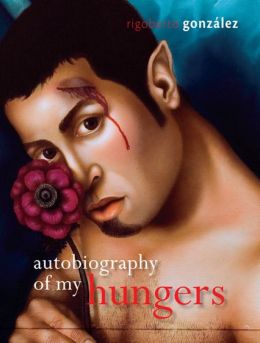
AutobiographyofmyHungersMay 6: Rigoberto González explores his life in a series of essays in Autobiography of My Hungers.

May 7: Pura Belpré Award-winning author Duncan Tonatiuh uses immigration as an allegory for his children’s picture book, Pancho Rabbit and the Coyote: A Migrant’s Tale. The book was featured in US News and World Report.

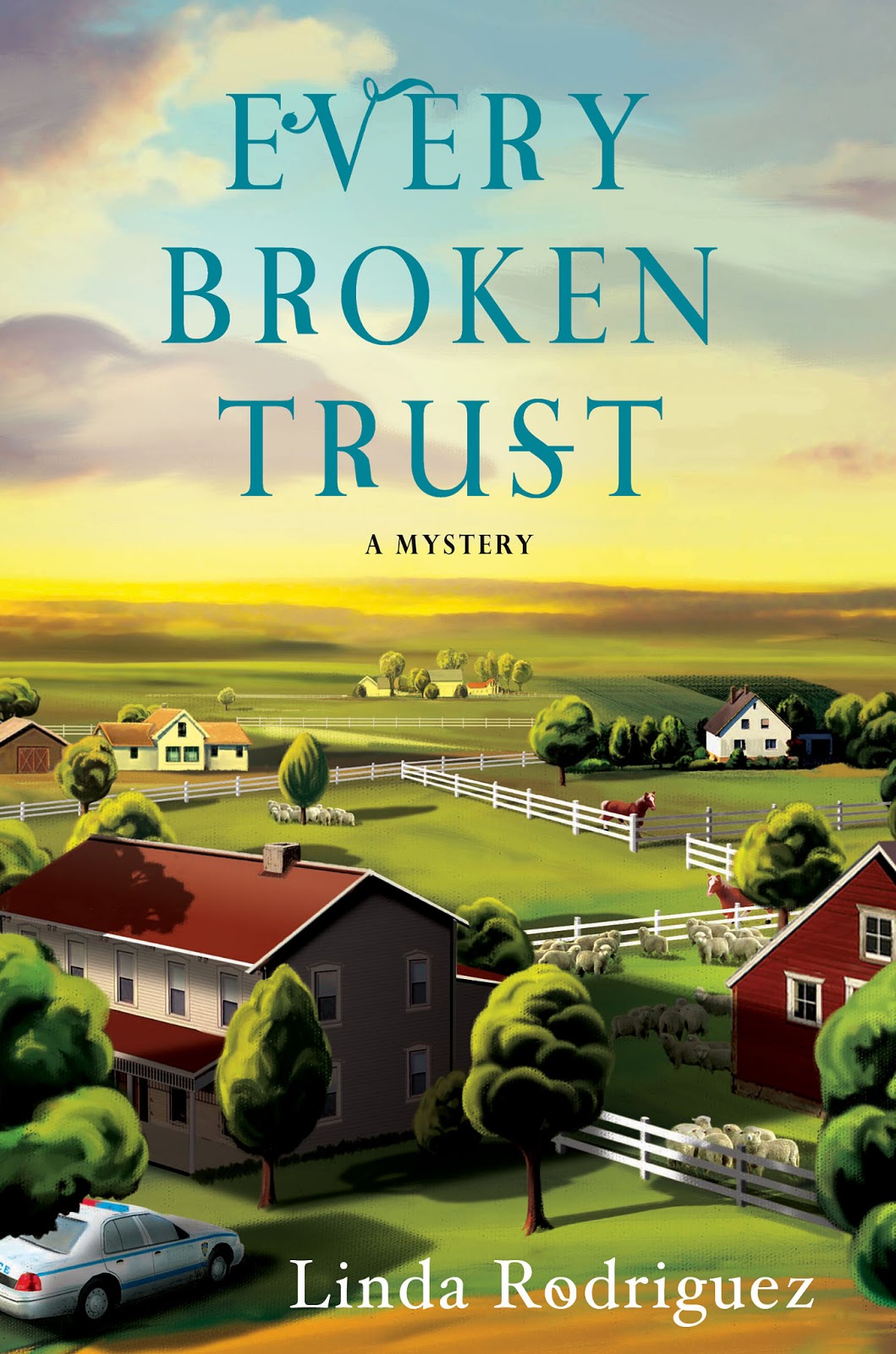
every+broken+trust• Linda Rodriguez is back with detective Skeet Bannion, who is solving a series of murders and her own personal problems in Every Broken Trust.

• In Amy Tintera’s young adult novel Reboot, Texas teenagers are forced to be slaves. Here’s the trailer, which was posted on Entertainment Weekly, and an interview in Latina magazine.

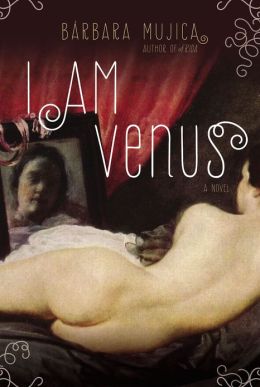
IAmVenusMay 16: Spanish painter Diego Velázquez becomes intrigued with one of his subjects in Barbara Mujica‘s novel I Am Venus.

May 21: In the Cristina García novel King of Cuba, a Cuban exile living in Florida is determined to get rid of a Fidel Castro-like figure.

MidnightinMexicoMay 30: Journalist Alfredo Corchado describes life in his native country in Midnight in Mexico: A Reporter’s Journey Through a Country’s Descent into Darkness.

June 4: Three pre-teens go back to the time of the Mayans in the Matt de la Pena book Infinity Ring: Curse of the Ancients, part of the Infinity Ring series.

Awards:

The nominees for the 2013 International Latino Book Awards have been announced. Nominated authors include Joy Castro, Leila Cobo, Reyna Grande, Linda Rodriguez and Gwendolyn Zepeda, as well as the anthology Count On Me: Tales of Sisterhood and Fierce Friendships.

Junot Díazs This Is How You Lose Her is up for the American Library Association’s Andrew Carnegie Medal for Excellence in Fiction. The winner will be announced in June.

Events:

• The Spanish language LeaLA book fair will take place May 17-20, according to the Los Angeles Times.

Other features:

The remains of Chilean poet Pablo Neruda are being examined to see if he was poisoned, according to The Daily Beast.

Rosemary Catacalos has been named the first Latina Texas State Poet Laureate, according to the San Antonio Express-News. Gwendolyn Zepeda was named the city of Houston’s first poet laureate.

Isabel Allende, author of the newly released Maya’s Notebook, shared her reading habits with The New York Times and the five books that most influenced her to The Daily Beast.

Alex Espinoza, author of The Five Acts of Diego León, talked to NPR about how Tomas Rivera’s book … And The Earth Did Not Devour Him influenced him. He also discussed his book to the Los Angeles Times.

• Also in the Times, Dagoberto Gilb talked to Héctor Tobar about his literary magazine, Huizache, and the Latino Lit scene.

Manuel Ramos discussed his novel, Desperado: A Mile High Noir, to the Denver newspaper Westword.

Alisa Valdes is releasing a chapter a day of her book Puta.

• Eight Latino poets shared their favorite poems to NBC Latino.

• NPR covered the popularity of Venezuelan novels and visited the Ciudad Juarez club that inspired Benjamin Alire Saenz’s award-winning book, Everything Begins and Ends at the Kentucky Club.

The New Yorker published a short story by the late Roberto Bolaño.

• Here’s a few interesting podcasts: Junot Díaz and Francisco Goldman at a Radio Ambulante podcast in February and a few events from the Lorca in New York festivities.

• California Poet Laureate Juan Felipe Herrera gave his playlist to alt.latino website on NPR.

• Got an ereader? Now you can download Sandra Cisneros’ books on there, according to Publishers Weekly.

Leave a comment

Filed under 2013 Books, Awards, Children's Books, Fiction, News, Non-Fiction, Poetry, Young Adult Books

Book review: Gilbert Hernandez’s “Marble Season” and “Julio’s Day”

MarbleSeasonGilbert Hernandez, the legendary graphic artist who created the Love and Rockets comics with his brothers, has released two books with very different topics – Marble Season (Drawn and Quarterly), an affectionate look at childhood in the 1960s, and Julio’s Day (Fantagraphics Books), a gritty take of one man’s 100 years of life.

Marble Season focuses on Huey, his two brothers and neighborhood pals. The book is a series of vignettes of their day-to-day lives – attempting to play marbles, collecting bubble gum cards and dealing with an obnoxious new kid in the neighborhood. Huey’s biggest problem in life? He’s not allowed to read comic books after his brother got a bad report card and his parents put them away.

Marble Season is retro – there’s a helpful guide in the back that explains the pop culture references. It’s a charming book that children and adults will read with amusement.

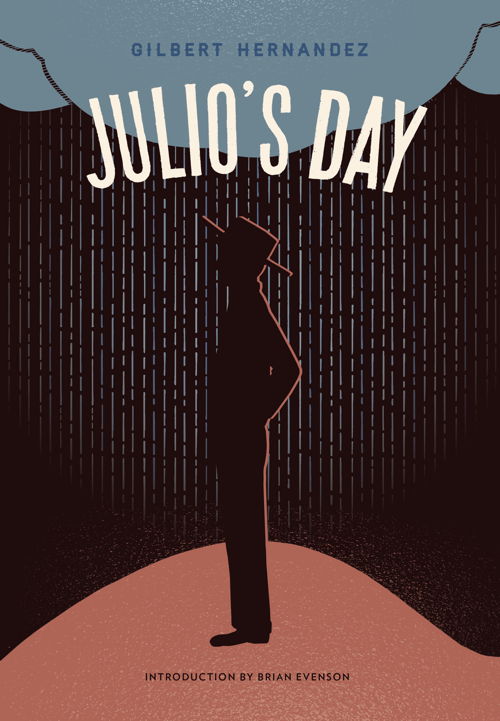
JuliosDayBy contrast, Julio’s Day is a far more ambitious and serious. The book opens with the birth of its main character, Julio Reyes, and follows him and several generations of his family through the century as they experience love, go to war and suffer some terrible illnesses. The books ends with Julio’s final breath. (Note: the book has some graphic images of illness, death and sex. You can read an excerpt of the book on this NPR webpage.)

Hernandez’s ability to capture life in just a few short frames would be the kind of books that would appeal to reluctant readers, especially teenage boys. I was especially intrigued with his drawings. With just a few strokes, he’s able to create a menacing sky or depict the ravages of illness.

Both books are entertaining, but your enjoyment may depend on your mood. Marble Season will make you smile. Julio’s Day will make you think.

gilbert_hernandezMore about Gilbert Hernandez:

Hernandez is known for writing and drawing the Love and Rockets graphic comics with his brothers Jaime and Mario. He has been nominated twice for Best Writer/Artist for the Will Eisner Comic Industry Awards. He grew up in Oxnard, Calif.

Source: I received a review copy of Marble Season. I purchased Julio’s Day.

2 Comments

Filed under 2013 Books, Graphic novels

Book review: Isabel Allende’s “Maya’s Notebook”

MayasNotebookNineteen-year-old Maya Vidal is in danger. She is sent to live to what seems like the end of the earth – Chilóe, a small island off the coast of Chile. And it’s there that she begins to find herself – a journey depicted in Isabel Allende’s newest novel Maya’s Notebook (Harper).

Maya, originally from Berkeley, Calif., has had a tough time since her beloved grandfather died from cancer. She turns to drugs and rapidly descends into a life of homelessness and crime – tangled in a web that involves the FBI, Interpol and a Las Vegas gang.

Her grandmother sends Maya to her native Chile to live in a town (population: 2,000) that seems disconnected from the world – the villagers can’t rent DVDs or video games and only see movies once a week at the school. Maya learns to like the villagers and adapts to their customs, such as the women’s gathering in a ruca on the nights of a full moon.

Maya’s Notebook requires some patience. The first 100 pages spend more time describing life in Chilóe and her family when I wanted to know how Maya got into such a mess. But my patience paid off, because when Maya finally revealed the secrets of her past, the story was a fast, fascinating read.

The book also draws it strength from Allende’s elegant writing, with inventive descriptions and metaphors, such as this:

“… Addiction is an astute and patient beast, with infinite resources, always lying in wait, whose strongest argument is persuading you to tell yourself you’re not really not an addict.”

Another great passage describes Manuel, a family friend who faces his own demons and secrets:

“On this blessed island nothing feeds my bad memories, but I make to an effort to write them down in this notebook so I won’t have to go through what happens to Manuel. He keeps his memories buried in a cave, and if he’s not careful, they attack him at night like rabid dogs.”

Beautiful writing – although, at times, I wondered if a 19-year-old brat would sound that sophisticated.

But those passages prove Allende’s excellence. She can make Maya a sympathetic character and take readers from the dangerous streets of Las Vegas to the humble town of Chilóe. Maya’s Notebook is an absorbing book that shows how one woman overcomes a life of terror.

AllendeMore about Isabel Allende:

Allende, who was born in Peru and raised in Chile, is best known for her 1982 novel The House of the Spirits. She also has written 11 novels, including 1985’s Eva Luna and 1999’s Daugher of Fortune, and four memoirs, including 1995’s Paula. She currently lives in the United States.

Source: I received a review copy from the publisher.
Leave a comment

Filed under 2013 Books, Book Reviews, Fiction

Book review: Rudolfo Anaya’s “The Old Man’s Love Story”

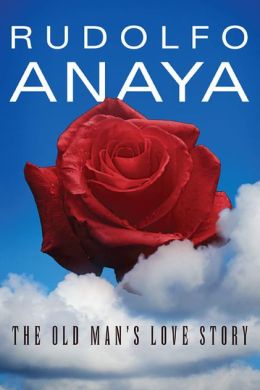
OldMan'sLoveStoryRudolfo Anaya’s newest novel, The Old Man’s Love Story (The University of Oklahoma Press) is a book that will touch your heart because it feels so real – after all, it’s based on Anaya’s own experiences as a widower.

The book begins as the old man (no name is given) sees his wife dying after an illness. The grief is profound as he thinks about her everywhere he goes – including the grocery store.

“A flickering memory suddenly burned bright. His wife’s lovely breasts. Other memories came piling on him. Whenever he passed won the cereal aisle, tears filled his eyes. He would never again buy her favorite cereal.”

He tries to be active – going to a water aerobics class, eating dinner with friends and family, and even dating a high school friend who lost her husband. But the memories keep coming up as he deals with growing older. (“Old people know bathrooms are dangerous places.”) He thinks about their travels and the rooms she carved in his heart. At one point he tries to conjure up her spirit by placing her pictures in a circle.

“He couldn’t say the magic word and have her appear. He would never again hold her in his arms.”

The book, at 170 pages, is easy to read thanks to Anaya’s simple prose. I thought the book would be depressing, but it’s not. Anaya writes in a matter-of-fact tone that doesn’t sound self-pitying and many readers will be able to relate to his struggles.

I have one minor complaint about the book. The old man seems to idealize his wife – which is natural, but I would like to know if they had any arguments or is she did anything that annoyed him.

Still, The Old Man’s Love Story is a beautiful love story. Your heart aches for the old man, as he tries to live each day without his soulmate. You may wish you had a love like they did.

Rudulfo AnayaMore about Rudolfo Anaya:

The New Mexico-based Anaya is best known for his 1972 classic, Bless Me Ultima, which was released as a movie earlier this year. He has written numerous children’s books and novels, including the Sonny Baca detective series and Randy Lopez Goes Home.

Source: I received a review copy from the publisher.

Another excellent book about a man dealing with the death of his wife, although in different circumstances, is Francisco Goldman’s 2011 novel Say Her Name.

Leave a comment

Filed under 2013 Books, Book Reviews, Fiction

¿Tienes hambre? You will be after you read these books about food

This spring, Gustavo Arellano’s Taco USA comes out in paperback and Pat Mora’s Delicious Hullabaloo/Pachanga deliciosa celebrates its 15th year in publication. So it seems like a good time to look at books in which food is the main ingredient.

Children’s books:

delicious-hullabaloo• Pat Mora’s Delicious Hullabaloo/Pachanga deliciosa is a bilingual poem in which a passel of creatures cook up a meal. Another one of her books, Yum! MmMm! Que Rico!: America’s Sproutings, features foods that originated in the Americas.

ArrozConLeche• In a series of books, Salvadoran Jorge Argueta covers a range of foods in poetry form – Arroz con leche/Rice Pudding: Un poema para cocinar/A Cooking Poem, Guacamole: A Cooking Poem/Un poema para cocinar, Tamilitos: Un poema para cocinar/A Cooking Poem, Sopa de frijoles/Bean Soup and La Fiesta De Las Tortillas/The Fiesta Of The Tortillas.

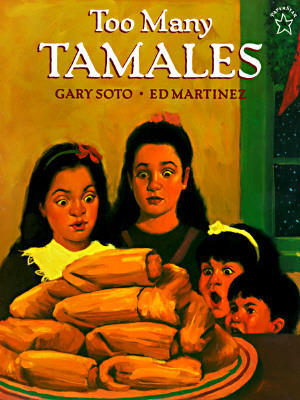
TooManyTamales• Tamales are featured in Too Many Tamales, by Gary Soto, in which a young girl faces trouble while cooking the food; Growing Up with Tamales, by Gwendolyn Zepeda, in which two sisters learn how to make the Christmas classic; and Tia’s Tamales by Ana Baca, in which a girl makes the food with her grandmother. Baca also wrote Chiles for Benito/Chiles para Benito and Benito’s Sopaipillas/Las sopaipillas de Benito.

magdastortillas1• In Becky Chavarria-Chairez’s Magda’s Tortillas/Las Tortillas de Magda, a 7-year-old attempts to make the food for her family. The round bread also plays a magical role in Joe Hayes’ The Day It Snowed Tortillas/El Dia Que Nevaron Tortillas, which is part of a collection of bilingual folktales.

Like_Water_for_Chocolate_(Book_Cover)Books for adults:

• In the Laura Esquivel novel Like Water for Chocolate, the characters feel what the main character Tita is feeling when she makes her elaborate concoctions – and those emotions are all over the place as her heart is breaking. The 1992 movie was hugely popular.

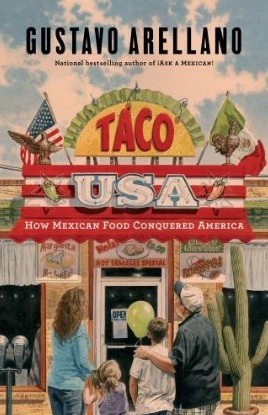
tacousa• In exuberant prose, Gustavo Arellano reveals the origins of Taco Bell, tortillas, margaritas and other culinary delights in Taco USA: How Mexican Food Conquered America. Just one question – where’s the section on menudo?

Leave a comment

Filed under Children's Books, Culture, Features, Fiction, Non-Fiction

Happy birthday, Gary Soto!

gary_sotoGary Soto was born April 12, 1952 in Fresno, Calif. The California-based novelist and poet is best known for his gritty portrayal of the lives of Mexican-Americans.

Soto grew up working the fields and living in the barrio, and he used those experiences in his poems – including his first book of poetry, 1977’s The Elements of San Joaquin and his collection New and Selected Poems, which was a finalist for the 1995 National Book Award.

His young adult books depict teenagers in tough situations. The  1996 novel Jesse takes place during the Vietnam War and the 2006 novel Buried Onions shows life in a gang.

He also has a more whimsical side, as seen in his picture books, chapter books, short stories and poetry for children.

Read his poems on the Academy of American Poets and Poetry Foundation websites. You also can find out more about him by visiting the Gary Soto Literary Museum in Fresno, Calif.

Sources: Gary Soto website, Wikipedia, Amazon.com, Poetry Foundation

Leave a comment

Filed under Author Profiles, Fiction, Poetry, Young Adult Books