Category Archives: 2013 Books

In the news: April showers books from Coelho, Anaya and Allende

April is the month notorious for rain. Fortunately, there are plenty of books to keep you entertained:

RitaMoreno:AMemoirAlready out: In Rita Moreno: A Memoir, the Emmy, Grammy, Oscar and Tony-winning actress looks back on her life. Rigoberto González explores his influences on his writing in Red-Inked Retablos. The late Cuban poet Severo Sarduy’s novel Firefly examines the effects of surgery on two transvestites.

FidelPerezIn Elizabeth Huergo’s The Death of Fidel Pérez, townspeople in Cuba believe dictator Fidel Castro – not their  neighbor – has died.

April 2: Paulo Coehlo, author of The Alchemist and Aleph, explores mysterious documents in his new book Manuscript Found in Accra. The Guardian profiled the Brazilian author.
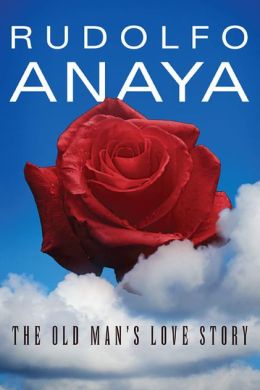
OldMan'sLoveStoryApril 19: Rudolfo Anaya writes about a widower coping with grief in The Old Man’s Love Story. Peruvian author Santiago Roncagliolo releases Hi, This is Conchita, a series of stories ranging from the sexy to the serious.

April 23: In Maya’s Notebook by Isabel Allende, a teenager returns to her home in Chile to cope with her past.
kentuckyclubAwards:

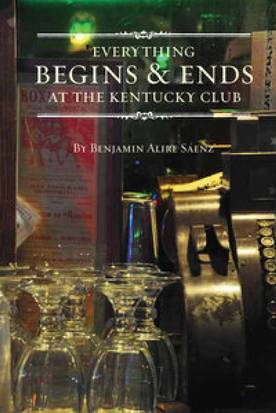
• After sweeping numerous awards for Dante and Aristotle Discover the Secrets of the Universe, Benjamin Alire Sáenz won the PEN/Faulkner Award for his book of short stories, Everything Begins and Ends at the Kentucky Club. His publishers at Cinco Puntos Press talked about the book to The Washington Post.

• Saenz, poets Richard Blanco and Eduardo Corral and academic Ramón H. Rivera-Servera are among the Latinos nominated for prizes at the 25th Annual Lambda Literary Awards, which goes to books about the LGBT experience. The winners will be announced in June.

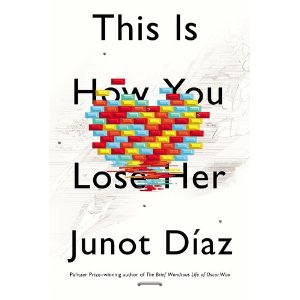
The Guardian reports that Junot Díaz won the Sunday Times EFG Private Bank award for his short story “Miss Lora,” which appeared in his book, This is How You Lose Her. Díaz also appeared on The Colbert Report last week, promoting Freedom University, a college for undocumented immigrants.

• The Westchester Fiction Award, which honors literature for young adults, nominated Saenz’s Dante and Aristotle and Guadalupe Garcia McCall’s Summer of the Mariposas.

Events:

Now-June 9: The Amherst, Mass.-based The Eric Carle Museum of Picture Book Art is presenting the exhibit “Latino Folk Tales,” about children’s literature aimed at young Hispanics, according to the Amherst Gazette. The exhibit will later show in University Center, Mich.; Phoenix; and Marshall, Texas.

April 5-July 21: A three-month celebration in New York City will honor of Spanish playwright Federico Garcia Lorca. His book about his experiences living in the city, Poet in New York, will be reissued.

April 6-7: Latino Literacy Now will play host to the 14th Annual Chicago Latino Book & Family Festival in Cicero, Ill.

April 18-21: Raquel Cepeda, author of Bird of Paradise: How I Became Latina; Domingo Martinez, author of The Boy Kings of Texas; and children’s writers Pat Mora and Duncan Tonatiuh will be among the writers at the Arkansas Literary Festival in Little Rock.

April 19-21: The Border Book Festival in New Mexico explores the Camino Real de La Tierra Adentro.

April 20-21: The Los Angeles Times Festival of Books features Luis Alfaro, Gustavo Arellano, Alex Espinoza, Manuel Gonzales, Reyna Grande, Luis J. Rodriguez, Héctor Tobar and Luis Alberto Urrea.

April 30: Día de los niños, El día de los libros/Children’s Day, Book Day
– created by children’s author Pat Mora – celebrates its 17th anniversary this year. Find out about activities going on in your area.

Features:

The Los Angeles Times wrote about the making of the movie version of Rudolfo Anaya’s Bless Me Ultima, which got help from an heiress of the Wal-Mart fortune.

• Tony Díaz, leader of the Librotraficantes movement that brought banned books to Arizona, is now fighting a similar attempt in his home state of Texas, where legislators have introduced a bill in which ethnic studies courses would not count toward college graduation, according to the Texas Observer. The Los Angeles Times has noted an increase in interest in ethnic studies since the ban in Arizona took place.

CBS Morning News featured Cuban-American poet Richard Blanco, who presented the poem at President Obama’s inauguration earlier this year.

Publishing Perspectives profiled Dolores Redondo, a Basque writer who specializes in mysteries.

Also this month:

• April is National Poetry Month. Read about some great Latino poets.

• The Pulitzer Prizes will be announced April 15. Find out about Latino writers who have won the prestigious American award for journalism and literary arts.

• Celebrating birthdays this month: Nobel Prize winners Gabriela Mistral, José Echegaray and Vicente Aleixandre, as well as the late Chilean novelist Roberto Bolaño.

Leave a comment

Filed under 2013 Books, Awards, Events, News

Book review: Meg Medina’s “Yaqui Delgado Wants to Kick Your Ass”

YaquiDelgadoYaqui Delgado Wants to Kick Your Ass (Candlewick) has one of the best titles of the year so far. And the young adult novel by Meg Medina boasts a story as compelling as its title.

Piddy Sanchez is a half-Cuban, half-Dominican teenager living in Queens who has started attending a new high school. One day, she is told that Yaqui Delgado, a classmate she doesn’t know, is after her. As another student tells her:

“‘You’re stuck-up for somebody who just showed up out of nowhere. Oh! And she wants to know who the hell you think you are, shaking your ass the way you do.’ … Interesting, I’ve only has an ass for about six months, and now it seems to have a mind of its own.”

Piddy is on the lookout for Yaqui. And her fear leads her to skip classes and neglect her studies. To add to her stress, she becomes involved with a boy from a troubled family, and she starts questioning her mother about the whereabouts of her father, whom she’s never met.

Delgado is a fast-paced, easy to read novel that accurately conveys the fear of bullying and the angst of being an adolescent, that awful time in life when nothing you do is right.

Take this scene where Piddy is hanging out with her mother’s best friend:

“I don’t say anything else as the sputtering radio fills the room. Lila wouldn’t understand what it’s like to be hated. Everyone loves her; everyone wants to talk to her at a party. … I don’t know that secret charm – at least not at (school), where I’ve become a loser just like that.”

While YouTube is mentioned, I would have liked to have seen the presence of more cyberbullying since it’s so rampant today – although I understand that the characters come from low-income families whose parents don’t own computers or smartphones.

But that’s a minor complaint. Overall, Yaqui Delgado is a excellent novel for teens, who will relate to the main character and her troubles. The book kicks ass.

Meg_MedinaMore about Meg Medina:

Virginia-based Medina is the author of the 2012 young adult novel The Girl Who Could Silence the Wind and the 2011 picture book Tía Isa Wants a Car, which won the Ezra Jack Keats New Writer Award.

Source: I received a review copy from the publisher.

2 Comments

Filed under 2013 Books, Book Reviews, Fiction, Young Adult Books

Meet children’s author Margarita Engle, author of “The Lightning Dreamer”

Margarita_Engle.2Margarita Engle has tapped into her Cuban-American heritage to create award-winning children’s books about the history of the island.

Her latest book, The Lightning Dreamer, Cuba’s Greatest Abolitionist, is out March 19. The story depicts the life of poet and abolitionist Gertrudis Gómez de Avellaneda in free verse.

In 2009, Engle was the first Latino/a to win the Newbery Honor Award for The Surrender Tree, about a nurse who helps those while war rages in Cuba in 1896. That book also won the Pura Belpré Prize, which honors children’s books that depict the Latino experience.

She also won the Pura Belpré Prize in 2008 for The Poet Slave of Cuba: A Biography of Juan Francisco Manzano

She also has won three Américas Awards (for the 2012 Hurricane Dancers, The Surrender Tree and The Poet Slave of Cuba) and the Jane Addams Children’s Book Award (for The Surrender Tree).

Summer Birds: The Butterflies of Maria Merian was selected as a Kirkus Best Children’s Book.

Her other novels include The Firefly Letters, Tropical Secrets and The Wild Book.

The California-based Engle also has written two books – When You Wander and Mountain Dog – inspired by her work with search and rescue dogs.

LightningDreamerQ: Tell me about your book, The Lightning Dreamer.  What inspired you to write about Gertrudis Gómez de Avellaneda?

A: My interest in Avellaneda is two-fold. First, as one of Latin America’s earliest and boldest abolitionist writers, she was far ahead of her time. Her interracial romance novel, Sab, was published eleven years before Uncle Tom’s Cabin. Not only did Sab make an impassioned appeal for emancipation, it surpassed that narrow goal by showing the need for complete equality, with interracial marriage portrayed as a normal aspect of Cuba’s culturally mixed society. In addition, Avellaneda was one of the most celebrated feminist writers of the nineteenth century. Her poetry, prose, and plays were devoted to a lifelong struggle against the archaic custom of arranged marriage, which she regarded as the marketing of teenage girls. In fact, Sab is thought to be inspired by real people Avellaneda met at the age of 15, when she was sent away to a country estate “to rest,” after rejecting an arranged marriage that would have been profitable for her family.

TulaLike so many other early abolitionists and feminists, Avellaneda (right) has been forgotten by history. She is no longer well known outside of her native country of Cuba, and Spain, where she lived much of her adult life. I wanted to help bring her back from obscurity. In particular, I felt excited about depicting her life in accessible free verse, hoping that young readers might be inspired by her independent way of thinking. She believed in the Golden Rule. She used stories and poetry as a way to make an emotional plea for complete equality, and completely voluntary marriage. She was brave enough to do this a time when most writers restricted interracial love stories to lurid tales of wealthy men with forbidden mistresses.

Personally, for me, the most impressive aspect of Avellaneda’s life is the way she overcame obstacles while she was still very young. Her mother regarded reading and writing as inappropriate for girls, so she had to write in secret, then burn her stories and poems.

Q: Many of your children’s books are about Cuban history. Why did you choose that particular subject to write about?  How do you research the subjects?

A: My mother is Cuban and my father is American. I was born and raised in Los Angeles, but during long childhood visits to the island, I developed a deep bond with the extended family, and with tropical nature, as well as an interest in Cuba’s complex history. I loved listening to stories my grandmother and great-grandmother told about their own childhoods. Listening made me wonder, and wondering makes me want to write. The research process is slow and painstaking. I read everything I can find about a subject, both in English and Spanish. I utilize bibliographies, working my way farther and farther back in time, hoping to discover diaries or other first person accounts. Since many of those primary sources are not yet digitized, I rely on interlibrary loan as a way of obtaining antique volumes. Once the research is complete, I begin selecting those aspects that seem most important to me. Since most of my books are novels in free verse, I have to omit many facts and figures. All the names and dates of history won’t fit into a poem. My goal is to offer young readers a friendly, welcoming page filled with thoughts and feelings that have some universal resonance, in any time, and every place.

Q: What made you want to become a writer? Were there any Latino writers who influenced you?

A: As a child, I was such an avid reader that writing just seemed natural.  While I was very young, I wrote poetry, and even when I drew a picture, there were always a few mysterious words scribbled in crayon, like the start of a story.

When I was little, my mother recited José Martí’s Versos Sencillos, and later, on my own, I discovered that I loved reading poets as diverse as Rubén Darío, Antonio Machado and Jorge Luis Borges. I found it strange that so few women were represented in Latino literature. Emily Dickinson had to fill the gap where Latina poets were missing from library shelves in the U.S.  Eventually, I discovered Gabriela Mistral, and Dulce María Loynáz.

As a graduate student at U.C. Riverside, I had the privilege of taking a creative writing seminar from Tomás Rivera. He was a great Mexican-American poet and novelist, the first Latino Chancellor of a U.C. campus, and a wonderful educator. He taught me to write from the heart, without worrying about publication. So that’s what I do. I choose subjects that inspire me, instead of ones that are popular. He also taught me that writing takes practice, so that’s what I continue to do. I write at my own speed, as if time does not exist.

4 Comments

Filed under 2013 Books, Author Q&A, Children's Books

Book review: Alex Espinoza’s “The Five Acts of Diego León”

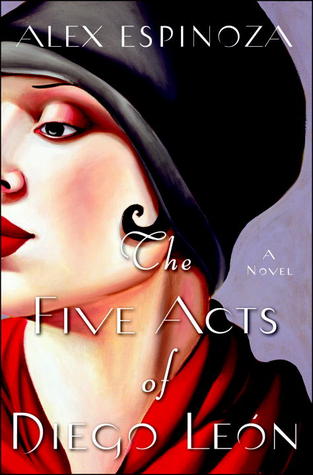
Diego LeonHollywood is made of illusions. But real life can be the greatest illusion of all. And that’s the premise of Alex Espinoza’s The Five Acts of Diego León (Random House).

León begins with Diego as a child, when his father is gone from their small village to fight in the Mexican Revolutionary Ward. Diego eventually moves to a larger town to live with his wealthier maternal grandparents. Now an adult, he would have a well-off, if dull, life if he stayed there. But Diego – who found joy in performing folk dances and theater in his youth – yearns for something more.

While the war rages on in Mexico, Diego moves to Hollywood. And, of course, nothing is what it seems. Diego has to struggle to find work as the Great Depression hits, and he begins to struggle with who he is, both personally – when he has to betray some friendships – and romantically – when he falls in love with someone unexpectedly.

Little wonder he feels most comfortable on the movie set.

 “Diego wanted to stay there, in that magnificent studio lot where French cancan dancers walked alongside nurses, where police officers mingled with criminals, where barons in fancy top hats and tuxedos shared cigarettes with homeless men in rags. It was all absurb and funny and dizzying. And yet he felt at home there, among the costumes and extravagance, among the chaos and commotion. This was where he wanted to be, where he needed to be.”

Espinoza writes in simple language, with a fast-moving plot and frequent dialogue, so the book is easy to zip through. He smoothly weaves in historical details with the plot, and the book never feels like a textbook.

But Diego still seems a mystery to the readers – I enjoyed the book, but I never seemed to make an emotional connection with him – and maybe to himself. A twist at the end didn’t hit me as much I thought it would, but it may surprise others.

Deigo León shows how Hollywood and humans are such a mystery.

AlexEspinozaMore about Alex Espinoza:

Espinoza’s first novel was the 2007 Still Water Saints. He was born in Tijerina, Mexico, grew up near Los Angeles and now teaches creative writing and literature at California State University, Fresno.

Source: I received a review copy from the publisher.

Leave a comment

Filed under 2013 Books, Book Reviews, Fiction

Book review: Daniel Hernandez’s “They Call Me a Hero: A Memoir of My Youth”

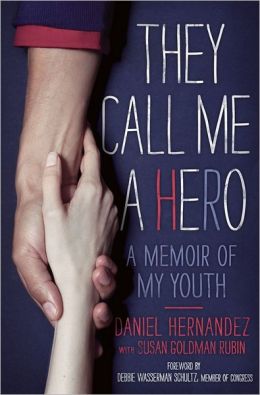
TheyCallMeAHeroDaniel Hernandez Jr. makes an outstanding role model for young Hispanics, LGBT youth and all youth in general – even though he doesn’t want to be.

His memoir is called They Call Me a Hero: A Memoir of My Youth (Simon & Schuster) because of the response he received for his actions at a 2011 event in which a gunman began shooting at U.S. Rep. Gabrielle Giffords and others at a public event in Tucson, Ariz.

Six people died and Giffords was shot in the head. Giffords was saved thanks to the help of Hernandez, a 21-year-old intern at her office, who drew on his first aid studies he learned in high school to help control her bleeding.

Hernandez was besieged with interviews and awards. He later was lauded at the 2011 State of the Union address and threw the ceremonial first pitch at the Major League Baseball All-Star Game later that year.

But Hernandez thought he would have done what anyone else would have done.

“I didn’t expect to be a poster boy for all the groups I happen to represent – Hispanics and people in the LGBT community. I never imagined that I would become a role model; this concept seemed foreign to me, because I was so used to not getting any attention. … As I told a reporter, whether I’d acted as I had during the shooting because I’m Latino or I’m gay or that I happened to be there on January 8 didn’t really matter. I’m not a model Latino or a model member of the LGBT community. The best way I knew to be a role model was by focusing on being the best Daniel Hernandez I could be.”

The book, co-authored by Susan Goldman Rubin, is a quick read and the first part of the book, which describes the shooting and aftermath, is riveting. The book, written in a conversational tone, then delves into Hernandez’s childhood and how he became politically active.

But keep in mind that the book was written for middle school students and older. I had to remind myself of this when the text seemed too simple or there was more telling than showing. The book could have used more anecdotes to tell the story better.

I also felt the book didn’t say enough about Hernandez’s life as a gay man. Hernandez also doesn’t mention Arizona’s anti-immigrant policies and ban on ethnic studies – but, again, this is a book for teenagers.

Still, this book could inspire youth to become more active their community. Hernandez’s work ethic is relentless and his passion of community service is tremendous. He drafted and helped pass a bill that gave college students time off from class to vote, managed an election for an Arizona state representative and was appointed to serve to the City of Tucson commission on LGBT issues – all before he could drink alcohol legally.

And if a young person isn’t inspired to volunteer for their community, this book could help them take pride in just being themselves. As Hernandez says:

“I was always different from most kids, and I was okay with it. I wasn’t very concerned with how others perceived me. I just wanted to be myself.”

Daniel HernandezMore about Daniel Hernandez:

Hernandez, who graduated from the University of Arizona in 2012, was elected to serve on the Sunnyside School Board. He also serves as a motivational speaker.

Source: I purchased this book through Amazon.com.

Leave a comment

Filed under 2013 Books, Book Reviews, Non-Fiction, Young Adult Books

Book review: Raquel Cepeda’s “Bird of Paradise: How I Became Latina”

BirdofParadiseRaquel Cepeda wasn’t sure of her cultural identity. Even her friends and family weren’t sure.

“Papi said I wanted to be Black because I love hip-hop, and a low-class Dominican because I like graffiti and b-boys. The kids … said I wanted to be white because I played tennis … Casimiro said I needed to recognize and embrace my natives indios and africanos in order to strengthen my spiritual guide … Caridad told me I had a vibe of a Black and white gringa. And Blackie said I could be from anywhere. But I like being Dominican, sort of, especially one born in Harlem who likes to wear socks in the winter.”

Her search for her personal and culture identity is the subject of her memoir Bird of Paradise: How I Became Latina (Atria). Readers may be inspired to investigate their own heritage after reading her book.

Cepeda divides the book into two parts, beginning with her personal life. Her parents split up early and Cepeda moved between her relatives – in the Dominican Republic and New York City – throughout her life.

Unfortunately, she was frequently abused by her father and neglected by her mother. Cepeda uses a conversational tone, good description and dialogue to keep the story moving, but these sections are intense and hard to read at times. (Some readers may be turned off by the explicit language.)

Cepeda found solace in the hip-hop world, becoming a music journalist. But when she has her own family and her father almost dies, she yearns to learn more about her heritage and persuades her parents to take DNA tests. She finds her father’s family can be traced to Africa and her mother’s family to Europe. Cepeda delves into Dominican Republic history, noting that many of its residents (and Latinos in general) can claim to be several races.

She quotes Ken Rodriguez, a software trainer and avid genealogist.

“ ‘In my opinion the biggest misconception is that Hispanic is a race in the first place. Hispanic people are generally a mix of different racial backgrounds. You can be White, Black, Asian, Amerindian, Jewish, and still be Hispanic,” he says, echoing a sentiment of many Latino-Americans. ‘What unites us is the Hispanic culture, not our race.’”

Cepeda creates a fascinating and compelling look at the complex issue of ethnicity by personalizing the issue. You even may want to get your own DNA tested.

cepeda_raquelMore about Raquel Cepeda:

Cepeda has written for various publications and edited the anthology And It Don’t Stop: The Best Hip-Hop Journalism of the Last 25 Years. She also directed and produced the 2007 documentary film Bling: A Planet Rock.

Source: I received a review copy from the publisher.

Leave a comment

Filed under 2013 Books, Book Reviews, Non-Fiction

In the news: March roars with new books by Cepeda, Espinoza, Brown, Engle and Medina

March is coming in like a lion, with lots of new releases:

TheyCallMeAHeroAlready out: Daniel Hernandez Jr. is known as the intern who helped save former Arizona Rep. Gabrielle Giffords’s life when she was shot at a public event in 2011. His book, They Call Me A Hero: A Memoir of My Youth, focuses on his growing up gay and Hispanic. He talked about the book on CNN and to Publishers Weekly.

TitoPuenteMamboKingMarch 5: Tito Puente Mambo King/Tito Puente, Rey del Mambo, written by Monica Brown and illustrated by Rafael López, introduces the musician to children. They talked about the book here. In Bird of Paradise: How I Became Latina, journalist Raquel Cepeda investigates her Dominican family’s ancestry.

Diego LeonMarch 19: In Alex Espinoza’s The Five Acts of Diego León: A Novel, a Mexican peasant goes to Hollywood to pursue a career in the movies. The life of poet Gertrudis Gómez de Avellaneda, who fought against slavery in Cuba as a teenager, is depicted in the children’s book The Lightning Dreamer: Cuba’s Greatest Abolitionist by Margarita Engle.

YaquiDelgadoMarch 26: In Meg Medina’s young adult novel, Yaqui Delgado Wants to Kick Your Ass, a teenager finds out she is being bullied by someone she doesn’t even know.

HotelJuarezMarch 31: Arte Publico is publishing several books:  Hotel Juarez: Stories, Room and Loops by Daniel Chacon, Desperado: A Mile High Noir by Manuel Ramos and Our Lost Border: Essays on Life Amid the Narco-Violence edited by Sergio Troncoso and Sarah Cortez.

Awards:

Guadalupe Garcia McCall was nominated for the Nebula Award’s Andre Norton Award for Young Adult Science Fiction and Fantasy – given by the Science Fiction and Fantasy Writers of America –for her novel Summer of the Mariposas.

Rigoberto González received the Barnes and Noble Writers for Writers Award for his work toward his peers.

Book Festivals:

• The Tucson Festival of Books takes place March 9-10 and will feature Diana Gabaldon, Guadalupe García McCall, Reyna Grande, Daniel Hernandez, Juan Felipe Herrera, Lizz Huerta, Ruben Martinez, Matt Mendez, Santino J. Rivera, Gloria Velasquez and Luis Alberto Urrea.

Other news:

The movie version of Bless Me Ultima is out in theaters. Author Rudolfo Anaya talked to NBC Latino about seeing his book hit the silver screen. Here’s a great review from noted film critic Roger Ebert.

Benjamin Alire Sáenz, who recently won three awards from the American Library Association Youth Media Awards for his 2012 book Aristotle and Dante Discover the Secrets of the Universe, talked to the School Library Journal.

• A memoir from singer Jenni Rivera, who died in a plane crash last year, is expected to be released in July, according to the Associated Press.

• The Omaha World-Herald profiled Joy Castro, author of Hell or High Water.

• Here’s an interesting New York Times article about Cuban-American playwright María Irene Fornés, the Obie-award winning author of 42 plays, who has Alzheimer’s disease and whose friends are campaigning to move her to New York City so they can visit her.

• The remains of Chilean poet Pablo Neruda will be exhumed to determine if he died of cancer or was poisoned by followers of dictator Augusto Pinochet, according to the BBC.

• NPR had a great story on the Oscar-nominated film, No, which covers the advertising campaign to vote out Pinochet. The movie, starring Gabriel Garcia Bernal, is based on a play by Antonio Skarmeta, author of Il Postino.

• Can’t get enough of Richard Blanco, the Cuban-American poet who read his poem, “One Today,” at President Obama’s inauguration? Here’s a story from NPR.

• PBS’ Need to Know presented a report on Arizona’s ban on ethnic studies.

Denise Chavez, author of Loving Pedro Infante, is using Kickstarter to raise money for an anthology on border literature and artwork.

• The Makers website profiled Sandra Cisneros.

• Fox News Latino reported on the rise of Latino comic book characters.

• Mexican-American artists Tony Preciado and Rhode Montijo have created a book, Super Grammar, to teach students grammar, according to NBC Latino.

Junot Díaz is scheduled to appear on The Colbert Report March 25.

Also this month:

• Three Nobel Prize winners – Gabriel Gárcia Márquez, Mario Vargas Llosa and the late Octavio Paz – celebrate birthdays in March.

Leave a comment

Filed under 2013 Books, Awards, Events, Movies, News

Book review: Sonia Sotomayor’s “My Beloved World”

MyBelovedWorldSupreme Court justices are so private that they almost don’t seem human. But readers can get to know Justice Sonia Sotomayor, who in 2009 became the first Hispanic to sit on the United States’ highest judicial branch, in her memoir, My Beloved World (Knopf).

The book begins with a gripping scene in which seven-year-old Sonia is determined to learn how to inject a needle of insulin. Sotomayor was diagnosed with juvenile diabetes, which can lower one’s life expectancy if not treated properly. That and other life events – her alcoholic father’s death when she was nine, growing up poor in the Bronx – made her determined to succeed in life.

“Along with discipline, that habit of internal awareness was perhaps another accidental gift from my disease. It is linked, I believe to the ease with which I can recall the emotions attached to memories and to a fine-tuned sensitivity to others’ emotional states, which has served me well in the courtroom.”

The first 100 pages are the best of the book, with descriptive anecdotes about her childhood – playing with her younger brother and friends in their neighborhood, winning a forensic tournament, trips to her family’s native Puerto Rico. In one touching scene, she recalls her abuelita singing the poem “To Puerto Rico (I Return),” written by José Gautier Benítez and translated for the book by novelist Lyn DiIorio.

As she goes to Princeton University and pursues a legal career, she does more telling than showing. But readers will be charmed by her naïveté – such as the time she threw away an invitation from Phi Beta Kappa, a prestigious sorority, because she thought it was a scam – and will emphasize with her honesty – such as this passage about the end of marriage:

“The truth is that since childhood I have cultivated an existential independence. It came from perceiving the adults around me as unreliable and without it I felt I wouldn’t have survived. I cared deeply for my family, but in the end I depended on myself. That way of being was part of the person I would become, but where once it had represented salvation, now it was alienating me from the person I had vowed to spend my life with.”

My Beloved World is a great, inspirational book about the making of a Latino hero.

Sonia_SotomayorMore about Sonia Sotomayor:

In her free time, Sotomayor enjoys salsa dancing. Check out this narrated album of family photos and interview with Sotomayor from the NPR website, and this New York Times article about her book tour that has drawn thousands of fans.

Source: I purchased this book from La Casa Azul Bookstore.

1 Comment

Filed under 2013 Books, Non-Fiction

In the news: Sáenz, Díaz win Pura Belpré Awards

The new year brings honors for books released last year. Here’s a look at some recent award winners, plus the usual round-up of new releases and other links.

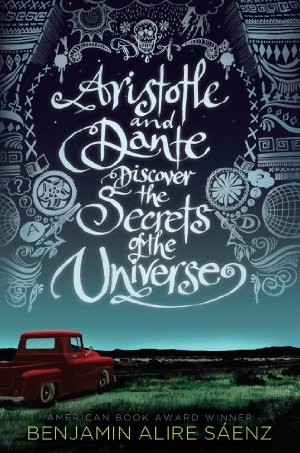
AristotleDanteBenjamin Alire Sáenz’s 2012 young adult novel Aristotle and Dante Discover the Secrets of the Universe won three major honors today at the American Library Association’s Youth Media Awards. His story of two teenagers who form an unlikely friendship earned the Pura Belpré Author Award, which honors books that depict the Latino experience; a Michael L. Printz Honor Book, which awards outstanding books for young adults; and the Stonewall Book Award, which recognizes stories that represent the lives of lesbian-gay-bisexual-transgendered youth.

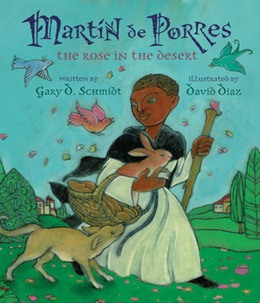
martin-de-porresThe other Pura Belpré recipients were The Revolution of Evelyn Serrano, an Honor Book winner for author Sonia Manzano, and Martín de Porres: The Rose in the Desert which won the Belpré Illustrator Award for David Díaz.

• Several Latino writers made the 2013 Rainbow List for books aimed at youth that depict the LBGTQ experience. They are Jeanne Córdova, When We Were Outlaws:  a Memoir of Love & Revolution; Rigoberto Gonzalez, Mariposa Gown; Sáenz, Aristotle and Dante; Charles Rice-González, Chulito: A Novel.

SummeroftheMariposasGuadalupe Gárcia McCall’s Summer of the Mariposas earned a place on the Amelia Bloomer Project Top Ten List for feminist books for youth.

Reyna Grande was nominated for a National Book Critics Circle Award in the autobiography category for her memoir The Distance Between Us.

ThisIsHowYouLoseHerJunot Díaz is up for The Story Prize, given to short story collections, for his book This is How You Lose Her. Diaz’s book was also named to the Reference and User Services Association’s 2013 Notable Books List.

Sergio Troncoso’s 2011 novel From This Wicked Patch of Dust won the Southwest Book Award, which is given by the Border Regional Library Association.

• Houston’s Tony Díaz, leader of the Librotraficante movement, will receive the Robert B. Downs Intellectual Freedom Award from the University of Illinois at Urbana-Champaign.

MyBelovedWorldOut in bookstores:

• Supreme Court Justice Sonia Sotomayor has the number one book on The New York Times’ Hardcover Non-Fiction chart with her memoir, My Beloved World.

• Fiction: In Thomas Sanchez‘s American Tropic, an ecoterrorist is on the loose in the Florida Keys. In Kind of Kin by Rilla Askew, an Oklahoma family comes under fire for hiring undocumented immigrants from Mexico.

Literary Magazines:

• The Kweli literary journal, which features works by people of color, is accepting submissions until March 1.

Dagoberto Gilb is among the writers with works in the latest issue of Make: A Chicago Literary Magazine.

Writing contests:

• Feb. 12 is the deadline to submit scripts for consideration for the 2013 Austin Latino New Play Festival, which is open to Texas/Tejano playwrights this year. The festival, sponsored by Teatro Vivo, features a different play each night from May 16 to 18.

Other news:

Cuban-American poet Richard Blanco, who recited his poem at President Obama’s inauguation, was profiled on the Poets.org website and the Poetry Foundation website. Watch that poem and read 14 other works by Blanco on the MediaBistro website. In this Huffington Post article, he talked about how his homosexuality was not accepted in his family.

• Cuban-American Dolores Prida, a playwright, newspaper columnist and the “Dolores Dice” columnist for Latina magazine, passed away last month, Latina reports. Here are articles about her from the Associated Press, CNN, Huffington Post, The Nation and The New York Times. Read Prida’s columns at the Voices of NY website.

• In this School Library Journal story, librarians reacted to a recent New York Times article about the lack of Latino literature in classrooms.

Las Comadres Para Las Americas National Latino Book Club has announced its first book selections of the year – including the anthology Eight Ways to Say “I Love My Life” and Sabrina Vourvoulias’ science-fiction novel Ink.

Los Angeles Times columnist Héctor Tobar interviewed Sandra Cisneros for the LA Review of Books. Tobar also wrote about Latino Books y Más, a bookstore that specializes in Latino literature in Palm Springs, Calif., that is closing down. Cisneros delivered her playlist, with selections from from Chavela Vargas to The Beatles,to the alt.latino website of NPR.

Manuel Gonzales, author of the The Miniature Wife and Other Stories, was featured in The Austin Chronicle. Hear Gonzales read one of his book’s stories, “Pilot, CoPilot, Writer”, on the Poets and Writers website.

• Poet Martín Espada discussed his works, including his most recent book The Trouble Ball, on the TV show Bill Moyers and Company.

• Daniel Alcarón, whose novel At Night We Walk in Circles will come out in the fall, talked to Poets and Writers magazine about the importance of literary awards.

• The Publishing Perspectives website discussed how more translations are needed for books by Latin American writers.

• Natasha Wimmer talked to the website Sampsonia Way about translating the works of Roberto Bolaño.

Joy Castro, author of Hell or High Water, discussed her faith to the In the Fray website.

In February:

• In honor of Black History Month, here’s a look at Afro-Latino writers. Want to read a great romance for Valentine’s Day? Try something from this list of great love stories, Latino-style.

3 Comments

Filed under 2013 Books, Awards, Children's Books, Fiction, News

Book review: Alejandro Zambra’s “Ways of Going Home”

Ways of Going HomeWays of Going Home (Farrar Straus and Giroux) by Alejandro Zambra is two books in one.

The book begins with an earthquake in 1985 in Maipú, a suburb of Santiago, Chile. The nine-year-old narrator, meets a girl, Claudia, who lives with her uncle and mother. Claudia asks the narrator to spy on her mysterious uncle and report back to him. Then the girl moves away.

The book then switches to a 30-year-old man who is writing that story. He is in the midst of separating from his wife, Eme, who has inspired the story. The narrator also draws from his own life, as the reader can see in his visits to his parents.

Eventually, he gets back to the story, where the narrator has grown up and reunites with Claudia – who reveals her family secrets.

The book is 138 pages, just the right size for a book that has mostly dialogue and internal narrative and not much action.

Zambra, who is often compared to another Chilean writer, Roberto Bolaño, describes life in Pinochet-era Chile – including a harrowing but brief scene in which a teacher fears he is being attacked in a classroom – but he excels in his observations about the relationship between parents and children.

“We go home and it’s as if we were returning from war, but from a war that isn’t over. I think, We’ve become deserters. I think, We’ve become war correspondents, tourists. That’s what we are, I think: tourists who arrive with their backpacks, their cameras, and their notebooks, prepared to spend a long time wearing out their eyes, but who suddenly decide to go home, and as they do they breathe a long sigh of relief.”

I didn’t feel particularly connected to the main character, except in the first – and strongest – part of the book, when the boy is young and innocent. The older character is more distant and cold, perhaps a reflection of aging.

“I got over to the little shelf holding the old family photo albums. That’s what these albums are for, I think: to make us believe we were happy as children. To show ourselves that we don’t want to accept how happy we were.”

It makes you wish he never lost his innocence. Ways of Going Home is much like life – adventurous and full of curiosity in the beginning, and a bit melancholy and weary as time moves on.

AlejandroZambraMore about Alejandro Zambra:

A native of Santiago, Chile, Zambra has written two other novels, The Private Lives of Trees and Bonsai. The novel was translated by Megan McDowell.

Source: I purchased this book from Amazon.com.

Leave a comment

Filed under 2013 Books, Book Reviews, Fiction