Category Archives: 2012 Books

In the news: New books, awards and news from Vargas Llosa, Díaz, Cisneros

It’s July! The month offers plenty of intriguing books to keep you cool during the hot summer days:

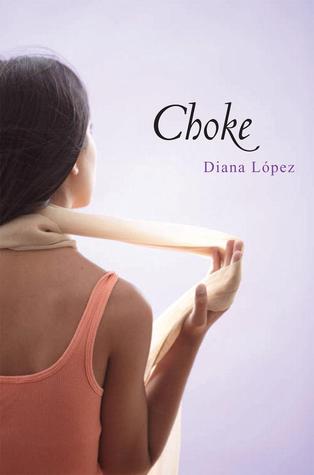
Just released: Choke by Diana López, editor of the Huizache literary magazine, features middle school students caught in a dangerous choking game so they can become “breath sisters.” The Boy Kings of Texas: A Memoir by Domingo Martinez examines the author’s childhood in the Rio Grande Valley. In the novel The Frost on His Shoulders by Spanish author Lorenzo Mediano, a teacher in 1930s looks back on a romance that ripped a small town in the Pyrenees Mountains.

July 10: Spanish author Carlos Ruiz Zafón’s The Prisoner of Heaven, the third in his Cemetery of Forgotten Books series, follows a newlywed couple who must go back in time to 1940s Barcelona to uncover a terrible secret.

July 17: Joy Castro’s Hell or High Water features newspaper reporter Nola Céspedes investigating the world of violent predators in post-Hurricane Katrina New Orleans. Gwedolyn Zepeda writes about single mother facing a family crisis in Better with You Here.

Awards:

Héctor Tobar’s The Barbarian Nurseries won the California Book Award in the Fiction category.

Winners in the ForeWord Book of the Year, which honor independently published books, include Sergio Troncoso’s From This Wicked Patch of Dust, honorable mention, Multicultural Adult Fiction category, and Crossing Borders: Personal Essays, bronze, Essays; Lyn DiIorio’s Outside the Bones, second place, Literary Fiction; Blas Falconer and Lorraine M. López, editors of The Other Latin@, honorable mention, Adult Non-Fiction Anthologies; and Emerita Romero-Anderson, Milagro of the Spanish Bean Pot, Bronze, Juvenile Fiction.

Other news:

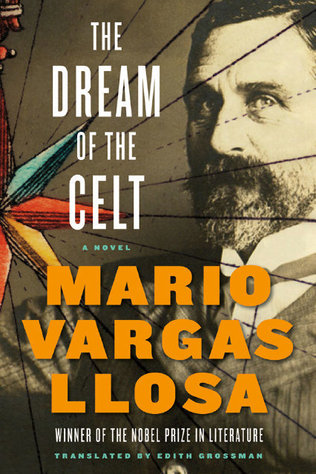
The Guardian profiled Nobel Prize winner Mario Vargas Llosa, right, whose newest book is The Dream of the Celt.

Gabriel García Marquez, 85, is reportedly suffering from dementia, according to this Huffington Post article.
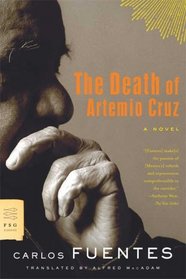
• A film version of the late Carlos Fuentes’ The Death of Artemio Cruz is in the works, reports the Word and Film website.

César Chávez’s The Words of César Chávez is the lone book by a Hispanic to make the Library of Congress exhibit, The Books That Shaped America.

• Here’s a video of Junot Díaz talking about his new book, This Is How You Lose Her, at last month’s Book Expo America. He also discussed the role of race in his writings to The Boston Review.

Luis Alberto Urrea talked about immigration to NPR’s Talk of the Nation.

 • Woo hoo! Sandra Cisneros has a new book – Have You Seen Marie? – coming out Oct. 2.

6 Comments

Filed under 2012 Books, Awards, News

Book review: Robert Ampuero’s “The Neruda Case”

Roberto Ampuero’s The Neruda Case (Riverhead Books) is a fascinating book that combines a missing persons case, one of Chile’s most historic events and the life story of Latin America’s greatest poet.

Detective Cayetano Brulé is living in Valparaíso, Chile, in 1973 when he is asked by poet Pablo Neruda to find an old lover. The search takes Brulé to Mexico, Cuba and Germany – and he discovers some things about Neruda that lessens his deep admiration for the 70-year-old.

While the search is going on, Neruda is dying of cancer and remembering his past lovers from his life, including his time as a diplomat. He is feeling regret, including the abandonment of his wife when their child was born with a birth defect. Meanwhile, the country of Chile is under tumult as the government of Socialist President Salvador Allende – Neruda’s friend – is under siege from General Pinochet.

Ampuero, who used to live near Neruda when he was a child, kept most of the historical details but fictionalized the missing lover case. Ampuero writes at a fast pace so that even his descriptive passages don’t slow down the story. The book only becomes more intense as General Pinochet is preparing a coup. But, like Brulé, readers may have a different impression of Neruda as they read the book. He comes across as a selfish cad – or maybe just more human than his romantic poems.

The Neruda Case, which was translated by Perla author Carolina DeRobertis, is a great book that is not to be missed.

More about Roberto Ampeuro: Ampuero has written a dozen novels in Spanish, with The Neruda Case being his first published in English. He serves as Chile’s ambassador to Mexico and is a professor of creative writing at the University of Iowa. He wrote about his memories of the poet in this essay published in The Daily Beast/Newsweek.

Source: I received a review copy from the publisher.

Leave a comment

Filed under 2012 Books, Book Reviews, Fiction

Book review: Malín Alegría’s “Border Town: Crossing the Line”

Malín Alegría provides something the book world badly needed – a great young adult novel depicting Latino life.

Border Town: Crossing the Line (Point/Scholastic) is the first in a series of books modeled after the popular 1980s series Sweet Valley High, which followed the lives of two high school sisters living in California. Border Town features Fabiola Garza and her sister, Alexis, as they attend high school in the small (and fictional) town of Dos Rios in the Rio Grande Valley of Texas.

Even though Alegría lives in California, she perfectly captures the Valley beyond the characters’ meals of menudo and pan dulce. Here’s a line when Fabiola runs into her old Sunday school teacher while she’s buying personal items: “This was exactly why she hated living in the Valley. You couldn’t do anything without running into someone you knew!” (I used to live in the Valley, and that line is so accurate, I laughed out loud.) Fabiola yearns to escape small town life – seeing nearby McAllen as the oasis of cosmopolitan life. “This was how civilized people should live, Fabi though as she grinned to herself – with movie theaters, a mall, art galleries.”

The plot covers typical adolescent angst. Alexis begins attending Fabiola’s high school and runs with the cool kids. Fabiola gets jealous, and accuses one of Alexis’ new friends of committing a crime. The ending is a bit Nancy Drew-ish and unrealistic. The book also is a bit innocent in portraying high school life. While the girls attend a party where they can smell marijuana, sex isn’t mentioned at all.

But Border Town is a fast-paced, easy-to-read book that Latino teenagers will enjoy to read – mostly because they will see themselves in the pages.

More about Malín Alegría: Alegría also wrote Sofi Mendoza’s Guide to Getting Lost in Mexico and Estrella’s Quinceañera. Quince Clash, which comes out in July, is the next book in the series.

Source: I bought this book at Barnes and Noble.

1 Comment

Filed under 2012 Books, Fiction, Young Adult Books

In the News: New books and short stories, and plenty of awards

Hello, summer! Here are some June book releases to keep you entertained:

Already in bookstores: Nobel Prize winner Mario Vargas Llosa’s The Dream of the Celt depicts the life of Irish human rights activist Richard Casement.  La Roja: How Soccer Conquered Spain and How Spanish Soccer Conquered the World by Jimmy Burns covers the world’s most popular sport. Daniel Orozco’s critically acclaimed book of short stories, Orientation, is now in paperback.

June 14: The Neruda Case by Roberto Ampuero features a private eye solving a case for poet Pablo Neruda during his final days. Carolina DeRobertis, author of Perla, talked to Publishers Weekly about translating the book.

June 26: Spanish author Felix J. Palma’s The Map of Time explores time travel in Victorian London.

Awards:

Congratulations to the winners of Latino Literacy Now’s International Latino Book Awards, which were announced last week. Honorees included some of The Hispanic Reader’s favorites – such as Becoming Dr. Q: My Journey from Migrant Farm Worker to Brain Surgeon by Dr. Alfredo Quiñones-Hinojosa and Crossing Borders: Personal Essays by Sergio Troncoso, which won first place and second place, respectively, in the Best Biography category; Outside the Bones by Lyn Di Iorio and Say Her Name by Francisco Goldman, which earned honorable mentions in the Best Popular Fiction – English category; and The Time in Between by Maria Dueñas which received first place for Best Novel – Historical.

• The Skipping Stones 2012 Honor Awards – given to books with multicultural themes – honored Marisol McDonald Doesn’t Match by Monica Brown.

When We Were Outlaws: A Memoir of Love & Revolution by Jeanne Córdova and Gay Latino Studies: A Critical Reader, edited by Michael Hames-García and Ernesto Javier Martínez, won prizes at the 24th Annual Lambda Literary Awards, which honors lesbian-gay-bisexual-transgendered literature.

New short stories and other works:

Junot Díaz talks about the science fiction short story, “Monstro,” he wrote for The New Yorker. He also remembered science fiction writer Ray Bradbury, who passed away earlier this month, in an article for the magazine.

Luis Alberto Urrea will have a short story included in Esquire’s ebook aimed at men, You and Me and the Devil Makes Three, out June 12.

Carlos Andrés Gómez put up a new poem, How to Fight, in response to recent shootings.

Author profiles:

NBC Latino profiled Julia Alvarez and her new book, A Wedding in Haiti.

Pulitzer Prize winner Oscar Hijuelos talked about his memoir, Thoughts Without Cigarettes, to The Morning News.

Carmen Gimenez Smith, New Mexico State University assistant professor of English and editor of the literary magazine Puerto del Sol, was featured in the Las Cruces Sun-News about being NPR’s NewsPoet.

Body art by Mia Roman. Photographed by Johnny Ramos.

Other news:

La Casa Azul bookstore, which specializes in Latino literature, opened in June in East Harlem by Aurora Anaya-Cerda (right), and was featured in The New York Times.

Aztec Muse publisher Tony Diaz earned the Open Book Award from the American Society of Journalists and Authors for his Librotraficante work.

• Here’s an interesting story, published in the The Daily Beast/Newsweek, about how Gabriel Garcia Marquez’s One Hundred Years of Solitude brought down a banana empire.
Note: This post was updated to correct that Sergio Troncoso won second place in the International Latino Book Awards and to add the Garcia Marquez link.

4 Comments

Filed under 2012 Books, Awards, Children's Books, Fiction, News, Poetry

Book review: Meg Medina’s “The Girl Who Could Silence the Wind”

The lead character in The Girl Who Could Silence the Wind (Candlewick Press), by Meg Medina, has an unique problem.

Sonia Ocampo was born during a terrible storm in the poor village of Tres Campos. Villagers considered it a miracle that they and Sonia all survived – and they began asking her to pray for their troubles. She wears a shawl that is weighed down – literally and figuratively – by the amulets they give her. As she tells her aunt:

“I can’t do what everyone wants. I can’t stop bad times from finding us. I can’t control things any more than they can. … Do you know what it’s like to live as I do? To be asked to make rain in the dry season? To cure coughs? … And why am I cursed this way? Because I was born on the wrong night, that’s all. It’s all been a silly lie.”

Her aunt offers to help her escape her situation by finding her a job as a maid for a rich family in the capital. But she has trouble learning new skills and adjusting to her unfriendly co-workers. And her troubles surmount when she finds out her brother Rafael has disappeared.

This novel had an old-fashioned quality to it that reminded me of a Latino version of Little House in the Prairie. The time period is never mentioned – although there are cars, there aren’t gadgets such as iPhones or TV. But the issues Sonia and the characters face – such as finding a place in society and searching for a better life – parallels issues people face today.

Medina writes in descriptive, beautiful prose that never drags the story. The ending is somewhat unexpected because it doesn’t end happily. But young girls will enjoy reading this story.

More about Meg Medina:

Meg Medina, who grew up in Queens, New York, and lives in Richmond, Virginia, is the author of  Milagros: Girl from Away and Aunt Isa Wants a New Car, which won the 2012 Ezra Jack Keats New Writers Award and earned a spot on the 2012 Amelia Bloomer List.

Source: I received a review copy from the publisher.

Leave a comment

Filed under 2012 Books, Book Reviews, Fiction, Young Adult Books

Book review: Carolina De Robertis’ “Perla”

A naked man appears at Perla’s house in Buenos Aires. He doesn’t say a word to her. She allows him to stay in the home.

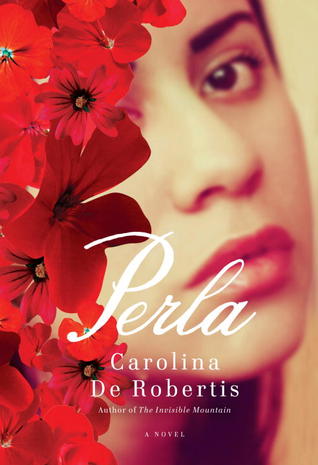
So begins Perla (Knopf), the new novel by Carolina De Robertis. Perla is a college student whose father was in the Argentine Navy during the Dirty War – leading to the vanishing of thousands of citizens, known as “the disappeared.” While her parents are away from the house, Perla begins to take care of the stranger and she discovers they may share a connection.

This book has won critical reviews – including a 4.33 ranking out of the highest score of “5” on the GoodReads website – but I just couldn’t get into it. When the book is told from the stranger’s viewpoint, De Robertis writes in abstract, overly descriptive passages that were hard for me to get through. Take this passage that borders on the silly:

“It is not her naked ankle that he wants to press against: it is the Who of her, the inside sound, the secret aural texture of her being. He wants to hear the chorus in the depths of her, where the past and all the unseen futures gather to sing.”

And that’s one of the shorter passages. This type of writing made a short book (236 pages) seem twice as long.

Perla has an intriguing premise about Argentina’s history, but I found it overwritten for my tastes.

More about Carolina De Robertis:

Carolina De Robertis, a Uruguayan native who now lives in California, is also the author of The Invisible Mountain.

Source: I purchased this book through Amazon.com.

Leave a comment

Filed under 2012 Books, Book Reviews, Fiction

In the News: New books from Alegría, Sheen and Estevez, Arte Público

It’s May! It’s time to celebrate one of the Latino community’s favorite holidays – Cinco de Mayo – and read some good books. Here’s what’s coming up on the bookshelves:

May 1: Border Town: Crossing the Line by Malín Alegría, author of the popular Estrella’s Quinceañera, focuses on two teenage girls who live in fictional Dos Rios, Texas. The novel is the first in a Sweet Valley High-like series, with more books, such as Quince Clash and Falling Too Fast coming out later this year.

May 8: Father-and-son actors Martin Sheen and Emilio Estevez will release a joint memoir, Along the Way: The Journey of a Father and Son with Hope Edelman. The book focuses on their faith and includes their thoughts on the making the 2011 movie The Way, about a man’s pilgrimage along the Camino de Santiago in Spain.

• May 31: Arte Público has several bilingual children’s books coming out, including A Day Without Sugar by Diane Deanda, Sofía and the Purple Dress by Diane Gonzales Bertrand and Alicia’s Fruity Drinks by Lupe Ruiz-Flores.

Leave a comment

Filed under 2012 Books, Children's Books, Fiction, Non-Fiction

Book review: Julia Alvarez’s “A Wedding in Haiti”

After the devastating 2010 earthquake in Haiti took more than 300,000 lives, many people felt compelled to help that country. Julia Alvarez wanted to go there.

She describes her experiences in her book, A Wedding in Haiti (Algonquin Books).

Her journey first began in 2009, when Alvarez and her husband, Bill, attended the wedding of Piti, a Haitian boy they had seen flying a kite near their coffee farm in her native Dominican Republic and they later hired to work on the farm.

But even before the earthquake, going to Haiti proves to be an ardurous journey, as Haiti’s infrastructure seems to be stuck in 1909.

A year later, Alvarez feels compelled to visit the country again after the earthquake.

“I didn’t have any answers for Haiti or fix-it advice or even a high road to take a moral stance for others to emulate. I just wanted to be with Haiti, and the line that kept echoing in my heart was the one from stations of the cross on Good Friday: Walk with me as I walk with you and never leave my side.

She makes the journey again  – compounded by bureaucracy and the devastation from the earthquake.

Alvarez doesn’t waste any words or get too fancy, making her writing so enjoyable to read. She is great at describing things – from a child’s schoolbook to a time when they had to drive through a river with the help of some Haitians, who then demand money. But the trips are worth the trouble as Alvarez describes the joy of the celebration – such as a scene in which the party-goers start to dance spontaneously.

Despite the devastation, she leaves the country with hope.

“So what is it that the eye is seeking and the heart is aching for? A flicker of wings, a thing that whispers hope. From a sidewalk wall hangs a red evening gown for sale. Incredible to think: there will be partying again! A boy in his school uniform walks by, holding the straps of his backpack. The very ordinariness of the moment seems a blessing.”

A Wedding in Haiti is a great book that gives readers a personal look at its people.

More about Julia Alvarez:

Julia Alvarez grew up in the Dominican Republic and came to the United States at age 10. She’s written numerous poems and books, including How the Garcia Girls Lost Their Accents and In the Time of Butterflies.

Source: I received a review copy from the publisher.

Leave a comment

Filed under 2012 Books, Book Reviews, Non-Fiction

Book review: Gustavo Arellano’s “Taco USA: How Mexican Food Conquered America”

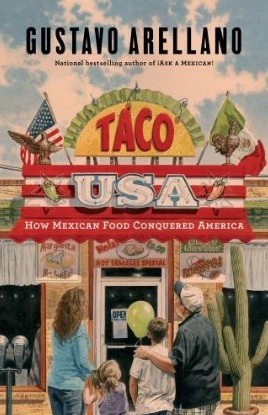
Gustavo Arellano’s Taco USA: How Mexican Food Conquered America (Scribner) is a literary feast.

Arellano covers the history of Mexican food, from its origins with the Aztecs to its present-day incarnations at Chipotle. In meticulous detail, Arellano writes about the selling of tamales on street corners, the emergence of the tortilla and salsa, and the creation of the margarita machine, among other topics.

Interestingly, some of the most prominent Mexican food – such as Taco Bell, Fritos and Paso picante sauce –was built up by Anglos. But all of the stories reveal great entrepreneurial spirit and ingenious inventions. (Sadly, his book went to press before the introduction of Doritos Locos Tacos.)

Arellano’s enthusiastic, descriptive and humorous writing makes this book so much fun to read. Check out this passage about a meal at Manuel’s El Tepeyac Café:

“There is a burrito sold in the Los Angeles neighborhood of Boyle Heights that’s beyond cosmic, that’s as close to touching God while eating Mexican food as finding Jesus on a tortilla. … Manuel’s Special: five pounds, beans and rice and guacamole and sour cream and your choice of meat – juicy nubs of grilled chicken, carne asada burned into succulent charcoal, or best with machaca, shredded beef that sticks between molars for hours afterward, heavily spiced and just grand, wrapped in a flour tortilla that, if laid flat, can serve as swaddling cloth for a puppy.”

A few quibbles: As a Texan, the book seemed a bit California-centric to me. How does the Rio Grande Valley get only one paragraph in a book about Mexican food? Although it doesn’t have the mass appeal of burritos and margaritas, I would have liked to read more about the history of pan dulce and menudo. I also would have liked to see some sociological and cultural analysis of the Americans’ seemingly contradictory anti-immigrant fervor and love for Mexican food.

The book left me hungry for that information, but it also made me hungry, literally. After reading the chapter on tortillas, I had to go to Chipotle (the closest available Mexican food place) for dinner.

Savor Taco USA. It’s as delightful as the meals Arellano describes.

More about Gustavo Arellano:

Gustavo Arellano, the editor of OC Weekly, is best known for his Ask a Mexican column. He also teaches at California State University, Fullerton.

Source: I purchased this book through Amazon.com.

1 Comment

Filed under 2012 Books, Book Reviews, Non-Fiction

A book club for Latino literature

One organization has a unique mission — combining Latino literature and fellowship.

Las Comadres and Friends National Latino Book Club, a partnership between Las Comadres Para Las Americas and the Association of American Publishers, meets once a month to discuss a recently published book by a Hispanic author. It boosts more than a dozen chapters in Arizona, California, Connecticut, Massachusetts, New Mexico and Texas.

Members read mostly novels, although they have discussed non-fiction and children’s books. (Its book archive is here.)

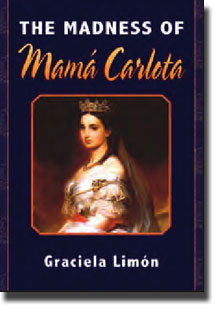
The club is scheduled to discuss The Madness of Mamá Carlota by Graciela Limón in April. The complete list for 2012, which includes Carolina de Robertis Perla and Joy Castro’s Hell or High Water, is here.

The book club also features Conversations with Authors, a teleconference in which members can talk with the writer. They’ve talked to Julia Amante, author of Say You’ll Be Mine; Lyn Di Iorio, Outside the Bones; Marisel Vera, If I Bring You Roses and Lelia Cobo, The Second Time We Met.

The book club began in 2008 as an offshoot of Las Comadres Para Las Americas, a national organization founded by Dr. Nora de Hoyos Comstock that connects and empowers Latinas through community building/networking, culture, learning and technology. The group features a monthly potluck called a comadrazo, as well as other activities.

But the book club remains one of its prominent activities. Many of the books have brought out interesting discussions, said Amanda Arizola, who serves as the National Project Manager for the book club.

“Book clubs are supposed to spark interest and debate,” she said. “All of our books have given us that.”

1 Comment

Filed under 2012 Books, Features