Yearly Archives: 2012

At the theater: Taking Sandra Cisneros’ words from print to the stage

Vanessa DeSilvio (center), with S-Ankh Rasa (left) and Armando Monsivias (right), plays Our Lady of Guadalupe in "Milagritos." Photo courtesy Cara Mia Theatre.

Vanessa DeSilvio (center), with S-Ankh Rasa (left) and Armando Monsivias (right), plays Our Lady of Guadalupe in “Milagritos.” Photo courtesy Cara Mia Theatre.

(Note: The Hispanic Reader is still on hiatus, but I wrote this article for the Theater Jones website, which appeared in a slightly different version. Enjoy the holidays and I’ll see you in January.)

“I had to stay up to read it,” she says. “I immediately connected with it.”

So much so that Barrera adapted it into the play, Milagritos / little miracles, which the Cara Mía Theatre Co. stages until Dec. 15 at the Latino Cultural Center in Dallas. Cisneros attended the opening night production.

Cara Mía is presenting the play, which director David Lozano bills it as a “holiday classic,” for the second time. The title comes from the short story, “Little Miracles, Kept Promises,” in which pilgrims come to a shrine to give thanks to Our Lady of Guadalupe—an iconic Mexican symbol who appeared before peasant Juan Diego on Dec. 12, 1531.

“The characters’ range (of prayers) reflects the diversity of life’s experiences, from problems with pimples to more serious health issues, to lost love and loves that need to get lost,” Barrera says.

Barrera was especially drawn to the lead character, Chayo.

“I found not only myself in her but the Chicanos I was running into,” Barrera says, adding that Cisneros based the characters on folks she knew. “That’s why her works are so relevant. We read them and it’s like, ‘Yes, I know this story, I know this woman.’ ”

Lozano agrees.

“Everyone knows these characters from our community,” Lozano says. “I think that’s what grabs people. The more you read it, the more you start peeling away some transformational pieces that become pure poetry.”

The story illuminates the people beyond the Latino neighborhood and into the Catholic community, he says.

“You talk to Catholic people and they have their miracle story,” he says. “Their prayers are heard.”

Eliberto Gonzalez, the president and co-founder of Cara Mía, knew Cisneros and got permission for Cara Mía to present the play when it first ran in 1998. Adapting the book is always full of surprises.

“Cisneros’ works aren’t dramatic narratives, and are more sophisticated than readers realize,” Lozano says. “Most folks will get more of the sense of the everyday quality of these characters and what they live through, while astute readers will recognize the symbolism and poetic quality.”

“Her writing is very complex at times and so when you start really repeating and working through these lyrical imagery, the symbolism of such profound events, you begin [to see] a larger universe that is very real to us,” he says.

Barrera, a Southern Methodist University graduate and a San Antonio-based playwright, director, actress, artist and community arts educator, says Cisneros has seen the play before, and she was supportive.

“I think she really felt the stories and listening to them in that way,” Barrera says. “[She enjoyed] her own work in a way she hadn’t before.”

If you live in the Dallas area, you can catch Milagritos  at 8 p.m., Thursdays-Saturdays, Dec. 1-15 at the Latino Cultural Center, 2600 Live Oak Street, Dallas. Tickets are $12-$30. Go to caramiatheatre.org for details.

Leave a comment

Filed under Features, Theater

In the news: Books from Bolaño, Saramago; new literary magazine

(I’m still taking a break, but check out my story I wrote about a Dallas theater company’s adaption of Sandra Cisneros’ Women Hollering Creek for the Theater Jones website.)

The Hispanic Reader will be taking a long hiatus, so here’s the new releases, events and holiday books to keep you entertained for the rest of the year. See you in 2013.

New releases:

Nov. 13Woes of the True Policeman is the last book Roberto Bolaño wrote before his death. The novel follows a Chilean professor as he undergoes several personal crises.

Nov. 30 – In the children’s book The Poet Upstairs by Judith Ortiz Cofer, a young girl makes friends with a writer.

• Dec. 4 – Raised From the Ground, by the late Nobel Prize winner José Saramago, is a reissue of a book – published for the first time in English – that depicts the lives of Portuguese peasants.

Dec. 11 – The children’s book The Beautiful Lady: Our Lady of Guadalupe by Pat Mora features the iconic Mexican figure.

Awards:

• The National Book Awards announced its nominations, with Junot Díaz’s  This is How You Lose Her shortlisted in the fiction category and Domingo Martinez’s The Boy Kings of Texas making the non-fiction category. Martinez spoke to NPR about how he learned about his nomination. Winners will be announced Nov. 14.

Literary magazines:

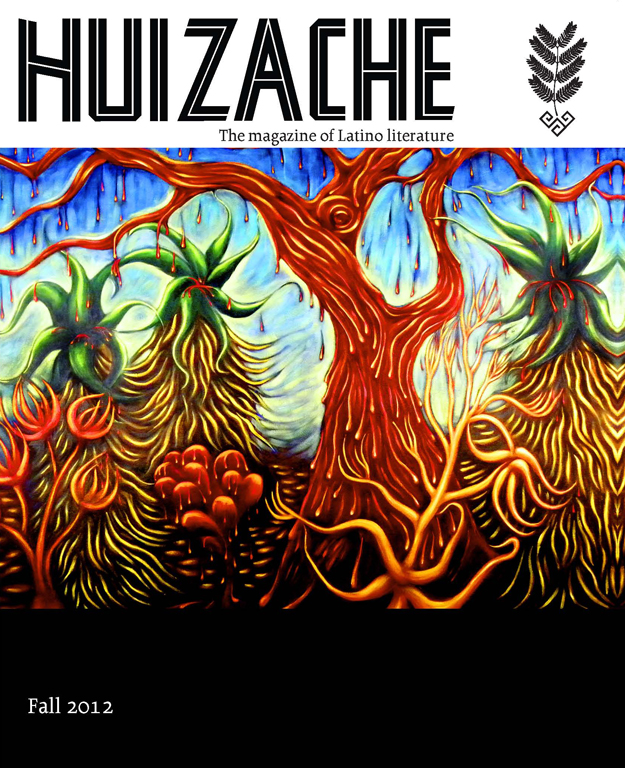
• The second issue of the literary magazine Huizache, produced by CentroVictoria – the Center for Mexican American Literature and Culture at the University of Houston-Victoria, is out. Contributors include Lorna Dee Cervantes, Rigoberto Gonzalez, Luis J. Rodriguez, Michele Serros and Gary Soto.

Book Festivals:

• The Miami Book Fair Festival International takes place Nov. 16-18. Featured authors include Malin Alegria, Roberto Ampuero, Joy Castro, Sandra Cisneros, Jeanne Cordova, Junot Díaz, Christina Diaz Gonzalez, Reyna Grande and Justin Torres.

Other News:

Sandra Cisneros discussed her newest book, Have You Seen Marie?, to NBC Latino, CNN and the LA Review of Books.

Junot Díaz talked to Wired magazine about the science-fiction book he’s writing, Monstro, and to LA Review of Books about his current book, This Is How You Lose Her.

Luis Alberto Urrea’s Into the Beautiful North has been named a 2013 Big Read selection by the National Endowment for the Arts.

• Pulitzer Prize winner Oscar Hijuelos will be featured in Symphony Space’s Artful Dining fundraiser Nov. 12 in New York City. Sonia Manzano will lead the discussion.

• Mexico City celebrated the 50th anniversary of Gabriel Gárcia Márquez’s move to that city by putting up posters honoring him, according to an article by Héctor Tobar in the Los Angeles Times. Tobar also wrote about a MacArthur Grant-winning Orange County barbershop that features a bookstore and is teaming up with Chapman University to promote Latino literature.

• Ploughshares magazine talked to Aurora Anaya-Cerda, owner of the La Casa Azul Bookstore in East Harlem, N.Y., that is devoted to Latino literature.

• Voices of New York wrote up about the Las Comadres Para Las Americas writer’s conference last month, with some interesting insights about Latinos in publishing.

• Want a blog that features the poetry of Pablo Neruda with pictures of cats? Here you go.

Also:

• Celebrating birthdays in November: The late Carlos Fuentes, right, and Nobel Prize winner José Saramago.

• Celebrating birthdays in December: Sandra Cisneros, Nobel Prize winning poet Juan Ramon Jimenez and Manuel Puig.

• Looking for gifts for the holidays? Here some some Christmas books for children and adults.

2 Comments

Filed under 2012 Books, Awards, Children's Books, Events, Fiction, News

Book review: Juan Pablo Villalobos’ “Down the Rabbit Hole”

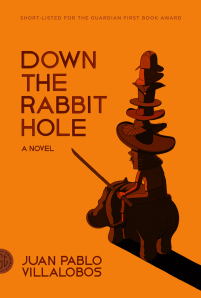
Down the Rabbit Hole (Farrar, Straus and Giroux) by Juan Pablo Villalobos seems like a crazy book, almost a fantasy – but it’s a serious book about one boy’s harsh reality.

Tochtli, the narrator, is a seven-year-old boy who lives in a palace in Mexico filled with ammunition. When he says he wants a pygmy hippopotamus, his family takes him on a safari in Liberia to get him one.

Sounds surreal, right? But Tochtli is the son of a drug gang leader.

The concept works because of Villalobos’ strong voice. Thanks to Villalobos and the book’s translator, Rosalind Harvey, Tochtli sounds both innocent and precocious. Take this passage in which he describes his preference for guillotines compared to the violent images seen on TV:

“The French put the heads in a basket after cutting them off. I saw it in a film. They put a basket just under the king’s head in a guillotine. Then the French let the blade fall and the king’s head is cut off and lands in the basket. That’s why I like the French so much. They’re so refined.”

He’s funny, too, as in this passage on the subject of food:

“I don’t like pozole much, mainly because it’s got cooked lettuce in it, which is ridiculous. Lettuce is for salads and sandwiches. Also you make pozole with pigs’ heads: once I peeped into the pot and there were teeth and ears floating around in the broth. Sordid. The things I like are enchiladas, quesadillas, and tacos al pastor. I like tacos al pastor without the pineapple, because pineapple on a taco is ridiculous, too. I hardly put any chili on my enchiladas, because otherwise my belly hurts a lot.”

One thing that bothered me: the frequent use of the F word (the one used to deride homosexuals). It was unnecessary and jarring to read.

Still, the book is an fast, fascinating read. At just 70 pages, Down the Rabbit Hole creates a unique  experience that makes you laugh and cringe.

More about Juan Pablo Villalobos: Juan Pablo Villalobos was born in Mexico and currently lives in Spain. Rabbit Hole was shortlisted for The Guardian First Book Award. His work, “Dispatches from Ambassador to Brazil, Earth,” was published by Granta.

Source: I received a review copy from the publisher.

2 Comments

Filed under 2012 Books, Book Reviews, Fiction

At the theater: Kristoffer Diaz’s “The Elaborate Entrance of Chad Deity”

“At the Theater” is a feature in which I check out plays by Latino writers. The article is intended to be a look at the author’s work and not a review of the theatrical production – so no comments about acting, lighting or staging. I caught the Dallas Theater Center production of “Chad Deity.”

Kristoffer Diaz’s The Elaborate Entrance of Chad Deity explores the issue of race through an offbeat forum – the wrestling ring.

Macedonia “Mace” Guerra is a Puerto Rican who grew up in the Bronx and now works as a wrestler – but he’s always there to lose. The star is Chad Deity, an Apollo Creed-type character, but without the talent.

Vigneshwar Padura, a young, enthusiastic Indian-American, aspires to get into the ring. So the wrestling association’s chief, Everett K. Olson, agrees to let him participate – albeit as a Muslim fundamentalist, complete with a long bushy beard and ammunition on his chest. His opponent is Mace – now billed as Che Chávez Castro.

Deity deals with serious issues in a humorous format. Mace speaks of the frustrations of stereotypes, but he’s more weary than preachy. The show – much of it Mace’s monologue – flows smoothly with good audience interaction.

The play was a finalist for the Pulitzer Prize in Drama in 2010. It was first produced in Chicago and has been presented in Berkeley, Calif., Boston, New York City, Washington, D.C., and is currently playing in Dallas and Colorado Springs until Nov. 11. This is a play that draws as much reflection as it does laughs. If you get the chance, go see it.

More about Kristoffer Diaz:

Kristoffer Diaz also has written the plays Welcome to Arroyo’s, Guernica, and #therevolution. He won the 2011 New York Times Outstanding Playwright Award.


Leave a comment

Filed under Theater

Classic book review: Esmeralda Santiago’s “When I Was Puerto Rican”

Esmeralda Santiago’s When I Was Puerto Rican (De Capo Press) is a beautiful book – one whose beauty often comes from deep pain.

The book is a memoir of Santiago’s early childhood in Puerto Rico, where the country dwellers are called jibaros. She grew up poor, describing her home as “a rectangle of rippled metal sheets on stilts hovering in the middle of a circle of red dirt.”

Through the years, young Esmeralda – called Negi by her parents because she was so dark as a baby – moves from the country to the city and, eventually, to Brooklyn – as her unmarried parents separate and reunite repeatedly. Negi takes care of her seven younger siblings as she experiences school, impending womanhood and, in one amusing chapter, the food program from the United States.

The book’s strength comes from Santiago’s style of writing – so simple that the book is a fast read, yet so elegant in its gorgeous and inventive descriptions.

Take this passage when Santiago’s family flies to New York City:

“Several times I bumped into Mami as I walked backwards, unwilling to face the metal bird that would whisk us to our new life … Neither one of us could have known what lay ahead. For her it began as an adventure and turned out to have more twists and turns than she expected or knew how to handle. For me, the person I was becoming when we left was erased and another one was created. The Puerto Rican jibara who longed for the green quiet of a tropical afternoon was to become a hybrid who would never forgive the uprooting.”

Although Santiago never feels sorry for herself, my heart broke for her all that she had to through in her young life. Fortunately, the great ending makes you grateful you went on the tough journey with her.

More about Esmeralda Santiago:

When I Was Puerto Rican was Santiago’s first book. She wrote two sequels, Almost a Woman and The Turkish Lover, as well as several novels, including America’s Dream and Conquistadora.

Source: I purchased this book at Barnes and Noble.

Note: This review is part of a series of classic books by Latinas. (I’m running a bit behind.) Next up: Chicana Falsa by Michelle Serros.

Leave a comment

Filed under Book Reviews, Classic Books, Non-Fiction

Thrillers and chillers: Spooky books for adults

Halloween is a holiday for children, but adults can get in the act, too. (Why turn down the candy?) There’s no better way to get into the mood than with a creepy or suspenseful book. As part of book blogger Jenn Lawrence’s meme, Murder, Monsters & Mayhem, here’s a list of Latino-themed thrillers. And check out our list of Halloween books for children posted earlier this week.

Let’s start with the monsters – specifically, vampires. The Strain is a trilogy of novels by Mexican film director Guillermo del Toro, written with Chuck Hogan, about a virus that vampires inflict on the world. (If you want a creepy movie to watch on Halloween, his 2006 film Pan’s Labyrinth is an excellent choice.)

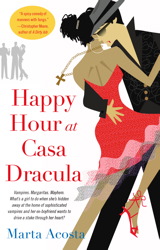
For a humorous touch, Marta Acosta’s Casa Dracula series, including Happy Hour at Casa Dracula, features a romance between the main character, Milagro de Los Santos, and a vampire. Caridad Piñeiro’s new book, Kissed by a Vampire, also features a paranormal romance – all part of her The Calling/Reborn series featuring the undead beasts.

Now let’s get to murder and mayhem, with several book series featuring Latino crime solvers. The Henry Rios series by Michael Nava, which has a gay lawyer in San Francisco as its lead character, began with The Little Death and ended with Rag and Bone. Rudolfo Anaya’s Sonny Baca series, which includes Zia Summer and Jemez Spring, features a detective solving crimes in New Mexico. The Rio Grande Valley is home to several thrillers, including Partners in Crime, by Rolando Hinojosa.

For books with a strong female protagonist, Lucha Corpi’s mysteries – including Eulogy for a Brown Angel, Cactus Blood and Black Widow’s Wardrobefeatures a clairvoyant detective solving crimes in Los Angeles. Or try these recent thrillers: Lyn DiIorio’s Outside the Bones, about a bruja who gets caught up in an old mystery; Joy Castro’s Hell or High Water , which has a newspaper reporter investigating sexual predators in New Orleans; and Linda Rodriguez’s  Every Last Secretabout a college police chief who solves a murder on campus.

1 Comment

Filed under Features, Fiction

La Llorona, chupacabras, oh my! Spooky books for children and teens

Boo! October brings the greatest holiday ever – Halloween. It’s not just about the candy, but listening to stories that put goosebumps on your arms and a shiver in your bones. As part of book blogger Jenn Lawrence’s meme, Murder, Monsters, Mayhem, here’s a look at spooky tales, Latino-style, for children and young adults. Look for a list of suspense books for adults later this week.

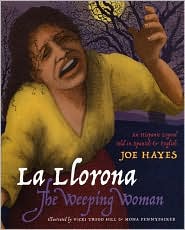
In Mexican folklore, no figure is more haunting than La Llorona, the woman who drowned her children and spends her time calling for them. Her tale has been told in numerous books, including La Llorona/The Weeping Woman by Joe Hayes, who talked about the story’s enduring legacy to The Hispanic Reader last year.

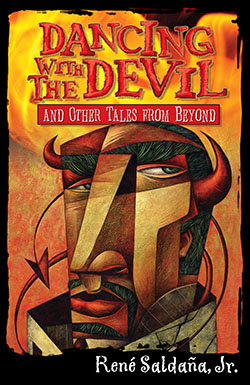
Texas-based writer Rene Saldaña Jr. also explores the myth – and others – in his book, Dancing with the Devil and Other Tales from Beyond / Bailando con el diablo y otros cuentos del más allá. La Llorona is becoming part of mainstream pop culture: She will be the subject of NBC’s Grimm in the Oct. 26 episode. Wilmer Valderrama talked about the project to NBC Latino. And here’s Lila Downs singing about La Llorona.

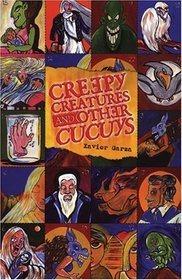
La Llorona and those other spooky beasts – the chupacabras – are part of Texas-based children’s writer Xavier Garza books, including Creepy Creatures and Other Cucuys, Kid Cyclone Fights the Devil and Other Stories and Juan and the Chupacabras/ Juan y el Chupacabras. The Rio Grande Valley native talked about the inspiration for the books to the San Antonio Express-News last year.

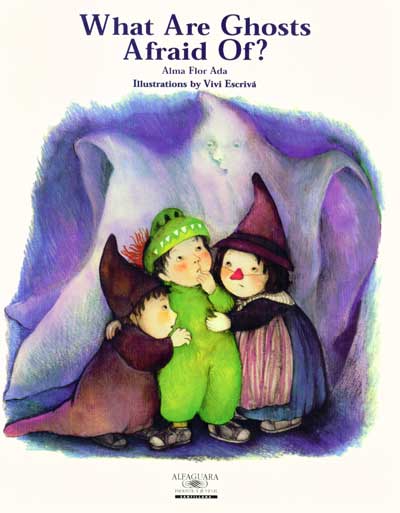
For more universal creatures, Alma Flor Ada writes about ghosts in What Are Ghosts Afraid Of? El susto de los fantsmas. In A Mummy in Her Backpack/Una Momia en su mochila by James Luna, a girl ends up with an unusual souvenir from vacation. Los Gatos Black on Halloween by Marisa Montes and Yuyi Morales is a poem about the creatures that haunt the night.

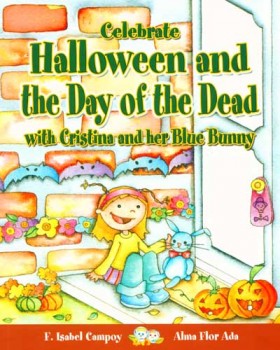
Alma Flor Ada and F. Isabel Campoy combines Halloween and the other upcoming holiday, Dias de los Muertos, in Celebrate Halloween and the Day of the Dead with Cristina and her Blue Bunny Celebra el Halloween y el Día de Muertos con Cristina y su conejito azul. Pat Mora’s Abuelos describes a Halloween-like holiday in northern New Mexico that has Mexican and Pueblo roots.

For young adults, You Don’t Have a Clue: Latino Mystery Stories for Teens features a variety of tales from as Saldaña, Diana López and Sergio Troncoso. Guadalupe Garcia McCall’s recently released novel Summer of the Mariposas also features La Llorona – in a gentler light than most books – and chupacabras.

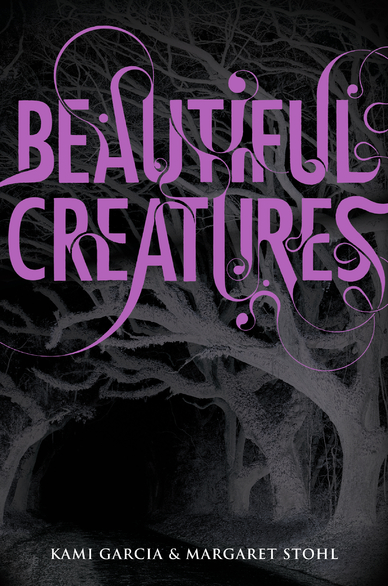
The Beautiful Creatures series, written by Kami Garcia and Margaret Stohl, features teenagers who meet otherworldly beings called Casters. The book soon will be a major motion picture starring Viola Davis and Emma Thompson. Alisa Valdes’ The Temptation features a romance between supernatural teens.

4 Comments

Filed under Children's Books, Culture, Features, Young Adult Books

Book review: César Aira’s “The Miracle Cures of Dr. Aira”

The Miracle Cures of Dr. Aira (New Directions) by César Aira begins with the title character talking to a tree.

So begins another original novel by Argentine-based Aira, whose Varamo was released earlier this year. In this 80-page novel, Dr. Aira is a Buenos Aires doctor who believes he is being followed and filmed in pursuit of his miracle cures.

The book is funny and philosophical at times, strange and confusing at others. Take this passage that shows Dr. Aira’s paranoia – and the book’s charm:

He had developed at least one sure method for finding out if somebody was observing him: it consisted of yawning while secretly spying on the one he suspected; if he yawned in turn, it meant his eyes had been on him, because the contagious property of yawns is infallible. Of course, somebody who just happened to be looking at him at that moment might have yawned; and anyway, proof didn’t do him much good, though at least he knew what to expect, which was enough for him.

But Aira writes in long sentences that can ramble and may need to be reread. The ending may be a bit mystifying for some readers – but it’s just about what you would expect from the quirky mind of César Aira.

More about César Aira:

César Aira is the author of more than 70 novels and essays. Miracle Cures was translated by Katherine Silver.

Source: I received a review copy from the publisher.

Leave a comment

Filed under 2012 Books, Book Reviews, Fiction

Meet novelist Sabrina Vourvoulias, author of “Ink”

Sabrina Vourvoulias has taken on the immigration issue with an intriguing twist.

Her newly released novel, Ink, explores the topic under the science fiction genre. Vourvoulias knows the issue firsthand. She grew up in Guatemala and moved to the United States as a teenager. Vourvoulias has worked mostly in newspapers and serves as managing editor of Al Día News Media, the Spanish-language newspaper in Philadelphia. She writes speculative fiction and poetry and also runs the blog, Following the Lede.

Q. Tell me about your book, Ink.
A. Ink is a novel that combines dystopia, literary fiction and magic realism. As the novel opens, a biometric tattoo has been instituted for temporary workers, immigrants with permanent resident status, and citizens with too-recent immigration history. (Because it is a tattoo those who are marked by it come to be called “inks.”) Restrictions, including “English-only” ones, are imposed and escalate until life becomes a series of “bad” and “worse” choices for the protagonists.

The story is narrated by four alternating voices: a journalist whose “beat” is reporting on inks; a citizen ink who works in the city’s population control office; an artist who is drawn (pun intended) into the inks’ struggles through friendship and temperament; and a teenager whose mother runs an “inkatorium” (a sanitarium-internment center opened in response to public health concerns).

All of the characters grapple with issues of exclusion, identity, and a shifting sense of community. But there is another layer of the world the characters are touched by — a layer peopled by mythic beings, and coursed by spirit and magic. A layer of the world where justice and reconciliation is measured in memories, and by the heart.

Q. Why did you choose the science fiction genre for a novel about immigration?
A. Speculative fiction that incorporates elements of science fiction and fantasy is born with a “what if?” and grows from there. In my case, I was already hearing and reporting about undocumented immigrants in my journalistic work, and tracking how the discourse was becoming less and less about authorization, and more about a generalized fear and loathing. I created characters I cared about — with a diversity of life experiences and expectations — and subjected them to a daily existence that is an exaggerated version of what I have already observed or heard about. I wove through this what I love best about Sci Fi/Fantasy/Magic Realism: the poetic imaginings, and the “what ifs” that aren’t restricted to our material, physical world.

Q. How has your Guatemalan/Latino heritage inspired your work? Who are your favorite Latino writers, and why?
A. I grew up in a Guatemala torn by an undeclared, internal war. Those years were spent living our everyday lives under the rule of a repressive government that didn’t hesitate to get rid of those it deemed undesirable. Those experiences undergird the very U.S. dystopia I created for Ink, and much of what I subject the fictional city of Hastings to (martial law, curfews, roadblocks and civil patrols, states of emergency) is lived experience.

At the same time, I am formed by the folklore and legends of Guatemala, which all live barely under the skin of those of us connected by blood and heart to that country. It is hard to imagine a nation more rich with pre and post colonial mythology and folklore. That living cultural legacy, and the particularly strong ties of family, faith and community I’ve experienced in the U.S., are all part of what inspires not only this work, but all my work.

As for favorites, I’m very fond of both Latin American Boom classics and the works of U.S. Latino authors, and probably for the same reasons: they tend to be character-driven and very socially aware, while imbued with a kind of casual or innate magic. Or, if not actual magic, a sense of the mythic. So, Miguel Angel Asturias, Gabriel Garcia Marquez, Juan Rulfo and Jorge Luis Borges on the Latin American side, and Sandra Cisneros, Denise Chavez, Ana Castillo, Julia Alvarez, Cristina Garcia, Francisco Goldman and emerging writers like Gina Ruiz and Melinda Palacio on the U.S. side. I also read a lot of poetry including the works of Francisco Alarcon, Lorna Dee CervantesAlma Luz Villanueva, Elena Diaz Bjorkquist and Martin Espada.

Leer es poder, they say, and it’s true. There is power in words, and the need for Latino voices — read, wrtitten and spoken — has never been clearer.

Leave a comment

Filed under 2012 Books, Author Q&A, Fiction

Book review: Sandra Cisneros’ “Have You Seen Marie?”

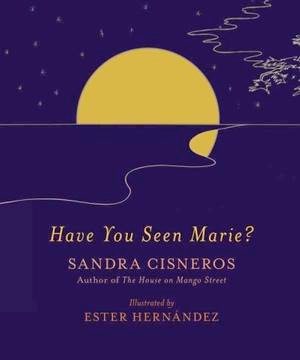
In Sandra Cisneros’ new book, Have You Seen Marie? (Knopf), the narrator searches for her lost her cat in her neighborhood. But she’s not just looking for Marie, she’s looking for a piece of herself.

The narrator lives in the King William district of San Antonio – a series of historic homes that are as colorful and unique as the people who live in them. On a hot Sunday, the narrator and a friend meet their neighbors as they search for the black and white cat who “looks like she’s wearing a tuxedo.” These eccentric group of people – a viejita who offers them a can of Big Red soda; a family of musicians who play in the park; “a girl in a fiesta dress and sleeves of tattoos” – are rendered beautifully by California-based artist Ester Hernandez.

At less than a hundred pages, Maria seems like a picture book for adults, but the book’s weight comes as the narrator realizes that she also misses her mother, who passed away a few months earlier. Marie provides a unique glimpse into a quirky neighborhood and heartfelt look into grieving.

More about Sandra Cisneros:

Sandra Cisneros is best known for her 1991 novel The House on Mango Street, and her 2003 novel Carmelo. She also founded The Macondo Foundation writer’s group.

Source: I checked this book out of the library.

Leave a comment

Filed under 2012 Books, Book Reviews, Fiction