Category Archives: Fiction

Classic book review: Rudolfo Anaya’s “Bless Me, Ultima”

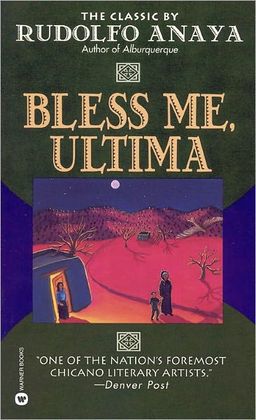
BlessMeUltimaCoverIt’s easy to see why Rudolfo Anaya’s Bless Me, Ultima has become one of Latino literature’s greatest classics and a well-read book in the classroom. The story of one boy’s struggle to find faith touches readers on a personal and cultural level.

Ultima was first published in 1972 by a small press, then grew in popularity through the decades – and has been the subject of banning at schools due to profanity. The book has been made into a movie that will be released this year.

The book is told through the eyes of 6-year-old Antonio Marez, who lives in rural New Mexico with his family in the 1940s. His mother wants him to become a priest, hoping for a more stable life than his brothers and some of the other villagers. The family invites Ultima, an elderly curandera, to live with them and she makes an instant connection with Antonio.

Antonio begins having visions as his town experiences some tough situations – including a shooting he witnesses. Some townspeople are angry at Ultima, accusing her of being a bruja who places curses on others.

But Ultima also heals people. As he undergoes his First Communion, Antonio begins to question his Catholic faith.

“I had been thinking how Ultima’s medicine had cured my uncle and how he was well and could work again. I had been thinking how the medicine of the doctors and of the priest had failed. In my mind I could not understand how the power of God had failed. But it had.”

The book is a fast read, with a well-paced plot and vivid descriptions about the land. Anaya also balances the dramatic passages with funny scenes at a Christmas pageant and Holy Communion.

Many Latinos – such as novelist Julia Amante, La Casa Azul bookseller Aurora Anaya-Cerda and writer Richard Yañez and others in a series of essays in the El Paso Times – cite this as one of their favorite books because they saw themselves depicted in the novel.

Bless Me, Ultima features some of the most prominent elements of Latino literature and the universal themes such as the importance of family and the toughness of growing up. Little wonder why it’s a classic.

Rudulfo AnayaMore about Rudolfo Anaya:

Anaya wrote Bless Me Ultima while working as a teacher in New Mexico in the 1960s. He went on to write many other books, including Alburquerque and the Sonny Baca mystery series, and he is considered the father of the Chicano literary movement.

Source: I checked this book out of the library.

Note: This is the first in my series of reviews of great Latino novels. Next up: The Aleph by Jorge Luis Borges.  
2 Comments

Filed under Book Reviews, Classic Books, Fiction

Book review: Manuel Gonzales’ “The Miniature Wife and Other Stories”

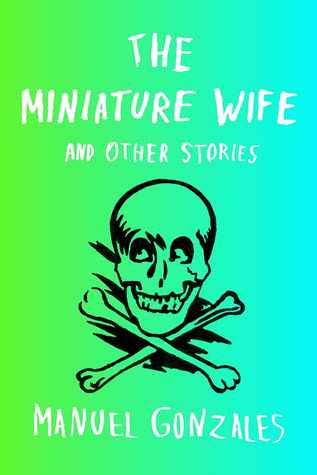
Miniature WifeManuel Gonzales can make a skeptic believe vampires and werewolves are real, even human.

In his book, The Miniature Wife and Other Stories (Riverhead), Gonzales conjures up all sorts of wild scenarios – and he uses those situations as metaphors for larger issues about the world we live in.

The book starts off with two strong stories – “Pilot, Copilot, Writer” – in which the narrator sits on a plane that is stuck in the air for 20 years, and the title story, about a man who shrinks his wife to the size of a coffee cup. Crazy stuff, but they speak about the stagnation of life and the world’s treatment of women.

A few stores – “The Artist’s Voice,” about a composer who speaks with his ears, and “Harold Withy Keith: A Meritorious Life,” about the inventor of a vascular system made out of plants – get so bogged down in technical detail that I felt like I was reading a science textbook.

But the book roars back with great, inventive stories – “All of Me,” about a zombie who crushes on a co-worker; “One-Horned and Wild-Eyed,” about a man whose friend finds a unicorn; and “Wolf,” a graphic but fascinating account about a father who turns into a werewolf.

How good are these stories? I’m not into paranormal books because I can’t take them seriously, but Gonzales makes them believable with clear, matter-of-fact writing and relatable characters who are forced to make heartbreaking decisions.

Take the zombie in “All of Me”:

“I don’t understand how hard it can be to keep our baser selves in check or how much easier it is, ultimately, to go back to the evil we knew and understand, the evil we have lived with for so long that it feels an inherent and important part of ourselves, to go back to this evil and tell ourselves that we had no other choice, that we didn’t opt for this decision, but that really there were never any other options for us to take. I know about choices and about not having choices and how it feels when it seems you have no other choice.”

So you get crazy scenarios mixed in fine writing and profound thoughts about the human condition and the state of the world. Manuel Gonzales can make you believe anything.

Manuel_GonzalesMore about Manuel Gonzales:

Texas-based Gonzales runs the Austin Bat Cave creative writing center for children and bakes pies on the side. His work has been published in The Believer, Esquire and the Dear Teen Me website. Read “The Animal House” from The Miniature Wife on the FiveChapters.com website.

Source: I received a review copy from the publisher.

Leave a comment

Filed under 2013 Books, Book Reviews, Fiction

In the news: Books from Valdes, Gonzales kick off the new year

Here’s what’s happening in the first month of 2013 (Note: I updated this article to include the Blanco and Valdes links.):

Feminist and the CowboyJust released: In The Feminist and the Cowboy: An Unlikely Love Story, Alisa Valdes recounts her relationship with a man with opposite views. In an intriguing article in Salon, Valdes said the relationship was abusive. In The Tragedy of Fidel Castro, Portuguese writer Joao Cerqueira imagines how Jesus Christ would settle the battle between Cuban dictator Fidel Castro and U.S. President John F. Kennedy.

Ways of Going HomeJan. 8: Chilean Alejandro Zambra depicts life in the Pinochet-era Chile in the novel Ways of Going Home.

Jan. 10: The Miniature Wife and Other Stories is a quirky collection of 18 short stories from Tejano Manuel Gonzales, whose work has appeared in The Believer and Esquire.

JunotDiazEvents:

Junot Díaz (right) and Francisco Goldman will speak at “A Benefit Evening of Latin American Storytelling,” Feb. 5 in New York City, with proceeds going to Radio Ambulante. Radio Ambulante’s executive producer, Daniel Alarcon, will moderate.

Literary magazines:

• The literary magazine BorderSenses is taking submissions until March 31 for its next issue. The publication will take short stories, poetry and book reviews in English and Spanish, as well as artwork. Write to editor@bordersenses.com.

Other features:

• Cuban-American poet Richard Blanco will read a poem at President Obama’s inauguration later this month, becoming the first Latino to hold that honor, NPR reports. He was also profiled in The New York Times.

• In a much-discussed article, The New York Times wrote about the lack of Latino-oriented books for children. In a follow-up article, Aurora Anaya-Cerda of La Casa Azul Bookstore in East Harlem, N.Y., gave her reading recommendations. Many small publishers felt they were not represented in the article, and Publishers Weekly featured those presses, including Lee and Low Books and Arte Público.

•  Arte Público books, which recently moved into new headquarters, was recently profiled in The Houston Chronicle.

ABC News/Univision marked the 50th anniversary of the Latin American Boom in literature.

• Book editor Marcela Landres delivered her list of the best in Latino literature for 2012.

Junot Díaz talked with NBC Latino about how he found his literary voice. He also discussed his love for libraries, politics and the greatness of Star Wars on the TV show Moyers & Company.

Joy Castro talked to the Lincoln Journal-Star about the prospect of her 2012 book, Hell or High Water, being optioned by actress Zoe Saldana for a possible movie or TV show.

Sandra Cisneros’ The House on Mango Street and Paulo Coelho’s The Alchemist are among the 30 selections for World Book Night, in which volunteers will give out books April 23. Sign up to be giver by Jan. 23.

• Cisneros remembered Mexican singer Chavela Vargas, who passed away last year, in The New York Times.

• Chilean Roberto Ampuero, author of The Neruda Case and his country’s ambassador to Mexico, was profiled in The Wall Street Journal.

• The film version of Rudolfo Anaya’s Bless Me Ultima is coming to the big screen, reports the Huffington Post.

3 Comments

Filed under 2013 Books, Fiction, News

In the news: Books from Bolaño, Saramago; new literary magazine

(I’m still taking a break, but check out my story I wrote about a Dallas theater company’s adaption of Sandra Cisneros’ Women Hollering Creek for the Theater Jones website.)

The Hispanic Reader will be taking a long hiatus, so here’s the new releases, events and holiday books to keep you entertained for the rest of the year. See you in 2013.

New releases:

Nov. 13Woes of the True Policeman is the last book Roberto Bolaño wrote before his death. The novel follows a Chilean professor as he undergoes several personal crises.

Nov. 30 – In the children’s book The Poet Upstairs by Judith Ortiz Cofer, a young girl makes friends with a writer.

• Dec. 4 – Raised From the Ground, by the late Nobel Prize winner José Saramago, is a reissue of a book – published for the first time in English – that depicts the lives of Portuguese peasants.

Dec. 11 – The children’s book The Beautiful Lady: Our Lady of Guadalupe by Pat Mora features the iconic Mexican figure.

Awards:

• The National Book Awards announced its nominations, with Junot Díaz’s  This is How You Lose Her shortlisted in the fiction category and Domingo Martinez’s The Boy Kings of Texas making the non-fiction category. Martinez spoke to NPR about how he learned about his nomination. Winners will be announced Nov. 14.

Literary magazines:

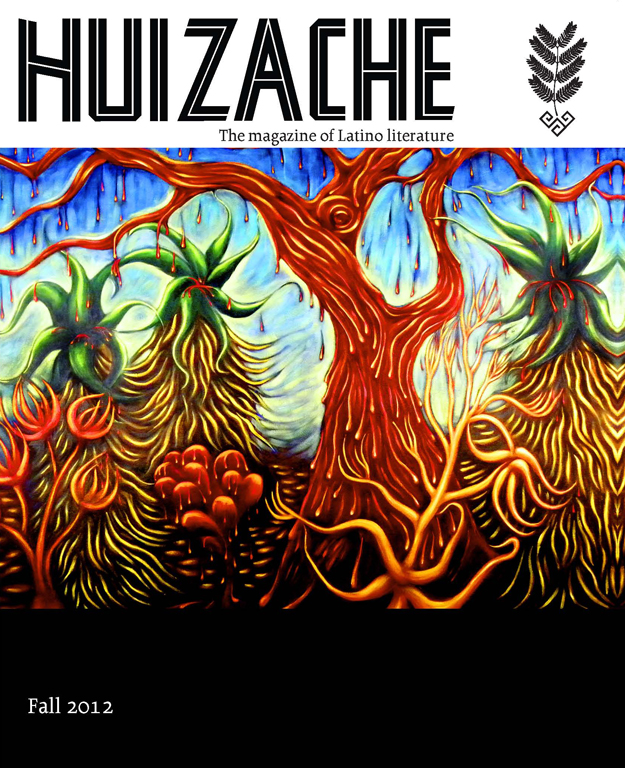
• The second issue of the literary magazine Huizache, produced by CentroVictoria – the Center for Mexican American Literature and Culture at the University of Houston-Victoria, is out. Contributors include Lorna Dee Cervantes, Rigoberto Gonzalez, Luis J. Rodriguez, Michele Serros and Gary Soto.

Book Festivals:

• The Miami Book Fair Festival International takes place Nov. 16-18. Featured authors include Malin Alegria, Roberto Ampuero, Joy Castro, Sandra Cisneros, Jeanne Cordova, Junot Díaz, Christina Diaz Gonzalez, Reyna Grande and Justin Torres.

Other News:

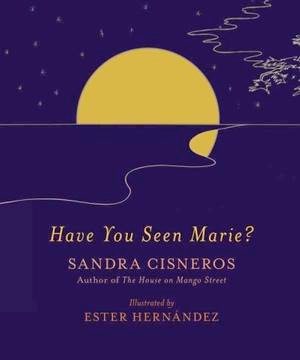
Sandra Cisneros discussed her newest book, Have You Seen Marie?, to NBC Latino, CNN and the LA Review of Books.

Junot Díaz talked to Wired magazine about the science-fiction book he’s writing, Monstro, and to LA Review of Books about his current book, This Is How You Lose Her.

Luis Alberto Urrea’s Into the Beautiful North has been named a 2013 Big Read selection by the National Endowment for the Arts.

• Pulitzer Prize winner Oscar Hijuelos will be featured in Symphony Space’s Artful Dining fundraiser Nov. 12 in New York City. Sonia Manzano will lead the discussion.

• Mexico City celebrated the 50th anniversary of Gabriel Gárcia Márquez’s move to that city by putting up posters honoring him, according to an article by Héctor Tobar in the Los Angeles Times. Tobar also wrote about a MacArthur Grant-winning Orange County barbershop that features a bookstore and is teaming up with Chapman University to promote Latino literature.

• Ploughshares magazine talked to Aurora Anaya-Cerda, owner of the La Casa Azul Bookstore in East Harlem, N.Y., that is devoted to Latino literature.

• Voices of New York wrote up about the Las Comadres Para Las Americas writer’s conference last month, with some interesting insights about Latinos in publishing.

• Want a blog that features the poetry of Pablo Neruda with pictures of cats? Here you go.

Also:

• Celebrating birthdays in November: The late Carlos Fuentes, right, and Nobel Prize winner José Saramago.

• Celebrating birthdays in December: Sandra Cisneros, Nobel Prize winning poet Juan Ramon Jimenez and Manuel Puig.

• Looking for gifts for the holidays? Here some some Christmas books for children and adults.

2 Comments

Filed under 2012 Books, Awards, Children's Books, Events, Fiction, News

Book review: Juan Pablo Villalobos’ “Down the Rabbit Hole”

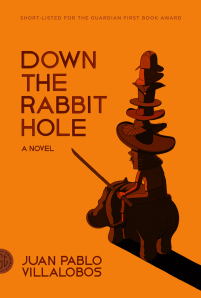
Down the Rabbit Hole (Farrar, Straus and Giroux) by Juan Pablo Villalobos seems like a crazy book, almost a fantasy – but it’s a serious book about one boy’s harsh reality.

Tochtli, the narrator, is a seven-year-old boy who lives in a palace in Mexico filled with ammunition. When he says he wants a pygmy hippopotamus, his family takes him on a safari in Liberia to get him one.

Sounds surreal, right? But Tochtli is the son of a drug gang leader.

The concept works because of Villalobos’ strong voice. Thanks to Villalobos and the book’s translator, Rosalind Harvey, Tochtli sounds both innocent and precocious. Take this passage in which he describes his preference for guillotines compared to the violent images seen on TV:

“The French put the heads in a basket after cutting them off. I saw it in a film. They put a basket just under the king’s head in a guillotine. Then the French let the blade fall and the king’s head is cut off and lands in the basket. That’s why I like the French so much. They’re so refined.”

He’s funny, too, as in this passage on the subject of food:

“I don’t like pozole much, mainly because it’s got cooked lettuce in it, which is ridiculous. Lettuce is for salads and sandwiches. Also you make pozole with pigs’ heads: once I peeped into the pot and there were teeth and ears floating around in the broth. Sordid. The things I like are enchiladas, quesadillas, and tacos al pastor. I like tacos al pastor without the pineapple, because pineapple on a taco is ridiculous, too. I hardly put any chili on my enchiladas, because otherwise my belly hurts a lot.”

One thing that bothered me: the frequent use of the F word (the one used to deride homosexuals). It was unnecessary and jarring to read.

Still, the book is an fast, fascinating read. At just 70 pages, Down the Rabbit Hole creates a unique  experience that makes you laugh and cringe.

More about Juan Pablo Villalobos: Juan Pablo Villalobos was born in Mexico and currently lives in Spain. Rabbit Hole was shortlisted for The Guardian First Book Award. His work, “Dispatches from Ambassador to Brazil, Earth,” was published by Granta.

Source: I received a review copy from the publisher.

2 Comments

Filed under 2012 Books, Book Reviews, Fiction

Thrillers and chillers: Spooky books for adults

Halloween is a holiday for children, but adults can get in the act, too. (Why turn down the candy?) There’s no better way to get into the mood than with a creepy or suspenseful book. As part of book blogger Jenn Lawrence’s meme, Murder, Monsters & Mayhem, here’s a list of Latino-themed thrillers. And check out our list of Halloween books for children posted earlier this week.

Let’s start with the monsters – specifically, vampires. The Strain is a trilogy of novels by Mexican film director Guillermo del Toro, written with Chuck Hogan, about a virus that vampires inflict on the world. (If you want a creepy movie to watch on Halloween, his 2006 film Pan’s Labyrinth is an excellent choice.)

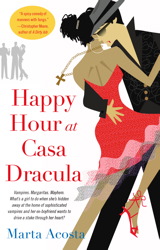
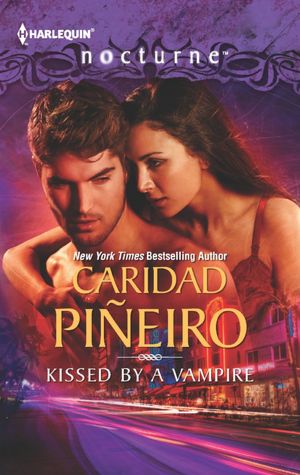
For a humorous touch, Marta Acosta’s Casa Dracula series, including Happy Hour at Casa Dracula, features a romance between the main character, Milagro de Los Santos, and a vampire. Caridad Piñeiro’s new book, Kissed by a Vampire, also features a paranormal romance – all part of her The Calling/Reborn series featuring the undead beasts.

Now let’s get to murder and mayhem, with several book series featuring Latino crime solvers. The Henry Rios series by Michael Nava, which has a gay lawyer in San Francisco as its lead character, began with The Little Death and ended with Rag and Bone. Rudolfo Anaya’s Sonny Baca series, which includes Zia Summer and Jemez Spring, features a detective solving crimes in New Mexico. The Rio Grande Valley is home to several thrillers, including Partners in Crime, by Rolando Hinojosa.

For books with a strong female protagonist, Lucha Corpi’s mysteries – including Eulogy for a Brown Angel, Cactus Blood and Black Widow’s Wardrobefeatures a clairvoyant detective solving crimes in Los Angeles. Or try these recent thrillers: Lyn DiIorio’s Outside the Bones, about a bruja who gets caught up in an old mystery; Joy Castro’s Hell or High Water , which has a newspaper reporter investigating sexual predators in New Orleans; and Linda Rodriguez’s  Every Last Secretabout a college police chief who solves a murder on campus.

1 Comment

Filed under Features, Fiction

Book review: César Aira’s “The Miracle Cures of Dr. Aira”

The Miracle Cures of Dr. Aira (New Directions) by César Aira begins with the title character talking to a tree.

So begins another original novel by Argentine-based Aira, whose Varamo was released earlier this year. In this 80-page novel, Dr. Aira is a Buenos Aires doctor who believes he is being followed and filmed in pursuit of his miracle cures.

The book is funny and philosophical at times, strange and confusing at others. Take this passage that shows Dr. Aira’s paranoia – and the book’s charm:

He had developed at least one sure method for finding out if somebody was observing him: it consisted of yawning while secretly spying on the one he suspected; if he yawned in turn, it meant his eyes had been on him, because the contagious property of yawns is infallible. Of course, somebody who just happened to be looking at him at that moment might have yawned; and anyway, proof didn’t do him much good, though at least he knew what to expect, which was enough for him.

But Aira writes in long sentences that can ramble and may need to be reread. The ending may be a bit mystifying for some readers – but it’s just about what you would expect from the quirky mind of César Aira.

More about César Aira:

César Aira is the author of more than 70 novels and essays. Miracle Cures was translated by Katherine Silver.

Source: I received a review copy from the publisher.

Leave a comment

Filed under 2012 Books, Book Reviews, Fiction

Meet novelist Sabrina Vourvoulias, author of “Ink”

Sabrina Vourvoulias has taken on the immigration issue with an intriguing twist.

Her newly released novel, Ink, explores the topic under the science fiction genre. Vourvoulias knows the issue firsthand. She grew up in Guatemala and moved to the United States as a teenager. Vourvoulias has worked mostly in newspapers and serves as managing editor of Al Día News Media, the Spanish-language newspaper in Philadelphia. She writes speculative fiction and poetry and also runs the blog, Following the Lede.

Q. Tell me about your book, Ink.
A. Ink is a novel that combines dystopia, literary fiction and magic realism. As the novel opens, a biometric tattoo has been instituted for temporary workers, immigrants with permanent resident status, and citizens with too-recent immigration history. (Because it is a tattoo those who are marked by it come to be called “inks.”) Restrictions, including “English-only” ones, are imposed and escalate until life becomes a series of “bad” and “worse” choices for the protagonists.

The story is narrated by four alternating voices: a journalist whose “beat” is reporting on inks; a citizen ink who works in the city’s population control office; an artist who is drawn (pun intended) into the inks’ struggles through friendship and temperament; and a teenager whose mother runs an “inkatorium” (a sanitarium-internment center opened in response to public health concerns).

All of the characters grapple with issues of exclusion, identity, and a shifting sense of community. But there is another layer of the world the characters are touched by — a layer peopled by mythic beings, and coursed by spirit and magic. A layer of the world where justice and reconciliation is measured in memories, and by the heart.

Q. Why did you choose the science fiction genre for a novel about immigration?
A. Speculative fiction that incorporates elements of science fiction and fantasy is born with a “what if?” and grows from there. In my case, I was already hearing and reporting about undocumented immigrants in my journalistic work, and tracking how the discourse was becoming less and less about authorization, and more about a generalized fear and loathing. I created characters I cared about — with a diversity of life experiences and expectations — and subjected them to a daily existence that is an exaggerated version of what I have already observed or heard about. I wove through this what I love best about Sci Fi/Fantasy/Magic Realism: the poetic imaginings, and the “what ifs” that aren’t restricted to our material, physical world.

Q. How has your Guatemalan/Latino heritage inspired your work? Who are your favorite Latino writers, and why?
A. I grew up in a Guatemala torn by an undeclared, internal war. Those years were spent living our everyday lives under the rule of a repressive government that didn’t hesitate to get rid of those it deemed undesirable. Those experiences undergird the very U.S. dystopia I created for Ink, and much of what I subject the fictional city of Hastings to (martial law, curfews, roadblocks and civil patrols, states of emergency) is lived experience.

At the same time, I am formed by the folklore and legends of Guatemala, which all live barely under the skin of those of us connected by blood and heart to that country. It is hard to imagine a nation more rich with pre and post colonial mythology and folklore. That living cultural legacy, and the particularly strong ties of family, faith and community I’ve experienced in the U.S., are all part of what inspires not only this work, but all my work.

As for favorites, I’m very fond of both Latin American Boom classics and the works of U.S. Latino authors, and probably for the same reasons: they tend to be character-driven and very socially aware, while imbued with a kind of casual or innate magic. Or, if not actual magic, a sense of the mythic. So, Miguel Angel Asturias, Gabriel Garcia Marquez, Juan Rulfo and Jorge Luis Borges on the Latin American side, and Sandra Cisneros, Denise Chavez, Ana Castillo, Julia Alvarez, Cristina Garcia, Francisco Goldman and emerging writers like Gina Ruiz and Melinda Palacio on the U.S. side. I also read a lot of poetry including the works of Francisco Alarcon, Lorna Dee CervantesAlma Luz Villanueva, Elena Diaz Bjorkquist and Martin Espada.

Leer es poder, they say, and it’s true. There is power in words, and the need for Latino voices — read, wrtitten and spoken — has never been clearer.

Leave a comment

Filed under 2012 Books, Author Q&A, Fiction

Book review: Sandra Cisneros’ “Have You Seen Marie?”

In Sandra Cisneros’ new book, Have You Seen Marie? (Knopf), the narrator searches for her lost her cat in her neighborhood. But she’s not just looking for Marie, she’s looking for a piece of herself.

The narrator lives in the King William district of San Antonio – a series of historic homes that are as colorful and unique as the people who live in them. On a hot Sunday, the narrator and a friend meet their neighbors as they search for the black and white cat who “looks like she’s wearing a tuxedo.” These eccentric group of people – a viejita who offers them a can of Big Red soda; a family of musicians who play in the park; “a girl in a fiesta dress and sleeves of tattoos” – are rendered beautifully by California-based artist Ester Hernandez.

At less than a hundred pages, Maria seems like a picture book for adults, but the book’s weight comes as the narrator realizes that she also misses her mother, who passed away a few months earlier. Marie provides a unique glimpse into a quirky neighborhood and heartfelt look into grieving.

More about Sandra Cisneros:

Sandra Cisneros is best known for her 1991 novel The House on Mango Street, and her 2003 novel Carmelo. She also founded The Macondo Foundation writer’s group.

Source: I checked this book out of the library.

Leave a comment

Filed under 2012 Books, Book Reviews, Fiction

Meet novelist Caridad Piñeiro, author of “Kissed by a Vampire”

Caridad Piñeiro has given Latino literature a supernatural edge.

Her latest novel is Kissed by a Vampire, featuring a paranormal romance. She’s written nearly three dozen books, including the Chicas romance series and the The Calling/Reborn series. She’s received numerous awards from romance writers associations.

Piñeiro was born in Havana, Cuba, and worked as an attorney. This post is part of a blog tour for Kissed by a Vampire.

Q: Tell us about your latest book, Kissed by a Vampire

Kissed by a Vampire is the story of a 2000-year-old vampire, Stacia, who has grown tired of her eternal life and has also grown lonely. She doesn’t believe it’s possible for her to find love or have any kind of lasting relationship, but then she meets DEA Agent Alex Garcia. Or should I say is reunited with him. She had saved his life many years earlier when Alex was shot during a raid that went wrong. Stacia had taken pity on Alex when she saw the love in his eyes for another agent who had been shot during the same raid. When Stacia runs into Alex again, she is unprepared for her attraction to him and for the emotions he rouses. Kissed by a Vampire is sexy and emotional. It’s also action-packed as Stacia decides to help Alex find a missing young woman and shut down a white slavery ring.

Q: Most of your novels deal with paranormal romance. What drew you to this genre? Why has it become so popular? 

I was in a dark mood and wanted to vent that in my writing. I also thought that stories with paranormal elements would let me play with different ideas that I could not include in more traditional romances. I think the ability to have such different stories, especially the edgier kinds of stories possible with paranormals, is what has made the genre so popular.

Q: How has your Cuban/Latino heritage inspired your work? Who are your favorite Latino authors? 

I try to include aspects of my culture and/or other Latino culture in as many works as I can.  For example, one of the main characters in The Calling/Reborn series is Cuban-American FBI Agent Diana Reyes. In her stories, I’ve brought in her family’s values and foods. In Kissed by a Vampire, the story is set in South Beach and I’ve tried to work in the flavor that Cuban-Americans have given to that area. As for my favorite Latino authors, there quite a few. Julia Amante, Sylvia Mendoza, Berta Platas, Tracey Montoya, Reyna Grande, Julia Alvarez and Aimee Thurlo just to name a few.

6 Comments

Filed under 2012 Books, Author Q&A, Fiction