Category Archives: Fiction

Book review: Meg Medina’s “Yaqui Delgado Wants to Kick Your Ass”

YaquiDelgadoYaqui Delgado Wants to Kick Your Ass (Candlewick) has one of the best titles of the year so far. And the young adult novel by Meg Medina boasts a story as compelling as its title.

Piddy Sanchez is a half-Cuban, half-Dominican teenager living in Queens who has started attending a new high school. One day, she is told that Yaqui Delgado, a classmate she doesn’t know, is after her. As another student tells her:

“‘You’re stuck-up for somebody who just showed up out of nowhere. Oh! And she wants to know who the hell you think you are, shaking your ass the way you do.’ … Interesting, I’ve only has an ass for about six months, and now it seems to have a mind of its own.”

Piddy is on the lookout for Yaqui. And her fear leads her to skip classes and neglect her studies. To add to her stress, she becomes involved with a boy from a troubled family, and she starts questioning her mother about the whereabouts of her father, whom she’s never met.

Delgado is a fast-paced, easy to read novel that accurately conveys the fear of bullying and the angst of being an adolescent, that awful time in life when nothing you do is right.

Take this scene where Piddy is hanging out with her mother’s best friend:

“I don’t say anything else as the sputtering radio fills the room. Lila wouldn’t understand what it’s like to be hated. Everyone loves her; everyone wants to talk to her at a party. … I don’t know that secret charm – at least not at (school), where I’ve become a loser just like that.”

While YouTube is mentioned, I would have liked to have seen the presence of more cyberbullying since it’s so rampant today – although I understand that the characters come from low-income families whose parents don’t own computers or smartphones.

But that’s a minor complaint. Overall, Yaqui Delgado is a excellent novel for teens, who will relate to the main character and her troubles. The book kicks ass.

Meg_MedinaMore about Meg Medina:

Virginia-based Medina is the author of the 2012 young adult novel The Girl Who Could Silence the Wind and the 2011 picture book Tía Isa Wants a Car, which won the Ezra Jack Keats New Writer Award.

Source: I received a review copy from the publisher.

2 Comments

Filed under 2013 Books, Book Reviews, Fiction, Young Adult Books

Classic book review: Sandra Cisneros’ “The House on Mango Street”

HouseonMangoStreetSandra Cisneros’ 1984 novel The House on Mango Street (Vintage) is just 110 pages long. It doesn’t have a sweeping plot. It’s a collection of interlinking stories about a young girl, Esperanza, her family and her neighbors. It’s the little details about everyday life that have made the book the classic that it is today.

I first read Mango Street more than 15 years ago, and I distinctly remember one line from the book, from the chapter called “My Name”: “In English my name means hope. In Spanish it means too many letters.”

I’ve missed Cisneros’ work. It has been 10 years since her last novel, Caramelo, was released. Last year, I read Women Hollering Creek, a collection of short stories from 1992, and just as I reread Mango Street, I remembered why Cisneros is such a beautiful writer. The conversations sound like she has been eavesdropping on your family and she makes commonplace objects sound extraordinary, almost poetic. Take this passage from the chapter “Hairs”:

“Everybody in our family has different hair. My Papa’s hair is like a broom, all up in the air. And me, my hair is lazy. It never obeys barrettes or bands. … But my mother’s hair, my mother’s hair, like little rosettes, like little candy circles all curly and pretty because she pinned it in pincurls all day, sweet to put your nose into when she is holding you, holding you and you feel safe, is the warm smell of bread before you bake it, is the smell when she make room for you on her side of the bed still warm with her skin, and you sleep near her, the rain outside falling and Papa snoring.”

Or this line from “Hips”:

“One day your wake up and they are there. Ready and waiting like a new Buick with the keys in the ignition. Ready to take you where?”

Many of the stories deal with universal adolescence angst. But several of the stories – including a thread about Sally, a beautiful girl who ends up married before eighth grade – show a gritty reality that is part of Esperanza’s tough Chicago neighborhood.

Mango Street is easy to read and relate to – there’s little wonder that it’s now part of the high school literary canon. It’s the only Latino book on the PBS’ The American Novel series and NPR’s 100 Best-Ever Teen Novels.

Cisneros released a book Have You Seen Marie? last year, but it was much too brief. Here’s hoping that a new Cisneros book will be published soon.

scisnerosMore about Sandra Cisneros:

Sandra Cisneros grew up in Chicago. She has won fellowships from the National Endowment of Arts and the MacArthur Foundation. She also founded The Macondo Foundation writer’s group.

Source: I purchased this book.

This book is the latest in my series of classic Latino novels. Up next: The Alchemist by Paulo Coehlo.

3 Comments

Filed under Book Reviews, Classic Books, Fiction, Young Adult Books

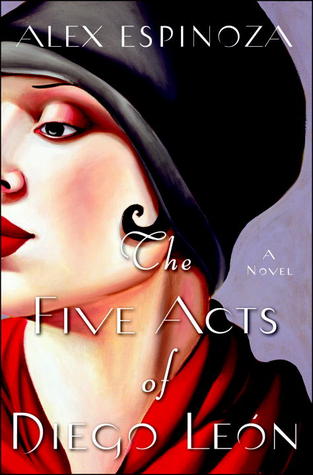
Book review: Alex Espinoza’s “The Five Acts of Diego León”

Diego LeonHollywood is made of illusions. But real life can be the greatest illusion of all. And that’s the premise of Alex Espinoza’s The Five Acts of Diego León (Random House).

León begins with Diego as a child, when his father is gone from their small village to fight in the Mexican Revolutionary Ward. Diego eventually moves to a larger town to live with his wealthier maternal grandparents. Now an adult, he would have a well-off, if dull, life if he stayed there. But Diego – who found joy in performing folk dances and theater in his youth – yearns for something more.

While the war rages on in Mexico, Diego moves to Hollywood. And, of course, nothing is what it seems. Diego has to struggle to find work as the Great Depression hits, and he begins to struggle with who he is, both personally – when he has to betray some friendships – and romantically – when he falls in love with someone unexpectedly.

Little wonder he feels most comfortable on the movie set.

 “Diego wanted to stay there, in that magnificent studio lot where French cancan dancers walked alongside nurses, where police officers mingled with criminals, where barons in fancy top hats and tuxedos shared cigarettes with homeless men in rags. It was all absurb and funny and dizzying. And yet he felt at home there, among the costumes and extravagance, among the chaos and commotion. This was where he wanted to be, where he needed to be.”

Espinoza writes in simple language, with a fast-moving plot and frequent dialogue, so the book is easy to zip through. He smoothly weaves in historical details with the plot, and the book never feels like a textbook.

But Diego still seems a mystery to the readers – I enjoyed the book, but I never seemed to make an emotional connection with him – and maybe to himself. A twist at the end didn’t hit me as much I thought it would, but it may surprise others.

Deigo León shows how Hollywood and humans are such a mystery.

AlexEspinozaMore about Alex Espinoza:

Espinoza’s first novel was the 2007 Still Water Saints. He was born in Tijerina, Mexico, grew up near Los Angeles and now teaches creative writing and literature at California State University, Fresno.

Source: I received a review copy from the publisher.

Leave a comment

Filed under 2013 Books, Book Reviews, Fiction

Classic book review: Jorge Luis Borges’ “The Aleph”

AlephBorgesJorge Luis Borges is hard to trust.

You never know what you’re going to get in his 1949 collection of short stories, The Aleph.

The Aleph, along with his 1944 book Ficcones, is a collection of short stories regarded as one of the greatest books from the Argentine writer. Borges is considered to be one of the greatest writers of the 20th century and one of the innovators of magic realism. His works have influenced such authors as Carlos Fuentes and Gabriel García Marquez, according to this comprehensive page from the Garden of Forking Paths fan page. He even has an unlikely fan in conservative political strategist Karl Rove.

The stories take place from the ancient times to the 20th century. The locations range from Argentina to the Middle East. War and revenge are frequent subjects. Religious themes are often evoked, with the Bible and Koran frequently cited. It’s not surprising labyrinths appear several times (or that the work of artist M.C. Escher, known for his elaborate drawings that often feature endless mazes, was chosen for the cover of the Penguin Classics edition).

Two men get in a vicious intellectual argument about the role of the Bible in “The Theologians.” In “The Biography of Tadeo Isidoro Cruz (1829-1874),” a soldier realizes who he is on the battlefield. A woman named “Emma” plots a clever way of revenge. A man is obsessed by a coin called the “Zahir,” a reflection of society’s obsession with money.

I was intimidated about reading Borges’ stories. His works were easier to read than I thought it would be, but I had to reread some passages several times.

If some situations came off as repetitive, others came off as original and I was waiting for what the twist was going to be. But the story that most intrigued me was one that grounded in realism. In “Deutsches Requim,” a Nazi recounts his time as a concentration prison guard. The story was chilling.

The Penguin Classics edition, translated by Andrew Hurley, also includes The Maker, a series of essays. The most powerful one being “In Memorium, J.F.K.,” a history of weapons used for killing.

Jorge Luis Borges is hard to trust, and hard to forget.

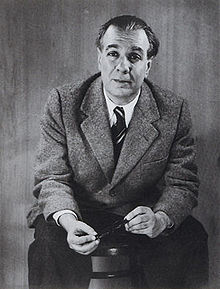
Jorge_Luis_BorgesMore about Jorge Luis Borges:

Borges, who was born in 1899 in Argentina and died in 1986, worked as a librarian and also wrote poetry. In 2011, he received a Google doodle in honor of his birthday.

Source: I purchased this book from Amazon.com

This review is part of my series of classic Latino novels. Up next: The House on Mango Street by Sandra Cisneros.

1 Comment

Filed under Classic Books, Fiction

Classic book review: Helena María Viramontes’ “Under the Feet of Jesus”

under_the_feet_of_jesusUnder the Feet of Jesus by Helena María Viramontes has been hailed as one of the great books of Latino literature with its lyrical prose and depiction of the struggles of farmworkers. But to me, it was challenging to read.

The 1995 novel follows a family of migrants as they move from one farm to another, looking for work. Petra is the mother, who is accompanied by her much older companion, Perfecto, and her children, including a pair of twins and her daughter, Estrella.

Estrella soon becomes smitten with a young man named Alejo. It’s a hopeful sign in a life filled with struggle. Biplanes fly over the fields, spewing pesticide over the farmworkers. Alejo soon becomes sick.

At times, Viramontes’ descriptions are absolutely breathtaking. Take this scene with Estrella in the fields.

“Carrying the full basket to the paper was not like the picture on the red raisin boxes Estrella saw in the markets, not like the woman wearing a fluffy bonnet, holding out the grapes with her smiling, ruby lips, the sun a flat orange behind her. The sun was white and it made Estrella’s eyes sting like an onion, and the baskets of grapes resisted her muscles, pulling their magnetic weight back to the earth. The woman with the red bonnet did not know this.”

But the book moves so slowly. Instead of a well-paced plot, Viramontes spends most of the times describing little things and creating metaphors. Take this scene at a clinic:

“There was a row of glass jars filled with flat tongue depressors that reminded them of fat ice cream sticks, gauze pads and cottons swabs on skinny wooden sticks that looked like the legs of ballet dances in tan nylons and white shoes; thermometers in a glass tube and a big jar of cotton balls.”

That’s some nice imagery, but it doesn’t tell me anything. Fortunately, that passage in the clinic turns into the most riveting scene in the book. The family only has $9.07 to its name and a car with no gas, and they must seek medical help for Alejo – forcing Estrella makes a drastic move to get help. I finally was swept up in the novel.

For readers who love descriptions and metaphors, this is a great book for them. But readers like me who prefer a strong plot will find this book frustrating.

HelenaMariaViramontesMore about Helena María Viramontes:

A California native, Viramontes also wrote The Moths and Other Stories and Their Dogs Came With Them, and co-edited Chicana (W)rites: On Word and Film and Chicana Creativity and Criticism with Maria Herrera Sobek.

Source: I checked this book out of the library.

And this marks the end of my 2012 reading challenge of classic books by Latinas. My reading challenge for 2013 is classic Latino novels. Check out this list of books about the farmworkers movement.

Leave a comment

Filed under Book Reviews, Classic Books, Fiction

Classic book review: Alisa Valdes’ “The Dirty Girls Social Club”

the-dirty-girls-social-clubYou know how you have that friend that’s funny and entertaining, but sometimes they’re annoying, too? The Dirty Girls Social Club by Alisa Valdes is like that friend.

Social Club, which was released in 2003, focuses on six friends in their late 20s in Boston who met in college and reunite several times a year. The characters are Lauren, the newspaper columnist looking for love; Rebecca, the uptight magazine editor stuck in a stale marriage; Elizabeth, the newscaster with a secret; Sara, the stay-at-home mom in denial about her abusive marriage; Usnavys, the non-profit executive who is torn over her relationship with a man who makes less money than her; and Amber, the musician who is active in the Mexica movement and later changes her name to Cuicatl.

The book has been frequently referred to as a Latina Sex and the City or Waiting to Exhale by Terry McMillan because of its depiction of strong female friendship. But it’s unique in its depiction of Latina in high-powered professional roles.

Valdes, a former newspaper reporter, writes clearly, so it’s an easy read. One scene in which Sara’s life is in danger is particularly gripping. Valdes has a knack for depicting women’s complex feelings and personalities, and she can nail some funny moments.

Take this scene in which Lauren found out some bad news:

“I feel like killing myself. I stop at the corner Korean market and buy a bag of Hot Cheetos, a carton of powdered sugar donuts, three chocolate bars, and a can of Pringles.”

Or this conversation between two of the characters:

“Back in college, you remember that trip we all took to Cancún for spring, you, me, Roberto, that guy Gerald I was dating, Lauren and that one guy, whatever his name was?”

“Alberto. Pimple man.”

“Alberto. Zits galore. Him.”

But some things tested my patience. The exposition takes too long. The character of Usnavys is so shallow that she’s hard to like. And considering the book takes place in a six-month span, the ending wraps up just a bit too tidy.

Still, just like that friend who can be annoying, Dirty Girls Social Club is also something that can be fun and rewarding.

Alisa ValdesMore about Alisa Valdes:

Cuban-American, New Mexico-based Alisa Valdes’ newest book is the just-released The Feminist and the Cowboy. She’s written two sequels to The Dirty Girls Social Club – Dirty Girls on Top and Lauren’s Saints of Dirty Faith, as well as a cooking blog, in addition to other novels.

Source: I checked this book out of the library.

Note: This review is part of a series of classic books by Latinas, which I’m catching up from last year. Next up: Under the Feet of Jesus by Helena María Viramontes.

1 Comment

Filed under Book Reviews, Classic Books, Fiction

In the news: Sáenz, Díaz win Pura Belpré Awards

The new year brings honors for books released last year. Here’s a look at some recent award winners, plus the usual round-up of new releases and other links.

AristotleDanteBenjamin Alire Sáenz’s 2012 young adult novel Aristotle and Dante Discover the Secrets of the Universe won three major honors today at the American Library Association’s Youth Media Awards. His story of two teenagers who form an unlikely friendship earned the Pura Belpré Author Award, which honors books that depict the Latino experience; a Michael L. Printz Honor Book, which awards outstanding books for young adults; and the Stonewall Book Award, which recognizes stories that represent the lives of lesbian-gay-bisexual-transgendered youth.

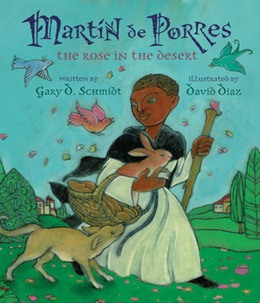
martin-de-porresThe other Pura Belpré recipients were The Revolution of Evelyn Serrano, an Honor Book winner for author Sonia Manzano, and Martín de Porres: The Rose in the Desert which won the Belpré Illustrator Award for David Díaz.

• Several Latino writers made the 2013 Rainbow List for books aimed at youth that depict the LBGTQ experience. They are Jeanne Córdova, When We Were Outlaws:  a Memoir of Love & Revolution; Rigoberto Gonzalez, Mariposa Gown; Sáenz, Aristotle and Dante; Charles Rice-González, Chulito: A Novel.

SummeroftheMariposasGuadalupe Gárcia McCall’s Summer of the Mariposas earned a place on the Amelia Bloomer Project Top Ten List for feminist books for youth.

Reyna Grande was nominated for a National Book Critics Circle Award in the autobiography category for her memoir The Distance Between Us.

ThisIsHowYouLoseHerJunot Díaz is up for The Story Prize, given to short story collections, for his book This is How You Lose Her. Diaz’s book was also named to the Reference and User Services Association’s 2013 Notable Books List.

Sergio Troncoso’s 2011 novel From This Wicked Patch of Dust won the Southwest Book Award, which is given by the Border Regional Library Association.

• Houston’s Tony Díaz, leader of the Librotraficante movement, will receive the Robert B. Downs Intellectual Freedom Award from the University of Illinois at Urbana-Champaign.

MyBelovedWorldOut in bookstores:

• Supreme Court Justice Sonia Sotomayor has the number one book on The New York Times’ Hardcover Non-Fiction chart with her memoir, My Beloved World.

• Fiction: In Thomas Sanchez‘s American Tropic, an ecoterrorist is on the loose in the Florida Keys. In Kind of Kin by Rilla Askew, an Oklahoma family comes under fire for hiring undocumented immigrants from Mexico.

Literary Magazines:

• The Kweli literary journal, which features works by people of color, is accepting submissions until March 1.

Dagoberto Gilb is among the writers with works in the latest issue of Make: A Chicago Literary Magazine.

Writing contests:

• Feb. 12 is the deadline to submit scripts for consideration for the 2013 Austin Latino New Play Festival, which is open to Texas/Tejano playwrights this year. The festival, sponsored by Teatro Vivo, features a different play each night from May 16 to 18.

Other news:

Cuban-American poet Richard Blanco, who recited his poem at President Obama’s inauguation, was profiled on the Poets.org website and the Poetry Foundation website. Watch that poem and read 14 other works by Blanco on the MediaBistro website. In this Huffington Post article, he talked about how his homosexuality was not accepted in his family.

• Cuban-American Dolores Prida, a playwright, newspaper columnist and the “Dolores Dice” columnist for Latina magazine, passed away last month, Latina reports. Here are articles about her from the Associated Press, CNN, Huffington Post, The Nation and The New York Times. Read Prida’s columns at the Voices of NY website.

• In this School Library Journal story, librarians reacted to a recent New York Times article about the lack of Latino literature in classrooms.

Las Comadres Para Las Americas National Latino Book Club has announced its first book selections of the year – including the anthology Eight Ways to Say “I Love My Life” and Sabrina Vourvoulias’ science-fiction novel Ink.

Los Angeles Times columnist Héctor Tobar interviewed Sandra Cisneros for the LA Review of Books. Tobar also wrote about Latino Books y Más, a bookstore that specializes in Latino literature in Palm Springs, Calif., that is closing down. Cisneros delivered her playlist, with selections from from Chavela Vargas to The Beatles,to the alt.latino website of NPR.

Manuel Gonzales, author of the The Miniature Wife and Other Stories, was featured in The Austin Chronicle. Hear Gonzales read one of his book’s stories, “Pilot, CoPilot, Writer”, on the Poets and Writers website.

• Poet Martín Espada discussed his works, including his most recent book The Trouble Ball, on the TV show Bill Moyers and Company.

• Daniel Alcarón, whose novel At Night We Walk in Circles will come out in the fall, talked to Poets and Writers magazine about the importance of literary awards.

• The Publishing Perspectives website discussed how more translations are needed for books by Latin American writers.

• Natasha Wimmer talked to the website Sampsonia Way about translating the works of Roberto Bolaño.

Joy Castro, author of Hell or High Water, discussed her faith to the In the Fray website.

In February:

• In honor of Black History Month, here’s a look at Afro-Latino writers. Want to read a great romance for Valentine’s Day? Try something from this list of great love stories, Latino-style.

3 Comments

Filed under 2013 Books, Awards, Children's Books, Fiction, News

Classic book review: Michele Serros’ “Chicana Falsa”

chicana-falsaMichele Serros can say a lot in just a few words.

In the 88 pages of her 1993 book of poems and stories Chicana Falsa, she writes about cultural identity, adolescent angst and the quirks of human relationships. In one poem, she shows the consequences of gang violence in just 37 words.

Her poetry is easy to read and, even better for a challenging genre, fun to read. Her poems feature great characters that you would know in real life – the lone Chicana in the gym who “the whole time/I am thinking of/that double-cheese/Chimichanga Supreme/I’m gonna pick up/On the way home”; a worker who gets what she want, including larger cubicle space and extended lunches; and a Chicana who’s yearns to speak Spanish so “I’ll be a perfected ‘r’ rolling/tilde-using Spanish speaker/A true Mexican!”

But her stories are universal. Serros understands the neurotic tendencies of humans very well. In one story, the narrator sticks with some friends just for the free stuff she gets from them. Another story features a family that holds grudges against each other over petty incidents.

The book begins and ends with stories about Serros’ mother, who encouraged her to be a writer – even buying her a desk. Serros grew up wanting to be an author, and she finally starting writing after her mother’s death at an early age. “The purpose? To make someone happy, inspired.” Serros succeeded because reading this book will make readers feel that way.

Michele SerrosMore about Michele Serros:

A California native, Serros has written the books How to Be a Chicana Role Model, Honey Blonde Chica and ¡Scandalosa! A Honey Blonde Chica Novel, as well as for The George Lopez Show TV show and other publications.

Source: I won this book in a giveaway on Serros’ Facebook page for my random knowledge of Santa Barbara, Calif. Thanks, Michele!

Note: This book is part of my series of books by Latina writers that I began last year. Yes, I know I’m way behind. Next up: Alisa Valdes’ The Dirty Girls Social Club.

4 Comments

Filed under Book Reviews, Classic Books, Fiction, Poetry

Book review: Alejandro Zambra’s “Ways of Going Home”

Ways of Going HomeWays of Going Home (Farrar Straus and Giroux) by Alejandro Zambra is two books in one.

The book begins with an earthquake in 1985 in Maipú, a suburb of Santiago, Chile. The nine-year-old narrator, meets a girl, Claudia, who lives with her uncle and mother. Claudia asks the narrator to spy on her mysterious uncle and report back to him. Then the girl moves away.

The book then switches to a 30-year-old man who is writing that story. He is in the midst of separating from his wife, Eme, who has inspired the story. The narrator also draws from his own life, as the reader can see in his visits to his parents.

Eventually, he gets back to the story, where the narrator has grown up and reunites with Claudia – who reveals her family secrets.

The book is 138 pages, just the right size for a book that has mostly dialogue and internal narrative and not much action.

Zambra, who is often compared to another Chilean writer, Roberto Bolaño, describes life in Pinochet-era Chile – including a harrowing but brief scene in which a teacher fears he is being attacked in a classroom – but he excels in his observations about the relationship between parents and children.

“We go home and it’s as if we were returning from war, but from a war that isn’t over. I think, We’ve become deserters. I think, We’ve become war correspondents, tourists. That’s what we are, I think: tourists who arrive with their backpacks, their cameras, and their notebooks, prepared to spend a long time wearing out their eyes, but who suddenly decide to go home, and as they do they breathe a long sigh of relief.”

I didn’t feel particularly connected to the main character, except in the first – and strongest – part of the book, when the boy is young and innocent. The older character is more distant and cold, perhaps a reflection of aging.

“I got over to the little shelf holding the old family photo albums. That’s what these albums are for, I think: to make us believe we were happy as children. To show ourselves that we don’t want to accept how happy we were.”

It makes you wish he never lost his innocence. Ways of Going Home is much like life – adventurous and full of curiosity in the beginning, and a bit melancholy and weary as time moves on.

AlejandroZambraMore about Alejandro Zambra:

A native of Santiago, Chile, Zambra has written two other novels, The Private Lives of Trees and Bonsai. The novel was translated by Megan McDowell.

Source: I purchased this book from Amazon.com.

Leave a comment

Filed under 2013 Books, Book Reviews, Fiction

She has the cure for what ails you: The curandera in Latino lit

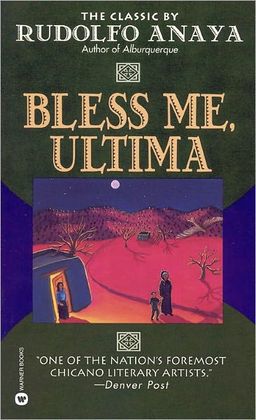
Bless Me Ultima, which The Hispanic Reader reviewed earlier this week, features an enduring figure in the Latino culture – the curandera, or healer. That figure has played a role in some of the great books in Latino literature. In this great post from La Bloga, Ultima author Rudolfo Anaya and children’s author Monica Brown talk about the role of curandera. Here’s a look at some great curanderas:

BlessMeUltimaCoverBless Me Ultima – Young Antonio Marez is growing up in rural New Mexico when his family takes in Ultima, an elderly curandera. She helps heal his dying uncle, but townspeople believe she places curses on people. This book by Rudolfo Anaya has become one of Latino lit’s best known and beloved books, and has stirred controversy for its profanity.

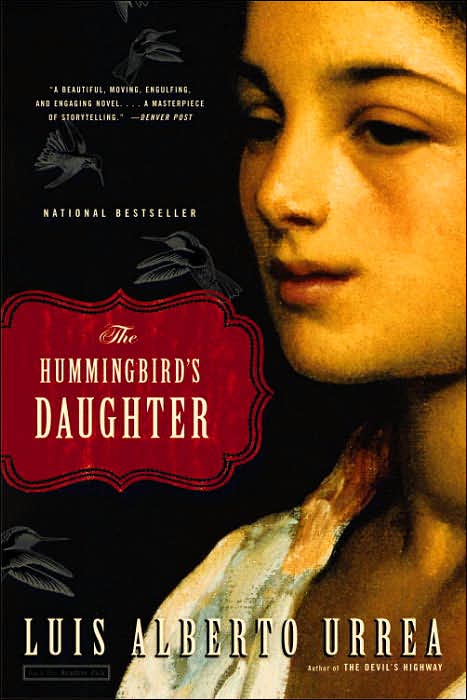
The+Hummingbird's+DaughterThe Hummingbird’s Daughter – In revolutionary Mexico, Teresita Urrea learns healing powers from a villager named Huila. Soon, she attracts the attention of hundreds of villagers, hoping she will cure them. The brilliantly funny book, written by Luis Alberto Urrea, rivals Ultima in the amount of profanity. The sequel, Queen of America, in which Teresita’s celebrity takes her to the United States, is now in paperback.

SoFarFromGodSo Far From God Ana Castillo’s book about a mother and her four daughters in New Mexico features a whole chapter devoted to villager Dona Felicia’s remedies. Dona Felicia goes on to teach the remedies to one of those daughters, Caridad, after she is traumatized after an attack. Caridad ends up becoming a saint to villagers because they believe she has special powers.

Clara_and_the_CuranderaClara and the Curandera – In this bilingual children’s book written by Monica Brown and illustrated by Thelma Muraida, the curandera has a cure for a young girl who is afflicted with a nasty case of the grumps.

Sources: Wikipedia, Challenging Realities: Magic Realism in Contemporary American Women’s Fiction by M. Ruth Noriega Sánchez

3 Comments

Filed under Children's Books, Culture, Features, Fiction