Yearly Archives: 2012

Classic book review: Laura Esquivel’s “Like Water for Chocolate”

In the early 1990s, Like Water for Chocolate: A Novel in Monthly Installments with Recipes, Romances, and Home Remedies by Laura Esquivel was one of the most popular books in the world, thanks to a well-made movie and an intriguing love story. Its popularity was well-earned.

The main character, Tita, has been told that she must take care of her mother Mama Elena in her old age – denying her a chance to be with Pedro, who has declared his love for her. He agrees to marry her older sister, Rosaura, so he can be closer to her.

While Pedro and Rosaura are raising a family and the revolution rages in Mexico, Tita is running the family ranch. The events of her life push her to feel “‘like water for chocolate’ – she was on the verge for boiling over.’”

In fact, her volatile emotions are felt in the meals she cooks for her family – causing those who eat her food to feel the same emotions she does. (The recipes are printed at the beginning of each of the 12 chapters, although they seem too elaborate to cook.)

Although it’s story about love, Like Water is also interesting when depicting family dynamics and early feminism. Mama Elena is portrayed as a domineering woman who rules the household, and Tita questions why the youngest daughter has to take care of the mother. Here’s one great passage that describes her life:

“At her mother’s, what she had to do with her hands was strictly determined, no questions asked. She had to get up, get dressed, get the fire going in the stove, fix breakfast, feed the animals, wash the dishes, make the beds, fix lunch, wash the dishes, iron the clothes, fix dinner, wash the dishes, day after day, year after year. Without pausing for a moment, without wondering if this is what she wanted.”

I’m not always a big fan of magic realism, but it works well in this novel because, oddly, it seems natural. This is a great book that – thanks to its creativity and strong heroine – is as satisfying as one of its meals.

More about Laura Esquivel: Laura Esquivel, who lives in Mexico City, is a former teacher who also has written the books The Law of Love, Between Two Fires: Intimate Writings on Life, Love, Food, and Flavor and Malinche. The book was translated by Carol Christensen and Thomas Christensen.

Note: This is part of a series of classic books written by Latinas. Next up: Cristina Garcia’s Dreaming in Cuban. (Yes, I’m running a bit behind.)

Source: I bought a hardcover version of this book for $1 at a thrift store. Don’t you love it when that happens?


2 Comments

Filed under Book Reviews, Classic Books, Fiction

A look at LGBT Latino writers

June is Gay Pride Month. Here’s a look at some Latino writers who have written about the lesbian-gay-bisexual-transgendered experience:

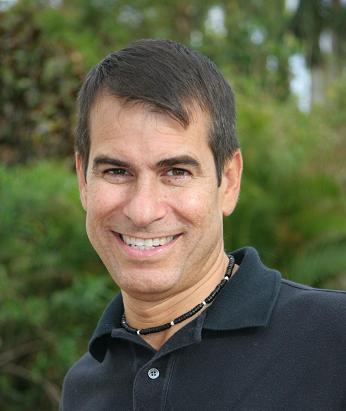
• Poet Francisco X. Alarcón, right, is best known for his Pura Belpré Honor Award-winning book Laughing Tomatoes and Other Spring Poems/Jitomates Risuenos y Otros Poemas de Primavera, but he has written about the gay experience in his numerous poems and is working on an anthology of gay Latino poetry.

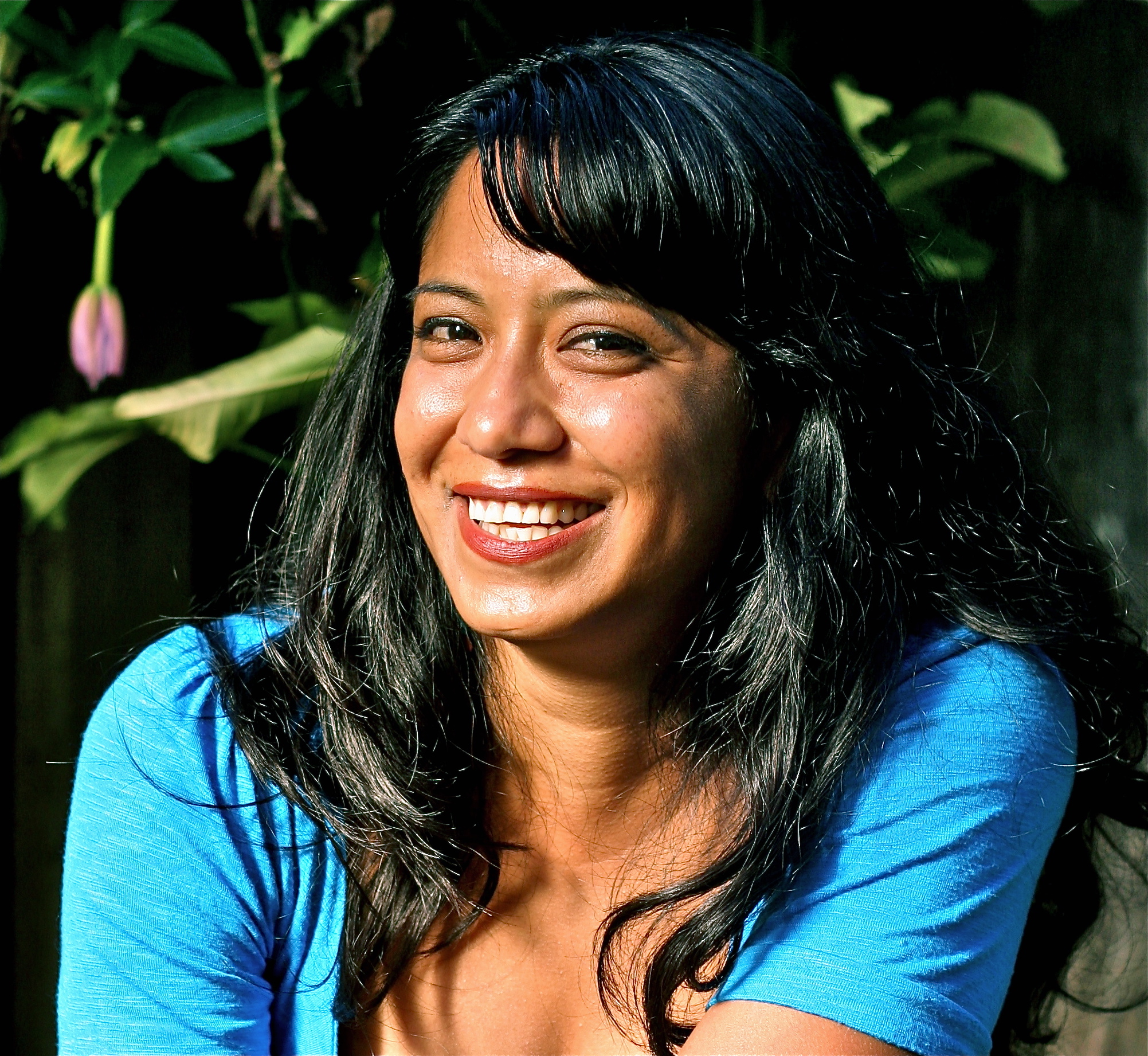
Jeanne Córdova, left, was on the forefront of the gay rights and women’s movement in the 1970s. Her most recent book, When We Were Outlaws: A Memoir of Love & Revolution, was partly written in Mexico. The book recently won the Lesbian Memoir/Biography prize from the 24th Annual Lambda Literary Awards.

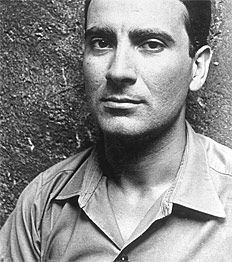
• The late Manuel Puig, right, wrote one of Latino literature’s most famous works – the 1976 novel, Kiss of the Spider Woman, about a gay man and a revolutionary who are trapped in prison together – which became a play, a popular 1985 movie and Broadway musical. He also wrote 1968’s Betrayed by Rita Hayworth and 1973’s The Buenos Aires Affair.

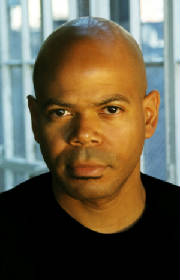
Charles Rice-Gonzalez, left, wrote the 2011 book Chulito, about a young gay man growing up in the Bronx, and co-edited the book From Macho to Mariposa: New Gay Latino Fiction with Charlie Vázquez. Vásquez is active in promoting gay Latino poetry, and has created poetry readings for gay Latino writers in the East Village in New York City.

Alex Sanchez, right, has won numerous awards for his young adult novels about being gay. His books include Rainbow Boys and Boyfriends with Girlfriends. His website offers resources and other book selections for LGBT teens.

Anybody I miss? Let me know in the comments.

4 Comments

Filed under Features, Fiction, Non-Fiction, Poetry, Young Adult Books

Book review: Malín Alegría’s “Border Town: Crossing the Line”

Malín Alegría provides something the book world badly needed – a great young adult novel depicting Latino life.

Border Town: Crossing the Line (Point/Scholastic) is the first in a series of books modeled after the popular 1980s series Sweet Valley High, which followed the lives of two high school sisters living in California. Border Town features Fabiola Garza and her sister, Alexis, as they attend high school in the small (and fictional) town of Dos Rios in the Rio Grande Valley of Texas.

Even though Alegría lives in California, she perfectly captures the Valley beyond the characters’ meals of menudo and pan dulce. Here’s a line when Fabiola runs into her old Sunday school teacher while she’s buying personal items: “This was exactly why she hated living in the Valley. You couldn’t do anything without running into someone you knew!” (I used to live in the Valley, and that line is so accurate, I laughed out loud.) Fabiola yearns to escape small town life – seeing nearby McAllen as the oasis of cosmopolitan life. “This was how civilized people should live, Fabi though as she grinned to herself – with movie theaters, a mall, art galleries.”

The plot covers typical adolescent angst. Alexis begins attending Fabiola’s high school and runs with the cool kids. Fabiola gets jealous, and accuses one of Alexis’ new friends of committing a crime. The ending is a bit Nancy Drew-ish and unrealistic. The book also is a bit innocent in portraying high school life. While the girls attend a party where they can smell marijuana, sex isn’t mentioned at all.

But Border Town is a fast-paced, easy-to-read book that Latino teenagers will enjoy to read – mostly because they will see themselves in the pages.

More about Malín Alegría: Alegría also wrote Sofi Mendoza’s Guide to Getting Lost in Mexico and Estrella’s Quinceañera. Quince Clash, which comes out in July, is the next book in the series.

Source: I bought this book at Barnes and Noble.

1 Comment

Filed under 2012 Books, Fiction, Young Adult Books

In the News: New books and short stories, and plenty of awards

Hello, summer! Here are some June book releases to keep you entertained:

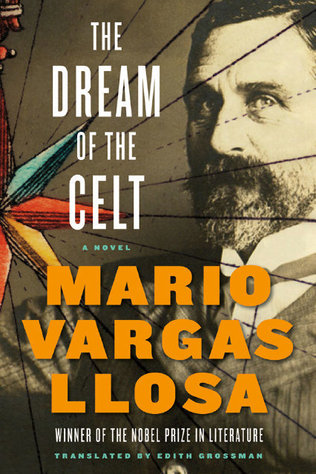
Already in bookstores: Nobel Prize winner Mario Vargas Llosa’s The Dream of the Celt depicts the life of Irish human rights activist Richard Casement.  La Roja: How Soccer Conquered Spain and How Spanish Soccer Conquered the World by Jimmy Burns covers the world’s most popular sport. Daniel Orozco’s critically acclaimed book of short stories, Orientation, is now in paperback.

June 14: The Neruda Case by Roberto Ampuero features a private eye solving a case for poet Pablo Neruda during his final days. Carolina DeRobertis, author of Perla, talked to Publishers Weekly about translating the book.

June 26: Spanish author Felix J. Palma’s The Map of Time explores time travel in Victorian London.

Awards:

Congratulations to the winners of Latino Literacy Now’s International Latino Book Awards, which were announced last week. Honorees included some of The Hispanic Reader’s favorites – such as Becoming Dr. Q: My Journey from Migrant Farm Worker to Brain Surgeon by Dr. Alfredo Quiñones-Hinojosa and Crossing Borders: Personal Essays by Sergio Troncoso, which won first place and second place, respectively, in the Best Biography category; Outside the Bones by Lyn Di Iorio and Say Her Name by Francisco Goldman, which earned honorable mentions in the Best Popular Fiction – English category; and The Time in Between by Maria Dueñas which received first place for Best Novel – Historical.

• The Skipping Stones 2012 Honor Awards – given to books with multicultural themes – honored Marisol McDonald Doesn’t Match by Monica Brown.

When We Were Outlaws: A Memoir of Love & Revolution by Jeanne Córdova and Gay Latino Studies: A Critical Reader, edited by Michael Hames-García and Ernesto Javier Martínez, won prizes at the 24th Annual Lambda Literary Awards, which honors lesbian-gay-bisexual-transgendered literature.

New short stories and other works:

Junot Díaz talks about the science fiction short story, “Monstro,” he wrote for The New Yorker. He also remembered science fiction writer Ray Bradbury, who passed away earlier this month, in an article for the magazine.

Luis Alberto Urrea will have a short story included in Esquire’s ebook aimed at men, You and Me and the Devil Makes Three, out June 12.

Carlos Andrés Gómez put up a new poem, How to Fight, in response to recent shootings.

Author profiles:

NBC Latino profiled Julia Alvarez and her new book, A Wedding in Haiti.

Pulitzer Prize winner Oscar Hijuelos talked about his memoir, Thoughts Without Cigarettes, to The Morning News.

Carmen Gimenez Smith, New Mexico State University assistant professor of English and editor of the literary magazine Puerto del Sol, was featured in the Las Cruces Sun-News about being NPR’s NewsPoet.

Body art by Mia Roman. Photographed by Johnny Ramos.

Other news:

La Casa Azul bookstore, which specializes in Latino literature, opened in June in East Harlem by Aurora Anaya-Cerda (right), and was featured in The New York Times.

Aztec Muse publisher Tony Diaz earned the Open Book Award from the American Society of Journalists and Authors for his Librotraficante work.

• Here’s an interesting story, published in the The Daily Beast/Newsweek, about how Gabriel Garcia Marquez’s One Hundred Years of Solitude brought down a banana empire.
Note: This post was updated to correct that Sergio Troncoso won second place in the International Latino Book Awards and to add the Garcia Marquez link.

4 Comments

Filed under 2012 Books, Awards, Children's Books, Fiction, News, Poetry

The Hispanic Reader’s 100th post!

Woo hoo! This is the 100th post of The Hispanic Reader! And after writing 100 posts, I can say it’s been a lot of fun – and a lot of work. I’ll be on hiatus for awhile to give myself a breather. While I’m gone, check out these posts from the blog:

• Features about Nobel and Pultizer Prize-winning authors, Afro-Latino authors, Latino poets, and a book club, a bookstore, literary magazines and writer’s groups devoted to Latino literature.

Interviews with Machete co-screenwriter Alvaro Rodriguez, journalist Edgar Sandoval, storyteller Joe Hayes, and novelists Julia Amante, Lyn DiIorio, Guadalupe Garcia McCall and Meg Medina.

Bios of some of great Latino authors, including many of the Nobel Prize winners, such as Gabriel García Marquez and Mario Vargas Llosa, as well prominent authors such as Roberto Bolaño, Sandra Cisneros, Carlos Fuentes and Manuel Puig.

Book reviews from the past year and classic books written by Latinas. My favorite books were Say Her Name by Francisco Goldman (which was also The Hispanic Reader’s first full book review), The Hummingbird’s Daughter by Luis Alberto Urrea and Loving Pedro Infante by Denise Chávez.

Plays written by Latinos, including recent Pulitzer Prize winner Quiara Alegría Hudes.

1 Comment

Filed under Features

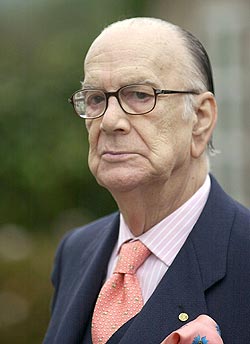
Happy Birthday, Camilo José Cela!

Camilo José Cela was born on this day in 1916 in Iria Flavia, Spain, and died in 2002. He is only one of a dozen Latinos to win the Nobel Prize in Literature, which he received in 1989.

Cela wrote in a variety of genres and styles, but he is best known for his 1942 novel La Familia de Pascual Duarte (The Family of Pascual Duarte), about a murderer who feels no remorse for his crimes, and the 1951 novel La Colmena (The Hive), which depicts the lives of hundreds of people in Madrid in the 1940s and was made into a movie in 1982. He also was known for his sometimes outrageous personality.

Leave a comment

Filed under Author Profiles, Fiction

Book review: Meg Medina’s “The Girl Who Could Silence the Wind”

The lead character in The Girl Who Could Silence the Wind (Candlewick Press), by Meg Medina, has an unique problem.

Sonia Ocampo was born during a terrible storm in the poor village of Tres Campos. Villagers considered it a miracle that they and Sonia all survived – and they began asking her to pray for their troubles. She wears a shawl that is weighed down – literally and figuratively – by the amulets they give her. As she tells her aunt:

“I can’t do what everyone wants. I can’t stop bad times from finding us. I can’t control things any more than they can. … Do you know what it’s like to live as I do? To be asked to make rain in the dry season? To cure coughs? … And why am I cursed this way? Because I was born on the wrong night, that’s all. It’s all been a silly lie.”

Her aunt offers to help her escape her situation by finding her a job as a maid for a rich family in the capital. But she has trouble learning new skills and adjusting to her unfriendly co-workers. And her troubles surmount when she finds out her brother Rafael has disappeared.

This novel had an old-fashioned quality to it that reminded me of a Latino version of Little House in the Prairie. The time period is never mentioned – although there are cars, there aren’t gadgets such as iPhones or TV. But the issues Sonia and the characters face – such as finding a place in society and searching for a better life – parallels issues people face today.

Medina writes in descriptive, beautiful prose that never drags the story. The ending is somewhat unexpected because it doesn’t end happily. But young girls will enjoy reading this story.

More about Meg Medina:

Meg Medina, who grew up in Queens, New York, and lives in Richmond, Virginia, is the author of  Milagros: Girl from Away and Aunt Isa Wants a New Car, which won the 2012 Ezra Jack Keats New Writers Award and earned a spot on the 2012 Amelia Bloomer List.

Source: I received a review copy from the publisher.

Leave a comment

Filed under 2012 Books, Book Reviews, Fiction, Young Adult Books

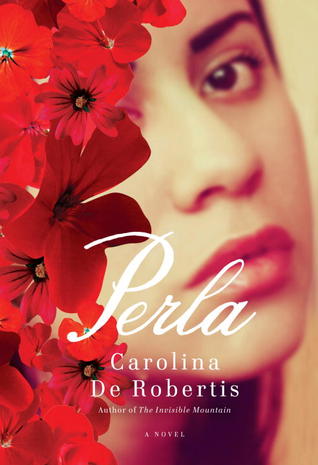
Book review: Carolina De Robertis’ “Perla”

A naked man appears at Perla’s house in Buenos Aires. He doesn’t say a word to her. She allows him to stay in the home.

So begins Perla (Knopf), the new novel by Carolina De Robertis. Perla is a college student whose father was in the Argentine Navy during the Dirty War – leading to the vanishing of thousands of citizens, known as “the disappeared.” While her parents are away from the house, Perla begins to take care of the stranger and she discovers they may share a connection.

This book has won critical reviews – including a 4.33 ranking out of the highest score of “5” on the GoodReads website – but I just couldn’t get into it. When the book is told from the stranger’s viewpoint, De Robertis writes in abstract, overly descriptive passages that were hard for me to get through. Take this passage that borders on the silly:

“It is not her naked ankle that he wants to press against: it is the Who of her, the inside sound, the secret aural texture of her being. He wants to hear the chorus in the depths of her, where the past and all the unseen futures gather to sing.”

And that’s one of the shorter passages. This type of writing made a short book (236 pages) seem twice as long.

Perla has an intriguing premise about Argentina’s history, but I found it overwritten for my tastes.

More about Carolina De Robertis:

Carolina De Robertis, a Uruguayan native who now lives in California, is also the author of The Invisible Mountain.

Source: I purchased this book through Amazon.com.

Leave a comment

Filed under 2012 Books, Book Reviews, Fiction

In the News: New books from Alegría, Sheen and Estevez, Arte Público

It’s May! It’s time to celebrate one of the Latino community’s favorite holidays – Cinco de Mayo – and read some good books. Here’s what’s coming up on the bookshelves:

May 1: Border Town: Crossing the Line by Malín Alegría, author of the popular Estrella’s Quinceañera, focuses on two teenage girls who live in fictional Dos Rios, Texas. The novel is the first in a Sweet Valley High-like series, with more books, such as Quince Clash and Falling Too Fast coming out later this year.

May 8: Father-and-son actors Martin Sheen and Emilio Estevez will release a joint memoir, Along the Way: The Journey of a Father and Son with Hope Edelman. The book focuses on their faith and includes their thoughts on the making the 2011 movie The Way, about a man’s pilgrimage along the Camino de Santiago in Spain.

• May 31: Arte Público has several bilingual children’s books coming out, including A Day Without Sugar by Diane Deanda, Sofía and the Purple Dress by Diane Gonzales Bertrand and Alicia’s Fruity Drinks by Lupe Ruiz-Flores.

Leave a comment

Filed under 2012 Books, Children's Books, Fiction, Non-Fiction

Happy Birthday Roberto Bolaño!

Chilean Roberto Bolaño was born on this day in 1953 and died in 2003. His works, with their dark, sometimes twisted themes, have become more popular after his death.

He first won mass recognition for The Savage Detectives, and won the 2008 National Book Critics Award. His 2008 book, 2666, was named one of the best books of that year by Time magazine, which has a great overview of his life.

Here’s The Hispanic Reader’s review of his book, The Third Reich, released last year. The Secret of Evil, a book of short stories, was published earlier this month.

The New Yorker has a guide to reading Bolaño. Newsweek/The Daily Beast has a fantastic article about him, as well as a look at some other prominent Latino writers. And check out this blog devoted to his works (which to quote the blogger is “now a blog dedicated to, uhm, books.”)

Leave a comment

Filed under Author Profiles, Fiction