At the theater: Quiara Alegria Hudes’s “26 Miles”

DeAnna Gonzales and Georgia Marshelle Phillips played Beatriz and Olivia in the 26 Miles production by Artes de la Rosa of Fort Worth. They were fantastic. (Photo courtesy Adam Adolfo.)

“At the Theater” is a new feature in which I will check out plays by Latino authors. The article is intended to be a look at the author’s work and not a review of the theatrical production – so no comments about acting, lighting or staging. I saw the Fort Worth-based Artes de la Rosa’s production of the play.

Quiara Alegria Hudes knows how to make a heart laugh – and then break it to pieces.

Audiences who see 26 Miles will experience those emotions when they see her play, which was first performed in 2008 and has been produced all around the country. In fact, two Dallas-Fort Worth theater companies put on the play within weeks of each other this month.

26 Miles tells the story of Beatriz, a temperamental Cuban secretary living in Philadelphia, and her troubled daughter, Olivia, 15, who has lived with her white father in suburbia since she was six years old. On the spur of the moment, Beatriz kidnaps Olivia and they take a road trip together.

Along the way, Beatriz teaches her daughter five words in Spanish a day. Olivia reveals her dreams and fears – mostly to the audience, sometimes to her mother – in her writings. They both must deal with the men they left behind – Beatriz’s husband, Manual; Olivia’s father, Aaron – through awkward phone calls and messages.

The road trip is a bit of a cliché. It’s been used in countless plays, movies and books as a metaphor for life. And the characters are stereotypes – Beatriz is the emotional Latina; Olivia is the typical moody teenager. But Hudes brings up touchy subjects – bullying, cultural identity and marital woes – in a natural, not contrived, manner and the dialogue sounds like everyday conversation. The well-paced play brings plenty of laughs, which makes the climax so much more dramatic.

There’s a reason why 26 Miles has been produced so frequently – it packs a great deal of emotion and life in 90 minutes.

More about Quiara Alegría Hudes:

Hudes, who is half-Puerto Rican, is also the playwright of the 2008 Tony-award winning musical In the Heights. She has also been a finalist for the Pultizer Prize Award twice, for Heights and Elliot, A Soldier’s Fugue.

26 Miles: If you live in the Dallas-Fort Worth area, you still have Friday-Sunday to check the play Artes de la Rosa’s production at the Rose Marine Theater in Fort Worth. Tickets cost $12 for students and seniors and $18 for adults, plus service charges.

Leave a comment

Filed under Theater

In the News

Year in Review: Junot Díaz and Justin Torres recommended their favorite books of 2011 to New York magazine, while Héctor Tobar and Torres gave their choices for the year’s best in Salon and Julia Alvarez revealed her picks to the Algonquin Books blog. Book editor Marcela Landres made her own best of 2011 list, including Outside the Bones by Lyn Di Iorio and Under the Mesquite by Guadalupe Garcia McCall. The Washington Post cited Esmeralda Santiago’s Conquistadora and Justin Torres’s We the Animals as some of its favorite 2011 novels. But why stop at 2011? Dagoberto Gilb named his favorite books of all time in The Week magazine.

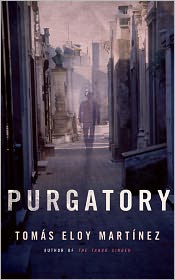
New releases: A paperback of Purgatory by the late Tómas Eloy Martinez, who was born in Argentina and lived in Venezuala, was released last month.

• A library in honor of Mexican writer Juan Jose Arreola is being constructed in Mexico City, with the opening expected for spring 2012. The library organization Reforma posted some pictures of the building on their Facebook page.

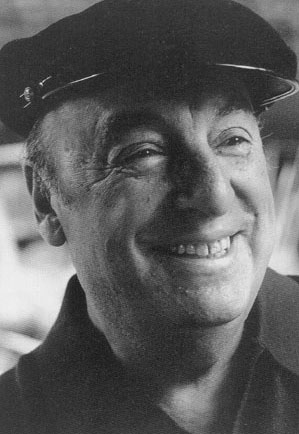
• According to this BBC article, the remains of legendary Nobel winning poet Pablo Neruda, pictured at left, have been asked to be exhumed to see if he was poisoned.

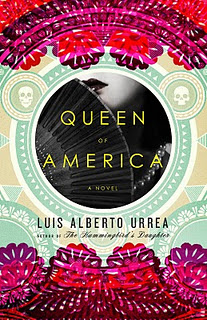
• Luis Alberto Urrea appeared on NPR’s All Things Considered to talk about his latest novel, Queen of America, which he describes as his “Lady Gaga book.”

Leave a comment

Filed under 2011 Books, News

‘Tis the season: Christmas books for children

Children are a big reason for celebrating Christmas. If you want to add some books to their stockings, here’s a good list (definitely not definitive) of Latino-themed reads about the holidays:

• The Night of Las Posadas, a 1999 book by Tomie dePaola, tells the story about a local community trying to present the reenactment of Mary and Joseph’s journey through Bethlehem. Pam Munoz Ryan’s 2005 book There Was No Snow on Christmas Eve is another story about the nativity.

• The Gift of the Poinsettia, a 1995 book by Pat Mora and Chris Ramírez Berg, depicts a young boy’s quest to get the perfect gift for the baby Jesus. Mora also wrote A Piñata in a Pine Tree: A Latino Twelve Days of Christmas.

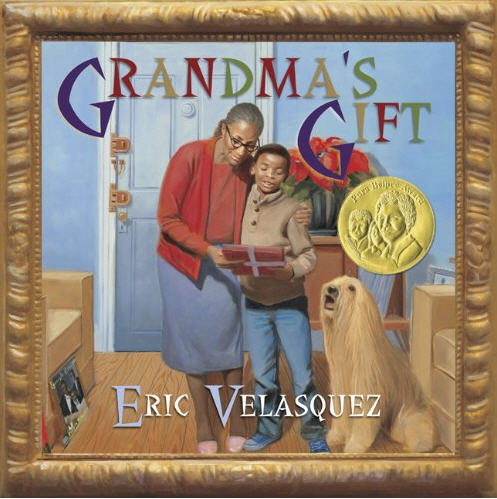
• Puerto Rican author Eric Velasquez won a Pura Belape award for his 2011 book, Grandma’s Gift, about a young boy creating the perfect Christmas present for his grandmother.

• Alma Flor Ada, who is of Cuban descent, has written several Christmas books, including The Christmas Tree/El Arbol de Navidad and Celebrate Christmas and Three Kings Days with Pablo and Carlitos (with F. Isabel Campoy).

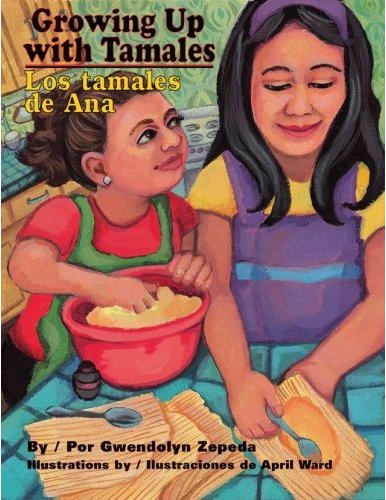
Growing Up with Tamales/ Los tamales de Ana by Gwendolyn Zepeda in 2009 depicts a great Hispanic Christmas tradition.

• And, finally, the 2008 Charo Claus and the Tejas Kid by Xavier Garza, gives a South Texas twist to the Christmas tale.

Got another great Christmas book to recommend? Make suggestions in the comments.

2 Comments

Filed under Children's Books, Culture

‘Tis the Season: Christmas books for adults

‘Tis the season for family gatherings, holiday parties and competitive shopping. If you prefer to celebrate Christmas with some good page turner, here are some Latino-themed books:

• Alisa Valdes’ 2010 book The Three Kings is a “Christmas dating story” about one woman’s quest to find love during the holiday season.

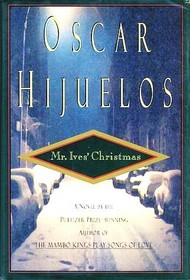
• In Pulitzer Prize-winner Oscar Hijuelos’s 1995 novel, Mr. Ives’ Christmas, a man struggles with life and his belief in God after his son is murdered on Christmas. PBS’s Ray Suarez gave a review of the book to NPR, which includes an excerpt.

• Twenty-five Latino authors, including Junot Diaz and Esmeralda Santiago, share their favorite holiday stories and recipes in the 1999 book, Las Christmas: Favorite Latino Authors Share Their Holiday Memories.

• In the 2007 book Last Night at the Lobster by Stewart O’Nan, Manny DeLeón has to close down the Red Lobster he manages in New Britain, Connecticut, as a blizzard comes down four nights before Christmas. O’Nan talked about writing about a Latino character and gives a shout-out to Luis Alberto Urrea here.

And if you’re in more of a movie mood, Nothing Like the Holidays depicts a dysfunctional Puerto Rican family celebrating the holidays. The 2008 movie stars John Leguizamo, Freddy Rodríguez, Elizabeth Peña and Alfred Molina. I’m partial to the 2003 movie Love Actually, which has a mostly British cast but features Brazilian actor Rodrigo Santoro and Portuguese actress Lúcia Moniz.

Coming up on Thursday: Christmas books for children.

Leave a comment

Filed under Culture, Fiction, Movies

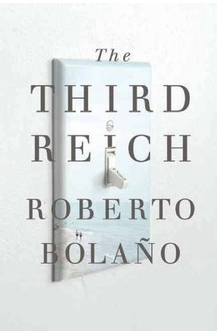
Book review: Roberto Bolaño’s “The Third Reich”

The Third Reich is a mystifying book.

Reich (Farrar Straus Giroux) was written by the late Roberto Bolaño, who was known for his critically acclaimed books such as The Savage Detectives and 2666. In this novel, German Udo Berger and his girlfriend, Ingeborg, visit a Spanish resort town that he used to visit as a child. While there, they meet a couple – Charley and Hanna – and spend a good deal of time with them.

But Udo is more interested in his war games that he’s set up in his hotel room. The game, called the Third Reich, is a simulation of World War II battles. Udo is Germany’s national champion at war games – a hobby even he finds a little odd when he goes to one of the conventions. “For my part, I came to the conclusion that eighty percent of the speakers needed psychiatric help,” he says.

But he has distractions from the game. Udo flirts with the hotel’s owner, Frau Else, who returns his affections despite having an ailing husband. Charley has an explosive, unpredictable personality that puts him in danger. Udo strikes up a friendship with a man named El Quemado, a muscular man with horrible burns all over his body – and soon rivals Udo at his own game.

While that seems like a lot of plot, it’s not. The book moves slowly. Udo has a passive personality that makes you wonder what he’s truly thinking, even though the book is told in first person. The book, translated by Natasha Wimmer, is easy to read, but readers may wish there was more action other than reports of his breakfast and technical descriptions of the game.

Fortunately, the conclusion of the book moves quickly and keeps you intrigued. The book has some deep observations, with World War II serving as a metaphor between Udo and El Quemado. And Bolaño, who wrote the book in 1989, is eerily prescient about how some of today’s gamers are isolated from society.

More about Roberto Bolaño:

Roberto Bolaño was born in 1953, grew up in Chile and Mexico City and died at age 50. The Third Reich was written in 1989 and found after his death. He won the National Book Critics Awards in 2009 for 2666.

Source: I received an advanced copy of the book from the publisher.

1 Comment

Filed under 2011 Books, Book Reviews, Fiction

In the news

New releases: Fantasy mega-bestseller Diana Gabaldon, who is of Mexican-American and English descent, released her latest book, The Scottish Prisoner, on Tuesday.  Entertainment Weekly has a great interview in which she lists her favorite and not-so-favorite books. Also new on the bookshelves is Something Urgent I Have to Say to You: The Life and Works of William Carlos Williams, a biography of the poet, who was half-Puerto Rican, by Herbert Leibowitz.

Year in Review: Two of The Hispanic Reader’s favorite books of the year, Héctor Tobar’s The Barbarian Nurseries and Francisco Goldman’s Say Her Name, were named to The New York Times’s 100 Notable Books of 2011. For its Best of 2011 list, Kirkus Reviews picked The Secret History of Costaguana by Columbian author Juan Gabriel Vásquez and We the Animals by Justin Torres. (Its teen list includes by If I Could Fly by Judith Ortiz Cofer and Under the Mesquite by Guadalupe Martinez McCall.) Animals also made Amazon.com’s Best of 2011 Top Twenty list. Lorraine Lopez’s The Realm of Hungry Spirits was selected for Bookpage’s best list.

Law: Nobel Laurete Gabriel García Márquez won a lawsuit in which a Colombian man claimed that a character in Márquez’s 1984 book Chronicle of a Death Foretold was based on him, according to The Guardian.

Random: President Obama purchased Junot Diaz’s The Brief Wondrous Life of Oscar Wao, among other books, while holiday shopping, ABC News reported.

Awards: Julia Alvarez, pictured at right, recently wrote about her acceptance of the Vermont Governor’sAward for Excellence in the Arts, which she received in November. The Cervantes Prize, considered the most prestigious Spanish language literary award, was given to Chilean poet Nicanor Parra, 97.

Leave a comment

Filed under News

Book Review: Rolando Hinojosa’s “Partners in Crime” and “A Voice of My Own”

Rolando Hinojosa may perhaps be one of the greatest storytellers from the Rio Grande Valley. Hinojosa, who grew up in Mercedes, Texas, a small town near the Mexican border, has written about the land’s quirks and contradictions in more than a dozen books. The Valley plays a big role in two books just released by Arte Publico Press, the detective story, Partners in Crime, and the collection A Voice of My Own: Essays and Stories.

Partners is part of the Klail City Death Trip series featuring Lieutenant Detective Rafe Buenrostro and taking place in Jones City, which appears to be modeled on Brownsville. In the novel, three men walk into a bar and start shooting up the place with their automatic rifles. The detectives must seek out the one clue about the murderers left by witnesses – a cream-colored Oldsmobile.

Partners was originally published in 1985 and the story takes place in 1972. It’s amusing to see how detectives worked without the Internet and cell phones, but the plot isn’t particularly captivating. The book’s strength comes from Hinojosa’s brisk writing. Like the detectives in the novel, he gives no bull but plenty of wit.

While Partners is an easy read, Hinojosa’s collections of short stories and essays are a little more frustrating. The 15 essays and four short stories – six of which are in Spanish – covers more than 25 years of writing about his life in the Valley and his thoughts on literature. Hinojosa, who is a creative writing professor at the University of Texas at Austin, can be wordy and unfocused in his pieces about literature. He uses the word “digression” often. He’s more interesting when he talks about his personal life, such as growing up in the Valley, describing his school days at the UT in the 1950s or showing how he wrote a poem.

The book ends with a few short stories. “Miami, Nice Climate” is a fast-paced  tale in the Rafe Buenrostro mode. “Es El Agua” is a beautiful and heartbreaking story about a migrant worker who recalls the travels in his life – from France, where he fought in the World War II and his brothers lost their lives, to the Midwest farms where he worked. But his home remains the Valley, the narrator says.

“It’s the water, the Rio Grande water,” the narrator says. “It claims you, you understand? It’s yours and you belong to it, too. No matter where we work, we always come back. To the border, to the Valley.”

 More about Rolando Hinojosa:

Hinojosa, who sometimes uses his mother’s name Smith, talked about his book of essays to the Austin Chronicle before his appearance at the Texas Book Festival earlier this year.

Source: I received advance copies of the books from Arte Público Press.

1 Comment

Filed under 2011 Books, Book Reviews, Classic Books

Book review: Luis Alberto Urrea’s “Queen of America”

Luis Alberto Urrea has done it again.

Urrea has released his new book, Queen of America (Little, Brown), the sequel to his brilliant 2005 novel, The Hummingbird’s Daughter. And while the tone of the books is different, the book is classic Urrea.

In Daughter, Teresita Urrea (the author’s great aunt) discovered her healing powers, earning her the name “Saint of Cabora” and leading an uprising of Mexican revolutionaries that prompted her and her father to escape to the north. America describes her journey to the United States, taking her from Arizona to El Paso to California to St. Louis to New York City. Teresita finds love along the way, but she also realizes the negative effects of being a celebrity, such as in this passage when she thinks about how her friends think of her now:

“They had once been her neighbors and friends, and then they become her followers. She felt a small chill of horror. Followers! It was terrible to have followers. But it was more terrible that part of her liked it.

Of course, she could not control her fanatics, only herself. Balance, again. When she had followers, she was watched over by the government and the newspapers. People copied her words in notebooks. She caught herself wondering what she had said and worrying all night if this time her careless utterances would lead to someone’s death or some outbreak of madness she could not have foreseen. Sometimes you just want to speak without measuring your words! Sometimes you want to laugh and sing! Sometimes you just want to ride your horse!”

That passage shows why Urrea is such a great writer. He’s just so much fun to read. Besides his beautiful descriptions and witty dialogue, he also creates some memorable characters, such as Teresita’s father, Don Tómas. His selfishness, arrogance and lack of self-awareness brings some of the biggest laughs in the book.

Check out this dialogue between Teresita and Tómas:

“‘I never said I was a saint … I am a prophet.’

‘Oh God, no,’ he said. ‘What you are is nineteen years old.’”

Or read this conversation between Tómas and a businessman seeking to exploit Teresita:

“‘You will provide for her with your Consortium profits. You incorporate. Partners. But structured so that she can honestly say she took nothing. It will honor her, shall we say, religious beliefs.’

‘I love America,’ Tómas said.”

But Tómas is absent from the last half of the book as Queen focuses mostly on Teresita’s journey. And then the book becomes somber, as Teresita realizes that not everyone has the best intentions for her and she yearns to return to her homeland. The reader becomes a bit melancholy, too, as another great book comes to an end.

More about Luis Alberto Urrea:

Urrea spent 26 years researching and writing The Hummingbird’s Daughter and Queen of America, and he did it while writing other books, such as Into the Beautiful North and the non-fiction The Devil’s Highway.

Urrea has a great website, which includes tour dates and a blog. And follow Urrea on his Facebook and Twitter feeds. He’s a lot of fun on there, too.

1 Comment

Filed under 2011 Books, Book Reviews, Fiction

In the news

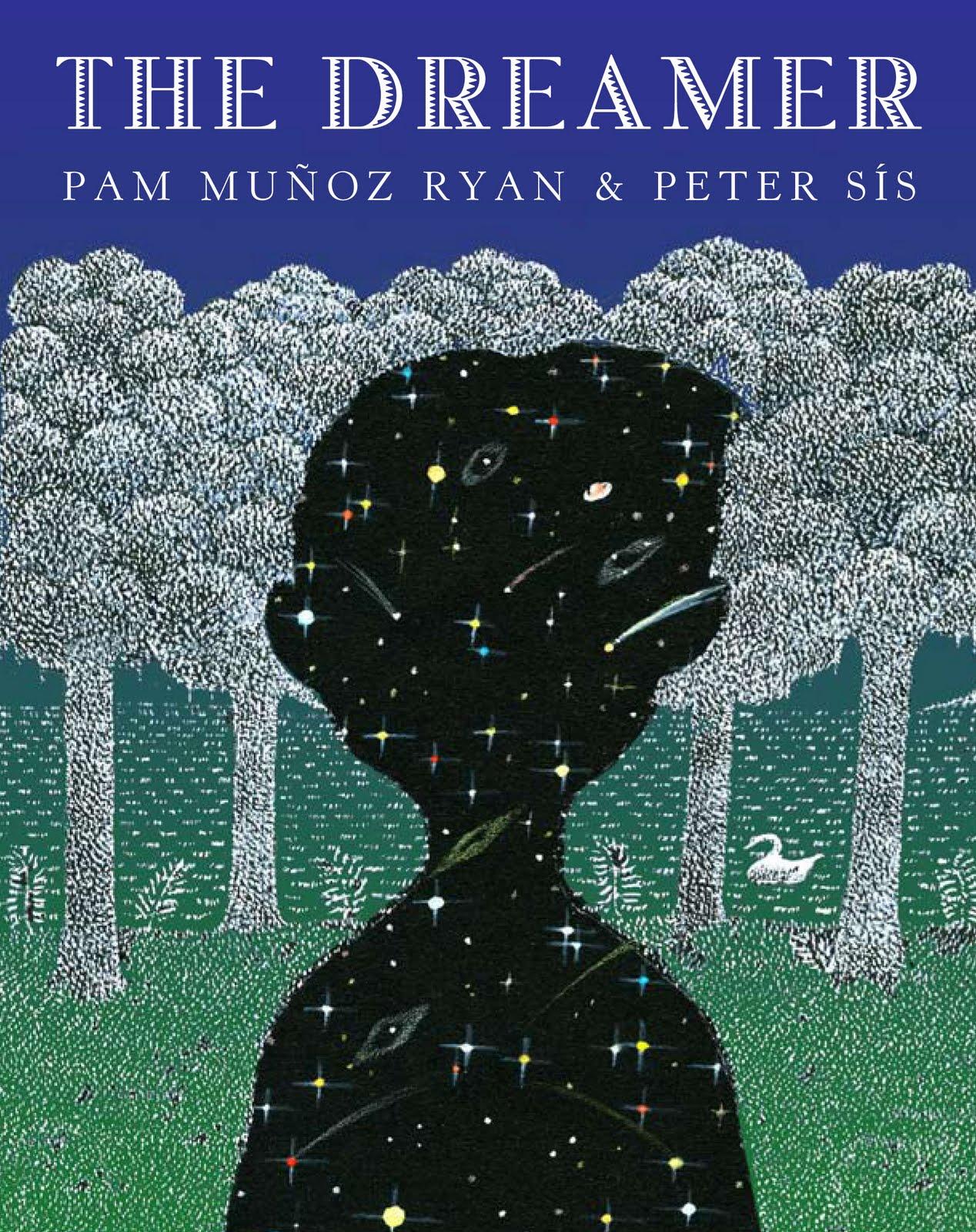
Awards: Pam Muñoz Ryan picked up the PEN Center USA award in Children/YA Literature earlier this month for her children’s book about poet Pablo Neruda, The Dreamer. Francisco Goldman took the Prix Femina Étranger, a French literary award, for his novel, Say Her Name, the first American to win since 2005.

• This is cool: The prestigious University of Iowa creative writing program is adding a master’s degree in Spanish Creative Writing, officials announced last week.

• Here’s some interesting articles about young adult authors: The Dallas Morning News profiled Ray Villareal (pictured at right), whose Don’t Call Me a Hero is published by Arte Publico Press, and NPR did a story about the popularity of Malín Alegría’s 2006 book Estrella’s Quinceanera.

• Spanish poet Tomas Segovia died last week. Segovia, who later lived in Mexico, won numerous awards for his work.

New releases: Luis Alberto Urrea’s Queen of America, the sequel to the awesome The Hummingbird’s Daughter comes out Nov. 29. Arte Público is releasing two books from Rolando Hinojosa Nov. 30: Partners In Crime: A Rae Buenrostro Mystery and A Voice of My Own: Essays and Stories. The Third Reich, written by the late Chilean author Roberto Bolaño, will come out Dec. 1 by Farrar Straus Giroux.

• The Hispanic Reader will return with reviews of those books after a weeklong holiday break. Happy Thanksgiving!

Leave a comment

Filed under 2011 Books, Awards, Children's Books, Young Adult Books

Happy Birthday, José Saramago!

Saramago, who was born on this date in 1922 and died in 2010, is one of only a dozen Latinos to win the Nobel Prize in literature, which he won in 1998.

Saramago’s best known book, 1995’s Blindness, was made into a 2008 movie starring Julianne Moore, Mark Ruffalo and Gael García Bernal. His 1991 book, The Gospel According to Jesus Christ), drew controversy for its anti-religious views.

Granta ran a great article about the Portuguese writer by his translator, Margaret Jull Costa.

The Hispanic Reader reviewed his last book, Cain, which was published last month.

Leave a comment

Filed under Author Profiles