Category Archives: Fiction

In the News: New books and short stories, and plenty of awards

Hello, summer! Here are some June book releases to keep you entertained:

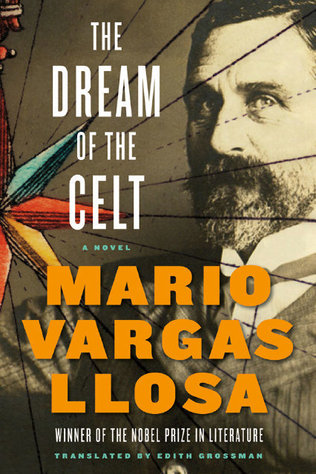
Already in bookstores: Nobel Prize winner Mario Vargas Llosa’s The Dream of the Celt depicts the life of Irish human rights activist Richard Casement.  La Roja: How Soccer Conquered Spain and How Spanish Soccer Conquered the World by Jimmy Burns covers the world’s most popular sport. Daniel Orozco’s critically acclaimed book of short stories, Orientation, is now in paperback.

June 14: The Neruda Case by Roberto Ampuero features a private eye solving a case for poet Pablo Neruda during his final days. Carolina DeRobertis, author of Perla, talked to Publishers Weekly about translating the book.

June 26: Spanish author Felix J. Palma’s The Map of Time explores time travel in Victorian London.

Awards:

Congratulations to the winners of Latino Literacy Now’s International Latino Book Awards, which were announced last week. Honorees included some of The Hispanic Reader’s favorites – such as Becoming Dr. Q: My Journey from Migrant Farm Worker to Brain Surgeon by Dr. Alfredo Quiñones-Hinojosa and Crossing Borders: Personal Essays by Sergio Troncoso, which won first place and second place, respectively, in the Best Biography category; Outside the Bones by Lyn Di Iorio and Say Her Name by Francisco Goldman, which earned honorable mentions in the Best Popular Fiction – English category; and The Time in Between by Maria Dueñas which received first place for Best Novel – Historical.

• The Skipping Stones 2012 Honor Awards – given to books with multicultural themes – honored Marisol McDonald Doesn’t Match by Monica Brown.

When We Were Outlaws: A Memoir of Love & Revolution by Jeanne Córdova and Gay Latino Studies: A Critical Reader, edited by Michael Hames-García and Ernesto Javier Martínez, won prizes at the 24th Annual Lambda Literary Awards, which honors lesbian-gay-bisexual-transgendered literature.

New short stories and other works:

Junot Díaz talks about the science fiction short story, “Monstro,” he wrote for The New Yorker. He also remembered science fiction writer Ray Bradbury, who passed away earlier this month, in an article for the magazine.

Luis Alberto Urrea will have a short story included in Esquire’s ebook aimed at men, You and Me and the Devil Makes Three, out June 12.

Carlos Andrés Gómez put up a new poem, How to Fight, in response to recent shootings.

Author profiles:

NBC Latino profiled Julia Alvarez and her new book, A Wedding in Haiti.

Pulitzer Prize winner Oscar Hijuelos talked about his memoir, Thoughts Without Cigarettes, to The Morning News.

Carmen Gimenez Smith, New Mexico State University assistant professor of English and editor of the literary magazine Puerto del Sol, was featured in the Las Cruces Sun-News about being NPR’s NewsPoet.

Body art by Mia Roman. Photographed by Johnny Ramos.

Other news:

La Casa Azul bookstore, which specializes in Latino literature, opened in June in East Harlem by Aurora Anaya-Cerda (right), and was featured in The New York Times.

Aztec Muse publisher Tony Diaz earned the Open Book Award from the American Society of Journalists and Authors for his Librotraficante work.
• Here’s an interesting story, published in the The Daily Beast/Newsweek, about how Gabriel Garcia Marquez’s One Hundred Years of Solitude brought down a banana empire.
Note: This post was updated to correct that Sergio Troncoso won second place in the International Latino Book Awards and to add the Garcia Marquez link.

4 Comments

Filed under 2012 Books, Awards, Children's Books, Fiction, News, Poetry

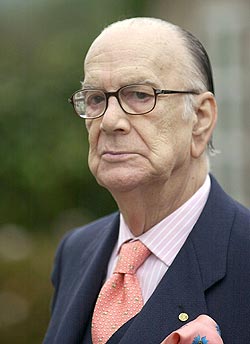
Happy Birthday, Camilo José Cela!

Camilo José Cela was born on this day in 1916 in Iria Flavia, Spain, and died in 2002. He is only one of a dozen Latinos to win the Nobel Prize in Literature, which he received in 1989.

Cela wrote in a variety of genres and styles, but he is best known for his 1942 novel La Familia de Pascual Duarte (The Family of Pascual Duarte), about a murderer who feels no remorse for his crimes, and the 1951 novel La Colmena (The Hive), which depicts the lives of hundreds of people in Madrid in the 1940s and was made into a movie in 1982. He also was known for his sometimes outrageous personality.

Leave a comment

Filed under Author Profiles, Fiction

Book review: Meg Medina’s “The Girl Who Could Silence the Wind”

The lead character in The Girl Who Could Silence the Wind (Candlewick Press), by Meg Medina, has an unique problem.

Sonia Ocampo was born during a terrible storm in the poor village of Tres Campos. Villagers considered it a miracle that they and Sonia all survived – and they began asking her to pray for their troubles. She wears a shawl that is weighed down – literally and figuratively – by the amulets they give her. As she tells her aunt:

“I can’t do what everyone wants. I can’t stop bad times from finding us. I can’t control things any more than they can. … Do you know what it’s like to live as I do? To be asked to make rain in the dry season? To cure coughs? … And why am I cursed this way? Because I was born on the wrong night, that’s all. It’s all been a silly lie.”

Her aunt offers to help her escape her situation by finding her a job as a maid for a rich family in the capital. But she has trouble learning new skills and adjusting to her unfriendly co-workers. And her troubles surmount when she finds out her brother Rafael has disappeared.

This novel had an old-fashioned quality to it that reminded me of a Latino version of Little House in the Prairie. The time period is never mentioned – although there are cars, there aren’t gadgets such as iPhones or TV. But the issues Sonia and the characters face – such as finding a place in society and searching for a better life – parallels issues people face today.

Medina writes in descriptive, beautiful prose that never drags the story. The ending is somewhat unexpected because it doesn’t end happily. But young girls will enjoy reading this story.

More about Meg Medina:

Meg Medina, who grew up in Queens, New York, and lives in Richmond, Virginia, is the author of  Milagros: Girl from Away and Aunt Isa Wants a New Car, which won the 2012 Ezra Jack Keats New Writers Award and earned a spot on the 2012 Amelia Bloomer List.

Source: I received a review copy from the publisher.

Leave a comment

Filed under 2012 Books, Book Reviews, Fiction, Young Adult Books

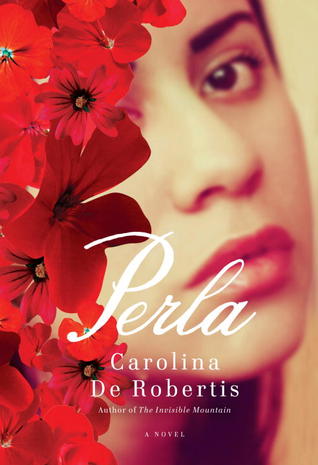
Book review: Carolina De Robertis’ “Perla”

A naked man appears at Perla’s house in Buenos Aires. He doesn’t say a word to her. She allows him to stay in the home.

So begins Perla (Knopf), the new novel by Carolina De Robertis. Perla is a college student whose father was in the Argentine Navy during the Dirty War – leading to the vanishing of thousands of citizens, known as “the disappeared.” While her parents are away from the house, Perla begins to take care of the stranger and she discovers they may share a connection.

This book has won critical reviews – including a 4.33 ranking out of the highest score of “5” on the GoodReads website – but I just couldn’t get into it. When the book is told from the stranger’s viewpoint, De Robertis writes in abstract, overly descriptive passages that were hard for me to get through. Take this passage that borders on the silly:

“It is not her naked ankle that he wants to press against: it is the Who of her, the inside sound, the secret aural texture of her being. He wants to hear the chorus in the depths of her, where the past and all the unseen futures gather to sing.”

And that’s one of the shorter passages. This type of writing made a short book (236 pages) seem twice as long.

Perla has an intriguing premise about Argentina’s history, but I found it overwritten for my tastes.

More about Carolina De Robertis:

Carolina De Robertis, a Uruguayan native who now lives in California, is also the author of The Invisible Mountain.

Source: I purchased this book through Amazon.com.

Leave a comment

Filed under 2012 Books, Book Reviews, Fiction

In the News: New books from Alegría, Sheen and Estevez, Arte Público

It’s May! It’s time to celebrate one of the Latino community’s favorite holidays – Cinco de Mayo – and read some good books. Here’s what’s coming up on the bookshelves:

May 1: Border Town: Crossing the Line by Malín Alegría, author of the popular Estrella’s Quinceañera, focuses on two teenage girls who live in fictional Dos Rios, Texas. The novel is the first in a Sweet Valley High-like series, with more books, such as Quince Clash and Falling Too Fast coming out later this year.

May 8: Father-and-son actors Martin Sheen and Emilio Estevez will release a joint memoir, Along the Way: The Journey of a Father and Son with Hope Edelman. The book focuses on their faith and includes their thoughts on the making the 2011 movie The Way, about a man’s pilgrimage along the Camino de Santiago in Spain.

• May 31: Arte Público has several bilingual children’s books coming out, including A Day Without Sugar by Diane Deanda, Sofía and the Purple Dress by Diane Gonzales Bertrand and Alicia’s Fruity Drinks by Lupe Ruiz-Flores.

Leave a comment

Filed under 2012 Books, Children's Books, Fiction, Non-Fiction

Happy Birthday Roberto Bolaño!

Chilean Roberto Bolaño was born on this day in 1953 and died in 2003. His works, with their dark, sometimes twisted themes, have become more popular after his death.

He first won mass recognition for The Savage Detectives, and won the 2008 National Book Critics Award. His 2008 book, 2666, was named one of the best books of that year by Time magazine, which has a great overview of his life.

Here’s The Hispanic Reader’s review of his book, The Third Reich, released last year. The Secret of Evil, a book of short stories, was published earlier this month.

The New Yorker has a guide to reading Bolaño. Newsweek/The Daily Beast has a fantastic article about him, as well as a look at some other prominent Latino writers. And check out this blog devoted to his works (which to quote the blogger is “now a blog dedicated to, uhm, books.”)

Leave a comment

Filed under Author Profiles, Fiction

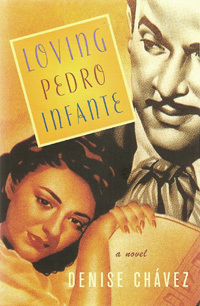
Classic book review: Denise Chávez’s “Loving Pedro Infante”

Denise Chávez’s 2001 Loving Pedro Infante is one of those books that becomes your friend.

Tere Avila is an “educational assistant” – teacher’s aide – in Cabritoville, near El Paso. She’s a divorced, 30-something woman who spends her time hanging out with her best friend, Irma, at Tino’s La Tempestad Lounge every Friday and Saturday night and serving as secretary in the Pedro Infante Fan Club, whose members watch the Mexican actor’s old movies from the 1940s and 1950s and analyze them as though they were in an English literature class.

Tere’s ordinary, somewhat lonely, life gets a jolt when she starts an affair with Lucio Valadez, a married man whose daughter attends the school she works at.

Sounds like an ordinary plot, right? But what makes Pedro Infante so wonderful is Chávez’s writing. Tere speaks to the reader in first person, and the conversational tone makes you sympathize with her, laugh with her and, at times, want to scold her. (Fortunately, Irma does that for us.) Think of it as a Mexican version of Bridget Jones’s Diary or a small town Sex and the City.

The minutes from the Pedro Infante Fan Club meetings are particularly hilarious, but here’s some of the better lines:

On her love for Lucio: “There’s nothing a Mejicano or Mejicana loves more than the burning, stinging pain of thwarted, frustrated, hopeless, soulful, take-it-to-the-grave love. Nothing gets us going more than what I call rabia/love of the te-juro-you’re-going-to-pay-for-all-the-suffering-you-caused-me variety.”

On visiting a curandera’s house in a poor neighborhood: “Doña Meche was one of the richest women in Cabritoville. … She loved to invest in the stock market. Oh yeah? Well, invest in your neighborhood, and your yard, girl!”

On a visit to the bathroom with Irma: “I could hear Irma’s spurty but intense urine stream. She was a fast pisser and in this session she outdid herself. I could barely keep up with her, and I flushed early to make a number of deep growly farts.”

I absolutely loved Loving Pedro Infante. Please stop what you’re doing and go read it now.

More about Denise Chávez:

• A native of New Mexico, Denise Chávez has also written A Taco Testimony: Meditations on Family, Food and Culture, Face of An Angel and The Last of the Menu Girls. She is the director of The Border Book Festival, which will take place Thursday-Sunday in Mesilla, New Mexico.

Source: I checked this book out of the library.

This book is fourth in the series of classic books by Latina authors. Next month: Laura Esquivel’s Like Water for Chocolate.

2 Comments

Filed under Book Reviews, Classic Books, Fiction

Latinos and the Pulitzer Prize

Update: Quiara Alegría Hudes won the 2012 Pulitzer Prize in Drama for her play, Water by the Spoonful. I also included information on Sonia Nazario, which I forgot about when I first wrote this post until I saw her book in my co-worker’s office and thought, “I can’t believe I forgot Enrique’s Journey!”

The Pulitzer Prizes, which award the best in journalism and literary arts, will be announced on Monday. While the Nobel Prize in Literature is an international award that honors a lifetime achievement of work, the Pulitzers are an American award that recognizes the previous year’s work in a variety of categories. Here’s a look at some of the past Latino winners:

Fiction:

• Only two Hispanics have won this prize: Oscar Hijuelos for 1990’s The Mambo Kings Sing Songs of Love and Junot Díaz, right, for 2008’s The Brief Wondrous Life of Oscar Wao. Hopefully, the committee will consider Francisco Goldman’s Say Her Name, Justin Torres’s We the Animals and Hector Tobar’s The Barbarian Nurseries this year.

Drama:

• Nilo Cruz, left, is the lone Latino playwright to win this honor, for 2003’s Anna in the Tropics. Some writers have come close in recent years – Quiara Alegría Hudes was a finalist for 2007’s Elliot, A Soldier’s Fugue in 2007 and, with Lin-Manuel Miranda, 2009’s In the Heights, as was Kristoffer Diaz for 2010’s The Elaborate Entrance of Chad Deity.

Poetry:

• William Carlos Williams, right, whose mother was Puerto Rican, appears to be the lone poet with Latino roots to win in the category.

Sadly, no Latinos appear to have won in the autobiography, general non-fiction or history categories. Luis Alberto Urrea came close in 2005, when he was a finalist for general non-fiction category for The Devil’s Highway.

Journalism:

Latinos have won in various categories throughout the years – as part of teams covering the Los Angeles riots for The Los Angeles Times in 1992 and the Elian Gonzalez case for The Miami Herald in 2001. Here’s a look at some interesting winners of the past:

Ruben Vives, left, who came to the United States from Guatemala as an undocumented immigrant and worked his way to become a reporter for The Los Angeles Times, won the award last year for Public Service at age 32.

Liz Balmaseda of The Miami Herald was the first (and still only) Latino to win in the Commentary category in 1993.

SoniaNazarioSonia Nazario, who was raised in the United States and Argentina, wrote a series of articles for The Los Angeles Times about one boy’s travels from Honduras to the United States that won the 2003 Feature Writing prize and became the book Enrique’s Journey.

• Photographer José Galvez, right, was part of the first team of Latinos to win a Pulitzer when  The Los Angeles Times took the 1984 Public Service Prize for its series on Latino life in Southern California. His work can also be seen in Urrea’s book of poems Vatos and other books.

1 Comment

Filed under Awards, Features, Fiction, Non-Fiction, Poetry, Theater

In the news: April showers new books, awards and other news

New releases:

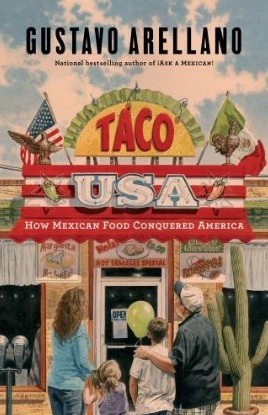
• Several Latino-oriented books are coming out in the next few weeks. Gustavo Arellano explores Americans’ fascination with Mexican food in Taco USA, which will be available this Tuesday. Read an excerpt here.

• Four interweaving stories, from South America to Boston, form the plot of Differential Equations by Julian Iragorri and Lou Aronica, out April 16.

Dagoberto Gilb’s “Uncle Rock” will be featured in the The PEN/O. Henry Prize Stories 2012 anthology, which will be published April 17.

Julia Alvarez’s new book, A Wedding in Haiti, out April 24, describes her experiences in that country before and after the 2010 earthquake. Also coming out that week is Roberto Bolaño’s The Secret of Evil, a collection of short stories, and Alisa Valdes’ The Temptation, the first in a supernatural trilogy.

Awards:

• Several Latinos were named as finalists in ForeWord Reviews’ Book of the Year contest, honoring books from independent publishers. Lyn DiIorio’s Outside the Bones made the Fiction-Literary list. Sergio Troncoso’s (left) Crossing Borders earned a spot in the Essays category and From This Wicked Patch of Dust made the Fiction-Multicultural list, as did Richard Yañez’s Cross Over Water and Rudolfo Anaya’s Randy Lopez Goes Home.

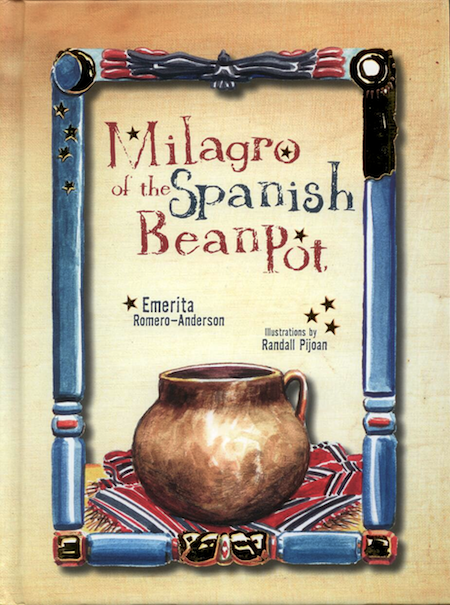
Troncoso’s From This Wicked Patch of Dust was also nominated in the Reading the West Book Awards in the Adult Fiction category. Emerita Romero-Anderson was nominated in the children’s category for Milagro of the Spanish Bean Pot.

Book festivals:

The Los Angeles Times Festival of Books, running April 20-21, will feature a plethora of authors, including Gustavo Arellano, Kami Garcia (left), José-Luis Orozco, Héctor Tobar and Luis Alberto Urrea. Rudolfo Anaya will be honored with a lifetime achievement award.

Writing workshops:

April 15 is the deadline to sign up for the National Latino Writers Conference May 16-19 at the National Hispanic Cultural Center in Albuquerque. Teachers include Jimmy Santiago Baca, Cristina García and Rigoberto González (right).

Body art by Mia Roman. Photographed by Johnny Ramos.

Other bits:

The New York Daily News profiled Aurora Anaya-Cerda’s (right) building of the Latino-oriented La Casa Azul bookstore in East Harlem, slated for a spring opening. Check out her progress on her Facebook page.

The Daily News also profiled poet Nuyorican poet Bonafide Rojas.

The Daily Show covered the Arizona ban on Latino-themed books and ethnic studies as only The Daily Show could.

Publishers Weekly had a nice write-up about Pat Mora’s Día: El día de los niños/El día de los libros, Children’s Day/Book.

Sergio Troncoso previews his panel, “Latino Literature, Then and Now,” to the Texas Library Association’s annual conference April 17-19 in Houston.

The Austin American-Statesman featured the Austin Latino New Play Festival.


2 Comments

Filed under 2012 Books, Awards, Children's Books, Events, Fiction, News, Non-Fiction, Poetry, Theater

Meet novelist Meg Medina, author of “The Girl Who Could Silence the Wind”

Meg Medina began telling stories at a young age. Now she’s won awards and devoted audiences for those stories.

The Cuban-American writer released her new young adult novel, The Girl Who Could Silence the Wind, (Candlewick Press) earlier this week.

This follows 2008’s Milagros: Girl from Away and 2011’s Aunt Isa Wants a New Car. Aunt Isa, which is also available in Spanish, earned Medina the 2012 Ezra Jack Keats New Writers Award, given to a new author and new artist of picture books for children nine and younger, as well as a spot on the 2012 Amelia Bloomer List for feminist literature for readers from birth to age 18.

Medina, who grew up in Queens, New York, and lives in Richmond, Virginia, talked to The Hispanic Reader as part of her blog tour for The Girl Who Could Silence the Wind. Click to watch the trailer and learn more about the book.

Q: Tell me about your book The Girl Who Could Silence the Wind. What inspired the story?

The Girl Who Could Silence the Wind is my first young adult novel. It is the story of 17-year-old Sonia Ocampo who, due to the strange circumstances of her birth, is mistakenly believed to be an angel sent to her mining village. With each passing year, her neighbors have pinned all their hopes and dreams on her shoulders (literally), a burden she can no longer bear. With the help of her clever aunt, Tia Neli, Sonia secures a job as a domestic in the capital, and for a while she believes she has escaped her burdens. Unfortunately, trouble isn’t far. Her brother has left for the north, too, and has not been heard from in weeks. Naturally, everyone turns to Sonia to secure his safety. With only her wits – and the help of a lovesick taxiboy – Sonia has to untangle lies and secrets that have plagued her since her birth.

The novel is written in magical realism, but it touches on contemporary issues: migration and legality; true love vs. predatory relationships; defining yourself despite how others define you; young people’s dreams and having the right to follow them.

Q: What influenced you to become a writer?

I have to believe that it was inevitable. I come from a large Cuban family that loves to tell stories. The act of retelling events was part of my life from a very young age – and I’m thankful to my aunts, my mother, and my grandmother for that gift. Even today, when my elders are in their eighties, I enjoy hearing their stories of Cuba. The stories connected me to my imagination and to my culture. I use my writing in much the same way.

Q: You write mostly for children and young adults about overcoming tough circumstances. What appealed to you about this audience?

I think that writing for children is an honor. I don’t think you can find an adult who truly loves to read, who can’t name his favorite book as a child. There’s something magical about that time in our lives, and I love that my work lives there, where real life and stories hold hands. It’s such a treat to write for an audience that operates that way. As for writing about tough circumstances, I say that it’s important to give children – especially bicultural children – a way to see themselves, their struggles, and their families in books and stories.

2 Comments

Filed under 2012 Books, Author Q&A, Children's Books, Fiction, Young Adult Books