Category Archives: Classic Books

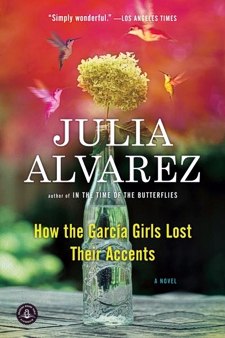
Classic book review: Julia Alvarez’s “How the Garcia Girls Lost Their Accents”

Julia Alvarez’s 1991 novel How the Garcia Girls Lost Their Accents follows four sisters from their adulthood in the United States to their childhood in the Dominican Republic. The book is funny, sad and always readable.

There’s Carla, “the responsible eldest”; Sandi, the “looker” who suffers a nervous breakdown; Yolanda, also known as “Yoyo,” the poet; and Sofía, or “Fifi,” the “plain one” who managed to snag “non-stop boyfriends.”

Instead of a straightforward plot, the family’s story is told in a series of vignettes in reverse chronological order. We first met the women as adults in the 1980s as they go through bad relationships and other problems. The book then goes back to the 1960s, when they first moved into the United States and they have to adjust to a different culture. The last part of the book takes place in the late 1950s, when they lived in the Dominican Republic under dictator Rafael Trujillo‘s rule.

Their time in their homeland makes for some of the most tense moments in the book. Their mother, Laura, severely punishes Yoyo when she inadvertently gets their father, a prominent doctor, in trouble. “You lose your head in this crazy hellhole, you do, and different rules apply,” she says.

It’s lines like that makes Alvarez such a great writer. Here’s another great passage in which she describes young Sandi’s urge to draw: “It seemed with so much protocol, I would never get to draw the brilliant and lush and wild world brimming over inside me. I tried to keep my mind on the demonstration, but something began to paw the inside of my drawing arm. It clawed at the doors of my will, and I had to let it out. I took my soaking brush in hand, stroked my gold cake, and a cat streaked out on my paper in one lightening stroke, whiskers, tail, meow and all!”

One gripe: it’s hard to tell the women apart sometimes. It seems Yoyo receives most of the attention. In fact, she later got her own book –1997’s ¡Yo!.

But Garcia Girls is an intriguing read about a family loving each other through the years, in good times and in bad. This piece of dialogue between their mother and a psychiatrist sums up their life:

“’The siblings,’ Dr. Tandlemann said. ‘Were they close? Was their any sense of rivalry between them?’

‘Siblings?’ The mother frowned at all this crazy psychology talk. ‘They’re sisters,’ she said by way of explanation.”

More about Julia Alvarez:

Julia Alvarez grew up in the Dominican Republic and came to the United States at age 10. She’s written numerous books, but is best known for Garcia Girls and In the Time of Butterflies. Her next book, A Wedding in Haiti, comes out in April.

Source: I checked this book out of the library.

This book is the second in a series of classic books by Latina authors. Coming in March: So Far From God by Ana Castillo.

Leave a comment

Filed under Book Reviews, Classic Books, Fiction

Classic Book Review: Isabel Allende’s “The House of the Spirits”

Isabel Allende’s 1982 The House of the Spirits is considered one of Latino literature’s best-known and greatest pieces of work. When you read it, you can the sense the influence the book has had on the books you read today.

Spirits tells the tale of Esteban Trueba, a poor but temperamental miner who rebuilds an abandoned ranch in South America and becomes a powerful patrón and politician. He is surrounded by three generations of headstrong women– his wife, clairvoyant Clara; his daughter, Blanca, who falls in love with a young revolutionary that Esteban disdains; and his granddaughter, Alba, who disagrees with him politically – and faces violent consequences.

The book mirrors political events in Chile and parts of Allende’s life. Her uncle, Salvador Allende, was that country’s socialist president in 1973 when he attacked in a 1973 military coup led by General Augusto Pinochet.

Allende writes in beautiful sentences, such as this: “Outside, the fields were shaking off their sleep and the first rays of sunlight were cutting the peaks of the cordillera like the thrusts of a saber, warming the earth and evaporating the dew into a fine white foam that blurred the edges of thing and turned the landscape into an enchanted dream.”

But those long descriptive paragraphs can make the book slow at times. I prefer fast-paced books with lots of dialogue, although the last 100 pages of Spirits was more gripping.

I can see the influence of Allende’s book in two epic tales of life on the ranchero and have characters with magical powers – Luis Alberto Urrea’s 2005 The Hummingbird’s Daughter, which has a more light-hearted tone, and Esmeralda Santiago’s 2011 Conquistadora, which has a feminist take.

Spirits – which was made into movie in 1993 starring Meryl Streep – is a fascinating story that earns the title of  “classic.”

More about Isabel Allende:

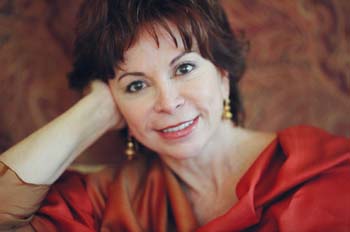
• Allende worked as a reporter before writing novels. This fascinating timeline shows her family’s history and reveals the inspiration for Spirits. Her other books include the novels 1985’s Eva Luna and 1999’s Daugher of Fortune, as well as 1995’s Paula, a memoir to her daughter, who died at age 28.

This is the first in a monthly series of classic books by Latina authors. Next month: How the Garcia Girls Lost Their Accents by Julia Alvarez.

Source: I purchased this book at Books-A-Million.

2 Comments

Filed under Book Reviews, Classic Books

Book Review: Rolando Hinojosa’s “Partners in Crime” and “A Voice of My Own”

Rolando Hinojosa may perhaps be one of the greatest storytellers from the Rio Grande Valley. Hinojosa, who grew up in Mercedes, Texas, a small town near the Mexican border, has written about the land’s quirks and contradictions in more than a dozen books. The Valley plays a big role in two books just released by Arte Publico Press, the detective story, Partners in Crime, and the collection A Voice of My Own: Essays and Stories.

Partners is part of the Klail City Death Trip series featuring Lieutenant Detective Rafe Buenrostro and taking place in Jones City, which appears to be modeled on Brownsville. In the novel, three men walk into a bar and start shooting up the place with their automatic rifles. The detectives must seek out the one clue about the murderers left by witnesses – a cream-colored Oldsmobile.

Partners was originally published in 1985 and the story takes place in 1972. It’s amusing to see how detectives worked without the Internet and cell phones, but the plot isn’t particularly captivating. The book’s strength comes from Hinojosa’s brisk writing. Like the detectives in the novel, he gives no bull but plenty of wit.

While Partners is an easy read, Hinojosa’s collections of short stories and essays are a little more frustrating. The 15 essays and four short stories – six of which are in Spanish – covers more than 25 years of writing about his life in the Valley and his thoughts on literature. Hinojosa, who is a creative writing professor at the University of Texas at Austin, can be wordy and unfocused in his pieces about literature. He uses the word “digression” often. He’s more interesting when he talks about his personal life, such as growing up in the Valley, describing his school days at the UT in the 1950s or showing how he wrote a poem.

The book ends with a few short stories. “Miami, Nice Climate” is a fast-paced  tale in the Rafe Buenrostro mode. “Es El Agua” is a beautiful and heartbreaking story about a migrant worker who recalls the travels in his life – from France, where he fought in the World War II and his brothers lost their lives, to the Midwest farms where he worked. But his home remains the Valley, the narrator says.

“It’s the water, the Rio Grande water,” the narrator says. “It claims you, you understand? It’s yours and you belong to it, too. No matter where we work, we always come back. To the border, to the Valley.”

 More about Rolando Hinojosa:

Hinojosa, who sometimes uses his mother’s name Smith, talked about his book of essays to the Austin Chronicle before his appearance at the Texas Book Festival earlier this year.

Source: I received advance copies of the books from Arte Público Press.

1 Comment

Filed under 2011 Books, Book Reviews, Classic Books

Celebrating Dias de los Muertos in words

Oct. 31 marks the beginning of the three-day Dias de los Muertos, one of the Latino community’s most important holidays. Celebrants remember their loved ones who have passed away by creating altars and writing calaveras, or poems. The day has roots in the Aztec culture and now coincides with All Saints Day and All Souls Day Nov. 1 and Nov. 2. As this Associated Press article notes, the celebrations are gaining popularity across the country. Here’s some reading about the day:

• Azcentral.com has a great website about the holiday, including a history about the holiday and a list of books.

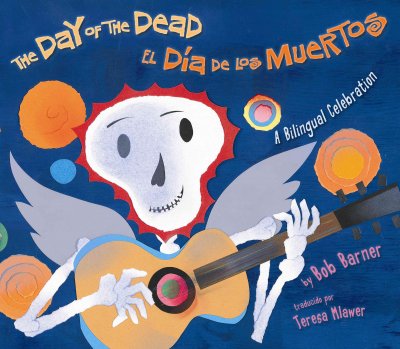
La Casa Azul Bookstore lists its favorite Dia de los Muertos books for children, including The Day of the Dead/El Dia de las Muertos by Bob Barner.

• Novelist Sandra Cisneros has created an altar for her mother that will be displayed at the National Hispanic Cultural Center in Albuquerque until March 2012, according to this article by the New Mexico Daily Lobo.

• The novel, Under the Volcano, by Malcolm Lowry, takes place on Dias de los Muertos. In the book, a British man self-destructs while in the Mexican city of Quauhnahuac. Time named it one of the 100 all-time greatest novels.

Leave a comment

Filed under Children's Books, Classic Books, Culture

Meet storyteller Joe Hayes, the man behind “La Llorona”

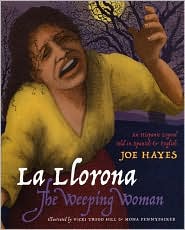
Halloween is approaching, and that means many storytellers will be weaving the famous Hispanic scary story of La Llorona, the weeping woman who drowned her children and looks for them along rivers and canals. The folktale, especially popular in Texas, has many versions. Storyteller Joe Hayes turned that story into a book, La Llorona/The Weeping Woman, in 1987, and it has gone on to sell more than 300,000 books for Cinco Puntos Press. Hayes grew up in Arizona, where he learned Spanish from his Mexican-American friends. Hayes has written more than three dozen children’s books that are written in English and Spanish.

Q: Why are people so intrigued by the tale of La Llorona?

There are really three aspects to the character of La Llorona. First, she’s a threatening character you have to look out for, especially if you’re a kid. This by far the best-known aspect. Many people know of her in this role, without knowing the tale behind it, or knowing only the detail that she drowned her children. And then there’s the legendary tale of her. It’s a legend because it’s widely accepted as factual. Finally, there are the many stories of personal experiences involving La Llorona. In my version in The Day It Snowed Tortillas (a collection of his short stories), I include all three aspects of her. And I think these three facets of La Llorona combine to make her so intriguing. Children are fascinated by a vague threat, and even more so if there’s a safety valve, a way to avoid the threat: Stay inside at night. The theme of a mother who kills her own children is widespread in folklore. It’s such a violation of the natural order, that people can’t quite get it out of their minds. And a character who is perpetually mourning and seeking forgiveness also has a strong hold on the imagination. Finally, so many people swear they’ve seen or heard La Llorona, that children can never quite declare that they don’t believe the story. There’s always that sense of “I don’t really think it’s true, but…but…”

Q: The story has many different versions. How did you adjust it to your book version?

I just started telling the story several decades ago, combining things I had heard as a kid with my own imagination. Over the years, the listeners helped me refine the story by the way they reacted to it. The printed version is somewhere between the way I started out telling and how I now tell it. I always tried not to glorify the violence that’s inherent in the tale, but refused to abandoned the essential fact that she drowned her children. I can’t stand some of the contemporary versions that turn La Llorona into a helpful character, or say that she didn’t actually drown the children. They rob the story of it’s mythic quality. The story, at least my story, of La Llorona is highly moralistic. It’s a teaching story.

Q: As an Anglo man, what has appealed to you about communicating through different cultures?

I have always believed that stories belong to those who honor and care for them. Years ago when I first started tellling stories, I knew that the story of La Llorona needed to be perpetuated. No other storytellers were telling it. So, without reasoning why, I just started telling the story. That’s changed now, of course. Many people tell it. I now realize that I’ve been able to make a greater contribution, both to Hispanic and non-Hispanic children, by not being Hispanic than I could ever have made were I Hispanic. It’s opened minds to the fact that words are for everyone, ideas are for everyone. The human family is one big round circle, not a lot of separate straight lines.

Leave a comment

Filed under Author Q&A, Children's Books, Classic Books

Classic Book Review: “The Hummingbird’s Daughter”

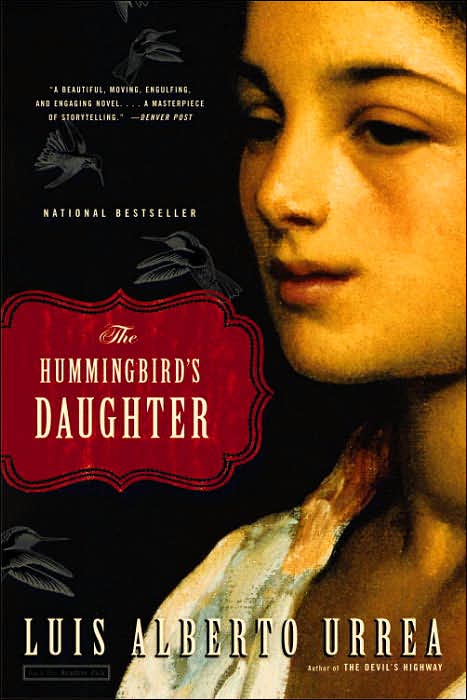
In preparation for Luis Alberto Urrea’s upcoming Queen of America, I wanted to read its predecessor, The Hummingbird’s Daughter, which was published in 2005. I was intimidated by the 500-page book and its serious description on the book cover, but I shouldn’t have been. Every page was a joy to read.

Daughter, which takes place in the 1800s in a small Mexican village, centers on Teresita, who was born out of wedlock and is abandoned by her mother, Cayetana, but she is later groomed by her father, the womanizing ranch owner Tomás Urrea.

As the story progresses, Teresita discovers has powers of healing. But rebels are stirring up a revolution in Mexico while hundreds of villagers are flocking to Teresita so she will cure them. Soon, the two forces collide.

Besides the tightly paced plot, Urrea imbues Daughter with rich language. One character “had the face of an Aztec carving.” In another passage, Urrea compares the villagers’ complexion to a character’s drink: “Every Mexican was a diluted Indian, invaded by milk like the coffee in Cayetana’s cup.”

Urrea knows how to build tension in a scene – and put in some comic relief, too. Sometimes, he accomplishes it all in one scene, such as when Tomás’s wife, Loreto, confronts him about an affair as several friends, including two named Aguirre and Huila, watch:

“Loreto slapped Tomás.

He spluttered an obscenity.

She slapped his other check.

He raised his hand.

Aguirre rose.

Huila, watching, clenched her hands – this was even better than she’d hoped!”

Here’s another great line: “If you are too blind to see God in Goddamned taco, then you are truly blind.”

And another: “A Mennonite missionary had moved through the ranchos assuring them that Jesus Christ would return to earth by 1880 – maybe He was early.”

Daughter was a fantastic read. I can’t wait for Queen of America.

More about Luis Alberto Urrea:

• Urrea is just as witty in his Twitter and Facebook feeds. His website features a blog, readings from Queen of America and upcoming appearances. Queen of America will be released in December.

Leave a comment

Filed under Book Reviews, Classic Books, Fiction

Hispanic literature’s greatest hits

Today marks the beginning of Hispanic Heritage Month, which runs through Oct. 15. Want to catch up on some great Latino literature through the centuries? Here are some good starting points:

The Norton Anthology of Latino Literature compiled the greatest works of four centuries of Hispanic literature. Smithsonian magazine wrote about the project last year.

Latina magazine offers an excellent and comprehensive list called 25 Books Every Latina Should Read. (And happy 15th anniversary to Latina magazine!) They list books from 24 Hispanic authors, as well as The People’s History of the United States by badass historian Howard Zinn.

• The Association of American Publishers and Las Comadres, a national Latina organization, has formed a National Latino Book Club that discusses Hispanic books once a month in cities across the country. They have a great list of selections on its website.


Leave a comment

Filed under Classic Books, Fiction

All in the name

A few years ago, I read three books for one selfish reason – the characters had the same last name as me.

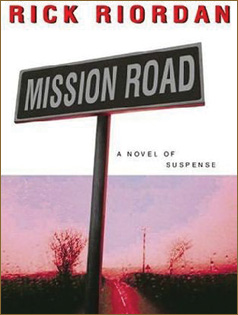
My last name, DeLeon, isn’t common, so it was exciting to see my name in print. The first of these books, Rick Riordan’s 2006 Mission Road, featured a character named Ana DeLeon who was tangled up in the investigation of an unsolved murder. Mission Road, unlike Riordan’s Percy Jackson and the Olympians series, isn’t particularly memorable, but the other two DeLeon books are awesome.

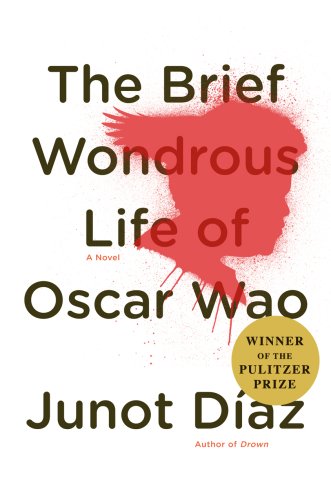
The most famous of these books is Junot Diaz’s 2008 The Brief Wondrous Life of Oscar Wao. The lead character, Oscar DeLeon, is a misfit whose Dominican-American family suffers a curse brought on by a former dictator from their homeland. This funny book won the Pulitzer Prize for Fiction, with Diaz becoming the second Hispanic to receive that honor.

But my personal favorite DeLeon character comes from Stewart O’Nan’s 2008 Last Night at the Lobster, which depicts Manny DeLeon’s last day on the job as manager of a New England Red Lobster on a snowy day. DeLeon is just an ordinary guy living an ordinary life, but his sense of decency makes him one of those characters that you wish you had as a friend. I’m proud to share the same last name as him.

Leave a comment

Filed under Book Reviews, Classic Books, Fiction