Category Archives: 2012 Books

Book review: Joy Castro’s “Hell or High Water” and “Island of Bones”

Class and cultural identity are two topics that don’t get as much attention as much as they should, but Joy Castro tackles the issues in her suspense novel Hell or High Water and a book of essays, Island of Bones.

Hell or High Water (St. Martin’s Press) begins with an intriguing premise. A young woman is kidnapped from a restaurant in broad daylight. The book then turns to Nola Céspedes, a Cuban-American newspaper reporter who’s assigned to investigate sexual predators in post-Hurricane Katrina New Orleans.

The book only devotes a few passages to the kidnapping that hooks the reader. Instead, it delves into the Nola’s long interviews for her article and her personal struggles. Nola is supposed to come off as ambitious and sarcastic, but I found her snobby and pretentious, especially when she talked about her job.

“I’ve got no intention of sticking around,” she says. “The plan is to write a few knockout features, get noticed, pack my bags and then take my clips to some real newspaper in some real city.”

Well, aren’t you special? In 2008, the year the story (somewhat randomly) takes place, and even today, she would have been lucky to have any job in newspapers.

I also wanted the book to be more about the potential killer on the loose than on Nola. And as a former newspaper reporter, I found the newsroom scenes could have been so much more – which may by why I’m more critical of this book than if Nola had been a police detective or a private investigator.

Fortunately, Castro writes clearly, so the book was an easy read. And Castro is terrific at bringing up class issues that many other writers ignore. In one scene, she talks to two lower-income women about sexual predator laws.

“Neither of the women has heard of Megan’s Law. Neither knows she can access a sex-offender registry online. Neither one owns a computer.”

At the end of the book, I understood more about the decisions that Nola makes. But I wished I could have liked her more.

I liked Island of Bones (University of Nebraska Press) much better. The collection of essays covers Castro’s personal life, including a horribly abusive childhood, and her career working as the rare Latina in academia in the Midwest.

The title essay examines the stereotypes people have about Latinos, such as their faith and looks. Another great essay, “Fitting,” discusses the subtle barbs of female friendships and the importance of a good spouse.

Like her novel, Castro excels when she discusses class issues. Coming from a poor background, she is amazed at the food spreads in the faculty meetings at the college at she works.

In one of the best essays, “On Becoming Educated,” she points out how academia doesn’t reach out to everyday Latinas.

“I’m a first-generation college student, here by fluke on fellowship, and the theorists’ English seems foreign to me, filled with jargon and abstractions at which I can only guess. They say nothing about wife-beating or rape or unequal wages or child molesting, which is the charge that finally got my stepfather sent to prison. They say nothing about being a single mother on ten thousand dollars a year, which is my own situation. The feminist writers respond to male theorists – Lacan, Derrida – whose work I haven’t read. I can’t parse their sentences or recognize their allusions, and I don’t know what they mean or how they’re helpful to the strippers and dropouts and waitresses I know, the women I care abut the most, to my aunt Lettie who worked the register at Winn-Dixie and my aunt Linda who cleaned houses.”

Fortunately, in Castro, women like Lettie and Linda have someone that’s writing about them.

More about Joy Castro:

Joy Castro’s first book was the 2005 memoir The Truth Book: Escaping a Childhood of Abuse Among Jehovah’s Witnesses. She is an associate professor at the University of Nebraska-Lincoln.

Source: I checked Hell or High Water out of the library. I received a review copy of Island of Bones from the publisher.
Leave a comment

Filed under 2012 Books, Book Reviews, Fiction, Non-Fiction

Book review: Junot Díaz’s “This is How You Lose Her”

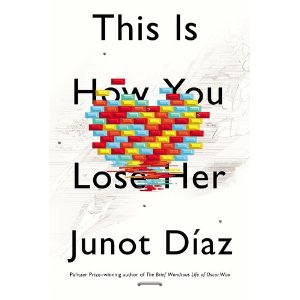
Junot Díaz’s collection of short stories, This Is How You Lose Her (Riverhead), is absolutely brilliant – and just a tad annoying.

Most of the stories feature Yunior – a character in Díaz’s first book, Drownwho, like Díaz, was born in the Dominican Republic, immigrated to New Jersey as a child and teaches creative writing in the Boston area. All of these stories are told in Díaz’s unique voice that seems to be speaking to you like you’re his best friend. The voice is tormented, cynical and, to the reader, entertaining to read.

The book shows Yunior in different phases from his life, including one story (“Invierno”) from his childhood in which he is fascinated by the snow and disillusioned by his father: “I had expected a different father, one about seven feet tall with enough money to buy our entire barrio, but this one was average height, with an average face.”

But, most of the time, Yunior always seems to be breaking up with a woman or in some sort of relationship drama. “And that’s when I know it’s over,” Yunior says in “The Sun, the Moon, the Stars.” “As soon as you start thinking about the beginning, it’s the end.”

In “The Pura Principle” Yunior’s brother, Rafa, has been diagnosed with cancer. It’s one of the best stories in the book, and it has some of the best lines, such as when their mother turns to religion: “She’d never been on big on church before, but as soon as we landed on cancer planet she went so over-the-top Jesucristo that I think she would have nailed herself to a cross if she had one handy.”

An abusive partner is described as “a two-year-long PSA,” and a new friend is termed as “fresh-off-the-boat-didn’t-have-no-papers Dominican.”

And there’s this: “Pura was her name. Pura Adames. Pura Mierda was what Mami called her.”

While it’s a great line, that sentence also represents the book’s one flaw. Many of the women are portrayed as lying sluts. Yunior is not a saint himself, but I’d wish the women were more multidimensional, such as in “Miss Lora”,  in which Yunior has an affair with an older woman, or in “Otra Vida, Otra Vez,” about an immigrant who works in a laundry room and waits for her family to call every Sunday.

(Díaz’s frequent use of the “F” and “N” words also may turn off some readers, although I understand that language is a reflection of the working class lives portrayed in the stories.)

But then, in the last story in the book, “The Cheater’s Guide to Love,” Yunior begins to grow up after his girlfriend catches him cheating on her and dumps him. You feel for Yunior because Díaz captures the pain of a broken heart so well – it’s slow, it’s hard, and it’s painful. It’s the perfect ending to a great book.

More about Junot Díaz:

Díaz is the author of the 1997 short story collection Drown and the 2008 novel The Brief Wondrous Life of Oscar Wao, which won the Pulitzer Prize for Fiction.

Source: I received a review copy from the publisher.

3 Comments

Filed under 2012 Books, Book Reviews, Fiction

In the news: New releases from González and Díaz, book festivals and more

September means new books and book festivals. Here’s a look at what’s going on:

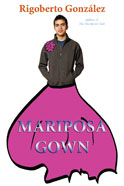
Already released: Rigoberto González’s Mariposa Gown – a sequel to The Mariposa Club –depicts the friendship between three teenage boys who want to make a splash at their high school prom with the titular outfit.

Brazilian writer Jorge Amado‘s The Double Death of Quincas Water-Bray and The Discovery of America by the Turks have received new translations from Gregory Rabassa. To mark Amado’s 100th birthday, Rabassa and writer Rivka Glachen will discuss Amado’s work Sept. 17 at the Queen Sofia Spanish Institute, reports the Shelf Awareness newsletter. The Millions website also wrote about the two new releases.

• Sept. 11: Pulitzer Prize winner Junot Díaz will release a collection of short stories, This is How You Lose Her. Here’s a cool Pinterest board by blogger Poornima Apte that shows the town and other details from the book. (She did the same for Roberto Ampuero’s The Neruda Case and other books.) Díaz has been all over the media: dressing up in Edith Wharton-era clothes for a Vogue fashion spread; discussing his love life in New York magazine; sharing his reading habits with The New York Times; and compiling a playlist to NPR’s alt. Latino website.

Sept. 25: In the novel The Secret Book of Frida Kahlo, Mexican writer F.G. Haghenbeck writes about the life of the iconic Mexican artist.

Sept. 27: Spoken word poet Carlos Andrés Gómez discusses how masculinity is evolving in Man Up: Cracking the Code of Modern Manhood.

Book festivals:

Here’s a look at some upcoming book festivals:

• Sept. 15: Houston Librofest will play host to Gwendolyn Zepeda (right), Javier O. Huerta and Sarah Cortez.

• Sept. 22-23: The National Book Festival in Washington, D.C. will feature Sandra Cisneros, Junot Díaz, Mario Vargas Llosa, Justin Torres and Maria Dueñas. Mexican-born, California-based Rafael Lopez is the festival artist.

Sept. 23: The Brooklyn Book Festival will include Carlos Andrés Gómez, Charles Rice-Gonzalez, Reyna Grande, Esmeralda Santiago, Luis Alberto Urrea, and graphic artists Gilbert & Jaime Hernandez.

• Sept. 28-30: The Baltimore Book Festival will feature Caridad Pineiro and Carmen Ferreiro-Esteban.

Literary Magazines:

• Several Latino-oriented literary magazines are out with new issues. Acentos Review, edited by Bonafide Rojas, focuses on music on its August 2012 edition. The bilingual BorderSenses published its 18th volume. Lorna Dee Cervantes, Rigoberto Gonzales and Andrea J. Serrano are featured in the latest issue of the Mas Tequila Review.

• The fall issue of Zyzzyva magazine, which is devoted to West Coast writers, features works by Dagoberto Gilb and Luis Alberto Urrea.

Librotraficante:

Sept. 21: Librotraficante, which was founded earlier this year to protest the state of Arizona’s ban on ethnic studies, will host a 50 States of Freedom of Speech event in honor of Hispanic Heritage Month, which begins Sept. 15.

Writer’s Workshop

Las Comadres Para Las Americas will host a writer’s workshop Oct. 6 in New York City. Speakers include Sesame Street actress and children’s book writer Sonia Manzano, author of the just released The Revolution of Evelyn Serrano, as well asLyn DiIorio, and Caridad Pineiro.

Other features:

• NPR featured the latest work of graphic comic book artist Jaime Hernandez, creator of the Love and Rockets series.

• The El Paso Times has marked the 40th anniversary of the Rudolfo Anaya novel Bless Me Ultima with essays from Rigoberto González, Denise Chávez and other writers.

• Argentine writers will now receive a pension, according to The New York Times.

Reyna Grande, author of The Distance Between Us, talked to the Zyzzyva website.

• Junot Díaz was among the writers at the Edinburgh World Writer’s Conference who condemned Arizona’s ban on ethnic studies.

3 Comments

Filed under 2012 Books, Events, Fiction, News

Book review: Las Comadres Para Las Americas’ “Count on Me: Tales of Sisterhoods and Fierce Friendships”

Count On Me: Tales of Sisterhoods and Fierce Friendships (Atria) is the perfect gift to give to your best friend.

The book of essays was put together by the non-profit association Las Comadres Para Las Americas and edited by Adriana V. Lopez. In a dozen essays, 11 prominent Latinas – plus Luis Alberto Urrea – talk about the power of female friendship. Some of the friends make extraordinary gestures. Carolina de Robertis, author of Perla, edits a deceased friend’s book. A teacher offers shelter to Reyna Grande, in an excerpt from her memoir The Distance Between Us, after she faces a bad family situation. Lorraine López receives advice from writer Judith Ortiz Cofer to pursue her literary career – leading to such books as The Realm of Hungry Spirits.

But two of the best essays are those that acknowledge that a best friend can often be your worst enemy. In “Anarchy Chicks,” Michelle Herrera Mulligan describes how adolescent friends go weeks without talking to each other, then become best friends again with a single phone call. In “The Miranda Manual,” Sofia Quintero nails all the subtle gestures and actions that can destroy a relationship:

“There were no betrayals or putdowns, no angry emails or shouting matches, breaches of confidences or rehashing of past misdeeds. Neither of us committed a gross act of deliberate hurt against the other. Rather, we engaged in tiny yet relentless acts of thoughtless toward each other. The little digs, constant interruptions and the passive listening typical of mere acquaintances that’s easy to ignore. When the person is usually mindful and considerate best friend, it hurts like hell.”

Most of the essays are excellent. Dr. Ana Nogales’ essay is too general to make an emotional impact, but she describes the health benefits to friendships. But Teresa Rodríguez sums up the power of friendship in her essay about activist Esther Chávez Cano:

You see, a comadre is not necessarily a close friend, but a person whose example is etched in your heart. The one you’d like to emulate, that friend who gave so much of herself and asked for nothing in return.

Source: I received a review copy from the publisher.
Leave a comment

Filed under 2012 Books, Book Reviews, Non-Fiction

Book review: Reyna Grande’s “The Distance Between Us”

Reyna Grande’s memoir The Distance Between Us (Atria) should come with a box of tissues.

Grande grew up in the 1970s in Iguala, Mexico, a small town whose mountain has a mysterious force on its other side that residents call El Otro Lado – the United States.

Grande’s parents left Reyna and her two older siblings behind with their grandparents so they could work at better paying jobs and build a new home in Iguala. But as Grande describes it, the separation took a toll on the family as the children live in squalor.

“… the banks lined with trash and debris floating in the water, the crumbling adobe houses, the shacks made of sticks, the children with worm-pregnant bellies running around with bare feet, the piles of drying horse dung littering the dirt road, the flea-bitten stray dogs lying under the shade of trees, flies hovering above them. But what I saw back then I saw through the eyes of a child – a child who had never been anywhere, a child who was still innocent enough to see past the things later in life she could not. What I saw the were the velvety mountains around us, the clear blue sky, the beautiful jacaranda trees covered in purple flowers, bougainvilleas crawling up fences, their dried magenta petals whirling in the wind. … I continued to think that there was beauty everywhere around us. … But when … I saw mothers and fathers strolling about holding hands with their children, I realized that it didn’t matter what I thought of Iguala. Without my parents here, it was a place of broken beauty.”

At age 10, Grande and her siblings crossed the border illegally and moved to Los Angeles to be with her parents. But life is just as tough there as her mother ignores her and father becomes abusive toward her and her siblings.

But her father also was her best motivator, emphasizing the importance of a good education. Grande earned good grades and became a top musician in her school’s marching band. Federal legislation in 1986 enabled her to become a legal citizen.

A teacher in junior college encouraged her to write – leading Grande to write this incredible book. Told in simple, easy to read – yet descriptive – prose, my heart broke as I read about all that Grande suffered through. The Distance Between Us is an inspirational book for young Latinos or anyone who has faced adversity. Just keep those tissues handy.

More about Reyna Grande:

Reyna Grande is the author of the novels Across a Hundred Mountains and Dancing with Butterflies.

Source: I received a review copy from the publisher.
Leave a comment

Filed under 2012 Books, Book Reviews, Non-Fiction

Book review: Carlos Ruiz Zafón’s “The Prisoner of Heaven”

Carlos Ruiz Zafon’s The Prisoner of Heaven (Harper Collins) is a good escape about a great escape.

Daniel Sempere is a bookseller in Barcelona when, on Christmas 1957, he is visited by a stranger who has information about his friend, Fermín Romero de Torres. Fermín then is forced to reveal a secret from his past life.

He was imprisoned in the 1940s, where his cellmate, a writer named David Martín, had strange, delusional ramblings that earned him the nickname “The Prisoner of Heaven” and may have ties to Daniel.

Fermín feels trapped. He desperately wants to escape the horrendous conditions of the prison that, under the Franco dictatorship, is run by a governor with strong personal ambitions. His plan has the audacity of Andy Dufresne in Stephen King’s The Shawshank Redemption.

Prisoner is the third in the Cemetery of Forgotten Books series, following 2004’s The Shadow of the Wind and 2009’s The Angel’s Game, although you don’t have to read them in order. I haven’t read the two previous books, and I didn’t feel lost.

But I had high expectations for Heaven. Book bloggers on Twitter were buzzing about the book, apparently since Shadow is so good.

And Heaven is an entertaining book. The main characters are easy to like, and the plot kept me reading. But I was expecting more – something with the unputdownable pace and intrigue of Dan Brown’s Angels and Demons. (Don’t roll your eyes. I know it’s lowbrow, but that book is awesome.)

Heaven doesn’t reach that high of a level, but it’s still a good read.

More about Carlos Ruiz Zafón:

Carlos Ruiz Zafón is the author of six weeks, including several young adult novels. He lives in Barcelona and Los Angeles.

Source: I purchased this book through Amazon.com.

1 Comment

Filed under 2012 Books, Book Reviews, Fiction

In the News: New releases, writer’s workshop and García Márquez

Hello August! Here are great selections to beat the heat:

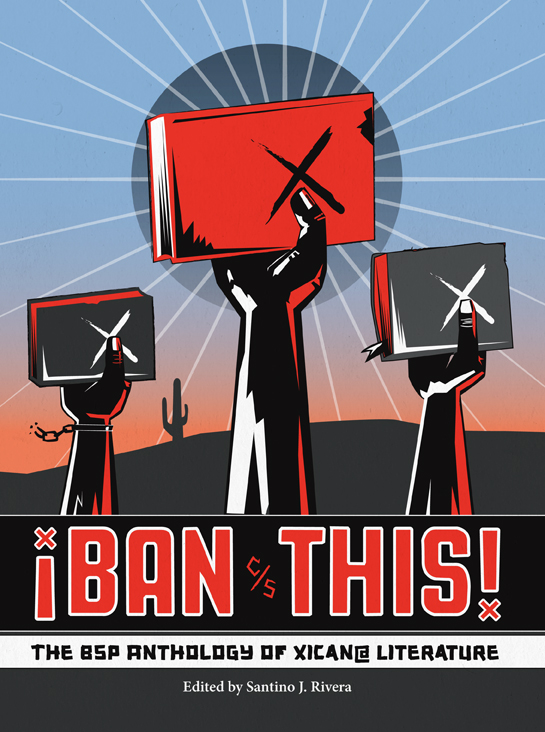
• Already released: Gustavo Arellano and Luis Alberto Urrea are among the writers who contributed to Ban This! The BSP Anthology of Xican@ Literature, edited by S.J. Rivera. The book was published in response to the state of Arizona’s ban on ethnic studies earlier this year.

• Now in paperback: Esmeralda Santiago’s Conquistadora, which was selected as Ladies’ Home Journal’s August Book of the Month (here’s a discussion guide and letter from Santiago); Paulo Coelho’s Aleph; Maria Duenas The Time in Between and Javier Sierra’s The Lost Angel.

Alisa Valdes has a new erotic e-novel out called Puta. You can read the first two chapters for free on Amazon.

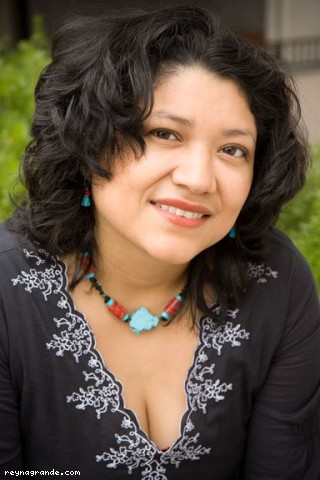
Aug. 28: Reyna Grande writes about immigrating from Mexico to California in her memoir, The Distance Between Us.

Sept. 4: Count on Me: Tales of Sisterhoods and Fierce Friendships features an all-star list of Latinas –Santiago, Grande, Sofia Quintero, Carolina De Robertis, Lórraine Lopez writing about the importance of female friendships. The book was produced by Las Comadres and Friends National Latino Book Club and edited by Adriana V. López.

Writer’s Workshop

Speaking of Las Comadres, the organization will host a writer’s workshop Oct. 6 in New York City. Speakers include Sesame Street actress and children’s book writer Sonia Manzano, left, as well as Lyn DiIorio, and Caridad Pineiro.

In other news:

• Sad News: It’s been confirmed that Nobel Prize winner Gabriel Garcia Márquez,  right, can no longer write due to dementia, according to The New York Times. The Daily Beast/Newsweek ran an interesting blog post about his writing process.

Bless Me Ultima author Rudolfo Anaya was honored by the city of El Paso as the movie version of the book is expected to premiere in September, reports the El Paso Times.

• Poets and Writers magazine profiled the Librotraficante movement. Its founder, Tony Díaz is planning a “50 for Freedom of Speech” teach-in in all 50 states Sept. 21.

Joy Castro talked about her novel, Hell or High Water, to Book Page.

Mexican-American poet Manuel Paul Lopez of El Centro, Calif., was featured in a KCET animated short about his chapbook, “1984,” which is his interpretation of the classic George Orwell novel.

Junot Díaz discussed his short story, “The Cheater’s Guide to Love,” to The New Yorker. The story is included in his book, This is How You Lose Her, out on Sept. 11.

Diana Gabaldon will see her Outlander books made into a TV series, according to the Word & Film website.

• A recent edition of the NPR radio program “Latino USA” took a look at Luis Alfaro’s new play, “Bruja,” and got reading recommendations from Aurora Anaya Cerda, owner of La Casa Azul Bookstore in East Harlem, N.Y.

• A new literary prize for works written in Spanish will be named after the late Carlos Fuentes, reports Publishing Perspectives.

• Celebrating birthdays this month: Jorge Luis Borges on Aug. 24.

2 Comments

Filed under 2012 Books, Events, Fiction, News

Book review: Gwendolyn Zepeda’s “Better with You Here”

In Gwendolyn Zepeda’s Better with You Here (Grand Central Publishing), single mother Natasha Davila can’t catch a break.

In the opening chapter, she’s competing with her ex-husband’s new girlfriend and dealing her son’s damp underwear.

“Fifty percent of my job as a mother is cleaning up bodily fluids… And then the other 50 percent is worrying,” she says.

Just when Natasha is getting some good luck – finding a decent babysitter and making friends with two other women in her Dallas apartment complex – her ex-husband demands full custody of their children, Alex and Lucia.

Better is a great read thanks to a fast-paced plot with a few interesting twists. But it’s strength lies in Natasha’s voice. She speaks matter-of-factly when she’s recounting her woes, not feeling sorry for herself. When she’s angry, she’s on fire and Zepeda’s words just flow.

“… I picked the wrong man to marry, which is what brought me to this point tobegin with.

What was the last thing I did right? If I had a time machine, how far back would I have to go to undo all the mistakes I’ve made?

This is stupid. Stop thinking this way. Why would I go back and undo anything? I wouldn’t want to live my life again without having Alex and Lucia, would I? No. And there’s no such thing as a time machine, so shut up. Get back to reality. Plan your next move.”

Zepeda is also terrific at describing the little things – such as the way the women struggle to make ends meet. In one scene, Natasha reveals her biggest loss since her divorce.

“That’s what I miss most about being married – my washer and dryer.”

Two other narrators are featured in the book – her 8-year-old son Alex and her friend Sara. Sara’s voice shows her smart-ass attitude (“I can’t stand church. It’s too damn boring.”), but a few of her lines are confusing and annoying.

Still, that’s one of the few weaknesses in this compelling book. Better with You Here makes a great summer read.

More about Gwendolyn Zepeda:

Texas native Gwendolyn Zepeda is the author of Houston, We Have A Problema and Lone Star Legend, as well as the children’s books Growing Up with Tamales and Sunflowers.

Source: I received a review copy from the publisher.
Leave a comment

Filed under 2012 Books, Book Reviews, Fiction

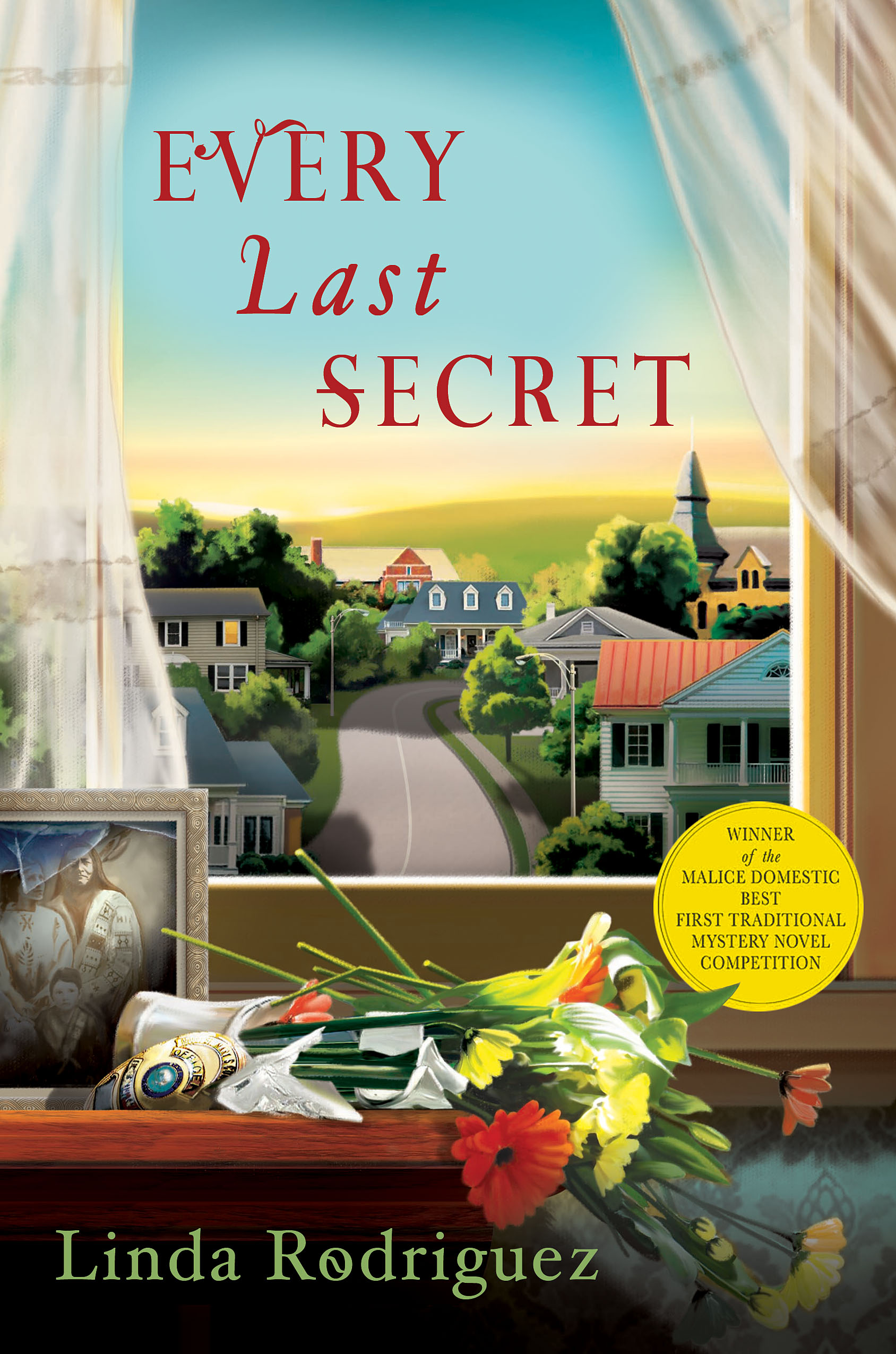
Meet novelist and poet Linda Rodriguez, author of “Every Last Secret”

Linda Rodriguez is the author of the recently released mystery novel Every Last Secret, but she’s also one of the most passionate advocates for Latino literature and other writers of color. Rodriguez’s blog features “Books of Interest by Writers of Color” and interviews with writers such as Joy Castro. She is also vice president of the Latino Writers Collective in Kansas City.

Every Last Secret won St. Martin’s/Malice Domestic Best First Traditional Mystery Novel Competition and was touted by Barnes & Noble as a mystery must-read for April. She also writes poetry and she recently edited Woven Voices: 3 Generations of Puertorriqueña Poets Look at Their American Lives (Scapegoat Press). She can be found on Facebook and Twitter.

Q: Tell me about your latest book, Every Last Secret.

A: Half-Cherokee Marquitta “Skeet” Bannion thought she was leaving her troubles behind when she fled the stress of being the highest ranking woman on the Kansas City Police Department, a jealous cop ex-husband who didn’t want to let go, and a disgraced alcoholic ex-cop father. Moving to a small town to be chief of the campus police force, she builds a life outside of police work. She might even begin a new relationship with the amiable Brewster police chief.

All of this is threatened when the student editor of the college newspaper is found murdered on campus. Skeet must track down the killer, following trails that lead to some of the most powerful people in the university. In the midst of her investigation, Skeet takes up responsibility for a vulnerable teenager as her ex-husband and seriously ailing father wind up back on her hands. Time is running out, and college administrators demand she conceal all college involvement in the murder, but Skeet will not stop until she’s unraveled every last secret.

Every Last Secret is the first in a series with Skeet Bannion as the protagonist. Skeet, like most of us, has some internal issues she has to learn to deal with. Each book is a complete mystery novel in itself, but I see the entire series as a kind of meta-novel following Skeet’s growth as a person. I like Julia Spencer-Fleming’s categorization of “traditional mystery-thriller” as a description. Every Last Secret is, indeed, a traditional mystery set in a small town, but the small town is right outside a big, dangerous city, and there’s a darker edge to this character, this book, and the series as a whole.

Q: What inspired you to go into writing?

Writing saved my life. I had a troubled childhood with parental involvement in violence and substance abuse. I’ve seen the sad ends of many who came from similar backgrounds. Reading books and writing poetry and journals made a difference for me, I’m sure. I come from several long lines of storytellers. The oral tradition was rich in my family, though they were poor in so much else. Writing was a door that opened for me at a young age.

I write crime fiction because it’s one genre of literature that is looking at the problems in our society—where they come from and what they do to us. As a child, I lived at close quarters with evil. I know too well that the possibility for it is inherent in each of us. I’m interested in exploring why some people fall into it and others in the same circumstance don’t and what this society does to and for people.

Now that the second Skeet Bannion book is in production, I’m working on a new series as well. This one will look at the Chicano community in Kansas City. The Skeet books are about being a mixed-blood Indian living a life surrounded by Anglo culture and the difficulties of remaining Indian under those circumstances, circumstances that many live under in American cities far from the reservations and their people. The new series will look at a vibrant Midwestern Chicano community that few people elsewhere even realize exists. Its protagonists are living in the heart of their community, and although at times that frustrates them, they draw real strength from it, even as they are faced with questions of assimilation and success in the Anglo world.

Q: Your blog encourages readers to read writers of color. What can we do to encourage more people to read Latino literature?

The first thing we can do is to bring the names and work of more Latino writers to the public. I started the series, “Books of Interest by Writers of Color,” because as a member of the Latino Writers Collective, after our readings I was often asked by parents, teachers, and librarians how to find out about Latino writers for their kids and their own reading. These were people of good will, often Latino themselves, but they couldn’t find much beyond the big names like Sandra Cisneros and Junot Díaz.

Latino writers are not published as much and are not reviewed as much as Anglo writers. This is changing, but very slowly. We actually have a large number of fine Latino writers, but if they’re published, it will usually be by one of a handful of small presses or university presses. These presses deserve all our gratitude and support. But they usually don’t have the budgets or staff to do much in the way of promotion. So a relatively few number of people actually hear about these books when they’re published. Trying to make Latino literature more visible are a handful of projects like Letras Latinas and The Latino Poetry Review run by Francisco Aragón out of the University of Notre Dame and LatinoStories.com run by Jose B. Gonzalez—and of course, The Hispanic Reader. Also, we are fortunate to have the gifted writer and critic Rigoberto Gonzalez, who reviews many Latino authors and who campaigns for more Latino writers to review the books of others.

One thing readers can do is to tell others about good Latino writers when they find them. They can also go on Amazon and Barnes & Noble and Goodreads websites and write short reviews of the books by Latino authors. I’ve been fortunate enough to have been reviewed in all the major review publications and over twenty newspapers across the country, but my publishers tell me that those reviews don’t sell as many books as a simple review on Amazon, B&N, or Goodreads. A third thing readers can do is to ask their library systems to order the books of Latino authors—and then check them out and get others to check them out. Also, support those small and university presses that have supported our writers, so they can continue to bring to us the best new Latino writers.

2 Comments

Filed under 2012 Books, Author Q&A, Fiction, Poetry

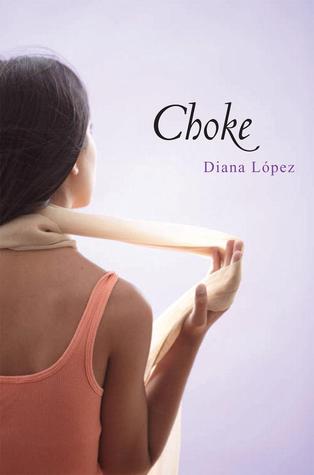
Book review: Diana López’s “Choke”

Windy Soto is an average eighth grade student when she gets to hang out with the popular crowd for the first time in her life. It’s an opportunity that puts her life in danger.

In Diana López’s young adult novel Choke (Scholastic Press), Windy becomes intrigued by Nina Díaz, the new girl who stands up to the cool kids – and acts nice to Windy. Windy even neglects her dorky best friend, Elena. But Windy soon learns that Nina has her friends play “the choking game,” in which teens choke each other until they pass out.

Choke is an easy-to-read book, although the exposition takes a little too long. López, a former middle school teacher who wrote the book after seeing her own students play the game, captures teenage angst well, especially in the opening paragraphs of the book:

“My middle school has the ‘in-crowd,’ the ‘out-crowd, and the ‘GP.’ ‘GP’ stands for ‘general public,’ just like the movie rating. The in-crowd works hard to stay out of the GP, while the out-crowd works hard to get in. I’m definitely GP, general public in every way. … Sometimes I like being GP because not one expects me to run for student council or compete in the academic decathlon. Being GP means being invisible … Being invisible has its benefits, but it can be boring, too. … I want to be part of the in-crowd. I want the keys to their golden lockers, the ones that decorated with streamers and ribbons on Spirit Day. The ones with mirrors on the inside door, mirrors reflecting beautiful faces and surrounded by pictures of beautiful BFFs.”

The novel, which takes place in San Antonio, features mostly Hispanic characters and the occasional nod to Latino life – such as barbacoa meals – but it should appeal to all middle school students. This book could even save a few lives.

More about Diana López:

Diana López, who grew up in Corpus Christi, Texas, is the editor of the Huizache literary magazine and teaches literature and creative writing at the University of Houston at Victoria. She also wrote Sofia’s Saints and the young adult novel Confetti Girl

Source: I received a review copy of the book from the publisher.

Leave a comment

Filed under 2012 Books, Book Reviews, Young Adult Books