Tag Archives: Sandra Cisneros

Literary magazines for Latinos

Latino writers have found a home at Huizache magazine.

The recently released publication is one of the few literary magazines devoted to the works of Hispanic writers. Huizache features the works of nearly a dozen Latino authors. Sandra Cisneros has a terrific essay about meeting her idol, tango composer Astor Piazzolla. Lorraine López and Estella Gonzalez contribute short stories. Gary Soto, José Montoya and Benjamin Alire Sáenz wrote poems.

Huizache is a literary magazine produced by CentroVictoria, the Center for Mexican American Literature and Culture at the University of Houston-Victoria. Dagoberto Gilb serves as the center’s executive director, and Diana López is the magazine’s editor. The center also produces the Made in Texas teacher’s guide, which features lesson plans in Mexican American literature.

Huizache editors said they hope to produce it annually, according to this Victoria Advocate article. You can order the magazine for $10 here.

Here are some other literary magazines devoted to Latino literature:

The Acentos Review comes out online four times a year. Its upcoming issue is devoted to Hispanic elders.

• The online Aztlán Reads, which calls itself “a database of Xicana/o Studies fiction and non-fiction work,” features poems, short stories, author interviews, giveaways and news about literary events.

Palabra, which bills itself as “a magazine of Chicano & Latino literary art,” is a yearly print magazine that intends “to present an eclectic and adventurous array of thought and construct, alma y corazón, and a few carcajadas woven in for good measure.”

• The online Somos en escrito features a novel in progress, poetry and other works by Hispanics.

3 Comments

Filed under Features

Happy Birthday, Sandra Cisneros!

Sandra Cisneros, arguably the most popular Hispanic writer in the United States, turns 57 years old today. Cisneros has won acclaim for her stories and poems that depict the Latina experience in America.

The House on Mango Street, which follows a year in the life of young Esperanza Cordero, was published in 1984. The book is now required reading in many classrooms and was featured in PBS’s 2007 series The American Novel – the only book by a Latino author to earn that distinction. Women Hollering Creek and Other Stories, published in 1991, is a collection of stories following the lives of Latinas (including one called Rosario “Chayo” De Leon – great last name!). Her 2002 book, Carmelo, follows one family’s summer trip from Chicago to Mexico. She’s also published books of poetry and children’s books.

Cisneros has founded The Macondo Foundation, an organization for writers. But, as this Texas Observer article notes, she has found it challenging to write and run the foundation at the same time, and she plans to move from San Antonio to New Mexico.

Cisneros is working on book called Writing in My Pajamas, but no release date has been set. Until then, check out some of her clips on YouTube, where she talks about writing and her books.

3 Comments

Filed under Author Profiles

In the news

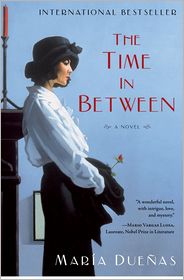
New releases: Maria Duenas’s The Time in Between comes out Tuesday. The suspense novel has received great reviews, including a blurb from Nobel Prize winner Mario Vargas Llosa.  News for all the People: The Epic Story of Race and the American Media, by Juan Gonzalez and Joseph Torres, came out last month.

 • Book festivals: The Miami Book Fair International begins Nov. 13 and runs through Nov. 20, with the street fair running from Nov. 18-20. One session includes Francisco Goldman, Elizabeth Nunez, Esmeralda Santiago and Héctor Tobar – all in one room! Other writers include Ricardo Cravo Albin, Jose Alvarez, Sandra Rodriguez Barron, Jorge Casteñada, Maria Duenas, Christina Diaz Gonzalez, Martha Medeiros, Ana Menendez, Javier Sierra, Justin Torres, Ian Vasquez and Luis Alberto Urrea. Awesome.

Sandra Cisneros announced this week that she plans to leave San Antonio to concentrate more on writing, according to this San Antonio Express-News article. She has put her home up for sale, and she is considering moving to New Mexico. The fate of the Macondo Foundation for writers remains unclear since Cisneros said she had difficulty balancing her writing with her charity.

 Writing contests: Pulitzer Prize winner Junot Diaz will judge stories (no longer than 1,000 words) based on their narrative voice for the Figment writing website. Deadline is Nov. 30. For details, click here.

Feb. 1 is the deadline to submit noir fiction for the Valley Artistic Outreach’s “Border Noir: Hard-Boiled Fiction from the Southwest,” an anthology of short stories to be edited by Machete co-screenwriter Alvaro Rodriguez. The book will come out in May. Stories can be sent to noir@valartout.org. For more information, click here.


Leave a comment

Filed under 2011 Books, Events, News

Celebrating Dias de los Muertos in words

Oct. 31 marks the beginning of the three-day Dias de los Muertos, one of the Latino community’s most important holidays. Celebrants remember their loved ones who have passed away by creating altars and writing calaveras, or poems. The day has roots in the Aztec culture and now coincides with All Saints Day and All Souls Day Nov. 1 and Nov. 2. As this Associated Press article notes, the celebrations are gaining popularity across the country. Here’s some reading about the day:

• Azcentral.com has a great website about the holiday, including a history about the holiday and a list of books.

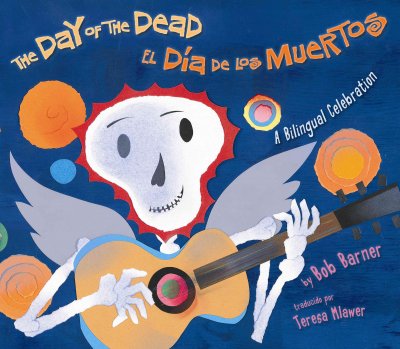
La Casa Azul Bookstore lists its favorite Dia de los Muertos books for children, including The Day of the Dead/El Dia de las Muertos by Bob Barner.

• Novelist Sandra Cisneros has created an altar for her mother that will be displayed at the National Hispanic Cultural Center in Albuquerque until March 2012, according to this article by the New Mexico Daily Lobo.

• The novel, Under the Volcano, by Malcolm Lowry, takes place on Dias de los Muertos. In the book, a British man self-destructs while in the Mexican city of Quauhnahuac. Time named it one of the 100 all-time greatest novels.

Leave a comment

Filed under Children's Books, Classic Books, Culture

In the News

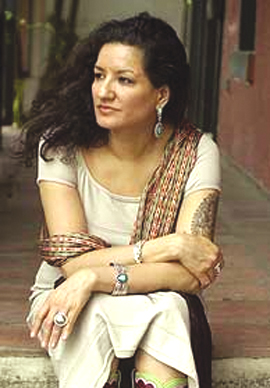
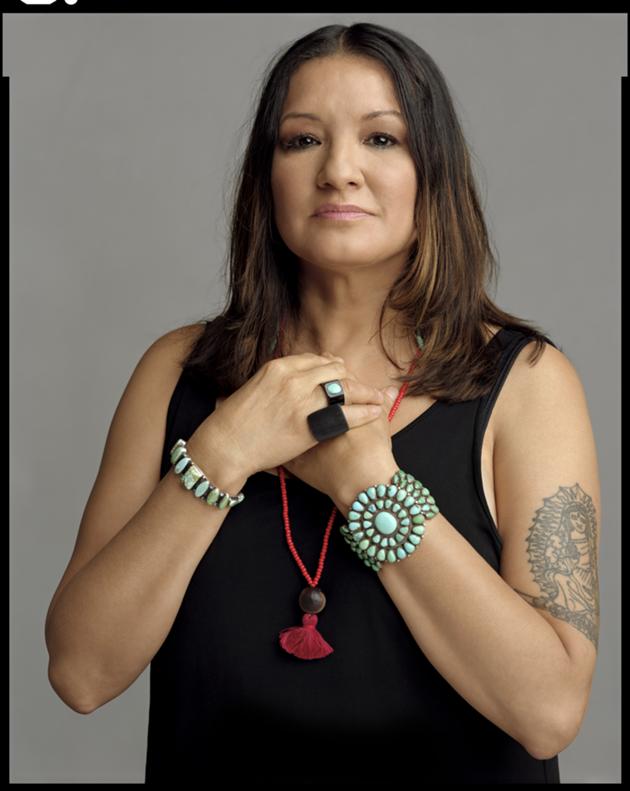
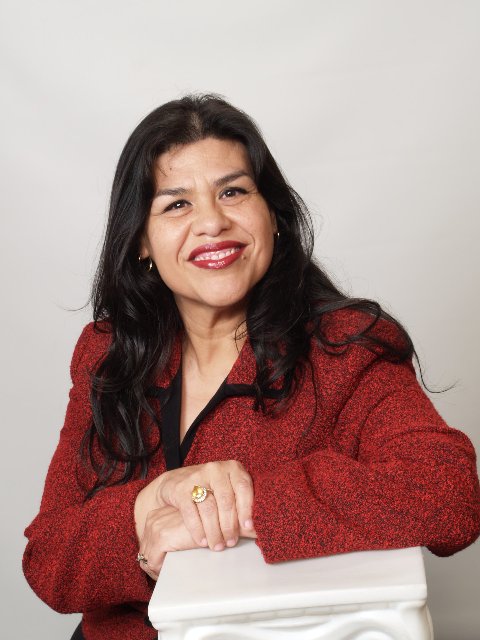
• Writer Sandra Cisneros (pictured at right) will be featured in HBO’s documentary, The Latino List, which premieres tonight. Other Hispanics profiled in the show include former Housing and Urban Development Secretary Henry Cisneros, actress Eva Longoria and Supreme Court Justice Sonia Sotomayer.

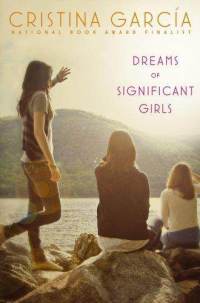
Cristina García, as well as dozens of other young adult novelists, will appear at the Austin Teen Book Festival Saturday. Garcia’s latest book, The Dreams of Siginificant Girls (Simon & Schuster Books For Young Readers), was released earlier this year.

Héctor Tobar’s critically acclaimed novel, The Barbarian Nurseries (Farrar, Straus and Giroux), comes out on Tuesday. The Hispanic Reader will post a review the same day.

• Also on Tuesday, Luis J. Rodriguez will release It Calls You Back: An Odyssey Through Love, Addiction, Revolutions, and Healing (Touchstone), a sequel to his book, Always Running.

• Rodriguez will be one of several speakers during the 6th Annual San Diego City College Int’l Book Fair Monday-Oct. 8. The event will also include a discussion on “Chicano Poetics: the Enduring Experience and Perspective,” with poets Manuél J. Velez, Angel Sandoval and Manuel Paul López.

Leave a comment

Filed under 2011 Books, Events, News, Young Adult Books

Meet novelist Guadalupe Garcia McCall

The seeds for Guadalupe Garcia McCall’s career as a novelist began in school, when her teachers encouraged her to become a writer. McCall’s first young adult novel, Under the Mesquite, was published earlier this month by Lee & Low Books.

McCall was born in Mexico and grew up in Eagle Pass. She is working on a second young adult novel and her poetry has been published in several literary journals. She also works as a junior high English teacher.

Q: Tell me more about your book, Under the Mesquite.

Under the Mesquite is a novel in verse, which came about because my editor, Emily Hazel, came across a small collection of poems I had submitted to Lee & Low. The poems were nothing more than small vignettes, glimpses of my life on the border, but Emily loved the poems so much she asked if I would work with her on turning the collection into a book. I agreed and thus began a three-year journey. Through several revisions, Emily and I decided to make it a work of fiction to allow for more freedom in the creative process.

Under the Mesquite is the story of Lupita, a young Mexican-American girl living the American dream, trying to fit in, dealing with normal teenage angst, until she learns her mother has cancer. The news devastates the family, but Lupita is determined to do whatever it takes to help Mami get better, and that includes taking on the role of parents while her parents travel to Galveston for her mother’s treatments. Unfortunately, life gets harder and harder, and Lupita’s journey is long and painful. However, because she is strong in love and faith, Lupita learns to cope and ultimately survive this difficult time in her life.

Q: What inspired you to become a writer?

Both my parents were an inspiration to me. They were hard-working people, with little education, so they always stressed education for us. My parents wanted great things for each and every one of us. They always made sure we saw how special and talented we were. From an early age, they looked for and fostered our “qualities” or talents.

However, my teachers played an integral role in my desire to become a writer. My third grade teacher, Mr. Hernandez, read a story I wrote in Spanish and asked me if I was going to become a writer. That planted the seed. Then, in high school, Ms. Garcia and Ms. Urbina were convinced I had the talent to become published. Even Ms. Moses, my mentor and math teacher, wanted that for me. I’ll never forget that she gave me a Writer’s Digest book for my high school graduation. I have all my wonderful teachers to thank for this beautiful dream I am living. They planted and nurtured the seed within me. All I had to do was believe them.

Q: What Latino/a authors have been your biggest influence and why?

There are so many authors I admire. I love Sandra Cisneros and Gary Soto and Julia Alvarez. As far as fiction is concerned, the author I love reading is Gabriel Garcia Marquez. I love his One Hundred Years of Solitude. I’ve read and reread that book so many times, and yet, every time, it feels like the first time because there is so much depth to that book. Someday, I want to grow up to write just like him. However, I am especially fond of Pat Mora, who has such beautiful lyrical poetry for children. I love her Dizzy in Your Eyes. She is my inspiration and my idol and “Dia de los Ninos” (her celebration of family literary) is close to my heart.

3 Comments

Filed under 2011 Books, Author Q&A, Fiction, Young Adult Books

The write stuff

Only one Latino is listed as an author on the 35 books on the Sept. 29 New York Times hardcover fiction bestseller list. The literary world needs more Hispanic authors, but the writing industry requires time, discipline and a tough skin to handle rejection.

But a few people are hoping to make things easier.

Corina Martinez Chaudhry created a website, The Latino Author, to encourage Hispanics to pursue a writing career. The website covers everything from the elements of writing a story to getting it published.

“A reader can actually read the articles and get a good sense of how to get started in the business,” she said.

Chaudry has always loved reading and writing, but couldn’t find many works by Latino authors as a child because many of them were not promoted in schools or the book market.

“It’s important that this ‘new’ generation of Latino and Hispanic writers get the same necessary tools and breaks that all other groups have acquired,” she said, “and I want to do my part to help with this effort.”

Arnaldo Lopez Jr., author of ChickenHawk, also tried to do his part by organizing a Latino Authors and Writers Conference, scheduled for Oct. 1 in New York City, but had to cancel it due to lack of interest.

“I wanted to do this because I have been to many writers conferences over the years and have always found there to be almost no Latino agents, editors, publishers, or aspiring authors,” he said. “I wanted to give aspiring or self-published Latino(a) writers the same information and opportunities that writers at these other conferences were getting.”

While the writing field can be difficult, Chaudry encourages Latinos not to give up. After all, she succeeded in the technical engineering environment field – making decisions and overseeing $300 million in contracts every year for an Orange County, Calif., government agency – with a business degree and a minor in English.

“I truly believe that we all have the ability to do anything we want to in this life – it’s just moving forward and understanding that failure is how we learn to get to the next step,” she said. “It is this failure in life that will make us successful in the end.  It is never giving up no matter how many rejections we get or how many obstacles are thrown our way.”

Here are some other resources for Hispanic writers:

• Hispanics have formed writers groups, such as the Society of Latino and Hispanic Writers of San Antonio and the Latino Writers Collective in Kansas City, Mo.

• Writer’s retreats are also available, including the Macondo Foundation created by Sandra Cisneros and Las Dos Brujas workshop founded by Cristina Garcia.

• Ecuadorian Marcela Landres, a former book editor, offers advice on her website.

Leave a comment

Filed under Features

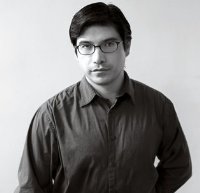
Meet journalist Edgar Sandoval

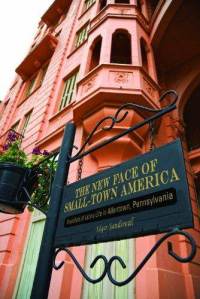
In his 1982 song “Allentown,” Billy Joel sang about a town that factory workers were leaving to find new opportunities. Since then, Latinos have immigrated to the Pennsylvania city and make up 25 percent of Allentown’s population. New York Daily News reporter Edgar Sandoval wrote about the change in the community in his 2010 book, The New Face of Small Town America.

Sandoval, who grew up in Zacatecas, Mexico, has worked for The (McAllen) Monitor; the South Florida Sun-Sentinel and The Allentown Morning Call before working as a general assignments reporter for the Daily News.

What inspired you to write the book The New Face of Small Town America?
I wrote most of the book without knowing it as a reporter for The Morning Call. I was hired to write a comprehensive look of the Latino community of Allentown, Pennsylvania, and its surrounding areas. Years later, while working as a reporter in South Florida, I met a literary agent visiting New York and she liked my stories, which were written in a narrative style. I tuned them into essays and wrote several new ones for the book. The result was The New Face of Small Town America published Penn State Press. It was all a pleasant surprise.

What kind of reaction have you gotten?
Most of the reaction has been positive, especially in Allentown, Pennsylvania. I have also been pleasantly surprised to see my book has been added to prestigious university libraries, such as Rutgers, and positive feedback from some newspapers and blogs. Of course, there were a few not so upbeat reviews. But, that’s the biz.

What Hispanic authors/books have inspired you?
Since I was a teen, I always admired many Latino writers like Victor Villasenor and Sandra Cisneros. Both are so inspirational and such genuine people. I never thought I would meet either in person. I remember when I met Villasenor during one of those NAHJ (National Association of Hispanic Journalists) conferences. He sensed my less that bright aura and made me scream, “I believe in myself,” in the middle of the crowd. I made sure to wave from afar from that day each time I run into him at such events. Then, through a friend of mine, I met Sandra Cisneros when I moved to New York a few years ago. I was a bit nervous walking up to the party where Sandra was a guest. Immediately, she made me feel at ease when she handed me a fan and said, “I like you. Fan me.” I have seen her a few times after that and it’s always hard to believe I’m talking to Sandra Cisneros!, and she’s so down to earth to me. She treats me like a regular person, unlike that waiter at Red Lobster.


Leave a comment

Filed under Author Q&A, Non-Fiction

Tough crowd

School will start soon, and many Hispanic teenagers will be stuck reading about white people again.

When I taught English at a high school with a predominantly Hispanic population, I struggled to get my students to enjoy any type of book. But it was even tougher to find young adult books with Hispanic characters. Of course, Sandra Cisneros’s The House on Mango Street and Rudolfo Anaya’s Bless Me Ultima are part of the canon. When students were looking for books for independent reading, I steered students toward Gary Soto’s novels – and then I had to recommend non-Hispanic authors.

It’s crucial to get young Hispanics to read. In 2009, 17 percent of Hispanics dropped out of high school, according to the National Center for Education Statistics. Hispanics had the highest dropout rate for any ethnic group, although the rate has been decreasing each year.

Here are a few good resources for finding Hispanic-oriented young adult fiction:

• Houston–based publisher Arte Publico has its own young adult section, which includes You Don’t Have a Clue: Latin Mystery Stories for Teens, a book of 18 short stories, according to AARP VIVA.

• The American Library Association lists several Hispanic-themed books in its 2010 Best Books for Young Adults, including David Hernandez’s No More Us for You and Matt de la Pena’s We Were Here.

• The Austin Public Library’s Connected Youth website features a great list of Hispanic-oriented books for young adults.

Leave a comment

Filed under Fiction, Young Adult Books