Classic Book Review: “The Hummingbird’s Daughter”

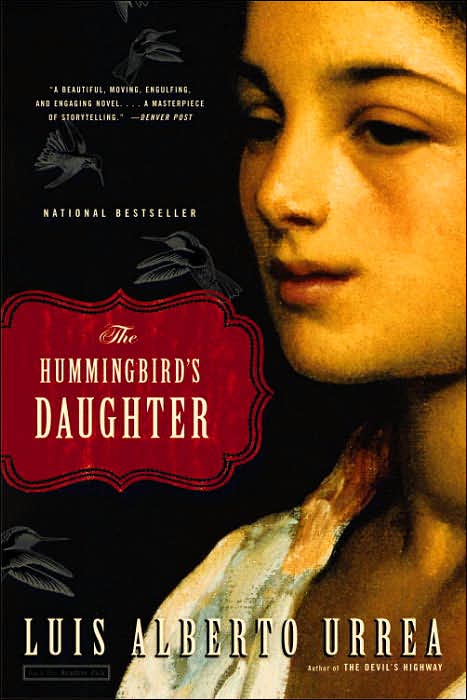
In preparation for Luis Alberto Urrea’s upcoming Queen of America, I wanted to read its predecessor, The Hummingbird’s Daughter, which was published in 2005. I was intimidated by the 500-page book and its serious description on the book cover, but I shouldn’t have been. Every page was a joy to read.

Daughter, which takes place in the 1800s in a small Mexican village, centers on Teresita, who was born out of wedlock and is abandoned by her mother, Cayetana, but she is later groomed by her father, the womanizing ranch owner Tomás Urrea.

As the story progresses, Teresita discovers has powers of healing. But rebels are stirring up a revolution in Mexico while hundreds of villagers are flocking to Teresita so she will cure them. Soon, the two forces collide.

Besides the tightly paced plot, Urrea imbues Daughter with rich language. One character “had the face of an Aztec carving.” In another passage, Urrea compares the villagers’ complexion to a character’s drink: “Every Mexican was a diluted Indian, invaded by milk like the coffee in Cayetana’s cup.”

Urrea knows how to build tension in a scene – and put in some comic relief, too. Sometimes, he accomplishes it all in one scene, such as when Tomás’s wife, Loreto, confronts him about an affair as several friends, including two named Aguirre and Huila, watch:

“Loreto slapped Tomás.

He spluttered an obscenity.

She slapped his other check.

He raised his hand.

Aguirre rose.

Huila, watching, clenched her hands – this was even better than she’d hoped!”

Here’s another great line: “If you are too blind to see God in Goddamned taco, then you are truly blind.”

And another: “A Mennonite missionary had moved through the ranchos assuring them that Jesus Christ would return to earth by 1880 – maybe He was early.”

Daughter was a fantastic read. I can’t wait for Queen of America.

More about Luis Alberto Urrea:

• Urrea is just as witty in his Twitter and Facebook feeds. His website features a blog, readings from Queen of America and upcoming appearances. Queen of America will be released in December.
Leave a comment

Filed under Book Reviews, Classic Books, Fiction

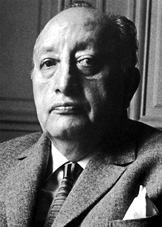
Happy Birthday, Miguel Angel Asturias!

Who?

Asturias may seem like an obscure author, but the Guatemalan is only one of a dozen Latinos to win the Nobel Prize in Literature, which he received in 1967. Asturias was born on this day in 1899 and died in 1974.

His best known books are The President (El Senor Presidente), about living under the dictatorship of Manuel Estrada Cabrera, and Men of Maize: The Modernist Epic of the Guatemalan Indians (Hombres de Maize), which tells the life of peasants in his homeland.

The Nobel Prize website and Encyclopedia Britannica have extensive biographies on Asturias.

Leave a comment

Filed under Author Profiles, Fiction

In the news

• New on the bookshelves: Kami Garcia’s latest book, Beautiful Chaos, part of her Beautiful Creatures series written with Margaret Stohl, comes out Tuesday. Cain, a retelling of the Biblical story from the late, Nobel Prize-winning novelist José Saramago, was released earlier this month.

• The Texas Book Festival, which runs from Saturday-Sunday in Austin, will feature 250 authors, and it features some great programs with Latino authors:

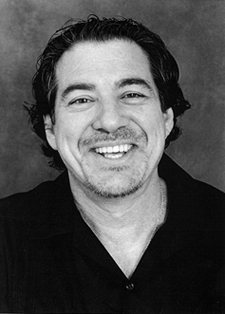
Dagoberto Gilb (pictured at right) will discuss his latest book, Before the End, After the Beginning.

Mary Romero, author of the non-fiction The Maid’s Daughter: Living Inside and Outside the American Dream, and Héctor Tobar, author of The Barbarian Nurseries, will discuss Mexican women working as maids in the United States.

Sarah Cortez, René Saldaña, Jr., Sergio Troncoso and Gwendolyn Zepeda will talk about the mysteries they contributed to the Arte Publico Press book for young adults, You Don’t Have a Clue: Latino Mystery Stories for Teens.

Alex Sanchez (pictured at left), author of Bait, will receive the Tomás Rivera Mexican American Children’s Book Award.

Troncoso and Richard Yanez will discuss stories from their hometown of El Paso. Kami Garcia, Rolando Hinojosa-Smith and Justin Torres will speak at other sessions.

Leave a comment

Filed under 2011 Books, Awards, Events, News

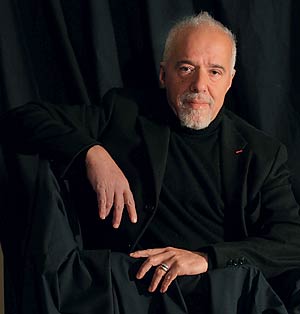
Book review: Paulo Coehlo’s “Aleph”

Paulo Coelho’s Aleph is not just a novel – but also a guidebook on how to live life in the present.

Coelho is the best-selling, beloved Brazilian novelist of The Alchemist and, like that book, Aleph is about a spiritual journey. The main character – a best-selling, beloved Brazilian novelist – is going through a mid-life crisis when he spontaneously decides to travel through Russia on the Trans-Siberian Railway to meet his fans.

While on the trip, a 21-year-old woman named Hilal insists on traveling with him. Although he is turned off by her aggressive behavior, he finds peace when he experiences an “aleph” – “the point at which everything is in the same place at the same time” – and sees scenes from his past lives.

They soon realize they’ve experienced the same thing. “The great Aleph,” the narrator tells Hilal, “occurs when two or more people with a very strong affinity happen to find themselves in the same Aleph.”

Now they must figure out their shared connection. They find the mystery frustrating, since Hilal is very stubborn and Paulo is very married.

The book, translated by Margaret Jull Costa, is a quick read that has an intriguing twist about Paulo’s actions to Hilal in a past life. It is also filled with life-affirming metaphors, such as the mode of transportation: “Life is the train, not the station.”

Whether you love the book depends on your view on life. Some readers, such as those who follow Eckhart Tolle, will enjoy the passages in the book about living in the present and forgiving yourself and others. But other readers may find the book – with its touchy-feely New Age philosophies and talk of reincarnation – not for them.

More about Paulo Coelho:

• Biography.com has an interesting article on Coelho.

• Coelho discussed his secrets to reaching fans on social media to The Wall Street Journal.

Leave a comment

Filed under 2011 Books, Book Reviews, Fiction

In the news

Rigoberto González (pictured at left), who was born in California and raised in Mexico, releases his latest collection of poetry, Black Blossoms, today. The book centers on the struggles of women of color.

• The Brattleboro Literary Festival, which runs Oct. 14-15 in Vermont, will feature Julia Alvarez (pictured at right), Martín Espada and Luis Alberto Urrea. Alvarez’s latest children’s book, How Tía Lola Ended Up Starting Over (Knopf Books for Young Readers) was released last month. Alvarez is touring this month in support of the book. For more of her schedule, click here.

• Alvarez and Carlos Eire are scheduled to speak at the Boston Book Festival Oct. 15.

• The Southern Festival of the Books will take place in Nashville Oct. 14-16. Lisa D. Chavez, Lorraine López, Helena Mesa, Justin Torres and Marisel Vera are on the schedule.

• Brazilian Paulo Coelho’s latest book, Aleph, reached number six on The New York Times bestsellers list for hardcover fiction. The Hispanic Reader will publish a review later this week.

Leave a comment

Filed under 2011 Books, Children's Books, Events, News

Meet novelist Lyn Di Iorio

Some people fear Afro-Caribbean religions. But Lyn Di Iorio is intrigued by them – so much so that her first book, Outside the Bones, focuses on the mysterious practices. Her novel was released last month by Arte Público Press.

Di Iorio, who was raised in Puerto Rico, teaches English with a focus on Caribbean and U.S. Latino literature at The City College of New York and The Graduate Center of the City University of New York.

She received her bachelor’s degree from Harvard University, her master’s degree from Stanford University and her Ph.D. from The University of California at Berkeley. 

Q: Tell me about your book, Outside the Bones.

Outside the Bones is a provocative tale of love, murder and mystery steeped in the Afro-Caribbean religio-magical practice of Palo Monte. When the irrepressible, street-toughened, but ultimately tender-hearted main character, Fina, falls in love with her upstairs neighbor, Chico the hot trumpet player, she does what any ghetto bruja would do–takes his picture intending to put a spell on him.  Her spell misfires and two strange women competing for Chico’s favors show up. Fina then ups the ante by asking the powerful Spanish Harlem Palero, Tata Victor Tumba Fuego, for help. All too soon Fina finds herself involved with a spirit whose quest for revenge can’t be stopped. Mixing humor, eroticism and Afro-Latino/a spiritual history, Outside the Bones takes readers on a rollicking, hair-raising, and ultimately redemptive journey through New York City’s Upper West Side, Central Park and Puerto Rico. Fina finds answers that uncover the mystery behind a murder but, more importantly, reveal things about her past she had never suspected.

Q: What inspired you to become a writer?

For one, reading so many great writers. As a child, I loved classic works such as the novels of Charles Dickens, Rudyard Kipling and so many other writers from all over the world, but I also loved mysteries by Agatha Christie, Dorothy Sayers, Dick Francis, and others. When I was a teenager, I started reading work by Puerto Rican and Caribbean women writers that really woke up my eyes to the magical and mysterious world that is the Caribbean. I was also always really fascinated by the fact that the Afro-Caribbean religions were regarded with fear by most of the people I knew growing up. Or, on the other hand, people negated their existence altogether.  But the more I discovered about them, the more they fascinated me. I think, in general and this applies beyond my interest in Afro-Caribbean religio-magical practices, I am really intrigued by surfaces that seem commonplace with little cracks or flaws and, the more you explore the cracks, the more you see that the apparently commonplace surfaces are just facades behind which lie completely different realities.

Q: You’re a professor specializing in Latino literature. What can we do to encourage more people to read Hispanic literature?

Well, I think the publishing world needs to recognize that there is a large population of Latino readers with diverse tastes and interests and that they may not be tapping that diversity. Some Latino readers don’t want to read books that are about growing up Latino because they feel they know that, they lived it; they want to read mysteries, for example, not coming of age stories, and would like to read mysteries with Latino characters or that have strong Latino ambiences. I also think that works by Latino writers should be taught not just in Latino and Caribbean literature classes, but in all kinds of literature classes ranging from American literature to classes with more thematic focuses.

Di Iorio is making several appearances in support of her book, including Oct. 24 at the Barnes and Noble in New York City’s Upper West Side. Click here for more information.

Leave a comment

Filed under 2011 Books, Author Q&A, Fiction

In the news

Sergio Troncoso (pictured at right) will read from his new novel, From This Wicked Patch of Dust, 10:30 a.m. today (Thursday) as part of the Smithsonian Latino Virtual Museum. Go to http://www.ustream.tv/channel/smithsonian-latino-virtual-museum.

Wordstock, a book festival in Portland, Org., will begin today and run through Sunday. The event will include sessions with Troncoso, Eduardo Halfon and Los Porteños, a Portland-based Latino writers group.

• Benjamin Alire Sáenz and Daniel Chacón (pictured at left) have begun hosting a new radio program about literature, Words on a Wire, that airs Sundays on El Paso’s NPR station, KTEP. You can hear the show online. They’ll read a poem by Luis J. Rodriguez on Sunday’s episode.

The Californian covered Rodriguez’s speech about gang activity in Salinas, Calif. His new book is It Calls You Back: An Odyssey Through Love, Addiction, Revolutions, and Healing.

• Mexican poet Javier Sicilia is profiled in this New York Times article about his movement to stop drug violence in this country.


Leave a comment

Filed under News

Creating a bookstore, with a little help from friends and strangers

Body art by Mia Roman. Photographed by Johnny Ramos.

Update: La Casa Azul Bookstore opened in June 2012. Here’s a New York Times article about its opening.

Aurora Anaya-Cerda (pictured above) wants to bring a Latino-oriented bookstore to East Harlem – and she’s asking you to help out.

Anaya-Cerda has created the “40K in 40 days” campaign to raise money to build La Casa Azul Bookstore in the Hispanic neighborhood in New York City. If she raises $40,000 by Oct. 24, an anonymous donor will match the amount. So far, the campaign has raised $10,000 so far and attracted attention from the Shelf Awareness newsletter and the Huffiington Post. Donors can receive a wide array of incentives, from books to T-shirts.

“I had to get creative, so I read about crowd funding and knew that was the way to go,” she said. “So far, over 100 people from New York to Australia have given to the ‘40K in 40 days’ because they recognize how important it is for an independent bookstore to exist.”

She knew it was important for Latinos to be exposed to their culture’s literature since she was young.

“Chicana/o literature was critical in my own education and identity,” Anaya-Cerda said. “Growing up, I was an avid reader, but it wasn’t until I discovered Chicana/o writers that I connected to the stories and then began seeking out more books that reflected my identity and experience. By then, I was already in high school and I wished I had read about them earlier! La Casa Azul Bookstore will be that place for adults and, especially for youth, because reading about your history and your culture should not have to be something that you read about in high school or during college courses.”

Anaya-Cerda has been planning the bookstore for years. She has worked and volunteered in five bookstores, taken countless business classes, attended book-selling school twice, travelled the country meeting with booksellers and built relationships with publishers and authors nationwide.

La Casa Azul has been running online for three years and has played host to author signings with Junot Díaz and Esmeralda Santiago. It has also established the annual East Harlem Children’s Book Festival.

Once the bookstore opens next year, she plans to host book clubs, author signings and storytime for children, as well as serve as a community meeting space. The store will sell pastries, art, clothing and locally-made cards and gifts. It will also continue to work with area schools and nonprofits to advance literacy in the community.

“La Casa Azul Bookstore aims to create a business that is much more than your average retail store by being the literature hub in East Harlem,” she said.

Leave a comment

Filed under News

Book review: Héctor Tobar’s “The Barbarian Nurseries”

Héctor Tobar’s novel, The Barbarian Nurseries (Farrar, Straus and Giroux) covers everything from the immigration debate to suburban angst – and he does it brilliantly.

His novel centers on Scott and Maureen Torres-Thompson, an Orange County couple who have it all – a beautiful home with an ocean view, two bright sons who go to private school and loads of debt. They’ve laid off their gardener and nanny, but have retained their housekeeper, Araceli, an undocumented immigrant from Mexico City who works for them for $250 a week and housing.

After the couple has an intense argument, Araceli is left alone with the two boys, Brandon, 11, and Keenan, 8. Through a series of circumstances, she finds herself lost in the labyrinth that is Los Angeles – and facing serious consequences that she barely understands.

Scott and Maureen also question their lifestyles. As Maureen, a stay-at-home mom, says of Araceli, “I have allowed this person to live in my home for four years without once having a substantial conversation about where she is from, about her brothers and sisters, or about how she got here.”

The book starts off slowly, but once it gets going, you don’t want to stop reading. Tobar, a Pulitzer-prize winning reporter for The Los Angeles Times, keeps the plot tight while zinging ambitious lawyers and politicians, angry white conservatives, do-gooder liberals, and the sensational media along the way. He writes the female characters well, making Araceli a complex character with ambitions beyond cleaning homes. Tobar even nails a romantic scene. Can we give this man another Pulitzer Prize?

More about Héctor Tobar:

• Tobar, the son of Guatemalan immigrants, writes a weekly column for The Los Angeles Times.

• Tobar is scheduled to make about a dozen appearances across the country in support of his book.

In this NPR profile, Tobar discusses the inspiration for the book.

Leave a comment

Filed under 2011 Books, Book Reviews, Fiction

Latinos and the Nobel Prize

Sometime this month, the Nobel Prize will be awarded for literature. Only a dozen of the 107 recipients – including 2010 recipient, Peruvian Mario Vargas Llosa (right) – have Hispanic and/or Latino roots.

The Nobel Prize is considered the most prestigious literary award in the world, given for lifetime achievement. So, who are some possible Latino contenders for the Nobel? Chile’s Isabel Allende seems like a great candidate – she has accumulated a large amount of work with critical acclaim. Other possible contenders could include Oscar Hijuelos and Victor Villasenor (as Felix Sanchez noted in this Huffington Post article about the Kennedy Center honors).

But since Llosa won his award fairly recently, the committee may give the honor to a writer from another part of the world. The committee can be unpredictable, as The Guardian pointed out in a recent article: “Some of their choices are so leftfield as to barely register.” The Washington Post speculates that Canadian Margaret Atwood, Syrian Adonis or American Phillip Roth could win the literary prize. By the way, no American has won the award since Toni Morrison took the prize in1993.

Here’s a list at the past Latino Nobel Prize winners. Click on this link to learn more about them.

1904 – José Echegaray, Spain

1922 – Jacinto Benavente, Spain

1945 – Gabriela Mistral, Chile

1956 – Juan Ramón Jiménez, Spain

1967 – Miguel Ángel Asturias, Guatemala

1971 – Pablo Neruda, Chile

1977 – Vicente Aleixandre, Spain

1982 – Gabriel García Márquez, Colombia

1989 – Camilo José Cela, Spain

1990 – Octavio Paz, Mexico

1998 – José Saramago, Portugal

2010 – Mario Vargas Llosa, Peru/Spain

Leave a comment

Filed under Author Profiles, Awards, Fiction