Love, Latino-style: Books and movies for Valentine’s Day

Depending on your point of view, Valentine’s Day is either one of the best or worst holidays of the year. But no matter what your point of view, this is a good time to look at some of the greatest love stories in Latino literature.

For the hopeless romantic:

In Gabriel Garcia Marquez’s Love in the Time of Cholera – young Florentino Ariza loves Fermina Daza from the moment he sees her – and keeps loving her even when she marries another man. This classic book was made into a 2007 movie staring Javier Bardem and Benjamin Bratt.

For the food lover:

Tita’s emotions can be felt in the food she is making in Laura Esquivel’s 1989 Like Water for Chocolate ­– and her emotions are intense when her sister marries the man she loves. The best-selling novel, made into a 1992 movie, includes recipes for the meals.
For a good cry:

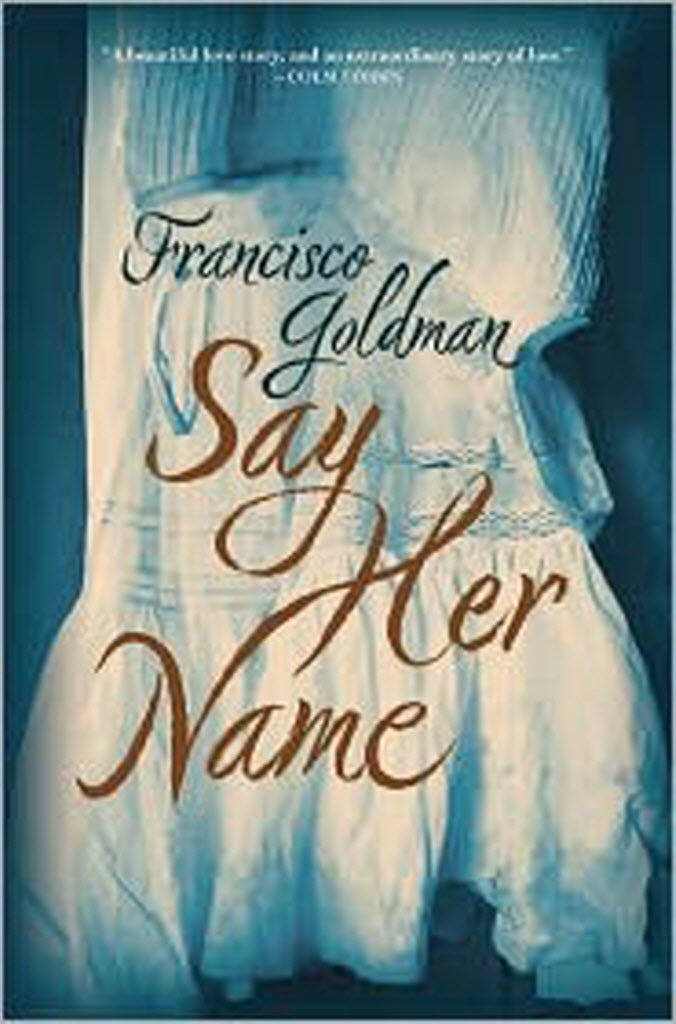
Francisco Goldman’s 2011 Say Her Name tells the story of Goldman’s relationship with his wife, Aura Estrada, who died in a swimming accident. His love for her is so palpable that your heart will break along with his.
For the poetry fan:

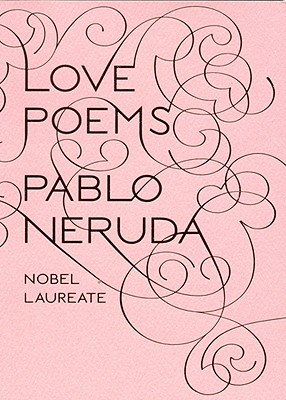
If you prefer poetry, you can’t more romantic than Nobel Prize-winning poet Pablo Neruda’s Love Poems. This book inspired the 1994 Academy Award-nominated movie Il Postino, in which Neruda appears as a character who helps a postal carrier woo the woman he loves. 

For the movie lover:

The 2011 film Chico and Rita features the romance between a Cuban pianist and singer in the 1940s. NPR talked to co-director Fernando Trueba about the film, which is up for an Academy Award for Best Animated Feature Film.

Do you know of any other great Latino love stories that should be included here? Post them in the comments.

Leave a comment

Filed under Features, Fiction, Movies

A look at Afro-Latino writers

February marks Black History Month. Here is a look at some prominent Afro-Latino authors:

Veronica Chambers, who is of Panamanian and Costa Rican-Jamaican descent, has written the Marisol and Magdalena series about two Latina tweenagers. She also wrote about her experiences as an Afro-Latina in this Essence article.

• Dominican Junot Díaz, author of the Pulitzer Prize-winning novel The Brief Wondrous Life of Oscar Wao, talked about growing up Afro-Latino to Fox News Latino.

• The late Nicolás Guillén, known for his poems about social justice that he wrote in the 1920s and 1930s, was the national poet of Cuba. He will be honored at Cuba’s International Book Fair Feb. 9-19.

• Brazilian author Paulo Lins wrote the 1997 novel City of God, which became a 2002 Academy Award-nominated movie. He talked to the Hispanic News website about growing up in the poor neighborhoods of Rio de Janeiro with blacks and immigrants.

Sofia Quintero has written the Black Armetis hip hop series and other novels, such as Divas Don’t Yield and Efrain’s Secret. In this 2009 article with The UBS.com, which also features other black Latino writers, she talks about her Puerto Rican-Dominican heritage.

• Puerto Rican-Cuban-American poet Piri Thomas, who died last year, wrote the classic Down These Mean Streets, about his life growing up in Spanish Harlem. The New York Times had a great obituary.

The blog Writing to Insanity has a great list of other Afro-Latino writers, as does The Woynigi Blog. Latina magazine has good coverage of the Afro-Latina community. And other celebrities, such as Soledad O’Brien, discussed their Afro-Latino heritage in this video.

3 Comments

Filed under Features

Book review: Francisco X. Stork’s “Irises”

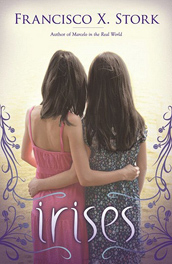
In Francisco X. Stork’s young adult novel Irises (Arthur A. Levine Books/Scholastic), the Romero sisters lived a life so strict that one of them had never been to the mall. Their father, a pastor, “literally thought the devil was going to sneak in the house through the Internet cable.” No wonder that Kate, 18, dreams of escaping her hometown of El Paso for Stanford University, and Mary, 16, paints to escape her world.

But life soon changes for the sisters. Their father dies suddenly, leaving the young women to take care of their mother, who has been in a vegetative state for two years after a car accident. The sisters must decide how to take care of themselves financially, with their own personal dreams at stake.

As Kate thinks, “What she wanted most of all was a more meaningful life, a life where she was useful to others, a life that in her mind could only be obtained someplace other than El Paso.”

Stork’s writing is easy to read, but the book is startlingly different from many of the edgy young adult books that deal with romance or have paranormal or dystopian scenarios. The book has one mention of sex, and a mild one at that. But Irises – named for the flowers Mary likes to paint – is deeper, digging into themes of faith and the purpose of life.

The characters go to church to seek peace, not just to attend service. Characters discuss their faith. One chapter is devoted to a pastor’s sermon. And Stork writes this in a matter-of-act manner, avoiding overtly religious language that may turn some readers off.

When the sisters have to make tough decisions, they discuss what they want from life. “God wants us to live,” Kate says. “He wants to give us abundant life. He wants to give us light and He wants us to be a light unto others.”

Irises is a thoughtful book that will appeal to teenage girls – and, hopefully, a few adults as well.

More about Francisco X. Stork:

Stork, who was born in Mexico and grew up in El Paso, is best known for his books Marcelo in the Real World and The Last Summer of the Death Warriors. He studied literature under Nobel Prize winner Octavio Paz at Harvard and earned a law degree. He works as an attorney in Boston.

Source: I received a review copy from the publisher.

Leave a comment

Filed under 2012 Books, Book Reviews, Fiction, Young Adult Books

In the news: Arizona, awards, Mexico, Marquez, Saenz

Arizona:

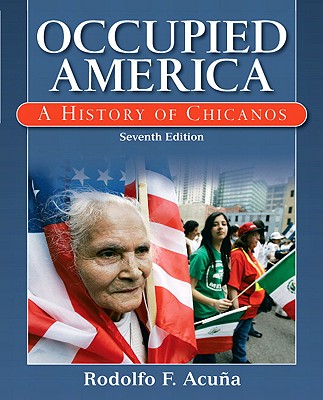
• Wednesday will mark a National Day of Solidarity in which educators across the country are encouraged to teach the controversial Tucson, Ariz., school district curriculum – including Latino-themed books such as Occupied America. The district put away the books so it could still receive funding from the state, which has banned ethnic studies. Tucson teacher Curtis Acosta discussed the situation here.

• The Huffington Post wrote about Aztec Muse magazine’s Librotraficante caravan, which will distribute the banned books in Tucson in March.

The Progressive magazine features several articles about the situation, with reactions from banned authors Ana Castillo, Junot Diaz and Dagoberto Gilb.

Awards:

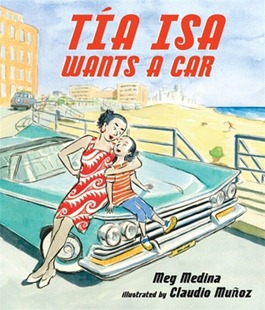
• Books by Meg Medina and Bettina Restrepo were named to the 2011 Amelia Bloomer list for their feminist themes. Medina was honored for Tia Isa Wants a Car and Restrepo was awarded for Illegal.

• Congratulations to California-based writer Jennifer Torres, who won the Lee and Low New Voices Award for her book, Live at the Cielito Lindo. She received a publishing contract from the publisher.

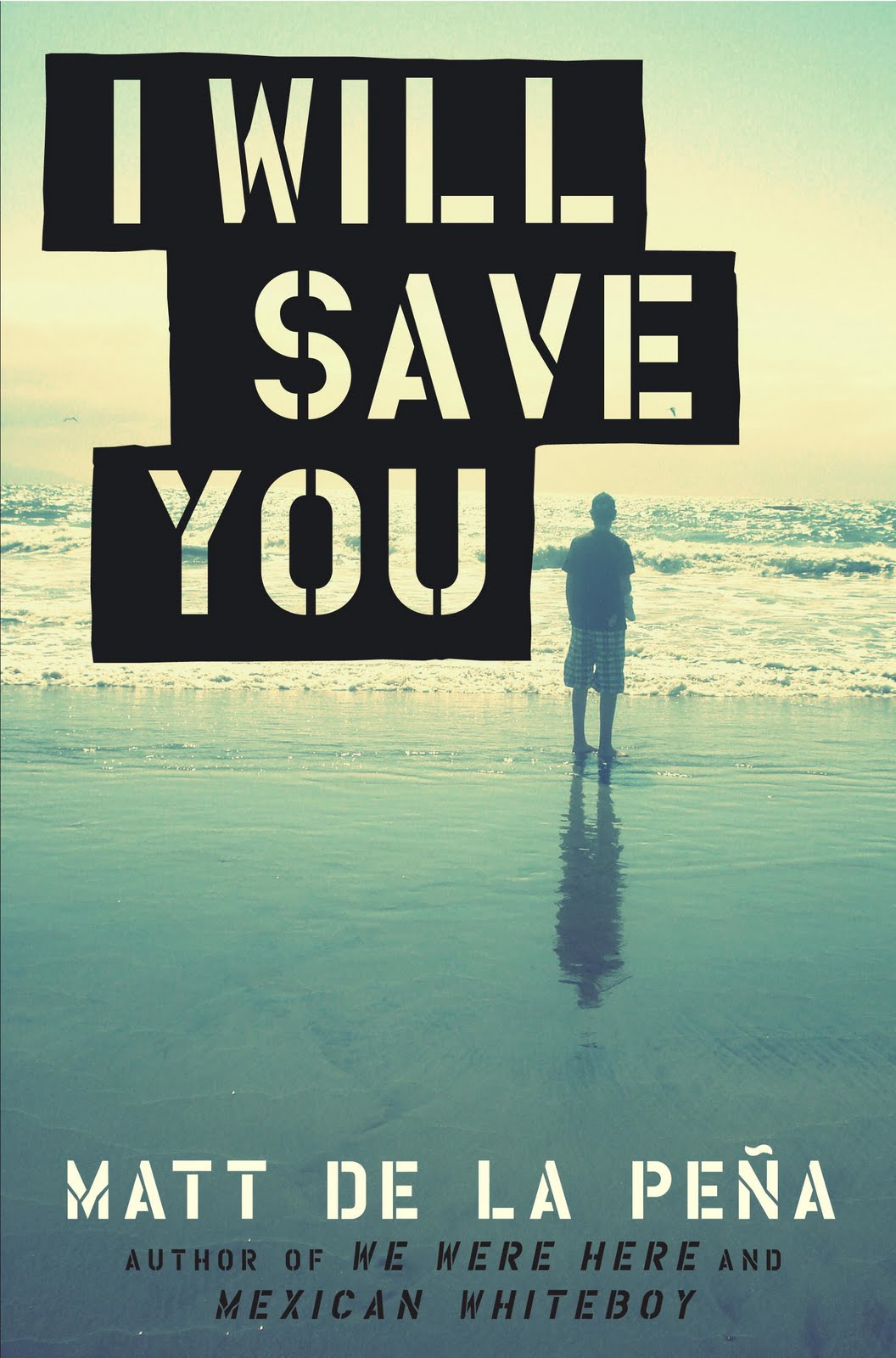
• The 2011 Best Fiction for Young Adults list, chosen by the Young Adult Library Services Association, includes I Will Save You by Matt de la Peña, Under the Mesquite by Guadalupe Garcia McCall and What Can(t) Wait by Ashley Hope Pérez.

Mexico:

• Nobel Prize winner Mario Vargas Llosa and 170 other writers signed a letter published in the Mexican newspaper El Universal calling for the end of violence to journalists in that country, according to the BBC.

Author profiles:

• Nobel winner Gabriel Garcia Marquez, left, talked to the Daily Sun about his return to journalism.

Benjamin Alire Sáenz discussed his writing and painting to the El Paso Times. The article noted that Sáenz, as well as Marquez and Pat Mora, made the list of the top 50 most inspiring writers in the world by Poets & Writers magazine in 2010. Salvador Plascencia was also included.

• Slam poet Jessica Helen Lopez received a nice profile from the San Antonio Express-News before a recent performance there.

Leave a comment

Filed under Awards, Children's Books, News, Young Adult Books

Classic Book Review: Isabel Allende’s “The House of the Spirits”

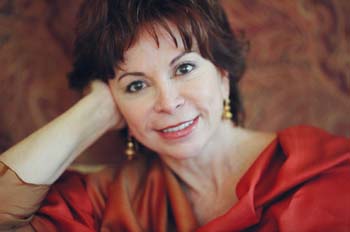
Isabel Allende’s 1982 The House of the Spirits is considered one of Latino literature’s best-known and greatest pieces of work. When you read it, you can the sense the influence the book has had on the books you read today.

Spirits tells the tale of Esteban Trueba, a poor but temperamental miner who rebuilds an abandoned ranch in South America and becomes a powerful patrón and politician. He is surrounded by three generations of headstrong women– his wife, clairvoyant Clara; his daughter, Blanca, who falls in love with a young revolutionary that Esteban disdains; and his granddaughter, Alba, who disagrees with him politically – and faces violent consequences.

The book mirrors political events in Chile and parts of Allende’s life. Her uncle, Salvador Allende, was that country’s socialist president in 1973 when he attacked in a 1973 military coup led by General Augusto Pinochet.

Allende writes in beautiful sentences, such as this: “Outside, the fields were shaking off their sleep and the first rays of sunlight were cutting the peaks of the cordillera like the thrusts of a saber, warming the earth and evaporating the dew into a fine white foam that blurred the edges of thing and turned the landscape into an enchanted dream.”

But those long descriptive paragraphs can make the book slow at times. I prefer fast-paced books with lots of dialogue, although the last 100 pages of Spirits was more gripping.

I can see the influence of Allende’s book in two epic tales of life on the ranchero and have characters with magical powers – Luis Alberto Urrea’s 2005 The Hummingbird’s Daughter, which has a more light-hearted tone, and Esmeralda Santiago’s 2011 Conquistadora, which has a feminist take.

Spirits – which was made into movie in 1993 starring Meryl Streep – is a fascinating story that earns the title of  “classic.”

More about Isabel Allende:

• Allende worked as a reporter before writing novels. This fascinating timeline shows her family’s history and reveals the inspiration for Spirits. Her other books include the novels 1985’s Eva Luna and 1999’s Daugher of Fortune, as well as 1995’s Paula, a memoir to her daughter, who died at age 28.

This is the first in a monthly series of classic books by Latina authors. Next month: How the Garcia Girls Lost Their Accents by Julia Alvarez.

Source: I purchased this book at Books-A-Million.

2 Comments

Filed under Book Reviews, Classic Books

Meet novelist Julia Amante, author of “Say You’ll Be Mine”

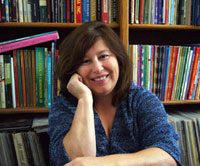
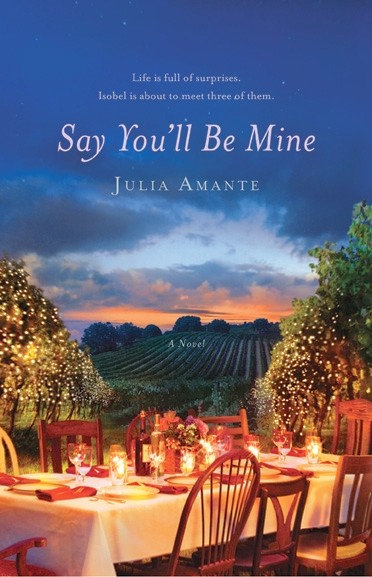
Julia Amante, right, writes about ordinary women facing extraordinary situations. Amante’s most recent book, Say You’ll Be Mine, was released last year. Her first book, Evening at the Argentine Club, was published in 2009. The daughter of Argentine immigrants, she currently lives in California.

Q: Tell me about your book, Say You’ll Be Mine.

The main character, Isabel Gallegos’s cousin, dies in a tragic accident and leaves her as custodian of three children that she does not want. That’s the basic plot, but Say You’ll Be Mine as well as my previous book, Evenings at the Argentine Club, are stories of immigrants striving to reach their goals in life. In Say You’ll Be Mine, Isabel has put her goals on hold her entire life to be there for her parents and husband, and just as she’s about to sell her winery and live the life she’s always wanted another family obligation presents itself and she has to decide what is more important – family or her dreams.

Q: What influenced you to become a writer?

I’ve always had a love for books. When I was younger I would rather spend time with a book than with other kids. I was so in awe of writers that could create such amazing stories out of their imaginations, so when I was given opportunities to write in school, I loved it. If anything influenced me, I would say it was other great books.

Q: What Latino/a authors have been your biggest influence and why?

Victor Villasenor – I think he’s an amazing writer, speaker and person. Rudolfo Anaya with Bless Me Ultimathis was such a sweet coming of age story full of cultural beauty that it made me want to read more books of this sort – though I have to say, I really never found others that were quite as good. More recently, Michele Serros – because her books and poems are so fun and real. She’s able to look at today’s culture and point out “issues” that make you think without sounding like she’s preaching or complaining. She makes me smile. There are others, but I’ll leave it at these three.

Leave a comment

Filed under Author Q&A, Fiction

In the news: Awards, Arizona, Mexico and Mario Vargas Llosa

Awards:

It’s book award season! Several organizations have announced winners and nominations for the best of 2011:

• The American Library Association announced today the winners of the Pura Belpé Awards, given to children’s and young adult books that honor Latino culture. The Author Award winner was Under the Mesquite by Guadalupe Garcia McCall. The Honor Books were Hurricane Dancers: The First Caribbean Pirate Shipwreck by Margarita Engle and Maximilian and the Mystery of the Guardian Angel: A Bilingual Lucha Libre Thriller by Xavier Garza.

The Illustrator Award Winner went to Diego Rivera: His World and Ours by Duncan Tonatiuh. The Honor Books were The Cazuela that the Farm Maiden Stirred, written by Samantha R. Vamos and illustrated by Rafael López, and Marisol McDonald Doesn’t Match, written by Monica Brown and illustrated by Sara Palacios.

Luis J. Rodriguez was nominated for a National Book Critics Circle Award in the autobiography category for his memoir, It Calls You Back: An Odyssey Through Love, Addiction, Revolutions, and Healing. Aracelis Girmay, who is part Puerto Rican, received a nod in the poetry category for her book, Kingdom Animalia, which has already won the 2011 Isabella Gardner Poetry Award.

Justin Torres‘s We the Animals will be one of five books vying for the NAACP Image Award’s Outstanding Literature Work – Debut Author.

Diana Gabaldon’s short story “Lord John and the Plague of Zombies,” from the anthology Down These Strange Streets, earned her a Best Short Story nomination from the Edgar Awards by the Mystery Writers of America.

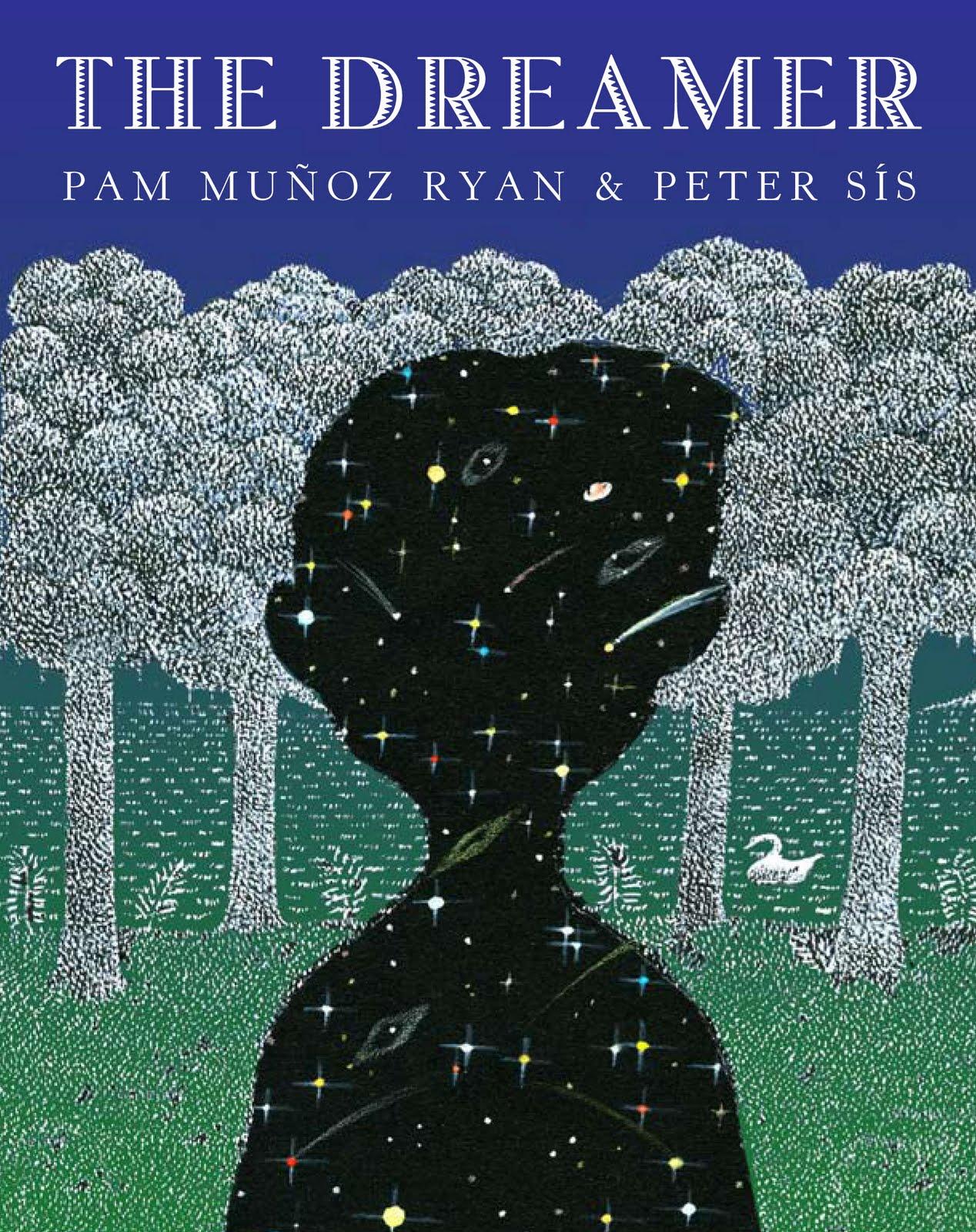
• Busboys and Poets bookstore, the progressive Washington D.C.-based bookstore, included several Latino-themed books in its Best of 2011 list: Pam Muñoz Ryan’s The Dreamer; Let’s Go See Papa!, by Lawrence Schimel, Alba Marina Rivera and Elisa Amado; the Spanish-language version of Howard Zinn’s classic A People’s History of the United States, La Otra Historia de los Estados Unidos; The Guatemala Reader by Greg Grandin, Deborah T. Levenson, Elizabeth Oglesby and News for All the People: The Epic Story of Race and the American Media by Juan Gonzalez and Joseph Torres.

Arizona:

Aztec Muse magazine is starting a Libro Traficante Caravan to distribute books in Tucson, Arizona, after the school district put away many Latino books from classrooms to retain funding from the state, which has banned ethnic studies. For a great take on the topic, here’s Texas-based writer Beatriz Terrazasessay on the Mamiverse website.

Mexico:

Here’s an excellent NPR story about how Mexican artists, including poet Javier Sicilia, are using words and music to react to their country’s drug war.

Mario Vargas Llosa:

Nobel Prize winner Mario Vargas Llosa, right, declined an offer to head the Cervantes Institute in Spain, which promotes Latin American culture, according to the Latin American Herald-Tribune.


2 Comments

Filed under Awards, Children's Books, News

In person: Ayad Akhtar and Luis Alberto Urrea

Luis Alberto Urrea and Ayad Akhtar signed books after their presentation.

Ayad Akhtar and Luis Alberto Urrea give voices to people whose stories are not always told.

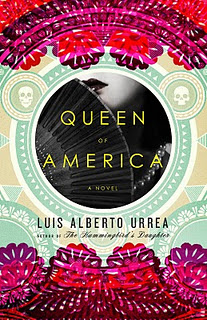
The authors spoke Friday night as part of the Arts & Letters Live series at the Dallas Museum of Art. Both writers have new books to promote – Urrea’s Queen of America, the sequel to The Hummingbird’s Daughter that depicts Saint Teresita’s journey from revolutionary Mexico to the United States, and Akhtar’s debut novel, American Dervish, about a pre-teen boy discovering his Muslim faith.

The two were a study in contrasts. Urrea was full of energy, speaking with a big voice and sprinkling his stories with punchlines. Akhtar was more subdued, but he did draw laughs from the audience when he read an excerpt from his book and used an accent and feminine voice to play the mother.

Akhtar, who grew up in Wisconsin, said he had a clear intention: to write a book about what it was like to be Muslim in the United States. Most books about Islam were distant, he said, but his book is a coming of age story with a dysfunctional family and different points of view.

“I wanted the audience not to experience anything foreign,” he said.

Akhtar earned degrees in theater and film programs from Brown and Columbia, has written several plays and acted in the movie Too Big to Fail. Those experiences inspired him to write a movie in the form of a book.

“I’m a dramatic storyteller,” he said. “I don’t want the language to be in the way of the experience.”

Urrea seems like a born storyteller. But he said he learned to tell his stories from his family.

His mother, who was American, read him Charles Dickens and Mark Twain books. He described her as someone who thought she was always in Vogue magazine, drinking from demitasse cups and calling him “dear boy” and “Louis.” His father was from Mexico and gave him The Iliad and The Odyssey in Spanish, but never found his place in the United States.

When a young Urrea was called a “greaser” and “wetback,” his father tried to convince him there were words of pride that Mexicans used to show off their prowess.

“I knew it was a lie,” Urrea said. But he knew his father had told a great story. “That may have the moment. It was so magical.”

Urrea became the first person in his family to attend college, but he did not know what he was going to do with his life. He soon became a translator for a preacher working in the slums of Tijuana. The preacher gave him some advice.

“You need to tell these stories for those who don’t have a voice,” his friend told him.

But, as Urrea noted earlier in his speech, his bi-cultural life served him well.

“We all have multiple personalities in a way,” he said. “I consider myself a theological writer. I write about the human spirit.”

3 Comments

Filed under Events

In the news: Arizona, Bolaño and a story from Cuba

Arizona:

Starting this week, several books by Latino authors can no longer be used in classes in the Tucson, Arizona, school district so the district could keep millions of dollars in funding after the state banned ethnic studies. The blog Remezcla profiles the books, including Occupied America: A History of Chicanos by Rodolfo F. Acuña and Critical Race Theory: An Introduction by Richard Delgado. (Héctor Tobar wrote about Acuña in the Los Angeles Times last year.) Salon, the online magazine, published a good overview about the issue. In this article from the Indian Country website, teachers and students talk about how the ban has affected them. The news was the topic of discussion between writers Dagoberto Gilb and S.J. Rivera on the Nuestra Palabra radio show, which you can find on its Facebook page.

Roberto Bolaño

The New Yorker has a short story called “Labyrinth” by the late Roberto Bolaño in its current issue. The website included an interview with one of his editors, Willing Davidson, and includes a mention of Francisco Goldman.

Cuban refugess

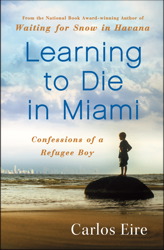
• Here’s an interesting article from the Marin Independent-Journal about a woman who found out about her family’s heritage through Cuban author Carlos Eire’s 2010 book, Learning to Die in Miami: Confessions of a Refugee Boy. NPR profiled Eire when the book first come out.

This post was updated to include a link to Bolaño’s short story.

Leave a comment

Filed under News

Literary magazines for Latinos

Latino writers have found a home at Huizache magazine.

The recently released publication is one of the few literary magazines devoted to the works of Hispanic writers. Huizache features the works of nearly a dozen Latino authors. Sandra Cisneros has a terrific essay about meeting her idol, tango composer Astor Piazzolla. Lorraine López and Estella Gonzalez contribute short stories. Gary Soto, José Montoya and Benjamin Alire Sáenz wrote poems.

Huizache is a literary magazine produced by CentroVictoria, the Center for Mexican American Literature and Culture at the University of Houston-Victoria. Dagoberto Gilb serves as the center’s executive director, and Diana López is the magazine’s editor. The center also produces the Made in Texas teacher’s guide, which features lesson plans in Mexican American literature.

Huizache editors said they hope to produce it annually, according to this Victoria Advocate article. You can order the magazine for $10 here.

Here are some other literary magazines devoted to Latino literature:

The Acentos Review comes out online four times a year. Its upcoming issue is devoted to Hispanic elders.

• The online Aztlán Reads, which calls itself “a database of Xicana/o Studies fiction and non-fiction work,” features poems, short stories, author interviews, giveaways and news about literary events.

Palabra, which bills itself as “a magazine of Chicano & Latino literary art,” is a yearly print magazine that intends “to present an eclectic and adventurous array of thought and construct, alma y corazón, and a few carcajadas woven in for good measure.”

• The online Somos en escrito features a novel in progress, poetry and other works by Hispanics.

3 Comments

Filed under Features