Happy Birthday, Camilo José Cela!

Camilo José Cela was born on this day in 1916 in Iria Flavia, Spain, and died in 2002. He is only one of a dozen Latinos to win the Nobel Prize in Literature, which he received in 1989.

Cela wrote in a variety of genres and styles, but he is best known for his 1942 novel La Familia de Pascual Duarte (The Family of Pascual Duarte), about a murderer who feels no remorse for his crimes, and the 1951 novel La Colmena (The Hive), which depicts the lives of hundreds of people in Madrid in the 1940s and was made into a movie in 1982. He also was known for his sometimes outrageous personality.

Leave a comment

Filed under Author Profiles, Fiction

Book review: Meg Medina’s “The Girl Who Could Silence the Wind”

The lead character in The Girl Who Could Silence the Wind (Candlewick Press), by Meg Medina, has an unique problem.

Sonia Ocampo was born during a terrible storm in the poor village of Tres Campos. Villagers considered it a miracle that they and Sonia all survived – and they began asking her to pray for their troubles. She wears a shawl that is weighed down – literally and figuratively – by the amulets they give her. As she tells her aunt:

“I can’t do what everyone wants. I can’t stop bad times from finding us. I can’t control things any more than they can. … Do you know what it’s like to live as I do? To be asked to make rain in the dry season? To cure coughs? … And why am I cursed this way? Because I was born on the wrong night, that’s all. It’s all been a silly lie.”

Her aunt offers to help her escape her situation by finding her a job as a maid for a rich family in the capital. But she has trouble learning new skills and adjusting to her unfriendly co-workers. And her troubles surmount when she finds out her brother Rafael has disappeared.

This novel had an old-fashioned quality to it that reminded me of a Latino version of Little House in the Prairie. The time period is never mentioned – although there are cars, there aren’t gadgets such as iPhones or TV. But the issues Sonia and the characters face – such as finding a place in society and searching for a better life – parallels issues people face today.

Medina writes in descriptive, beautiful prose that never drags the story. The ending is somewhat unexpected because it doesn’t end happily. But young girls will enjoy reading this story.

More about Meg Medina:

Meg Medina, who grew up in Queens, New York, and lives in Richmond, Virginia, is the author of  Milagros: Girl from Away and Aunt Isa Wants a New Car, which won the 2012 Ezra Jack Keats New Writers Award and earned a spot on the 2012 Amelia Bloomer List.

Source: I received a review copy from the publisher.

Leave a comment

Filed under 2012 Books, Book Reviews, Fiction, Young Adult Books

Book review: Carolina De Robertis’ “Perla”

A naked man appears at Perla’s house in Buenos Aires. He doesn’t say a word to her. She allows him to stay in the home.

So begins Perla (Knopf), the new novel by Carolina De Robertis. Perla is a college student whose father was in the Argentine Navy during the Dirty War – leading to the vanishing of thousands of citizens, known as “the disappeared.” While her parents are away from the house, Perla begins to take care of the stranger and she discovers they may share a connection.

This book has won critical reviews – including a 4.33 ranking out of the highest score of “5” on the GoodReads website – but I just couldn’t get into it. When the book is told from the stranger’s viewpoint, De Robertis writes in abstract, overly descriptive passages that were hard for me to get through. Take this passage that borders on the silly:

“It is not her naked ankle that he wants to press against: it is the Who of her, the inside sound, the secret aural texture of her being. He wants to hear the chorus in the depths of her, where the past and all the unseen futures gather to sing.”

And that’s one of the shorter passages. This type of writing made a short book (236 pages) seem twice as long.

Perla has an intriguing premise about Argentina’s history, but I found it overwritten for my tastes.

More about Carolina De Robertis:

Carolina De Robertis, a Uruguayan native who now lives in California, is also the author of The Invisible Mountain.

Source: I purchased this book through Amazon.com.

Leave a comment

Filed under 2012 Books, Book Reviews, Fiction

In the News: New books from Alegría, Sheen and Estevez, Arte Público

It’s May! It’s time to celebrate one of the Latino community’s favorite holidays – Cinco de Mayo – and read some good books. Here’s what’s coming up on the bookshelves:

May 1: Border Town: Crossing the Line by Malín Alegría, author of the popular Estrella’s Quinceañera, focuses on two teenage girls who live in fictional Dos Rios, Texas. The novel is the first in a Sweet Valley High-like series, with more books, such as Quince Clash and Falling Too Fast coming out later this year.

May 8: Father-and-son actors Martin Sheen and Emilio Estevez will release a joint memoir, Along the Way: The Journey of a Father and Son with Hope Edelman. The book focuses on their faith and includes their thoughts on the making the 2011 movie The Way, about a man’s pilgrimage along the Camino de Santiago in Spain.

• May 31: Arte Público has several bilingual children’s books coming out, including A Day Without Sugar by Diane Deanda, Sofía and the Purple Dress by Diane Gonzales Bertrand and Alicia’s Fruity Drinks by Lupe Ruiz-Flores.

Leave a comment

Filed under 2012 Books, Children's Books, Fiction, Non-Fiction

Happy Birthday Roberto Bolaño!

Chilean Roberto Bolaño was born on this day in 1953 and died in 2003. His works, with their dark, sometimes twisted themes, have become more popular after his death.

He first won mass recognition for The Savage Detectives, and won the 2008 National Book Critics Award. His 2008 book, 2666, was named one of the best books of that year by Time magazine, which has a great overview of his life.

Here’s The Hispanic Reader’s review of his book, The Third Reich, released last year. The Secret of Evil, a book of short stories, was published earlier this month.

The New Yorker has a guide to reading Bolaño. Newsweek/The Daily Beast has a fantastic article about him, as well as a look at some other prominent Latino writers. And check out this blog devoted to his works (which to quote the blogger is “now a blog dedicated to, uhm, books.”)

Leave a comment

Filed under Author Profiles, Fiction

Happy Birthday, Vicente Aleixandre!

Vicente Aleixandre was born on this day in 1898 in Seville, Spain, and died in 1984. The poet won the Nobel Prize in Literature in 1977, becoming one of only a dozen Latinos to win that honor.

His poetry is known for its surrealism and touches on topics such as nature and kindness – attributes he appreciated since he was invalid for most of his life.

Leave a comment

Filed under Author Profiles, Poetry

Book review: Julia Alvarez’s “A Wedding in Haiti”

After the devastating 2010 earthquake in Haiti took more than 300,000 lives, many people felt compelled to help that country. Julia Alvarez wanted to go there.

She describes her experiences in her book, A Wedding in Haiti (Algonquin Books).

Her journey first began in 2009, when Alvarez and her husband, Bill, attended the wedding of Piti, a Haitian boy they had seen flying a kite near their coffee farm in her native Dominican Republic and they later hired to work on the farm.

But even before the earthquake, going to Haiti proves to be an ardurous journey, as Haiti’s infrastructure seems to be stuck in 1909.

A year later, Alvarez feels compelled to visit the country again after the earthquake.

“I didn’t have any answers for Haiti or fix-it advice or even a high road to take a moral stance for others to emulate. I just wanted to be with Haiti, and the line that kept echoing in my heart was the one from stations of the cross on Good Friday: Walk with me as I walk with you and never leave my side.

She makes the journey again  – compounded by bureaucracy and the devastation from the earthquake.

Alvarez doesn’t waste any words or get too fancy, making her writing so enjoyable to read. She is great at describing things – from a child’s schoolbook to a time when they had to drive through a river with the help of some Haitians, who then demand money. But the trips are worth the trouble as Alvarez describes the joy of the celebration – such as a scene in which the party-goers start to dance spontaneously.

Despite the devastation, she leaves the country with hope.

“So what is it that the eye is seeking and the heart is aching for? A flicker of wings, a thing that whispers hope. From a sidewalk wall hangs a red evening gown for sale. Incredible to think: there will be partying again! A boy in his school uniform walks by, holding the straps of his backpack. The very ordinariness of the moment seems a blessing.”

A Wedding in Haiti is a great book that gives readers a personal look at its people.

More about Julia Alvarez:

Julia Alvarez grew up in the Dominican Republic and came to the United States at age 10. She’s written numerous poems and books, including How the Garcia Girls Lost Their Accents and In the Time of Butterflies.

Source: I received a review copy from the publisher.

Leave a comment

Filed under 2012 Books, Book Reviews, Non-Fiction

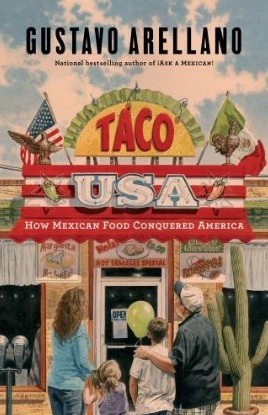
Book review: Gustavo Arellano’s “Taco USA: How Mexican Food Conquered America”

Gustavo Arellano’s Taco USA: How Mexican Food Conquered America (Scribner) is a literary feast.

Arellano covers the history of Mexican food, from its origins with the Aztecs to its present-day incarnations at Chipotle. In meticulous detail, Arellano writes about the selling of tamales on street corners, the emergence of the tortilla and salsa, and the creation of the margarita machine, among other topics.

Interestingly, some of the most prominent Mexican food – such as Taco Bell, Fritos and Paso picante sauce –was built up by Anglos. But all of the stories reveal great entrepreneurial spirit and ingenious inventions. (Sadly, his book went to press before the introduction of Doritos Locos Tacos.)

Arellano’s enthusiastic, descriptive and humorous writing makes this book so much fun to read. Check out this passage about a meal at Manuel’s El Tepeyac Café:

“There is a burrito sold in the Los Angeles neighborhood of Boyle Heights that’s beyond cosmic, that’s as close to touching God while eating Mexican food as finding Jesus on a tortilla. … Manuel’s Special: five pounds, beans and rice and guacamole and sour cream and your choice of meat – juicy nubs of grilled chicken, carne asada burned into succulent charcoal, or best with machaca, shredded beef that sticks between molars for hours afterward, heavily spiced and just grand, wrapped in a flour tortilla that, if laid flat, can serve as swaddling cloth for a puppy.”

A few quibbles: As a Texan, the book seemed a bit California-centric to me. How does the Rio Grande Valley get only one paragraph in a book about Mexican food? Although it doesn’t have the mass appeal of burritos and margaritas, I would have liked to read more about the history of pan dulce and menudo. I also would have liked to see some sociological and cultural analysis of the Americans’ seemingly contradictory anti-immigrant fervor and love for Mexican food.

The book left me hungry for that information, but it also made me hungry, literally. After reading the chapter on tortillas, I had to go to Chipotle (the closest available Mexican food place) for dinner.

Savor Taco USA. It’s as delightful as the meals Arellano describes.

More about Gustavo Arellano:

Gustavo Arellano, the editor of OC Weekly, is best known for his Ask a Mexican column. He also teaches at California State University, Fullerton.

Source: I purchased this book through Amazon.com.

1 Comment

Filed under 2012 Books, Book Reviews, Non-Fiction

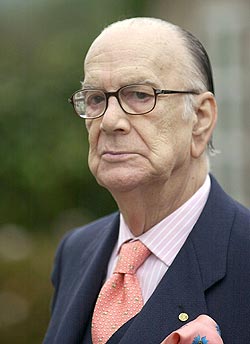
Happy Birthday, José Echegaray!

José Echegaray was born on this date in 1833 in Madrid, Spain, and died in 1916. The dramatist is one of only a dozen Latinos to win the Nobel Prize in Literature, which he won in 1904.

Echegaray was a mathematician who was working for the government when he decided to pursue a career in his first love – theater. His plays, known for their romanticism, were wildly popular in his country. His most famous play is 1881’s El gran Galeoto (The Great Galeotto) about the effects of gossip on one man.

Leave a comment

Filed under Author Profiles, Theater

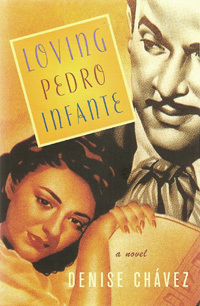
Classic book review: Denise Chávez’s “Loving Pedro Infante”

Denise Chávez’s 2001 Loving Pedro Infante is one of those books that becomes your friend.

Tere Avila is an “educational assistant” – teacher’s aide – in Cabritoville, near El Paso. She’s a divorced, 30-something woman who spends her time hanging out with her best friend, Irma, at Tino’s La Tempestad Lounge every Friday and Saturday night and serving as secretary in the Pedro Infante Fan Club, whose members watch the Mexican actor’s old movies from the 1940s and 1950s and analyze them as though they were in an English literature class.

Tere’s ordinary, somewhat lonely, life gets a jolt when she starts an affair with Lucio Valadez, a married man whose daughter attends the school she works at.

Sounds like an ordinary plot, right? But what makes Pedro Infante so wonderful is Chávez’s writing. Tere speaks to the reader in first person, and the conversational tone makes you sympathize with her, laugh with her and, at times, want to scold her. (Fortunately, Irma does that for us.) Think of it as a Mexican version of Bridget Jones’s Diary or a small town Sex and the City.

The minutes from the Pedro Infante Fan Club meetings are particularly hilarious, but here’s some of the better lines:

On her love for Lucio: “There’s nothing a Mejicano or Mejicana loves more than the burning, stinging pain of thwarted, frustrated, hopeless, soulful, take-it-to-the-grave love. Nothing gets us going more than what I call rabia/love of the te-juro-you’re-going-to-pay-for-all-the-suffering-you-caused-me variety.”

On visiting a curandera’s house in a poor neighborhood: “Doña Meche was one of the richest women in Cabritoville. … She loved to invest in the stock market. Oh yeah? Well, invest in your neighborhood, and your yard, girl!”

On a visit to the bathroom with Irma: “I could hear Irma’s spurty but intense urine stream. She was a fast pisser and in this session she outdid herself. I could barely keep up with her, and I flushed early to make a number of deep growly farts.”

I absolutely loved Loving Pedro Infante. Please stop what you’re doing and go read it now.

More about Denise Chávez:

• A native of New Mexico, Denise Chávez has also written A Taco Testimony: Meditations on Family, Food and Culture, Face of An Angel and The Last of the Menu Girls. She is the director of The Border Book Festival, which will take place Thursday-Sunday in Mesilla, New Mexico.

Source: I checked this book out of the library.

This book is fourth in the series of classic books by Latina authors. Next month: Laura Esquivel’s Like Water for Chocolate.

2 Comments

Filed under Book Reviews, Classic Books, Fiction