Category Archives: Book Reviews

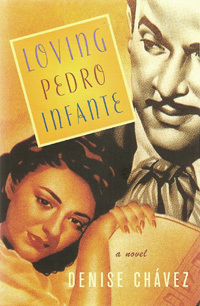
Classic book review: Denise Chávez’s “Loving Pedro Infante”

Denise Chávez’s 2001 Loving Pedro Infante is one of those books that becomes your friend.

Tere Avila is an “educational assistant” – teacher’s aide – in Cabritoville, near El Paso. She’s a divorced, 30-something woman who spends her time hanging out with her best friend, Irma, at Tino’s La Tempestad Lounge every Friday and Saturday night and serving as secretary in the Pedro Infante Fan Club, whose members watch the Mexican actor’s old movies from the 1940s and 1950s and analyze them as though they were in an English literature class.

Tere’s ordinary, somewhat lonely, life gets a jolt when she starts an affair with Lucio Valadez, a married man whose daughter attends the school she works at.

Sounds like an ordinary plot, right? But what makes Pedro Infante so wonderful is Chávez’s writing. Tere speaks to the reader in first person, and the conversational tone makes you sympathize with her, laugh with her and, at times, want to scold her. (Fortunately, Irma does that for us.) Think of it as a Mexican version of Bridget Jones’s Diary or a small town Sex and the City.

The minutes from the Pedro Infante Fan Club meetings are particularly hilarious, but here’s some of the better lines:

On her love for Lucio: “There’s nothing a Mejicano or Mejicana loves more than the burning, stinging pain of thwarted, frustrated, hopeless, soulful, take-it-to-the-grave love. Nothing gets us going more than what I call rabia/love of the te-juro-you’re-going-to-pay-for-all-the-suffering-you-caused-me variety.”

On visiting a curandera’s house in a poor neighborhood: “Doña Meche was one of the richest women in Cabritoville. … She loved to invest in the stock market. Oh yeah? Well, invest in your neighborhood, and your yard, girl!”

On a visit to the bathroom with Irma: “I could hear Irma’s spurty but intense urine stream. She was a fast pisser and in this session she outdid herself. I could barely keep up with her, and I flushed early to make a number of deep growly farts.”

I absolutely loved Loving Pedro Infante. Please stop what you’re doing and go read it now.

More about Denise Chávez:

• A native of New Mexico, Denise Chávez has also written A Taco Testimony: Meditations on Family, Food and Culture, Face of An Angel and The Last of the Menu Girls. She is the director of The Border Book Festival, which will take place Thursday-Sunday in Mesilla, New Mexico.

Source: I checked this book out of the library.

This book is fourth in the series of classic books by Latina authors. Next month: Laura Esquivel’s Like Water for Chocolate.
2 Comments

Filed under Book Reviews, Classic Books, Fiction

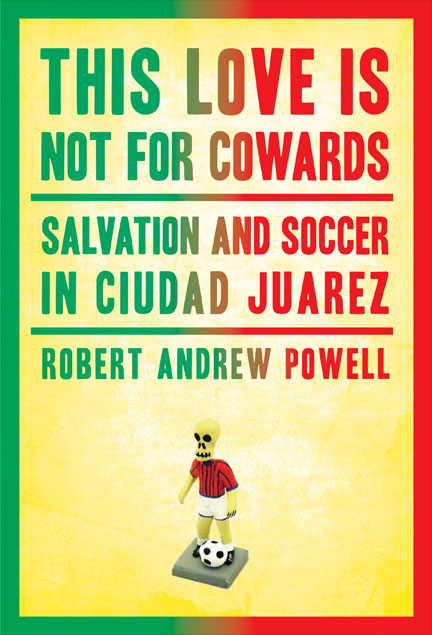
Book review: Robert Andrew Powell’s “This Love is Not for Cowards”

Robert Andrew Powell’s This Love is Not for Cowards: Salvation and Soccer in Ciudad Juárez revolves around two of Mexico’s most prominent subjects – its love for soccer and its dangerous drug trade.

Los Indios are the minor league soccer team near El Paso that scored a huge coup in 2009 – they have been accepted into the major leagues. This provides the people of Juárez a glimmer of hope as murders and violence become an everyday occurrence.

Powell describes the moment the team won the game that led to the promotion: “Players climbed onto the roof of their bus as young women danced in blue jeans and form-fitting red Indios jerseys tied at the waist. La gente, the people, proved to be bigger than the cartels. The city showed it was more than just violence.”

The book features several characters – Marco Vidal, the American who comes to Mexico so he can play the sport he loves; Francisco Ibarra, the team’s owner who lives in El Paso and has applied for American citizenship; and the cheekily named Ken-tokey, the student who belongs to the cheekily named El Kartel, the  booster club that supports and travels with the club.

Los Indios soon finds that playing in the major leagues isn’t so easy. But as Powell notes, “It’s been nice, for a while, to be in the fold, to be a city all of Mexico has to acknowledge is indeed in Mexico. However fleeing the coverage on ESPN Deportes, Juárez was still on ESPN Deportes.”

Powell is great at detailing the violence the surrounds the city and describing its land and its people. He also has an interesting chapter about the deaths of the women in Juárez that has drawn much media attention.

But the book’s strength is also its greatest weakness. Powell overdescribes things – even revealing the toppings of the pizza he eats at a restaurant. (Who cares?) The book starts to drag in the last 100 pages and, at times, I thought the story would have been better as a long article in Rolling Stone or The New Yorker than as a 256-page book.

Still, the book is an intriguing look at Juárez, providing a human face to a city that has been forsaken by so many.

More about Robert Andrew Powell:

Powell has written for The New York Times, Sports Illustrated and other magazines, as well the book We Own This Game. Read an excerpt from Love here.

Source: I purchased this book through Amazon.com.

Leave a comment

Filed under 2012 Books, Book Reviews, Non-Fiction

Classic book review: Ana Castillo’s “So Far From God”

I was so close to loving Ana Castillo’s 1993 novel So Far From God.

So Far From God takes place in a small village in New Mexico, where Sofi is taking care of her four daughters after her husband Domingo has left her. There’s Esperanza, the oldest daughter who works as a television reporter in the Middle East; Fe, who suffers a nervous breakdown when her engagement ends; Caridad, who is attacked by a mysterious creature, ends up living in a cave and becomes a saint to villagers because they believe she has special powers; and La Loca, who dies as an toddler, but wakes up during her own funeral and lands on the church’s roof.

And that’s just the first four chapters, folks.

This book reminded me of Julia Alvarez’s How the Garcia Girls Lost Their Accents, which also focused on four daughters in a non-linear story. But Garcia Girls is a realistic book and, if you couldn’t tell already, So Far From God uses vast amounts of magic realism and myth.

Sofi is the backbone of the family, running the family’s carnicería and even becoming the leader of her small village. Castillo keeps a light, conversational tone throughout the book even when the women suffer through some terrible tragedies.

As Sofi says, “God gave me four daughters, and you would have thought that by now I would be a content grandmother, sitting back and letting my daughters care for me, bringing me nothing but their babies on Sundays to rock on my lap! But no, not my hijitas! I had to produce the kinds of species that flies!”

I enjoyed the stories and I liked Castillo’s sense of humor. But Castillo packs so much into her sentences that I had to reread them and hunt for the verb. I was also annoyed by her frequent use of double negatives. I would accept this – reluctantly – if the book had a strong first person narrator or if it was used in the dialogue, but I didn’t think they were necessary. In fact, wanted to stab the book with a red pen so the double negatives would bleed to death.

So, I just liked So Far From God when I could have loved it.

More about Ana Castillo:

Ana Castillo is a Mexican-American author who has written numerous books and poems, including 1992’s The Mixquiahuala Letters and 1999’s Peel My Love Like an Onion. Her next book, The Last Goddess Standing, is expected to come out later this year.

Source: I checked this book out of the library.

This book is third in the series of classic books by Latina authors. Next month: Loving Pedro Infante by Denise Chávez.

Leave a comment

Filed under Book Reviews, Classic Books, Fiction

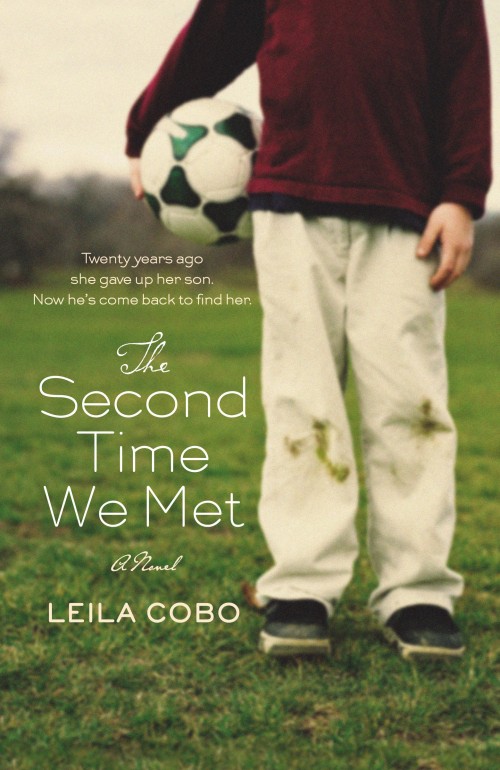
Book review: Leila Cobo’s “The Second Time We Met”

In Leila Cobo’s The Second Time We Met (Grand Central Publishing), teenager Rita Ortiz lives in a small town called Edén, but her life is hell.

Her parents are overly strict, and her small town in Colombia is run by guerillas. She falls in love with one of those guerillas, Lucas, and then her life becomes even more complicated: she finds out she’s pregnant. Her parents force her to move into a convert, and she gives birth and puts the baby up for adoption.

The book then goes from 1989 South America to present day California, where that baby – named Asher Stone – is now a college student living with his tight-knit family and dreaming of a professional soccer career. An almost-fatal car accident forces him to rethink his life – and search for his birth mother. But Asher has very little to go on – just her name, a birth date and a letter she wrote to him. Now Asher – and the reader – wants to know what happened to Rita Ortiz.

The book’s plot isn’t original and Asher isn’t as compelling a character as his mother. But the story runs at a good pace, and Cobo writes some killer lines. Take this passage when Rita and Lucas fall in love: “What neither of them reckoned with is that love and lust are transformative, that they peel back layers of your self, surreptitiously, life the softest caress. Before you know it, fragments of you are exposed for all to see, little pieces of you didn’t know carried with you until they found their reason to exist.”

And readers will have good reason to keep turning the pages.

About the author:

Leila Cobo is a native of Colombia and former concert pianist. She covers Latin music for Billboard magazine. Her first book was Tell Me Something True.
She can be found on Facebook and Twitter.

Source: I received a review copy from the publisher.

1 Comment

Filed under 2012 Books, Book Reviews, Fiction

Book review: César Aira’s “Varamo”

In just 88 pages, César Aira’s Varamo (New Directions) contains more quirkiness than a Wes Anderson movie.

The book is named for the book’s protagonist, Varamo, a bureaucrat in Colon, Panama, who lives an ordinary life. But one afternoon, he receives counterfeit money for his salary. Varamo is a decent man and feels confused about what to do with the money.

He tries to go on with his life – such as embalming small animals to create wacky scenes; dealing with his temperamental mother; and going to a club that he hangs out every night. But even his fun is interrupted by something called regularity racing, an auto contest in which the winner is determined by which car deviates the least from a predetermined speed.

I told you this book was quirky.

All of these events led Varamo to write a poem – something he has never done before – that makes him a hero in his country. The poem, called The Song of the Virgin Boy, is made up of the papers Varamo collected from the day’s events, although the reader doesn’t get to see this work of art.

Some readers may find Varamo a little odd for their tastes. And it is at times. But for the adventurous, the book may be a fun way to spend an hour.

More about César Aira:

César Aira, a native of Argentina, has written more than 80 books. His translator, Chris Andrews, talked to The New Yorker about Aira’s work. His fans include actor Daniel Radcliffe.

Source: I received a review copy from the publisher.

Leave a comment

Filed under 2012 Books, Book Reviews, Fiction

Classic book review: Julia Alvarez’s “How the Garcia Girls Lost Their Accents”

Julia Alvarez’s 1991 novel How the Garcia Girls Lost Their Accents follows four sisters from their adulthood in the United States to their childhood in the Dominican Republic. The book is funny, sad and always readable.

There’s Carla, “the responsible eldest”; Sandi, the “looker” who suffers a nervous breakdown; Yolanda, also known as “Yoyo,” the poet; and Sofía, or “Fifi,” the “plain one” who managed to snag “non-stop boyfriends.”

Instead of a straightforward plot, the family’s story is told in a series of vignettes in reverse chronological order. We first met the women as adults in the 1980s as they go through bad relationships and other problems. The book then goes back to the 1960s, when they first moved into the United States and they have to adjust to a different culture. The last part of the book takes place in the late 1950s, when they lived in the Dominican Republic under dictator Rafael Trujillo‘s rule.

Their time in their homeland makes for some of the most tense moments in the book. Their mother, Laura, severely punishes Yoyo when she inadvertently gets their father, a prominent doctor, in trouble. “You lose your head in this crazy hellhole, you do, and different rules apply,” she says.

It’s lines like that makes Alvarez such a great writer. Here’s another great passage in which she describes young Sandi’s urge to draw: “It seemed with so much protocol, I would never get to draw the brilliant and lush and wild world brimming over inside me. I tried to keep my mind on the demonstration, but something began to paw the inside of my drawing arm. It clawed at the doors of my will, and I had to let it out. I took my soaking brush in hand, stroked my gold cake, and a cat streaked out on my paper in one lightening stroke, whiskers, tail, meow and all!”

One gripe: it’s hard to tell the women apart sometimes. It seems Yoyo receives most of the attention. In fact, she later got her own book –1997’s ¡Yo!.

But Garcia Girls is an intriguing read about a family loving each other through the years, in good times and in bad. This piece of dialogue between their mother and a psychiatrist sums up their life:

“’The siblings,’ Dr. Tandlemann said. ‘Were they close? Was their any sense of rivalry between them?’

‘Siblings?’ The mother frowned at all this crazy psychology talk. ‘They’re sisters,’ she said by way of explanation.”

More about Julia Alvarez:

Julia Alvarez grew up in the Dominican Republic and came to the United States at age 10. She’s written numerous books, but is best known for Garcia Girls and In the Time of Butterflies. Her next book, A Wedding in Haiti, comes out in April.

Source: I checked this book out of the library.

This book is the second in a series of classic books by Latina authors. Coming in March: So Far From God by Ana Castillo.

Leave a comment

Filed under Book Reviews, Classic Books, Fiction

Book review: Francisco X. Stork’s “Irises”

In Francisco X. Stork’s young adult novel Irises (Arthur A. Levine Books/Scholastic), the Romero sisters lived a life so strict that one of them had never been to the mall. Their father, a pastor, “literally thought the devil was going to sneak in the house through the Internet cable.” No wonder that Kate, 18, dreams of escaping her hometown of El Paso for Stanford University, and Mary, 16, paints to escape her world.

But life soon changes for the sisters. Their father dies suddenly, leaving the young women to take care of their mother, who has been in a vegetative state for two years after a car accident. The sisters must decide how to take care of themselves financially, with their own personal dreams at stake.

As Kate thinks, “What she wanted most of all was a more meaningful life, a life where she was useful to others, a life that in her mind could only be obtained someplace other than El Paso.”

Stork’s writing is easy to read, but the book is startlingly different from many of the edgy young adult books that deal with romance or have paranormal or dystopian scenarios. The book has one mention of sex, and a mild one at that. But Irises – named for the flowers Mary likes to paint – is deeper, digging into themes of faith and the purpose of life.

The characters go to church to seek peace, not just to attend service. Characters discuss their faith. One chapter is devoted to a pastor’s sermon. And Stork writes this in a matter-of-act manner, avoiding overtly religious language that may turn some readers off.

When the sisters have to make tough decisions, they discuss what they want from life. “God wants us to live,” Kate says. “He wants to give us abundant life. He wants to give us light and He wants us to be a light unto others.”

Irises is a thoughtful book that will appeal to teenage girls – and, hopefully, a few adults as well.

More about Francisco X. Stork:

Stork, who was born in Mexico and grew up in El Paso, is best known for his books Marcelo in the Real World and The Last Summer of the Death Warriors. He studied literature under Nobel Prize winner Octavio Paz at Harvard and earned a law degree. He works as an attorney in Boston.

Source: I received a review copy from the publisher.

Leave a comment

Filed under 2012 Books, Book Reviews, Fiction, Young Adult Books

Classic Book Review: Isabel Allende’s “The House of the Spirits”

Isabel Allende’s 1982 The House of the Spirits is considered one of Latino literature’s best-known and greatest pieces of work. When you read it, you can the sense the influence the book has had on the books you read today.

Spirits tells the tale of Esteban Trueba, a poor but temperamental miner who rebuilds an abandoned ranch in South America and becomes a powerful patrón and politician. He is surrounded by three generations of headstrong women– his wife, clairvoyant Clara; his daughter, Blanca, who falls in love with a young revolutionary that Esteban disdains; and his granddaughter, Alba, who disagrees with him politically – and faces violent consequences.

The book mirrors political events in Chile and parts of Allende’s life. Her uncle, Salvador Allende, was that country’s socialist president in 1973 when he attacked in a 1973 military coup led by General Augusto Pinochet.

Allende writes in beautiful sentences, such as this: “Outside, the fields were shaking off their sleep and the first rays of sunlight were cutting the peaks of the cordillera like the thrusts of a saber, warming the earth and evaporating the dew into a fine white foam that blurred the edges of thing and turned the landscape into an enchanted dream.”

But those long descriptive paragraphs can make the book slow at times. I prefer fast-paced books with lots of dialogue, although the last 100 pages of Spirits was more gripping.

I can see the influence of Allende’s book in two epic tales of life on the ranchero and have characters with magical powers – Luis Alberto Urrea’s 2005 The Hummingbird’s Daughter, which has a more light-hearted tone, and Esmeralda Santiago’s 2011 Conquistadora, which has a feminist take.

Spirits – which was made into movie in 1993 starring Meryl Streep – is a fascinating story that earns the title of  “classic.”

More about Isabel Allende:

• Allende worked as a reporter before writing novels. This fascinating timeline shows her family’s history and reveals the inspiration for Spirits. Her other books include the novels 1985’s Eva Luna and 1999’s Daugher of Fortune, as well as 1995’s Paula, a memoir to her daughter, who died at age 28.

This is the first in a monthly series of classic books by Latina authors. Next month: How the Garcia Girls Lost Their Accents by Julia Alvarez.

Source: I purchased this book at Books-A-Million.

2 Comments

Filed under Book Reviews, Classic Books

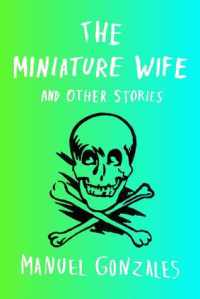
Book review: Manuel Gonzales’ “The Miniature Wife and Other Stories”

Miniature WifeManuel Gonzales can make a skeptic believe vampires and werewolves are real, even human.

In his book, The Miniature Wife and Other Stories (Riverhead), Gonzales conjures up all sorts of wild scenarios – and he uses those situations as metaphors for larger issues about the world we live in.

The book starts off with two strong stories – “Pilot, Copilot, Writer” – in which the narrator sits on a plane that is stuck in the air for 20 years, and the title story, about a man who shrinks his wife to the size of a coffee cup. Crazy stuff, but they speak about the stagnation of life and the world’s treatment of women.

A few stores – “The Artist’s Voice,” about a composer who speaks with his ears, and “Harold Withy Keith: A Meritorious Life,” about the inventor of a vascular system made out of plants – get so bogged down in technical detail that I felt like I was reading a science textbook.

But the book roars back with great, inventive stories – “All of Me,” about a zombie who crushes on a co-worker; “One-Horned and Wild-Eyed,” about a man whose friend finds a unicorn; and “Wolf,” a graphic but fascinating account about a father who turns into a werewolf.

How good are these stories? I’m not into paranormal books because I can’t take them seriously, but Gonzales makes them believable with clear, matter-of-fact writing and relatable characters who are forced to make heartbreaking decisions.

Take the zombie in “All of Me”:

 “I don’t understand how hard it can be to keep our baser selves in check or how much easier it is, ultimately, to go back to the evil we knew and understand, the evil we have lived with for so long that it feels an inherent and important part of ourselves, to go back to this evil and tell ourselves that we had no other choice, that we didn’t opt for this decision, but that really there were never any other options for us to take. I know about choices and about not having choices and how it feels when it seems you have no other choice.”

So you get crazy scenarios mixed in fine writing and profound thoughts about the human condition and the state of the world. Manuel Gonzales can make you believe anything.

Manuel_GonzalesMore about Manuel Gonzales:

Texas-based Gonzales runs the Austin Bat Cave creative writing center for children and bakes pies on the side. His work has been published in The Believer, Esquire and the Dear Teen Me website. Read “The Animal House” from The Miniature Wife on the FiveChapters.com website.

Source: I received a review copy from the publisher.

Leave a comment

Filed under 2013 Books, Book Reviews, Fiction

Book review: Maria Dueñas’s “The Time in Between”

In Maria Dueñas’s novel, The Time in Between, Sira Quiroga goes from humble dressmaker to World War II spy in just a few years. The transformation is a mostly fascinating and sometimes frustrating tale.

The book begins in 1935 in Madrid, where Sira is, as one character describes her, a “young dressmaker filled with tenderness and innocence,” and engaged to a civil servant. But, she says, “a typewriter shattered my destiny.” While visiting an office supply store, she meets and eventually falls in love with another man. She moves with him to Morocco with the promise that they will start their own business. But, through a series of rather unpleasant surprises, Sira has to return to her sewing skills as a means of survival. She makes friends with several people on the social scene, and she returns to Madrid to design clothes for the wives of German Nazis – and tries to find out about their husbands’ plans as World War II begins to brew.

Sira’s means of spying is one of several clever twists in the book – and Sira goes through plenty of life-changing events that will elicit a few gasps. Like any spy novel, the book has its share of intrigue and coincidences. But I wish the 600-page book, which was translated by Daniel Hahn, had more dialogue and shorter paragraphs. Although Dueñas writes beautifully, the book dragged at times and needed a faster pace. I also wished two of the more colorful characters – her feisty landlord, Candelaria, and a fun next-door-neighbor, Félix – had stuck around longer.

Still, Sira makes a strong feminist character and, although the ending doesn’t suggest a sequel, I’d read a series of her spy adventures. And if we can’t get that, can we get a movie starring Penélope Cruz and Javier Bardem?

More about María Dueñas:

Dueñas, a professor in Spain, based some of the characters on real life people involved in World War II. She talked about the book to Publishers Weekly when it came out earlier this fall.

Source: I checked the book out from my local library.

1 Comment

Filed under 2011 Books, Book Reviews, Fiction