Category Archives: Book Reviews

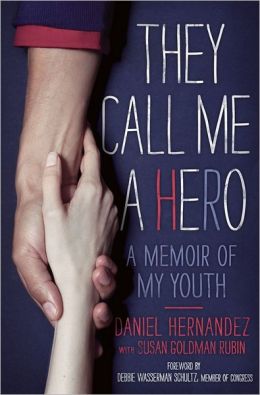
Book review: Daniel Hernandez’s “They Call Me a Hero: A Memoir of My Youth”

TheyCallMeAHeroDaniel Hernandez Jr. makes an outstanding role model for young Hispanics, LGBT youth and all youth in general – even though he doesn’t want to be.

His memoir is called They Call Me a Hero: A Memoir of My Youth (Simon & Schuster) because of the response he received for his actions at a 2011 event in which a gunman began shooting at U.S. Rep. Gabrielle Giffords and others at a public event in Tucson, Ariz.

Six people died and Giffords was shot in the head. Giffords was saved thanks to the help of Hernandez, a 21-year-old intern at her office, who drew on his first aid studies he learned in high school to help control her bleeding.

Hernandez was besieged with interviews and awards. He later was lauded at the 2011 State of the Union address and threw the ceremonial first pitch at the Major League Baseball All-Star Game later that year.

But Hernandez thought he would have done what anyone else would have done.

“I didn’t expect to be a poster boy for all the groups I happen to represent – Hispanics and people in the LGBT community. I never imagined that I would become a role model; this concept seemed foreign to me, because I was so used to not getting any attention. … As I told a reporter, whether I’d acted as I had during the shooting because I’m Latino or I’m gay or that I happened to be there on January 8 didn’t really matter. I’m not a model Latino or a model member of the LGBT community. The best way I knew to be a role model was by focusing on being the best Daniel Hernandez I could be.”

The book, co-authored by Susan Goldman Rubin, is a quick read and the first part of the book, which describes the shooting and aftermath, is riveting. The book, written in a conversational tone, then delves into Hernandez’s childhood and how he became politically active.

But keep in mind that the book was written for middle school students and older. I had to remind myself of this when the text seemed too simple or there was more telling than showing. The book could have used more anecdotes to tell the story better.

I also felt the book didn’t say enough about Hernandez’s life as a gay man. Hernandez also doesn’t mention Arizona’s anti-immigrant policies and ban on ethnic studies – but, again, this is a book for teenagers.

Still, this book could inspire youth to become more active their community. Hernandez’s work ethic is relentless and his passion of community service is tremendous. He drafted and helped pass a bill that gave college students time off from class to vote, managed an election for an Arizona state representative and was appointed to serve to the City of Tucson commission on LGBT issues – all before he could drink alcohol legally.

And if a young person isn’t inspired to volunteer for their community, this book could help them take pride in just being themselves. As Hernandez says:

“I was always different from most kids, and I was okay with it. I wasn’t very concerned with how others perceived me. I just wanted to be myself.”

Daniel HernandezMore about Daniel Hernandez:

Hernandez, who graduated from the University of Arizona in 2012, was elected to serve on the Sunnyside School Board. He also serves as a motivational speaker.

Source: I purchased this book through Amazon.com.

Leave a comment

Filed under 2013 Books, Book Reviews, Non-Fiction, Young Adult Books

Book review: Raquel Cepeda’s “Bird of Paradise: How I Became Latina”

BirdofParadiseRaquel Cepeda wasn’t sure of her cultural identity. Even her friends and family weren’t sure.

“Papi said I wanted to be Black because I love hip-hop, and a low-class Dominican because I like graffiti and b-boys. The kids … said I wanted to be white because I played tennis … Casimiro said I needed to recognize and embrace my natives indios and africanos in order to strengthen my spiritual guide … Caridad told me I had a vibe of a Black and white gringa. And Blackie said I could be from anywhere. But I like being Dominican, sort of, especially one born in Harlem who likes to wear socks in the winter.”

Her search for her personal and culture identity is the subject of her memoir Bird of Paradise: How I Became Latina (Atria). Readers may be inspired to investigate their own heritage after reading her book.

Cepeda divides the book into two parts, beginning with her personal life. Her parents split up early and Cepeda moved between her relatives – in the Dominican Republic and New York City – throughout her life.

Unfortunately, she was frequently abused by her father and neglected by her mother. Cepeda uses a conversational tone, good description and dialogue to keep the story moving, but these sections are intense and hard to read at times. (Some readers may be turned off by the explicit language.)

Cepeda found solace in the hip-hop world, becoming a music journalist. But when she has her own family and her father almost dies, she yearns to learn more about her heritage and persuades her parents to take DNA tests. She finds her father’s family can be traced to Africa and her mother’s family to Europe. Cepeda delves into Dominican Republic history, noting that many of its residents (and Latinos in general) can claim to be several races.

She quotes Ken Rodriguez, a software trainer and avid genealogist.

“ ‘In my opinion the biggest misconception is that Hispanic is a race in the first place. Hispanic people are generally a mix of different racial backgrounds. You can be White, Black, Asian, Amerindian, Jewish, and still be Hispanic,” he says, echoing a sentiment of many Latino-Americans. ‘What unites us is the Hispanic culture, not our race.’”

Cepeda creates a fascinating and compelling look at the complex issue of ethnicity by personalizing the issue. You even may want to get your own DNA tested.

cepeda_raquelMore about Raquel Cepeda:

Cepeda has written for various publications and edited the anthology And It Don’t Stop: The Best Hip-Hop Journalism of the Last 25 Years. She also directed and produced the 2007 documentary film Bling: A Planet Rock.

Source: I received a review copy from the publisher.

Leave a comment

Filed under 2013 Books, Book Reviews, Non-Fiction

Classic book review: Helena María Viramontes’ “Under the Feet of Jesus”

under_the_feet_of_jesusUnder the Feet of Jesus by Helena María Viramontes has been hailed as one of the great books of Latino literature with its lyrical prose and depiction of the struggles of farmworkers. But to me, it was challenging to read.

The 1995 novel follows a family of migrants as they move from one farm to another, looking for work. Petra is the mother, who is accompanied by her much older companion, Perfecto, and her children, including a pair of twins and her daughter, Estrella.

Estrella soon becomes smitten with a young man named Alejo. It’s a hopeful sign in a life filled with struggle. Biplanes fly over the fields, spewing pesticide over the farmworkers. Alejo soon becomes sick.

At times, Viramontes’ descriptions are absolutely breathtaking. Take this scene with Estrella in the fields.

“Carrying the full basket to the paper was not like the picture on the red raisin boxes Estrella saw in the markets, not like the woman wearing a fluffy bonnet, holding out the grapes with her smiling, ruby lips, the sun a flat orange behind her. The sun was white and it made Estrella’s eyes sting like an onion, and the baskets of grapes resisted her muscles, pulling their magnetic weight back to the earth. The woman with the red bonnet did not know this.”

But the book moves so slowly. Instead of a well-paced plot, Viramontes spends most of the times describing little things and creating metaphors. Take this scene at a clinic:

“There was a row of glass jars filled with flat tongue depressors that reminded them of fat ice cream sticks, gauze pads and cottons swabs on skinny wooden sticks that looked like the legs of ballet dances in tan nylons and white shoes; thermometers in a glass tube and a big jar of cotton balls.”

That’s some nice imagery, but it doesn’t tell me anything. Fortunately, that passage in the clinic turns into the most riveting scene in the book. The family only has $9.07 to its name and a car with no gas, and they must seek medical help for Alejo – forcing Estrella makes a drastic move to get help. I finally was swept up in the novel.

For readers who love descriptions and metaphors, this is a great book for them. But readers like me who prefer a strong plot will find this book frustrating.

HelenaMariaViramontesMore about Helena María Viramontes:

A California native, Viramontes also wrote The Moths and Other Stories and Their Dogs Came With Them, and co-edited Chicana (W)rites: On Word and Film and Chicana Creativity and Criticism with Maria Herrera Sobek.

Source: I checked this book out of the library.

And this marks the end of my 2012 reading challenge of classic books by Latinas. My reading challenge for 2013 is classic Latino novels. Check out this list of books about the farmworkers movement.

Leave a comment

Filed under Book Reviews, Classic Books, Fiction

Classic book review: Alisa Valdes’ “The Dirty Girls Social Club”

the-dirty-girls-social-clubYou know how you have that friend that’s funny and entertaining, but sometimes they’re annoying, too? The Dirty Girls Social Club by Alisa Valdes is like that friend.

Social Club, which was released in 2003, focuses on six friends in their late 20s in Boston who met in college and reunite several times a year. The characters are Lauren, the newspaper columnist looking for love; Rebecca, the uptight magazine editor stuck in a stale marriage; Elizabeth, the newscaster with a secret; Sara, the stay-at-home mom in denial about her abusive marriage; Usnavys, the non-profit executive who is torn over her relationship with a man who makes less money than her; and Amber, the musician who is active in the Mexica movement and later changes her name to Cuicatl.

The book has been frequently referred to as a Latina Sex and the City or Waiting to Exhale by Terry McMillan because of its depiction of strong female friendship. But it’s unique in its depiction of Latina in high-powered professional roles.

Valdes, a former newspaper reporter, writes clearly, so it’s an easy read. One scene in which Sara’s life is in danger is particularly gripping. Valdes has a knack for depicting women’s complex feelings and personalities, and she can nail some funny moments.

Take this scene in which Lauren found out some bad news:

“I feel like killing myself. I stop at the corner Korean market and buy a bag of Hot Cheetos, a carton of powdered sugar donuts, three chocolate bars, and a can of Pringles.”

Or this conversation between two of the characters:

“Back in college, you remember that trip we all took to Cancún for spring, you, me, Roberto, that guy Gerald I was dating, Lauren and that one guy, whatever his name was?”

“Alberto. Pimple man.”

“Alberto. Zits galore. Him.”

But some things tested my patience. The exposition takes too long. The character of Usnavys is so shallow that she’s hard to like. And considering the book takes place in a six-month span, the ending wraps up just a bit too tidy.

Still, just like that friend who can be annoying, Dirty Girls Social Club is also something that can be fun and rewarding.

Alisa ValdesMore about Alisa Valdes:

Cuban-American, New Mexico-based Alisa Valdes’ newest book is the just-released The Feminist and the Cowboy. She’s written two sequels to The Dirty Girls Social Club – Dirty Girls on Top and Lauren’s Saints of Dirty Faith, as well as a cooking blog, in addition to other novels.

Source: I checked this book out of the library.

Note: This review is part of a series of classic books by Latinas, which I’m catching up from last year. Next up: Under the Feet of Jesus by Helena María Viramontes.

1 Comment

Filed under Book Reviews, Classic Books, Fiction

Classic book review: Michele Serros’ “Chicana Falsa”

chicana-falsaMichele Serros can say a lot in just a few words.

In the 88 pages of her 1993 book of poems and stories Chicana Falsa, she writes about cultural identity, adolescent angst and the quirks of human relationships. In one poem, she shows the consequences of gang violence in just 37 words.

Her poetry is easy to read and, even better for a challenging genre, fun to read. Her poems feature great characters that you would know in real life – the lone Chicana in the gym who “the whole time/I am thinking of/that double-cheese/Chimichanga Supreme/I’m gonna pick up/On the way home”; a worker who gets what she want, including larger cubicle space and extended lunches; and a Chicana who’s yearns to speak Spanish so “I’ll be a perfected ‘r’ rolling/tilde-using Spanish speaker/A true Mexican!”

But her stories are universal. Serros understands the neurotic tendencies of humans very well. In one story, the narrator sticks with some friends just for the free stuff she gets from them. Another story features a family that holds grudges against each other over petty incidents.

The book begins and ends with stories about Serros’ mother, who encouraged her to be a writer – even buying her a desk. Serros grew up wanting to be an author, and she finally starting writing after her mother’s death at an early age. “The purpose? To make someone happy, inspired.” Serros succeeded because reading this book will make readers feel that way.

Michele SerrosMore about Michele Serros:

A California native, Serros has written the books How to Be a Chicana Role Model, Honey Blonde Chica and ¡Scandalosa! A Honey Blonde Chica Novel, as well as for The George Lopez Show TV show and other publications.

Source: I won this book in a giveaway on Serros’ Facebook page for my random knowledge of Santa Barbara, Calif. Thanks, Michele!

Note: This book is part of my series of books by Latina writers that I began last year. Yes, I know I’m way behind. Next up: Alisa Valdes’ The Dirty Girls Social Club.

4 Comments

Filed under Book Reviews, Classic Books, Fiction, Poetry

Book review: Alejandro Zambra’s “Ways of Going Home”

Ways of Going HomeWays of Going Home (Farrar Straus and Giroux) by Alejandro Zambra is two books in one.

The book begins with an earthquake in 1985 in Maipú, a suburb of Santiago, Chile. The nine-year-old narrator, meets a girl, Claudia, who lives with her uncle and mother. Claudia asks the narrator to spy on her mysterious uncle and report back to him. Then the girl moves away.

The book then switches to a 30-year-old man who is writing that story. He is in the midst of separating from his wife, Eme, who has inspired the story. The narrator also draws from his own life, as the reader can see in his visits to his parents.

Eventually, he gets back to the story, where the narrator has grown up and reunites with Claudia – who reveals her family secrets.

The book is 138 pages, just the right size for a book that has mostly dialogue and internal narrative and not much action.

Zambra, who is often compared to another Chilean writer, Roberto Bolaño, describes life in Pinochet-era Chile – including a harrowing but brief scene in which a teacher fears he is being attacked in a classroom – but he excels in his observations about the relationship between parents and children.

“We go home and it’s as if we were returning from war, but from a war that isn’t over. I think, We’ve become deserters. I think, We’ve become war correspondents, tourists. That’s what we are, I think: tourists who arrive with their backpacks, their cameras, and their notebooks, prepared to spend a long time wearing out their eyes, but who suddenly decide to go home, and as they do they breathe a long sigh of relief.”

I didn’t feel particularly connected to the main character, except in the first – and strongest – part of the book, when the boy is young and innocent. The older character is more distant and cold, perhaps a reflection of aging.

“I got over to the little shelf holding the old family photo albums. That’s what these albums are for, I think: to make us believe we were happy as children. To show ourselves that we don’t want to accept how happy we were.”

It makes you wish he never lost his innocence. Ways of Going Home is much like life – adventurous and full of curiosity in the beginning, and a bit melancholy and weary as time moves on.

AlejandroZambraMore about Alejandro Zambra:

A native of Santiago, Chile, Zambra has written two other novels, The Private Lives of Trees and Bonsai. The novel was translated by Megan McDowell.

Source: I purchased this book from Amazon.com.

Leave a comment

Filed under 2013 Books, Book Reviews, Fiction

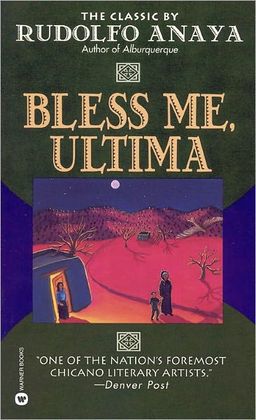
Classic book review: Rudolfo Anaya’s “Bless Me, Ultima”

BlessMeUltimaCoverIt’s easy to see why Rudolfo Anaya’s Bless Me, Ultima has become one of Latino literature’s greatest classics and a well-read book in the classroom. The story of one boy’s struggle to find faith touches readers on a personal and cultural level.

Ultima was first published in 1972 by a small press, then grew in popularity through the decades – and has been the subject of banning at schools due to profanity. The book has been made into a movie that will be released this year.

The book is told through the eyes of 6-year-old Antonio Marez, who lives in rural New Mexico with his family in the 1940s. His mother wants him to become a priest, hoping for a more stable life than his brothers and some of the other villagers. The family invites Ultima, an elderly curandera, to live with them and she makes an instant connection with Antonio.

Antonio begins having visions as his town experiences some tough situations – including a shooting he witnesses. Some townspeople are angry at Ultima, accusing her of being a bruja who places curses on others.

But Ultima also heals people. As he undergoes his First Communion, Antonio begins to question his Catholic faith.

“I had been thinking how Ultima’s medicine had cured my uncle and how he was well and could work again. I had been thinking how the medicine of the doctors and of the priest had failed. In my mind I could not understand how the power of God had failed. But it had.”

The book is a fast read, with a well-paced plot and vivid descriptions about the land. Anaya also balances the dramatic passages with funny scenes at a Christmas pageant and Holy Communion.

Many Latinos – such as novelist Julia Amante, La Casa Azul bookseller Aurora Anaya-Cerda and writer Richard Yañez and others in a series of essays in the El Paso Times – cite this as one of their favorite books because they saw themselves depicted in the novel.

Bless Me, Ultima features some of the most prominent elements of Latino literature and the universal themes such as the importance of family and the toughness of growing up. Little wonder why it’s a classic.

Rudulfo AnayaMore about Rudolfo Anaya:

Anaya wrote Bless Me Ultima while working as a teacher in New Mexico in the 1960s. He went on to write many other books, including Alburquerque and the Sonny Baca mystery series, and he is considered the father of the Chicano literary movement.

Source: I checked this book out of the library.

Note: This is the first in my series of reviews of great Latino novels. Next up: The Aleph by Jorge Luis Borges.  

2 Comments

Filed under Book Reviews, Classic Books, Fiction

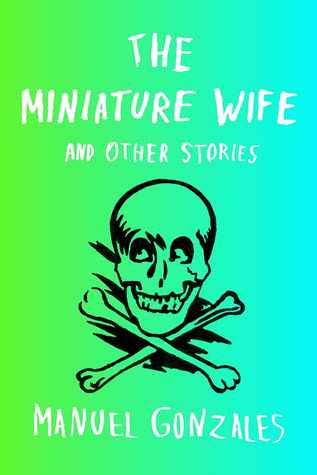
Book review: Manuel Gonzales’ “The Miniature Wife and Other Stories”

Miniature WifeManuel Gonzales can make a skeptic believe vampires and werewolves are real, even human.

In his book, The Miniature Wife and Other Stories (Riverhead), Gonzales conjures up all sorts of wild scenarios – and he uses those situations as metaphors for larger issues about the world we live in.

The book starts off with two strong stories – “Pilot, Copilot, Writer” – in which the narrator sits on a plane that is stuck in the air for 20 years, and the title story, about a man who shrinks his wife to the size of a coffee cup. Crazy stuff, but they speak about the stagnation of life and the world’s treatment of women.

A few stores – “The Artist’s Voice,” about a composer who speaks with his ears, and “Harold Withy Keith: A Meritorious Life,” about the inventor of a vascular system made out of plants – get so bogged down in technical detail that I felt like I was reading a science textbook.

But the book roars back with great, inventive stories – “All of Me,” about a zombie who crushes on a co-worker; “One-Horned and Wild-Eyed,” about a man whose friend finds a unicorn; and “Wolf,” a graphic but fascinating account about a father who turns into a werewolf.

How good are these stories? I’m not into paranormal books because I can’t take them seriously, but Gonzales makes them believable with clear, matter-of-fact writing and relatable characters who are forced to make heartbreaking decisions.

Take the zombie in “All of Me”:

“I don’t understand how hard it can be to keep our baser selves in check or how much easier it is, ultimately, to go back to the evil we knew and understand, the evil we have lived with for so long that it feels an inherent and important part of ourselves, to go back to this evil and tell ourselves that we had no other choice, that we didn’t opt for this decision, but that really there were never any other options for us to take. I know about choices and about not having choices and how it feels when it seems you have no other choice.”

So you get crazy scenarios mixed in fine writing and profound thoughts about the human condition and the state of the world. Manuel Gonzales can make you believe anything.

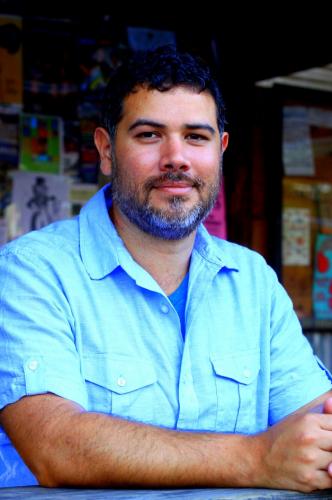
Manuel_GonzalesMore about Manuel Gonzales:

Texas-based Gonzales runs the Austin Bat Cave creative writing center for children and bakes pies on the side. His work has been published in The Believer, Esquire and the Dear Teen Me website. Read “The Animal House” from The Miniature Wife on the FiveChapters.com website.

Source: I received a review copy from the publisher.

Leave a comment

Filed under 2013 Books, Book Reviews, Fiction

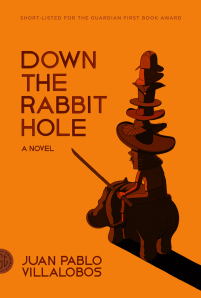
Book review: Juan Pablo Villalobos’ “Down the Rabbit Hole”

Down the Rabbit Hole (Farrar, Straus and Giroux) by Juan Pablo Villalobos seems like a crazy book, almost a fantasy – but it’s a serious book about one boy’s harsh reality.

Tochtli, the narrator, is a seven-year-old boy who lives in a palace in Mexico filled with ammunition. When he says he wants a pygmy hippopotamus, his family takes him on a safari in Liberia to get him one.

Sounds surreal, right? But Tochtli is the son of a drug gang leader.

The concept works because of Villalobos’ strong voice. Thanks to Villalobos and the book’s translator, Rosalind Harvey, Tochtli sounds both innocent and precocious. Take this passage in which he describes his preference for guillotines compared to the violent images seen on TV:

“The French put the heads in a basket after cutting them off. I saw it in a film. They put a basket just under the king’s head in a guillotine. Then the French let the blade fall and the king’s head is cut off and lands in the basket. That’s why I like the French so much. They’re so refined.”

He’s funny, too, as in this passage on the subject of food:

“I don’t like pozole much, mainly because it’s got cooked lettuce in it, which is ridiculous. Lettuce is for salads and sandwiches. Also you make pozole with pigs’ heads: once I peeped into the pot and there were teeth and ears floating around in the broth. Sordid. The things I like are enchiladas, quesadillas, and tacos al pastor. I like tacos al pastor without the pineapple, because pineapple on a taco is ridiculous, too. I hardly put any chili on my enchiladas, because otherwise my belly hurts a lot.”

One thing that bothered me: the frequent use of the F word (the one used to deride homosexuals). It was unnecessary and jarring to read.

Still, the book is an fast, fascinating read. At just 70 pages, Down the Rabbit Hole creates a unique  experience that makes you laugh and cringe.

More about Juan Pablo Villalobos: Juan Pablo Villalobos was born in Mexico and currently lives in Spain. Rabbit Hole was shortlisted for The Guardian First Book Award. His work, “Dispatches from Ambassador to Brazil, Earth,” was published by Granta.

Source: I received a review copy from the publisher.

2 Comments

Filed under 2012 Books, Book Reviews, Fiction

Classic book review: Esmeralda Santiago’s “When I Was Puerto Rican”

Esmeralda Santiago’s When I Was Puerto Rican (De Capo Press) is a beautiful book – one whose beauty often comes from deep pain.

The book is a memoir of Santiago’s early childhood in Puerto Rico, where the country dwellers are called jibaros. She grew up poor, describing her home as “a rectangle of rippled metal sheets on stilts hovering in the middle of a circle of red dirt.”

Through the years, young Esmeralda – called Negi by her parents because she was so dark as a baby – moves from the country to the city and, eventually, to Brooklyn – as her unmarried parents separate and reunite repeatedly. Negi takes care of her seven younger siblings as she experiences school, impending womanhood and, in one amusing chapter, the food program from the United States.

The book’s strength comes from Santiago’s style of writing – so simple that the book is a fast read, yet so elegant in its gorgeous and inventive descriptions.

Take this passage when Santiago’s family flies to New York City:

“Several times I bumped into Mami as I walked backwards, unwilling to face the metal bird that would whisk us to our new life … Neither one of us could have known what lay ahead. For her it began as an adventure and turned out to have more twists and turns than she expected or knew how to handle. For me, the person I was becoming when we left was erased and another one was created. The Puerto Rican jibara who longed for the green quiet of a tropical afternoon was to become a hybrid who would never forgive the uprooting.”

Although Santiago never feels sorry for herself, my heart broke for her all that she had to through in her young life. Fortunately, the great ending makes you grateful you went on the tough journey with her.

More about Esmeralda Santiago:

When I Was Puerto Rican was Santiago’s first book. She wrote two sequels, Almost a Woman and The Turkish Lover, as well as several novels, including America’s Dream and Conquistadora.

Source: I purchased this book at Barnes and Noble.

Note: This review is part of a series of classic books by Latinas. (I’m running a bit behind.) Next up: Chicana Falsa by Michelle Serros.

Leave a comment

Filed under Book Reviews, Classic Books, Non-Fiction