Monthly Archives: December 2011

‘Tis the Season: Christmas books for adults

‘Tis the season for family gatherings, holiday parties and competitive shopping. If you prefer to celebrate Christmas with some good page turner, here are some Latino-themed books:

• Alisa Valdes’ 2010 book The Three Kings is a “Christmas dating story” about one woman’s quest to find love during the holiday season.
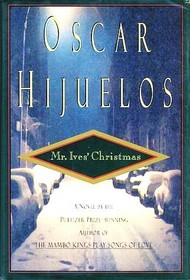
• In Pulitzer Prize-winner Oscar Hijuelos’s 1995 novel, Mr. Ives’ Christmas, a man struggles with life and his belief in God after his son is murdered on Christmas. PBS’s Ray Suarez gave a review of the book to NPR, which includes an excerpt.
• Twenty-five Latino authors, including Junot Diaz and Esmeralda Santiago, share their favorite holiday stories and recipes in the 1999 book, Las Christmas: Favorite Latino Authors Share Their Holiday Memories.

• In the 2007 book Last Night at the Lobster by Stewart O’Nan, Manny DeLeón has to close down the Red Lobster he manages in New Britain, Connecticut, as a blizzard comes down four nights before Christmas. O’Nan talked about writing about a Latino character and gives a shout-out to Luis Alberto Urrea here.

And if you’re in more of a movie mood, Nothing Like the Holidays depicts a dysfunctional Puerto Rican family celebrating the holidays. The 2008 movie stars John Leguizamo, Freddy Rodríguez, Elizabeth Peña and Alfred Molina. I’m partial to the 2003 movie Love Actually, which has a mostly British cast but features Brazilian actor Rodrigo Santoro and Portuguese actress Lúcia Moniz.

Coming up on Thursday: Christmas books for children.
Leave a comment

Filed under Culture, Fiction, Movies

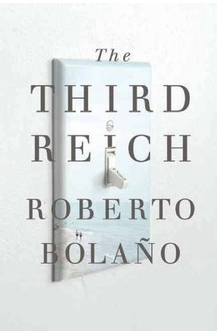
Book review: Roberto Bolaño’s “The Third Reich”

The Third Reich is a mystifying book.

Reich (Farrar Straus Giroux) was written by the late Roberto Bolaño, who was known for his critically acclaimed books such as The Savage Detectives and 2666. In this novel, German Udo Berger and his girlfriend, Ingeborg, visit a Spanish resort town that he used to visit as a child. While there, they meet a couple – Charley and Hanna – and spend a good deal of time with them.

But Udo is more interested in his war games that he’s set up in his hotel room. The game, called the Third Reich, is a simulation of World War II battles. Udo is Germany’s national champion at war games – a hobby even he finds a little odd when he goes to one of the conventions. “For my part, I came to the conclusion that eighty percent of the speakers needed psychiatric help,” he says.

But he has distractions from the game. Udo flirts with the hotel’s owner, Frau Else, who returns his affections despite having an ailing husband. Charley has an explosive, unpredictable personality that puts him in danger. Udo strikes up a friendship with a man named El Quemado, a muscular man with horrible burns all over his body – and soon rivals Udo at his own game.

While that seems like a lot of plot, it’s not. The book moves slowly. Udo has a passive personality that makes you wonder what he’s truly thinking, even though the book is told in first person. The book, translated by Natasha Wimmer, is easy to read, but readers may wish there was more action other than reports of his breakfast and technical descriptions of the game.

Fortunately, the conclusion of the book moves quickly and keeps you intrigued. The book has some deep observations, with World War II serving as a metaphor between Udo and El Quemado. And Bolaño, who wrote the book in 1989, is eerily prescient about how some of today’s gamers are isolated from society.

More about Roberto Bolaño:

Roberto Bolaño was born in 1953, grew up in Chile and Mexico City and died at age 50. The Third Reich was written in 1989 and found after his death. He won the National Book Critics Awards in 2009 for 2666.

Source: I received an advanced copy of the book from the publisher.

1 Comment

Filed under 2011 Books, Book Reviews, Fiction

In the news

New releases: Fantasy mega-bestseller Diana Gabaldon, who is of Mexican-American and English descent, released her latest book, The Scottish Prisoner, on Tuesday.  Entertainment Weekly has a great interview in which she lists her favorite and not-so-favorite books. Also new on the bookshelves is Something Urgent I Have to Say to You: The Life and Works of William Carlos Williams, a biography of the poet, who was half-Puerto Rican, by Herbert Leibowitz.

Year in Review: Two of The Hispanic Reader’s favorite books of the year, Héctor Tobar’s The Barbarian Nurseries and Francisco Goldman’s Say Her Name, were named to The New York Times’s 100 Notable Books of 2011. For its Best of 2011 list, Kirkus Reviews picked The Secret History of Costaguana by Columbian author Juan Gabriel Vásquez and We the Animals by Justin Torres. (Its teen list includes by If I Could Fly by Judith Ortiz Cofer and Under the Mesquite by Guadalupe Martinez McCall.) Animals also made Amazon.com’s Best of 2011 Top Twenty list. Lorraine Lopez’s The Realm of Hungry Spirits was selected for Bookpage’s best list.

Law: Nobel Laurete Gabriel García Márquez won a lawsuit in which a Colombian man claimed that a character in Márquez’s 1984 book Chronicle of a Death Foretold was based on him, according to The Guardian.

Random: President Obama purchased Junot Diaz’s The Brief Wondrous Life of Oscar Wao, among other books, while holiday shopping, ABC News reported.

Awards: Julia Alvarez, pictured at right, recently wrote about her acceptance of the Vermont Governor’sAward for Excellence in the Arts, which she received in November. The Cervantes Prize, considered the most prestigious Spanish language literary award, was given to Chilean poet Nicanor Parra, 97.

Leave a comment

Filed under News