In the News: New books, Librotraficantes, Rodriguez, Mora

Upcoming Releases:

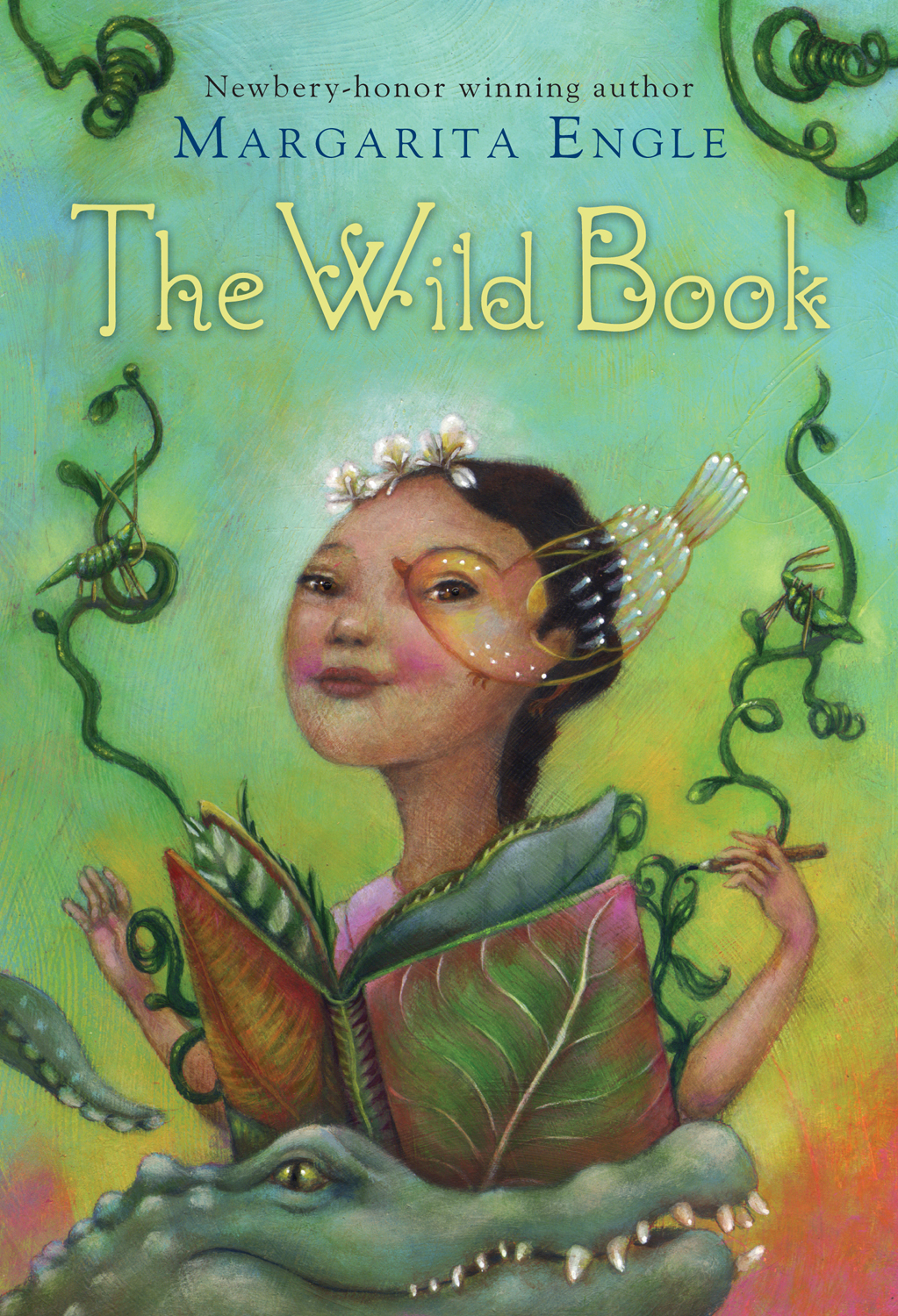
Margarita Engle’s The Wild Book, for children ages 10 and younger, will be released Tuesday. The story focuses on a girl who struggles with reading.

Carolina de Robertis’ Perla, about an Argentine woman who discovers a painful secret about her parents’ past, will come out March 27.

Arizona:

The Librotraficante Caravan, led by Aztec Muse publisher Tony Diaz, made its way from Houston to Tucson – with stops in San Antonio, El Paso and Albuquerque – to distribute $20,000 worth of Latino-themed books that were banned by the Tucson school district. The journey received coverage from The New York Times, El Paso Times, San Antonio Express-News, Arizona Daily Star and The Texas Observer.

• Here’s a great New York Times article about how the state’s ban on ethnic studies has affected classroom studies, such as a visit by author Matt de La Peña.
Awards:

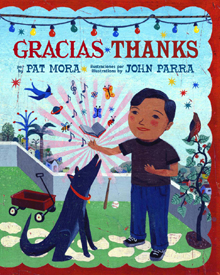
Pat Mora won the Gelett Burgess Children’s Book Award for her book, Gracias/Thanks.

Author profiles:

Bless Me Ultima author Rudolfo Anaya talks about his banned books in the Albuquerque alternative newspaper, Alibi.

The Los Angeles Times features a great profile of Luis J. Rodriguez.

Contests:

Luis Alberto Urrea provides the prompt for NPR’S Three-Minute Fiction contest. Deadline is March 25.

• The Hispanic Reader is taking the week off. When we come back, we’ll celebrate the birthdays of two Nobel Prize winners. Happy Spring Break!

Note: This post was updated to include The New York Times article.

2 Comments

Filed under 2012 Books, Awards, Children's Books, News

Meet novelist Meg Medina, author of “The Girl Who Could Silence the Wind”

Meg Medina began telling stories at a young age. Now she’s won awards and devoted audiences for those stories.

The Cuban-American writer released her new young adult novel, The Girl Who Could Silence the Wind, (Candlewick Press) earlier this week.

This follows 2008’s Milagros: Girl from Away and 2011’s Aunt Isa Wants a New Car. Aunt Isa, which is also available in Spanish, earned Medina the 2012 Ezra Jack Keats New Writers Award, given to a new author and new artist of picture books for children nine and younger, as well as a spot on the 2012 Amelia Bloomer List for feminist literature for readers from birth to age 18.

Medina, who grew up in Queens, New York, and lives in Richmond, Virginia, talked to The Hispanic Reader as part of her blog tour for The Girl Who Could Silence the Wind. Click to watch the trailer and learn more about the book.

Q: Tell me about your book The Girl Who Could Silence the Wind. What inspired the story?

The Girl Who Could Silence the Wind is my first young adult novel. It is the story of 17-year-old Sonia Ocampo who, due to the strange circumstances of her birth, is mistakenly believed to be an angel sent to her mining village. With each passing year, her neighbors have pinned all their hopes and dreams on her shoulders (literally), a burden she can no longer bear. With the help of her clever aunt, Tia Neli, Sonia secures a job as a domestic in the capital, and for a while she believes she has escaped her burdens. Unfortunately, trouble isn’t far. Her brother has left for the north, too, and has not been heard from in weeks. Naturally, everyone turns to Sonia to secure his safety. With only her wits – and the help of a lovesick taxiboy – Sonia has to untangle lies and secrets that have plagued her since her birth.

The novel is written in magical realism, but it touches on contemporary issues: migration and legality; true love vs. predatory relationships; defining yourself despite how others define you; young people’s dreams and having the right to follow them.

Q: What influenced you to become a writer?

I have to believe that it was inevitable. I come from a large Cuban family that loves to tell stories. The act of retelling events was part of my life from a very young age – and I’m thankful to my aunts, my mother, and my grandmother for that gift. Even today, when my elders are in their eighties, I enjoy hearing their stories of Cuba. The stories connected me to my imagination and to my culture. I use my writing in much the same way.

Q: You write mostly for children and young adults about overcoming tough circumstances. What appealed to you about this audience?

I think that writing for children is an honor. I don’t think you can find an adult who truly loves to read, who can’t name his favorite book as a child. There’s something magical about that time in our lives, and I love that my work lives there, where real life and stories hold hands. It’s such a treat to write for an audience that operates that way. As for writing about tough circumstances, I say that it’s important to give children – especially bicultural children – a way to see themselves, their struggles, and their families in books and stories.

2 Comments

Filed under 2012 Books, Author Q&A, Children's Books, Fiction, Young Adult Books

At the theater: “Electricidad” and “In the Heights”

“At the Theater” is a feature in which I check out plays by Latino writers. The article is intended to be a look at the author’s work and not a review of the theatrical production – so no comments about acting, lighting or staging. I saw the Fort Worth-based Artes de la Rosa’s production of the play Electricidad and a national tour production of In the Heights.

Life in the barrio has been a constant theme in Latino literature – and it’s the setting of two powerful, and very different, plays that have received nationwide attention and are now showing in the Dallas-Fort Worth area.

In Luis Alfaro’s Electricidad, the barrio is at its rawest, filled with gangsters and cholos who can’t escape their ‘hood. Electricidad is a young woman who sits outside her home, protecting the body of her murdered father. Based on the Sophocles’ Greek tragedy Electra, a trio of neighborhood women serve as the Greek chorus while Electricidad deals with her mother, sister and others. Depending on your point of view, the play shows barrio life at its most realistic or it perpetuates the worst stereotypes of Latinos.

By contrast, In the Heights is so joyful, one could think it takes place on another planet. The play actually takes place near a bodega in the Washington Heights neighborhood of Manhattan. The story by Quiara Alegría Hudes (she also wrote 26 Miles) depicts the lives of its residents, who break into upbeat songs written by Lin-Manuel Miranda. At the end of the show, you wished you lived in this neighborhood where everyone is your friend and every problem has a solution. The show deservedly won the 2008 Tony Award for Best Musical and was nominated for a Pulitzer Prize in Drama.

About the plays: If you live in the Dallas-Fort Worth area, you can see excellent productions of these plays until March 25. Electricidad is produced by the Artes de la Rosa Cultural Center for the Arts at the Rose Marine Theater in Fort Worth. For tickets, click here. In the Heights, which is on a national tour until June, is playing at the Winspear Opera House, part of the AT&T Performing Arts Center, in Dallas. For tickets, click here.

Leave a comment

Filed under Theater

Classic book review: Ana Castillo’s “So Far From God”

I was so close to loving Ana Castillo’s 1993 novel So Far From God.

So Far From God takes place in a small village in New Mexico, where Sofi is taking care of her four daughters after her husband Domingo has left her. There’s Esperanza, the oldest daughter who works as a television reporter in the Middle East; Fe, who suffers a nervous breakdown when her engagement ends; Caridad, who is attacked by a mysterious creature, ends up living in a cave and becomes a saint to villagers because they believe she has special powers; and La Loca, who dies as an toddler, but wakes up during her own funeral and lands on the church’s roof.

And that’s just the first four chapters, folks.

This book reminded me of Julia Alvarez’s How the Garcia Girls Lost Their Accents, which also focused on four daughters in a non-linear story. But Garcia Girls is a realistic book and, if you couldn’t tell already, So Far From God uses vast amounts of magic realism and myth.

Sofi is the backbone of the family, running the family’s carnicería and even becoming the leader of her small village. Castillo keeps a light, conversational tone throughout the book even when the women suffer through some terrible tragedies.

As Sofi says, “God gave me four daughters, and you would have thought that by now I would be a content grandmother, sitting back and letting my daughters care for me, bringing me nothing but their babies on Sundays to rock on my lap! But no, not my hijitas! I had to produce the kinds of species that flies!”

I enjoyed the stories and I liked Castillo’s sense of humor. But Castillo packs so much into her sentences that I had to reread them and hunt for the verb. I was also annoyed by her frequent use of double negatives. I would accept this – reluctantly – if the book had a strong first person narrator or if it was used in the dialogue, but I didn’t think they were necessary. In fact, wanted to stab the book with a red pen so the double negatives would bleed to death.

So, I just liked So Far From God when I could have loved it.

More about Ana Castillo:

Ana Castillo is a Mexican-American author who has written numerous books and poems, including 1992’s The Mixquiahuala Letters and 1999’s Peel My Love Like an Onion. Her next book, The Last Goddess Standing, is expected to come out later this year.

Source: I checked this book out of the library.

This book is third in the series of classic books by Latina authors. Next month: Loving Pedro Infante by Denise Chávez.

Leave a comment

Filed under Book Reviews, Classic Books, Fiction

Happy Birthday, Gabriel García Márquez!

(Update: García Márquez passed away in April 2014. Here is his obituary from The New York Times; an overview of his life in Mental Floss magazine that first appeared in 2009; a collection of his short stories published in The New Yorker; and reaction to his death from world leaders and writers compiled by the Huffington Post.)

Gabriel García Márquez was born 85 years old today in Aracataca, Colombia. He is the greatest Latino writer alive, perhaps ever.

García Márquez is known for his classic books, One Hundred Years of Solitude and Love in the Time of Cholera. He was part of the Latin American boom of literature in the 1960s, along with Carlos Fuentes and his rival, Mario Vargas Llosa. (Their feud resulted in García Márquez getting a black eye.)

His books are known for their magic realism. But some books are too realistic: 1996’s News of a Kidnapping, which reflected the turmoil in his country, recently received a sales boost in Tehran because the story is similar to recent events in that country.

What makes García Márquez the most significant writer in Latino literature today? He was awarded the Nobel Prize in literature earlier than any other living recipient. But he’s also permeated the pop culture more than anyone else. Oprah Winfrey chose his works for her book club. Cholera plays a major plot point in the 2001 movie Serendipity. And, best of all, actor Tom Hanks is shown reading Solitude in the 1989 movie Turner and Hooch. What could be better than that?

1 Comment

Filed under Author Profiles

In the news: Librotraficantes in Arizona, Anaya, Valdes, Díaz

Arizona:

The Librotraficante Caravan will kick off March 12 on its journey to distribute Latino-themed books that have been banned in Tucson classrooms. Aztec Muse founder Tony Diaz is spearheading the tour, which starts in Houston and hosts events during its stops in San Antonio, El Paso and Albuquerque and, finally, Tucson. The San Antonio event on March 13 will include Sandra Cisneros (right), Carmen Tafolla and Luis Alberto Urrea. The Tucson event on March 17 will feature Dagoberto Gilb and Helena Maria Viramontes. At each stop, the caravan will create Underground Libraries made up of the banned books.

Awards:

Bless Me Ultima author Rudolfo Anaya, left, will receive a lifetime achievement award from the Los Angeles Times Book Prizes. The ceremony takes place April 20 and coincides with the Los Angeles Festival of Books April 21-22.

• Books by Sergio Chejfec, Tomás Eloy Martínez, Juan José Saer, Moacyr Scliar and Enrique Vila-Matas made the 2012 Best Translated Books Award Longlist.

Book Festivals:

• The Tucson Festival of Books, which runs March 10-11, will include Monica Brown, Denise Chavez, Diana Gabaldon, Carmen Giménez Smith, Grace Pena Delgado, Sam Quinones, Alberto Alvaro Ríos, Sergio Troncoso and Luis Alberto Urrea, right, who will give the keynote address during the Author’s Table Dinner March 9.

Children’s Literature Conference:

March 19 is the deadline for early registration for the National Latino Children’s Literature Conference, which takes place March 29-30 in Tuscaloosa, Ala. The event includes seminars on educational strategies, networking opportunities and a keynote address by authors Alma Flor Ada and F. Isabel Campoy.

Upcoming releases:

Alisa Valdes, best known for her Dirty Girls Social Club series, plans to publish 100-page ebook romance “novelas” for $1.99 one a month starting with Billy, the Man in April. (Click on her “eRomance” page.)

• Pultizer Prize winner Junot Díaz is releasing a new book of short stories called This Is How You Lose Her on Sept. 11, according to The New York Times.

2 Comments

Filed under 2012 Books, Awards, Events, News

Book review: Leila Cobo’s “The Second Time We Met”

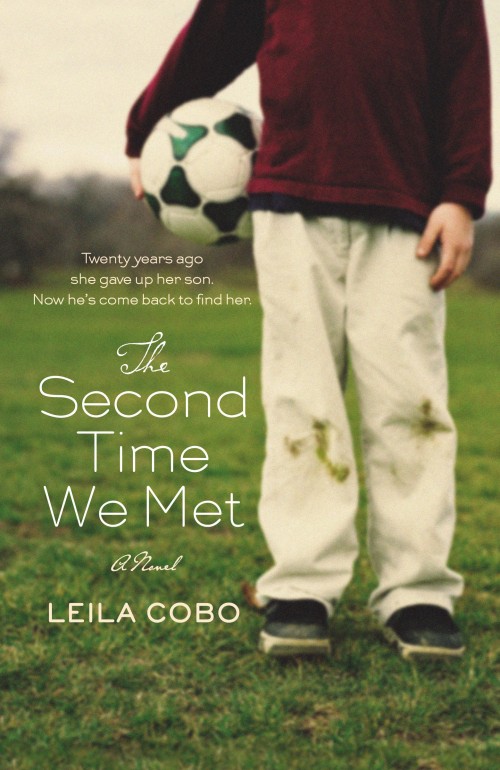
In Leila Cobo’s The Second Time We Met (Grand Central Publishing), teenager Rita Ortiz lives in a small town called Edén, but her life is hell.

Her parents are overly strict, and her small town in Colombia is run by guerillas. She falls in love with one of those guerillas, Lucas, and then her life becomes even more complicated: she finds out she’s pregnant. Her parents force her to move into a convert, and she gives birth and puts the baby up for adoption.

The book then goes from 1989 South America to present day California, where that baby – named Asher Stone – is now a college student living with his tight-knit family and dreaming of a professional soccer career. An almost-fatal car accident forces him to rethink his life – and search for his birth mother. But Asher has very little to go on – just her name, a birth date and a letter she wrote to him. Now Asher – and the reader – wants to know what happened to Rita Ortiz.

The book’s plot isn’t original and Asher isn’t as compelling a character as his mother. But the story runs at a good pace, and Cobo writes some killer lines. Take this passage when Rita and Lucas fall in love: “What neither of them reckoned with is that love and lust are transformative, that they peel back layers of your self, surreptitiously, life the softest caress. Before you know it, fragments of you are exposed for all to see, little pieces of you didn’t know carried with you until they found their reason to exist.”

And readers will have good reason to keep turning the pages.

About the author:

Leila Cobo is a native of Colombia and former concert pianist. She covers Latin music for Billboard magazine. Her first book was Tell Me Something True.
She can be found on Facebook and Twitter.

Source: I received a review copy from the publisher.

1 Comment

Filed under 2012 Books, Book Reviews, Fiction

Book review: César Aira’s “Varamo”

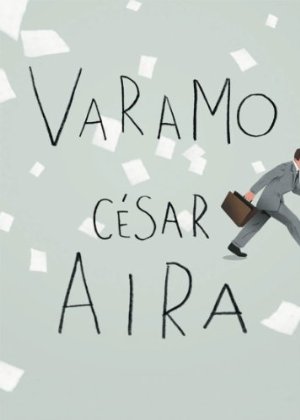
In just 88 pages, César Aira’s Varamo (New Directions) contains more quirkiness than a Wes Anderson movie.

The book is named for the book’s protagonist, Varamo, a bureaucrat in Colon, Panama, who lives an ordinary life. But one afternoon, he receives counterfeit money for his salary. Varamo is a decent man and feels confused about what to do with the money.

He tries to go on with his life – such as embalming small animals to create wacky scenes; dealing with his temperamental mother; and going to a club that he hangs out every night. But even his fun is interrupted by something called regularity racing, an auto contest in which the winner is determined by which car deviates the least from a predetermined speed.

I told you this book was quirky.

All of these events led Varamo to write a poem – something he has never done before – that makes him a hero in his country. The poem, called The Song of the Virgin Boy, is made up of the papers Varamo collected from the day’s events, although the reader doesn’t get to see this work of art.

Some readers may find Varamo a little odd for their tastes. And it is at times. But for the adventurous, the book may be a fun way to spend an hour.

More about César Aira:

César Aira, a native of Argentina, has written more than 80 books. His translator, Chris Andrews, talked to The New Yorker about Aira’s work. His fans include actor Daniel Radcliffe.

Source: I received a review copy from the publisher.

Leave a comment

Filed under 2012 Books, Book Reviews, Fiction

In the news: New books by Sáenz and Aira, plus Cisneros, García Márquez

New releases:

• Coming out this week: the young adult novel Aristotle and Dante Discover the Secrets of Universe by Benjamin Alire Sáenz, about the friendship between two teenage boys, and Varamo by César Aira, about the making of an epic poem by a Panamanian bureaucrat.

Latino scholars honored:

Latino scholars Teófilo Ruiz and Ramón Saldívar were awarded the National Humanities Medal by President Barack Obama.

Children’s books:

Pam Muñoz Ryan’s When Marian Sang: The True Recital of Marian Anderson and Esperanza Rising and Antonio Skarmeta’s The Composition made USA Today’s 100 Greatest Books for Kids.

Reading is Fundamental’s 2011-12 Multicultural Booklist includes books by Loretta Lopez, Alma Flor Ada, George Ancona and Gary Soto.

Other stories:

• The San Antonio Current ran an article about author Sandra Cisneros’ impact on the city, which she plans to leave.

Gabriel García Márquez’s Love in the Time of Cholera inspired Carlos Campos’ latest fashion collection, according to the Los Angeles Times.

• A Toronto librarian found a letter that appeared to have been written by Jorge Luis Borges, reports the Canadian magazine Quill & Quire.

Leave a comment

Filed under 2012 Books, Children's Books, News

Classic book review: Julia Alvarez’s “How the Garcia Girls Lost Their Accents”

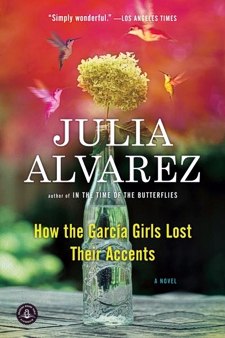
Julia Alvarez’s 1991 novel How the Garcia Girls Lost Their Accents follows four sisters from their adulthood in the United States to their childhood in the Dominican Republic. The book is funny, sad and always readable.

There’s Carla, “the responsible eldest”; Sandi, the “looker” who suffers a nervous breakdown; Yolanda, also known as “Yoyo,” the poet; and Sofía, or “Fifi,” the “plain one” who managed to snag “non-stop boyfriends.”

Instead of a straightforward plot, the family’s story is told in a series of vignettes in reverse chronological order. We first met the women as adults in the 1980s as they go through bad relationships and other problems. The book then goes back to the 1960s, when they first moved into the United States and they have to adjust to a different culture. The last part of the book takes place in the late 1950s, when they lived in the Dominican Republic under dictator Rafael Trujillo‘s rule.

Their time in their homeland makes for some of the most tense moments in the book. Their mother, Laura, severely punishes Yoyo when she inadvertently gets their father, a prominent doctor, in trouble. “You lose your head in this crazy hellhole, you do, and different rules apply,” she says.

It’s lines like that makes Alvarez such a great writer. Here’s another great passage in which she describes young Sandi’s urge to draw: “It seemed with so much protocol, I would never get to draw the brilliant and lush and wild world brimming over inside me. I tried to keep my mind on the demonstration, but something began to paw the inside of my drawing arm. It clawed at the doors of my will, and I had to let it out. I took my soaking brush in hand, stroked my gold cake, and a cat streaked out on my paper in one lightening stroke, whiskers, tail, meow and all!”

One gripe: it’s hard to tell the women apart sometimes. It seems Yoyo receives most of the attention. In fact, she later got her own book –1997’s ¡Yo!.

But Garcia Girls is an intriguing read about a family loving each other through the years, in good times and in bad. This piece of dialogue between their mother and a psychiatrist sums up their life:

“’The siblings,’ Dr. Tandlemann said. ‘Were they close? Was their any sense of rivalry between them?’

‘Siblings?’ The mother frowned at all this crazy psychology talk. ‘They’re sisters,’ she said by way of explanation.”

More about Julia Alvarez:

Julia Alvarez grew up in the Dominican Republic and came to the United States at age 10. She’s written numerous books, but is best known for Garcia Girls and In the Time of Butterflies. Her next book, A Wedding in Haiti, comes out in April.

Source: I checked this book out of the library.

This book is the second in a series of classic books by Latina authors. Coming in March: So Far From God by Ana Castillo.

Leave a comment

Filed under Book Reviews, Classic Books, Fiction