Category Archives: Book Reviews

Book Review: Justin Torres’s “We the Animals”

Justin Torres’s debut novel, We the Animals, can be described in one word – wow.

The book is a series of short vignettes about three brothers – half-Puerto Rican, half-white – growing up in upstate New York. The narrator begins the book using “we” as he describes the boys’ exploits around their neighborhood. The title’s metaphor is perfect, as demonstrated in the book’s opening lines:

“We wanted more. We knocked the butt ends of our forks against the table, tapped our spoons against our empty bowls; we were hungry. We wanted more volume, more riots. We turned up the knob on the TV til our ears ached with the shouts of angry men. We wanted more music on the radio; we wanted beats; we wanted rock. We wanted muscles on our skinny arms. We had bird bones, hollow and light, and we wanted more density, more weight. We were six snatching hands, six stomping feet; we were brothers, boys, three little kings locked in a feud for more,” he writes in the poetic first story, “We Wanted Everything.”

The book starts out with stories that are funny and innocent, just like the boys. But life gets tougher for the children, especially as their young mother and father experience stressful jobs and marital problems. Torres’s dialogue and descriptions are so real that you feel like you’re in the room with the family.

Sometimes, the scenes can get stark.

“You talking about escaping?” Ma asked.

“Nobody,” Papa said. “Not us. Not them. Nobody’s ever escaping this.”

As the boys get older, the narrator uses “I” instead of “we” as he emerges as the smarter, more responsible brother. But the book – and the title’s metaphor – takes on an unexpected and disturbing tone as the family discovers a secret about the narrator.

We the Animals is a thin book – only 125 pages – that readers will zip through in a couple of hours. But the memories of the book will last with them.

More about Justin Torres:

• An interview with Torres and excerpt from the book can be found on “The Diane Rehm Show” website.

• Torres talked about his short story, “Reverting to a Wild State,” to The New Yorker.

1 Comment

Filed under 2011 Books, Book Reviews, Fiction

Book review: Esmeralda Santiago’s “Conquistadora”

Conquistadora is the tale of a strong, feminist Latina living in the wrong century.

Esmeralda Santiago, best known for her 1994 memoir When I Was Puerto Rican, has written the epic story of Ana Larragoity Cubillas, a 19th century Spainard who yearns to live an adventurous life overseas after reading the journals of her ancestors who traveled to the New World three centuries earlier. At the age of 18, she convinces her husband, Ramón, and his identical twin brother, Inocente, to run a sugar cane plantation in Puerto Rico.

“I don’t expect to be happy all the time,” Ana tells a friend. “I’d rather be surprised by one moment every so often to remind me that joy is possible, even if I have to pay for it later.”

Good thing she has that attitude because, over the course of two decades, Ana endures the death of loved ones, adultery, family disputes, a fatal cholera epidemic, and bad accounting practices. But Ana leads the large plantation to success, employing more than seventy-five workers – many of them slaves. At the same time, the United States is in the midst of the Civil War over its slaves. Some of Ana’s family members support abolition in Puerto Rico, and the slaves’ uprising leads to the story’s tragic conclusion.

But readers can be tested to reach the ending of this thick book. The story drags at times – especially when Santiago provides historical background that, while providing context, makes the novel seem like a history book. Still, readers will keep turning the pages because they will want to know how Ana handles the next obstacle in her way.

More on Esmeralda Santiago:

• Santiago talked about and read from her book to PBS Newshour earlier this month.

• She wrote an essay about retirement for AARP VIVA.

1 Comment

Filed under 2011 Books, Book Reviews, Fiction

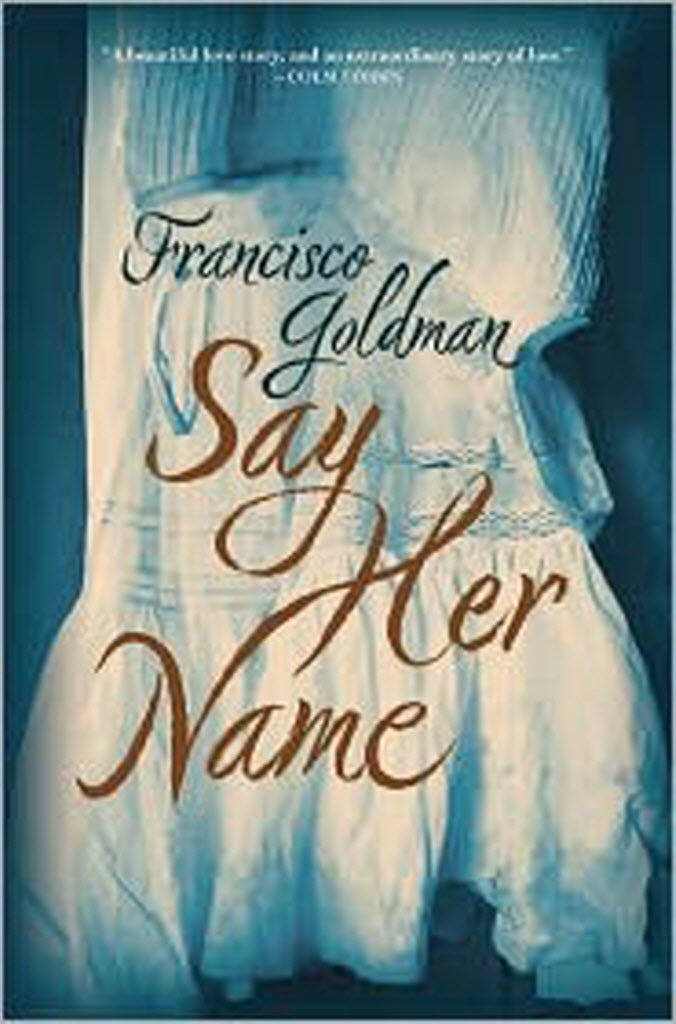
Book Review: Francisco Goldman’s “Say Her Name”

Francisco Goldman has turned his pain into one of the most eloquent and most praised novels of the year.

Goldman writes about his young wife’s death in the book, Say Her Name. Goldman was married to Aura Estrada, a Ph.D. candidate in literature who died in a swimming accident in 2007, and he keeps their names and many real life incidents in the novel.

In the book, he describes their first meeting, their difficult families, and their lives spent in New York City and Mexico. The first hundred pages are particularly riveting and, although the subject can be heavy, Goldman’s details make the reader know the characters intimately and feel Francisco’s heartache. Many times Goldman sounds like a teenage boy who can’t believe his crush likes him back – such as this passage in the beginning of their relationship, when he calls Aura and her roommate answers the phone:

“She had a young cheerful voice that came through the phone line like a fresh breeze of spring. Aura was in the shower, she told me. She was in the shower. That phrase evoked so much – it was about six or seven on a weekday evening, normally not an hour for showering unless she was going out, most likely on a date, or whatever it is, I thought grad students call ‘dates.’ Even now it hurts to imagine her engaged in that sweet ritual for anyone other than me: coming out of the bathroom with her hair turbaned in a towel, another wrapped around her torso, choosing her dress, blow-drying her hair, putting on the dress, studying herself in the mirror, applying makeup, taking off the dress and putting on another – one that’s less pretty and sexy but that’s in a way that covers the yin-yang-faced sun-moon tattoo on her chest above her left breasted that she’s had since she was fifteen – reapplying her lip gloss with a Zen calligrapher’s perfect touch, padding around the apartment in still bare or stockinged feet, in that state of restrained excitement just before going out into the night.”

Looking back on her life, Goldman is charmed even by Aura’s annoying characteristics – such as her habit of losing or forgetting things. And his grief is so profound, he kisses a tree that he walks by every day because he imagines seeing her face on it, and he even goes out in the middle of a frigid night because he had forgotten to kiss the tree earlier that day.

Just as Goldman is haunted by his wife’s memories, readers will be haunted by his words.

Leave a comment

Filed under 2011 Books, Book Reviews, Fiction

All in the name

A few years ago, I read three books for one selfish reason – the characters had the same last name as me.

My last name, DeLeon, isn’t common, so it was exciting to see my name in print. The first of these books, Rick Riordan’s 2006 Mission Road, featured a character named Ana DeLeon who was tangled up in the investigation of an unsolved murder. Mission Road, unlike Riordan’s Percy Jackson and the Olympians series, isn’t particularly memorable, but the other two DeLeon books are awesome.

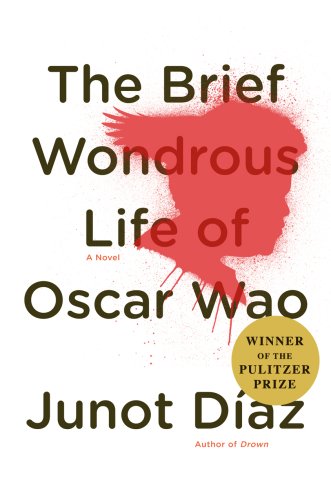
The most famous of these books is Junot Diaz’s 2008 The Brief Wondrous Life of Oscar Wao. The lead character, Oscar DeLeon, is a misfit whose Dominican-American family suffers a curse brought on by a former dictator from their homeland. This funny book won the Pulitzer Prize for Fiction, with Diaz becoming the second Hispanic to receive that honor.

But my personal favorite DeLeon character comes from Stewart O’Nan’s 2008 Last Night at the Lobster, which depicts Manny DeLeon’s last day on the job as manager of a New England Red Lobster on a snowy day. DeLeon is just an ordinary guy living an ordinary life, but his sense of decency makes him one of those characters that you wish you had as a friend. I’m proud to share the same last name as him.

Leave a comment

Filed under Book Reviews, Classic Books, Fiction