Category Archives: Author Profiles

Happy Birthday, José Saramago!

Saramago, who was born on this date in 1922 and died in 2010, is one of only a dozen Latinos to win the Nobel Prize in literature, which he won in 1998.

Saramago’s best known book, 1995’s Blindness, was made into a 2008 movie starring Julianne Moore, Mark Ruffalo and Gael García Bernal. His 1991 book, The Gospel According to Jesus Christ), drew controversy for its anti-religious views.

Granta ran a great article about the Portuguese writer by his translator, Margaret Jull Costa.

The Hispanic Reader reviewed his last book, Cain, which was published last month.

Leave a comment

Filed under Author Profiles

Happy Birthday, Carlos Fuentes!

Update: Carlos Fuentes passed away in May 2012. Here’s his obituary from The New York Times and a remembrance from his friends Alberto Manguel and Liz Calder in The Guardian.

Fuentes, perhaps Mexico’s best known writer, turns 83 today. Along with Columbian Gabriel Garcia Marquez and Peruvian Mario Llosa Vargas, he was part of the Latin American boom in literature in the 1960s and 1970s. Encyclopedia Britannica has his biography here.

His best known books are 1962’s The Death of Artemio Cruz, about an dying soldier looking back on his life, and 1985’s The Old Gringo, the story of an American writer in the Mexican revolution that was made into a 1989 movie with Gregory Peck, Jane Fonda and Jimmy Smits.

Here’s some clips of Fuentes on The Charlie Rose Show.

In this article for the Latin American Herald-Tribune, Fuentes discussed the history of Latin American literature.

Leave a comment

Filed under Author Profiles

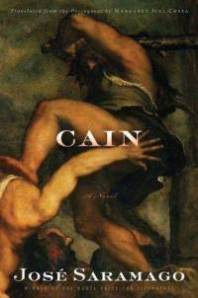
Book review: José Saramago’s “Cain”

Nobel Prize winner José Saramago is known for his dark words such as Blindness. Who knew he was such a comedian?

The late Portuguese’s last novel, Cain, released last month, tells some of the stories of the Bible from the perspective of Adam and Eve’s son, Cain, who killed his brother, Abel, out of jealousy. After the murder, Cain witnesses historical events from the Bible – the destruction of Sodom and Gomorrah, the creation of the golden calf and the construction of Noah’s Ark.

Through it all, Saramago offers some wry observations – such as when Eve complains about having diarrhea. “What’s diarrhea, asked the angel, Another word for it is the runs, the vocabulary the lord taught us has a word for everything, having diarrhea or the runs, if you prefer that term, means that you can’t retain the shit you have inside you.”

Or this, when Abraham is asked to sacrifice his son, Isaac: “The logical, natural and simply human response would have been for abraham to tell the lord to piss off, but that isn’t what happened.”

(By the way, Saramago doesn’t capitalize names or use quote marks in the book.)

Of course, Saramago, who was known for his atheist views, is mocking the Bible. Cain frequently questions the Lord’s motives in killing thousands of innocent lives during the destruction of Sodom and Gomorrah and the Golden Calf. Fans of Kurt Vonnegut and Christopher Hitches will love this stuff.

Saramago writes in never-ending sentences and never-ending paragraphs that may have some readers rereading passages. But, at 159 pages, Cain is a quick read and, considering the complexity of his other books, this may be a good starting point for his work.

More about José Saramago:

Saramago won the Nobel Prize for Literature in 1998. The Nobel’s website includes this biography.

Margaret Jull Costa, who translated Cain and Paulo Coelho’s recent book Aleph, wrote about him in this article for Granta magazine.

1 Comment

Filed under 2011 Books, Author Profiles, Book Reviews

In the news

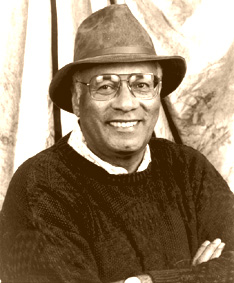
Puerto Rican/Cuban-American poet Piri Thomas (pictured at left) passed away last week. His book, Down These Mean Streets, described his life growing up in Spanish Harlem and became a staple in classrooms, according to this New York Times obituary.

• Here’s the round-up in book festivals this coming weekend:

Luis Alberto Urrea will speak at the Louisiana Book Festival Saturday in Baton Rouge.

The Dallas International Book Festival, on Saturday, will feature novelist Esmeralda Santiago (pictured at right), children’s author Lucia Gonzalez, young adult author Ray Villareal and poet Joaquin Zihuatanejo.

The 31st Annual Book Fair of Santiago will run from Friday-Nov. 13 if you just so happen to be in Chile.

• Monday will be a big day for Arte Publico Press – it’s releasing several children’s and young adult books that day. The titles are: Don’t Call Me a Hero by Ray Villareal; The Lemon Tree Caper: A Mickey Rangel Mystery by René Saldana Jr.; ¡A Bailar! Let’s Dance! by Judith Ortiz Cofer and illustrated by Christina Ann Rodriguez; Clara and the Curandera by Monica Brown and illustrated by Thelma Muraida; and Adelita and the Veggie Cousins by Diane Gonzales Bertrand and illustrated by Christina Rodriguez.

Dagoberto Gilb, whose short story collection Before the End, After the Beginning comes out Tuesday, will tour several Texas cities with Aztec Muse magazine editor Tony Diaz. They’ll be in San Antonio Nov. 2; Dallas, Nov. 3-4; and Houston, Nov. 16-17. The Texas Observer covered his speech at last week’s Texas Book Festival, as well as Sergio Troncoso’s and Richard Yanez’s discussion about El Paso literature. (Scroll down the page for the articles.) Texas Monthly also excerpted a story in its latest issue. The Hispanic Reader will post a review of his book next week.

Leave a comment

Filed under 2011 Books, Author Profiles, Children's Books, Events, News, Young Adult Books

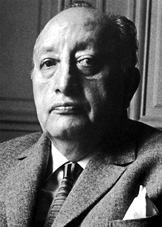
Happy Birthday, Miguel Angel Asturias!

Who?

Asturias may seem like an obscure author, but the Guatemalan is only one of a dozen Latinos to win the Nobel Prize in Literature, which he received in 1967. Asturias was born on this day in 1899 and died in 1974.

His best known books are The President (El Senor Presidente), about living under the dictatorship of Manuel Estrada Cabrera, and Men of Maize: The Modernist Epic of the Guatemalan Indians (Hombres de Maize), which tells the life of peasants in his homeland.

The Nobel Prize website and Encyclopedia Britannica have extensive biographies on Asturias.

Leave a comment

Filed under Author Profiles, Fiction

Latinos and the Nobel Prize

Sometime this month, the Nobel Prize will be awarded for literature. Only a dozen of the 107 recipients – including 2010 recipient, Peruvian Mario Vargas Llosa (right) – have Hispanic and/or Latino roots.

The Nobel Prize is considered the most prestigious literary award in the world, given for lifetime achievement. So, who are some possible Latino contenders for the Nobel? Chile’s Isabel Allende seems like a great candidate – she has accumulated a large amount of work with critical acclaim. Other possible contenders could include Oscar Hijuelos and Victor Villasenor (as Felix Sanchez noted in this Huffington Post article about the Kennedy Center honors).

But since Llosa won his award fairly recently, the committee may give the honor to a writer from another part of the world. The committee can be unpredictable, as The Guardian pointed out in a recent article: “Some of their choices are so leftfield as to barely register.” The Washington Post speculates that Canadian Margaret Atwood, Syrian Adonis or American Phillip Roth could win the literary prize. By the way, no American has won the award since Toni Morrison took the prize in1993.

Here’s a list at the past Latino Nobel Prize winners. Click on this link to learn more about them.

1904 – José Echegaray, Spain

1922 – Jacinto Benavente, Spain

1945 – Gabriela Mistral, Chile

1956 – Juan Ramón Jiménez, Spain

1967 – Miguel Ángel Asturias, Guatemala

1971 – Pablo Neruda, Chile

1977 – Vicente Aleixandre, Spain

1982 – Gabriel García Márquez, Colombia

1989 – Camilo José Cela, Spain

1990 – Octavio Paz, Mexico

1998 – José Saramago, Portugal

2010 – Mario Vargas Llosa, Peru/Spain

Leave a comment

Filed under Author Profiles, Awards, Fiction

Happy Birthday, Jorge Luis Borges!


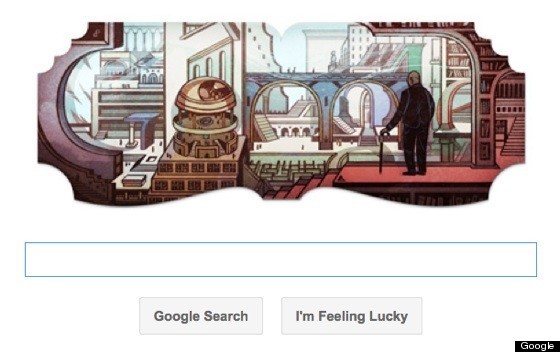
Argentinean author Jorge Luis Borges was born 112 years ago today, and Google celebrates his birthday with this great doodle on its home page.

 The Guardian features an article about Borges, calling him the “master of magic realism.”

The Garden of Jorge Borges and The Garden of Forking Paths are two websites devoted to Borges – both take their name from Borges’ first book, The Garden of Forking Paths.

2 Comments

Filed under Author Profiles